

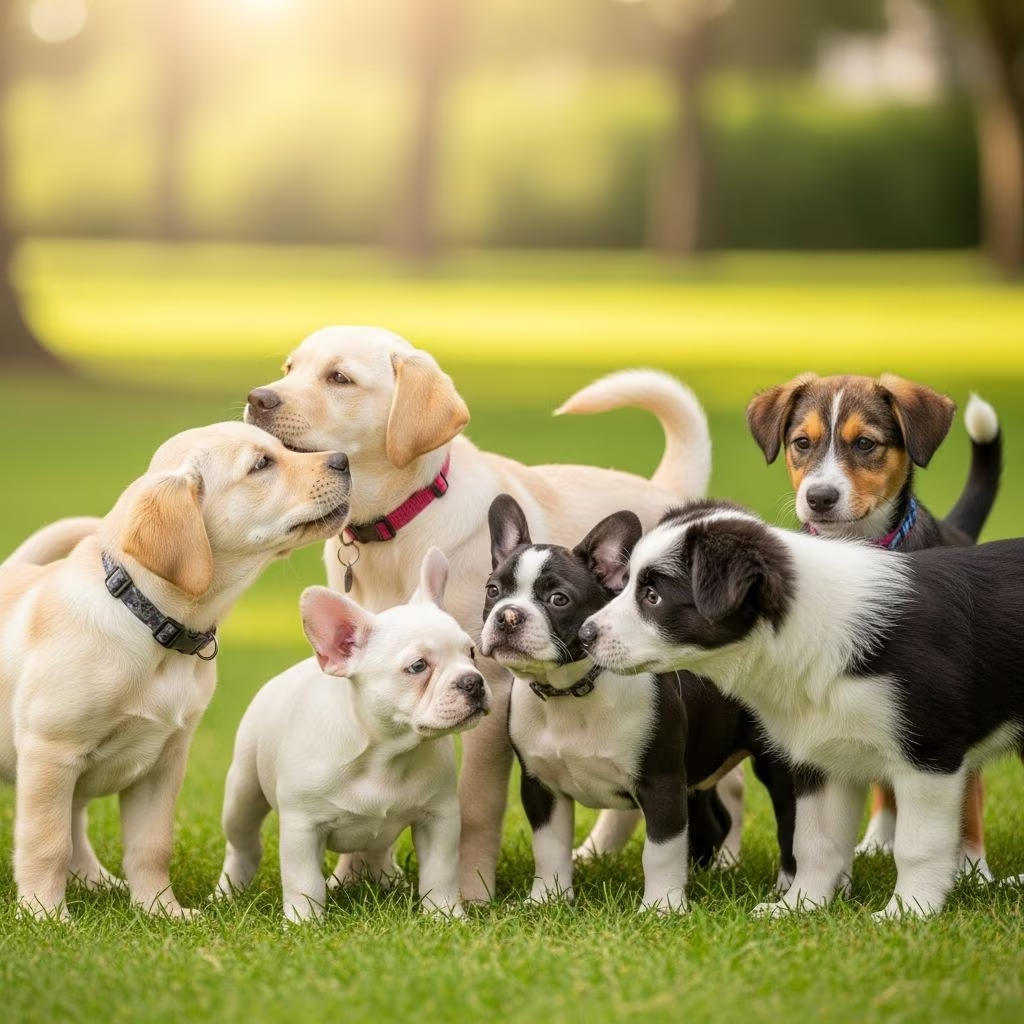
Puppy socialization is the process of exposing young dogs to a wide variety of people, animals, environments, sounds, and experiences in a positive way during their critical developmental window, typically from 3 to 12 weeks of age. This foundational stage shapes their lifelong behavior, confidence, and adaptability, preventing fearfulness and aggression later in life.
The Critical Socialization Period: Why Timing Matters
The primary socialization period for puppies spans from approximately 3 weeks to 12 weeks (21 to 84 days), with the most sensitive phase between 3 to 5 weeks when littermates are present. During this time, puppies form lasting impressions about what is safe and enjoyable in their world. Puppies are highly receptive to new stimuli, recovering quickly from mild scares without permanent negative effects, but after 12 weeks, they become more cautious and fearful.
Experiences before 14 weeks imprint permanently on a puppy’s brain. Positive exposures build curiosity and confidence, while negative ones can lead to lifelong fears of people, dogs, sounds, or environments. Veterinary professionals emphasize starting socialization early, even before full vaccinations, in controlled settings to maximize this window.
- 3-5 Weeks (Primary Socialization): Kinship recognition, play with littermates, bite inhibition development, and group activities begin. Puppies prefer familiar scents and show coordinated social behaviors like stalking and pouncing.
- 5-12 Weeks: Peak socialization window; puppies remain open but grow more hesitant toward new contacts. Ideal for structured exposures.
- Post-12 Weeks: Socialization continues but is less effective; focus shifts to reinforcement and gradual introductions.
Missing this period often results in fearful or reactive dogs. Owners must ensure every encounter is positive, pairing novelties with treats, play, and praise to create joyful associations.
Interactive Puppy Socialization: Controlled Meetings with People and Dogs
Interactive socialization involves direct, positive interactions with people and other dogs. The goal is to teach puppies that new social partners are trustworthy and fun, fostering comfort in diverse encounters throughout life.
The Right Kinds of Social Interactions
Select gentle, polite individuals for introductions. People should offer treats, engage in calm play, and handle the puppy softly—no sudden grabs or loud voices. For dogs, choose those who are playful yet responsive, matching the puppy’s energy without overwhelming them.
- People of all types: Different ages, sizes, hats, glasses, mobility aids, ethnicities.
- Dogs: Vaccinated, friendly adults or age-appropriate puppies in supervised settings.
- Control duration: Stop if puppy shows stress (yawning, lip licking, avoidance).
Reading canine body language is crucial—relaxed ears, wagging tail, play bows indicate enjoyment; stiff posture or tucked tail signals overload.
Social Interactions to Avoid
Never force interactions that scare or overwhelm. Avoid enthusiastic strangers who charge or yell, or dominant dogs that bully. Such experiences create fear and avoidance, counteracting socialization goals. Puppy-centric rules mean prioritizing the puppy’s comfort over ‘exposure for exposure’s sake’.
| Good Interactions | Bad Interactions |
|---|---|
| Treats and gentle petting | Sudden loud noises or grabs |
| Playful, matched-energy dogs | Overly exuberant or aggressive dogs |
| Short, positive sessions | Forced prolonged exposure |
Observational Puppy Socialization: Sensory Exposure Without Direct Contact
Beyond interactions, observational socialization exposes puppies to the world’s sights, sounds, smells, textures, and movements from a safe distance. This builds tolerance without risk of overwhelm, teaching puppies to cope or ignore novel stimuli.
Pair exposures with high-value treats and owner support. Start low-intensity and gradually increase:
- Sounds: Trucks, vacuums, doorbells, mixers—play recordings softly first.
- Sights: Bicycles, umbrellas, crowds, strollers—observe from afar.
- Surfaces/Textures: Grates, carpet, tile, grass—encourage voluntary exploration.
- Smells: Spices, perfumes, other animals’ scents on cloth.
Comprehensive plans cover household items (dishwasher, garage door) to urban novelties (escalators, crowds), ensuring 100% positive pairings.
Comprehensive Puppy Socialization: Combining Approaches for Success
Effective socialization integrates interactive and observational elements. A well-socialized puppy confidently greets strangers, enjoys dog playdates, and remains unfazed by daily life chaos. Benefits include reduced reactivity, better trainability, and happier pet-parent bonds.
Daily checklist example:
- Morning: Observational walk (watch joggers, cars).
- Afternoon: Interactive play with a friend (gentle handling).
- Evening: Sound desensitization at home.
Socialization is ongoing—apply class-learned skills 24/7 post-formal period.
Puppy Classes: Structured Socialization Done Right
Puppy socialization classes provide safe, supervised environments for meeting vaccinated peers, learning commands, and owner education. Primarily for socialization, not obedience, they occur during the critical window (start by 8-10 weeks).
Expect:
- Controlled puppy play sessions (brief, monitored).
- Body language lessons for owners.
- Positive-only training basics (sit, recall).
- Desensitization to class stimuli (toys, mats).
Classes set a rubric for positive novelties, empowering puppies in decision-making. Experts like behaviorist Lauren Novack stress their role in lifelong confidence.
Practical Tips and Common Mistakes
Start Early Safely: Use backyard meets or vet-approved parks pre-vaccines.
Track Progress: Use socialization logs to ensure variety (aim for 100+ positive exposures).
Mistakes to Avoid:
- Over-socializing (fatigue leads to shutdown).
- Ignoring stress signals.
- Uncontrolled park visits.
Post-socialization, reinforce with gradual challenges and professional help if fears emerge.
Frequently Asked Questions (FAQs)
What is the best age to socialize a puppy?
The critical period is 3-12 weeks; start immediately upon bringing puppy home (around 8 weeks). Continue positively beyond.
Can I socialize before full vaccinations?
Yes, in low-risk, controlled settings like puppy classes with vaccinated dogs. Consult your vet.
What if my puppy seems scared?
Stop immediately, reduce intensity, pair with treats. Never force—seek trainer help if persistent.
How many exposures does my puppy need?
Hundreds of varied, positive ones. Quality over quantity; track diversity.
Do adult dogs need socialization?
Yes, through ongoing positive experiences, though less imprintable than puppies.
References
- On Puppy Socialization — OnDogBehavior. Accessed 2026. https://ondogbehavior.com/on-puppy-socialization/
- There Is More Than One “Right” Way to Socialize Your Puppy — Kinship. Accessed 2026. https://www.kinship.com/dog-behavior/socialize-your-puppy
- What to Expect at Puppy Socialization Classes — Kinship. Accessed 2026. https://www.kinship.com/dog-behavior/puppy-classes
- Here’s Why You Need to Socialize Your Dog ASAP — Kinship. Accessed 2026. https://www.kinship.com/dog-behavior/how-to-socialize-a-puppy



