

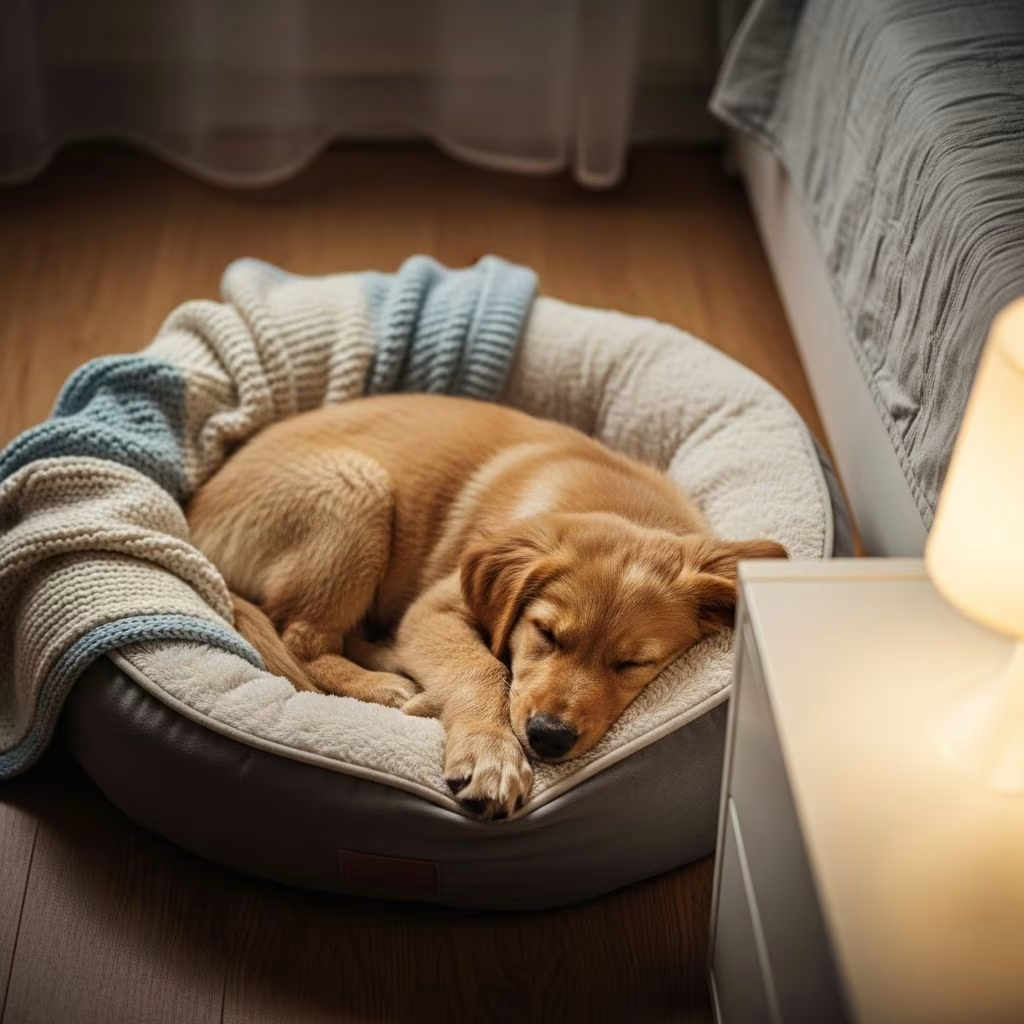
Bringing a new puppy into your home is exciting, but the sleepless nights that often follow can quickly become exhausting. Unlike adult dogs, puppies have not yet developed the bladder control or internal sleep rhythms necessary to rest through the night. Understanding how to guide your puppy toward consistent, uninterrupted sleep is one of the most valuable investments you can make in their development and your family’s well-being. This comprehensive guide walks you through scientifically-backed strategies for training your puppy to sleep soundly.
Understanding Your Puppy’s Sleep Physiology and Developmental Needs
Before implementing any training strategy, it’s essential to understand why puppies struggle with nighttime sleep. Young puppies have significantly smaller bladders than adult dogs, meaning they need to eliminate waste more frequently. Additionally, their nervous systems are still developing, making them more susceptible to external stimuli and anxiety when separated from their littermates or caregivers.
Puppies typically cannot hold their bladder through the night until they reach approximately 12 to 16 weeks of age. This biological reality means that patience and realistic expectations form the foundation of successful sleep training. Rather than expecting your puppy to sleep through the night immediately, your initial goal should be to minimize disruptions and create conditions that support gradually longer sleep periods.
The amount of sleep your puppy needs also factors significantly into training success. Young puppies require substantial rest—often 18 to 20 hours daily—distributed across multiple naps and nighttime sleep. This extended sleep requirement means that creating an environment and routine that supports quality rest directly impacts your puppy’s development, immune function, and ability to learn.
Establishing a Predictable Evening Schedule and Wind-Down Protocol
The foundation of successful sleep training lies in creating consistency. Puppies thrive with predictability, and establishing a structured evening schedule signals to their developing brain that specific activities lead to sleep. This consistency helps regulate their internal clock and reduces anxiety associated with bedtime.
Begin by timing your final meal strategically. Feed your puppy no later than three hours before your target bedtime. This timing allows sufficient digestion while ensuring they won’t experience an urgent need to eliminate during the night. Following the meal, wait approximately 30 to 60 minutes before the next phase of your routine.
Approximately one hour before bed, initiate a deliberate wind-down period. This means eliminating high-energy play, running games, or stimulating activities. Instead, transition your puppy to calmer engagement. Gentle petting, quiet time together, or low-key interactions signal that the day’s active phase is concluding. If you have multiple family members, ensure everyone understands and respects this wind-down protocol, as unexpected excitement can undo these preparations.
Provide your puppy with a final outdoor bathroom break approximately 15 to 30 minutes before their designated bedtime. Approach this potty break calmly and matter-of-factly. Use a consistent command or phrase, keep the environment dimly lit if possible, and avoid enthusiastic play or reward. This calm approach prevents stimulation that might make settling down more difficult.
Creating an Optimal Sleep Environment That Promotes Rest
Your puppy’s sleeping area significantly influences their ability to rest undisturbed. The environment should balance security with comfort, providing a space where your puppy feels safe without becoming overstimulated.
Crate Selection and Setup
A properly sized crate serves multiple functions in puppy training. It provides a den-like space that appeals to dogs’ natural instinct to have a secure sleeping area. Equally important, an appropriately sized crate supports house-training by encouraging puppies to hold their bladder rather than eliminating in a corner and sleeping elsewhere.
The crate should be large enough for your puppy to stand, turn around, and lie down comfortably, but not so spacious that they can create separate elimination and sleeping zones. Many trainers recommend using dividers in larger crates to adjust the interior space as your puppy grows. This prevents the crate from feeling cavernous while accommodating your puppy’s developing size.
Outfit the crate with soft bedding—a comfortable mat, blanket, or dog bed designed for crate use. Some puppies respond positively to items with heartbeat sounds or warmth elements, which can mimic the comfort of littermates. Include a favorite toy or chew item, which provides comfort and gives your puppy appropriate activities if they experience restlessness.
Environmental Considerations
Temperature, lighting, and sound significantly impact sleep quality. Maintain a cool room temperature—typically between 65 and 75 degrees Fahrenheit—as cooler environments generally support better sleep. Excessive warmth can cause restlessness and discomfort.
Dim or eliminate bright lighting in the sleeping area. If you need to check on your puppy or respond to bathroom breaks, use minimal, warm lighting rather than bright overhead lights. This preserves your puppy’s sleep-wake cycle and prevents the activation of their nervous system.
Address external noise strategically. While some ambient sound can mask startling noises, excessive noise disturbs sleep. Many trainers recommend soft background music or white noise machines that create consistent, unobtrusive sound masking. This approach prevents random environmental sounds from triggering alertness or barking responses.
Strategic Location of Your Puppy’s Sleeping Space
Deciding where your puppy sleeps significantly influences their adjustment to nighttime routines. Dogs are pack animals with a strong drive to remain near their family, and proximity often facilitates faster adjustment and better compliance with training objectives.
For the initial training phase, positioning your puppy’s crate in your bedroom—ideally next to your bed—acknowledges this biological drive while maintaining appropriate boundaries. This proximity allows you to respond quickly to legitimate bathroom needs without extended delays that could encourage accidents. Equally important, your presence provides reassurance during your puppy’s adjustment period, reducing anxiety-driven whining.
As your puppy matures and demonstrates consistent nighttime bathroom control, you can gradually move the crate to another location. This transition should happen slowly, moving the crate incrementally over weeks rather than relocating it abruptly. Gradual progression allows your puppy to adjust psychologically to increasing distance from you.
For puppies struggling with crate confinement, some trainers recommend the co-sleeper approach—positioning a dog bed directly adjacent to your bed with a leash of appropriate length tethering your puppy to your bed frame. This setup provides security and proximity while maintaining boundaries. The leash prevents your puppy from wandering and getting into unsafe situations during nighttime hours.
Managing Nighttime Bathroom Needs Without Reinforcing Disruption
Successfully navigating nighttime bathroom breaks requires balancing your puppy’s genuine physiological needs with avoiding accidental reinforcement of attention-seeking behavior. The key distinction lies in understanding whether your puppy’s vocalization or movement signals genuine bathroom urgency or attention-seeking.
Watch for specific signals indicating bathroom needs: restlessness, sniffing, circling, or whining with an urgent quality distinctly different from anxious whining. When your puppy displays these signals, respond promptly and calmly. Carry your puppy directly outside (or to a designated indoor elimination area) without stimulating play, conversation, or excitement.
During the outdoor bathroom break, remain calm and quiet. Use a consistent command to encourage elimination, then praise quietly when your puppy completes the task. Return directly to the sleeping area without extended interaction. This neutral, business-like approach prevents your puppy from learning that nighttime bathroom breaks provide playtime or social engagement—a realization that would motivate false signaling.
Some families use pee pads as a temporary solution when frequent outdoor trips aren’t feasible, though this approach requires more vigilance during house-training. If using pee pads, position them away from your puppy’s sleeping area—puppies naturally prefer eliminating away from where they rest. However, plan to phase out pee pads as your puppy matures and develops better bladder control.
Positive Reinforcement Strategies That Encourage Desired Sleep Behavior
Positive reinforcement proves significantly more effective for establishing sleep training than punishment-based approaches. Your goal is helping your puppy associate the sleeping area and bedtime routine with positive outcomes rather than anxiety or conflict.
When your puppy settles calmly in their sleeping area without fussing, respond with quiet praise and gentle affection. Avoid enthusiastic celebration, which can re-energize your puppy. Instead, use a calm, approving tone: “Good puppy,” delivered softly while providing gentle petting. This subtle reinforcement communicates approval without triggering arousal.
Treat-based rewards can powerfully encourage desired behavior. Offer a small, appropriate treat when your puppy calmly lies down in their crate or sleeping area. Some families establish a pre-bedtime ritual: puppy goes to the bathroom, settles into bed, receives a small treat, then quiet praise. This sequence creates positive associations with bedtime without excessive stimulation.
Consistency in your reinforcement approach is essential. Reinforce calm, quiet behavior every time it occurs during the sleep routine. Inconsistent reinforcement—where sometimes calm behavior is rewarded and sometimes ignored—actually weakens training effectiveness. Brief, predictable, and consistent positive interactions establish clearer behavioral expectations than sporadic, enthusiastic responses.
Addressing Common Nighttime Disruptions: Whining and Barking
Most puppies vocalize during the adjustment period to nighttime routines. Successfully managing this behavior requires distinguishing between legitimate needs and attention-seeking, then responding appropriately to each situation.
Identifying the Source of Vocalization
Puppies whine or bark for specific reasons: bathroom urgency, anxiety about isolation, or attention-seeking. Genuine bathroom signals typically include restlessness and a particular quality of urgency in the vocalization. Anxiety-based whining often occurs when your puppy first settles down or periodically throughout the night, regardless of recent bathroom breaks. Attention-seeking behavior usually intensifies when you’ve recently looked at or moved toward your puppy.
Responding to Anxiety-Based Vocalization
If you’ve recently provided a bathroom break and ruled out immediate physiological needs, anxiety typically underlies persistent whining. Resist the urge to rush to your puppy or provide extensive reassurance—these responses reinforce vocalization. Instead, wait for a moment of quiet, even brief silence lasting just a few seconds, before acknowledging your puppy. This teaches that quiet behavior, not whining, produces your attention.
If you must check on your puppy, do so calmly and briefly. Touch them gently, speak in a low, reassuring tone, but avoid elaborate interaction. Keep these check-ins boring and matter-of-fact so your puppy doesn’t perceive nighttime vocalization as an opportunity for engagement or play.
Gradual Comfort Building
Help your puppy adjust to alone time by starting with short periods and gradually extending duration. During your puppy’s awake hours, practice leaving them in their crate for brief intervals while remaining nearby. Reward calm behavior with quiet praise and treats. Over time, extend these practice periods and increase your physical distance, helping your puppy develop confidence in their ability to be alone.
Using Calming Techniques to Ease Transition to Sleep
Strategic use of calming activities immediately before bedtime helps transition your puppy from alert wakefulness to a relaxed state conducive to sleep. Certain activities—specifically licking, chewing, and sniffing—have self-soothing properties that help puppies settle.
Provide appropriate chew items such as bully sticks, long-lasting chews, or puzzle toys filled with appropriate treats 30 to 45 minutes before bedtime. The repetitive action of chewing triggers relaxation responses similar to how repetitive human activities like knitting promote calm. This approach provides mental stimulation in a controlled manner without the high energy of active play.
Gentle petting using slow, rhythmic strokes across your puppy’s body also promotes relaxation. Avoid stimulating areas and focus on long, smooth movements along the back, sides, and neck. This gentle tactile input activates parasympathetic nervous system responses that lower arousal and promote sleep.
Soft background music or white noise specifically designed for dogs can significantly support sleep. These auditory inputs mask random environmental sounds that might trigger alertness or barking while providing consistent, non-stimulating acoustic environment.
Progressive Training: Gradually Extending Sleep Duration
Successfully training your puppy to sleep through the night typically requires a gradual approach rather than expecting immediate, uninterrupted sleep. Most puppies achieve consistent nighttime bathroom control between 12 and 16 weeks of age, though individual development varies.
During the early training phase, respond promptly to genuine bathroom signals. As your puppy demonstrates increasing bladder control and consistency with your routine, gradually extend the intervals between bathroom breaks. This progression happens naturally as your puppy matures, but consistent, patient training accelerates the process.
Track patterns in your puppy’s nighttime behavior. If your puppy consistently remains dry for specific intervals, you can confidently extend those intervals slightly. For example, if your puppy reliably sleeps for four hours before signaling bathroom needs, try extending to four and a half hours. Small incremental increases prevent setbacks while building capacity.
Common Mistakes to Avoid in Puppy Sleep Training
Understanding frequent errors helps accelerate your training success. The “cry it out” method—allowing puppies to cry indefinitely without response—can increase anxiety and damage trust. While you shouldn’t respond to every vocalization, completely ignoring genuine distress proves counterproductive.
Inconsistent responses to bedtime routines significantly impair training effectiveness. If bedtime occurs at different times, the pre-bedtime routine varies, or responses to nighttime vocalization fluctuate, your puppy receives contradictory messages about expectations. Consistency—even when it feels rigid—accelerates learning.
Excessive bedtime activity and stimulation represents another common error. Even well-intentioned playtime close to bedtime activates your puppy’s nervous system, making sleep initiation more difficult. Honor the wind-down period as a non-negotiable transition phase.
When to Seek Professional Guidance
Most puppies respond well to consistent, patient training. However, if your puppy demonstrates extreme anxiety, refuses to settle despite appropriate training, or shows unusual behavior patterns, consulting with a professional trainer or veterinary behaviorist proves worthwhile. These professionals can identify underlying issues and develop customized strategies for your specific puppy.
Frequently Asked Questions
At what age can puppies realistically sleep through the night?
Most puppies achieve nighttime bathroom control between 12 and 16 weeks of age, though individual development varies. Before this age, frequent bathroom breaks are necessary due to limited bladder capacity rather than behavioral issues.
Is crate training necessary for successful sleep training?
Crate training significantly facilitates sleep training and house-training, but alternative approaches—such as playpens or co-sleeping arrangements—can work for some families. The key is establishing a consistent, secure sleeping space.
How long does successful sleep training typically take?
Timeline varies based on age, individual temperament, and training consistency. Most puppies show marked improvement within 2 to 4 weeks of consistent training, with continued progress as they mature physically.
Should I respond to all nighttime whining?
Distinguish between genuine bathroom signals and attention-seeking behavior. Respond promptly to legitimate needs but avoid reinforcing attention-seeking whining with interaction or engagement.
Can I speed up the sleep training process?
Consistency in routine, appropriate timing of meals and bathroom breaks, and realistic expectations based on your puppy’s age support faster progress. However, rushing the process typically creates setbacks rather than acceleration.
Moving Forward: Building Lifelong Healthy Sleep Habits
The sleep training phase, while challenging, represents an investment in your puppy’s long-term health and your family’s well-being. The consistent routines, environmental optimization, and positive reinforcement strategies you implement during this critical period establish foundations for healthy sleep habits throughout your dog’s life.
Remember that patience and consistency prove more valuable than perfection. Puppies progress at individual rates, and occasional setbacks don’t indicate training failure but rather normal development. By maintaining your commitment to established routines, responding appropriately to your puppy’s needs, and adjusting expectations based on developmental realities, you guide your puppy toward the restful nights that benefit both of you.
References
- How to Help Your Puppy Sleep Through the Night — Preventive Vet. 2024. https://www.preventivevet.com/dogs/how-to-help-puppy-sleep-through-the-night
- How to Get Your Puppy on a Healthy Sleeping Schedule — PetMD. 2024. https://www.petmd.com/dog/general-health/puppy-sleep-schedule
- No More Sleepless Nights: Training Your Puppy to Sleep Soundly — Superior Care Pet. 2024. https://www.superiorcare.pet/blogs/news/how-to-get-puppy-to-sleep-through-the-night
- How to get your puppy to sleep through the night — Blue Cross UK. 2024. https://www.bluecross.org.uk/advice/dog/behaviour-and-training/how-to-get-your-puppy-to-sleep-through-the-night
- Getting Your Puppy To Sleep Through The Night — So Much PETential. 2024. https://somuchpetential.com/getting-your-puppy-to-sleep-through-the-night/
- Ask Crystal: Puppy Routine for a Good Night’s Sleep — Blue Ridge Humane Society. 2024. https://www.blueridgehumane.org/ask-crystal-puppy-routine-for-a-good-nights-sleep/



