

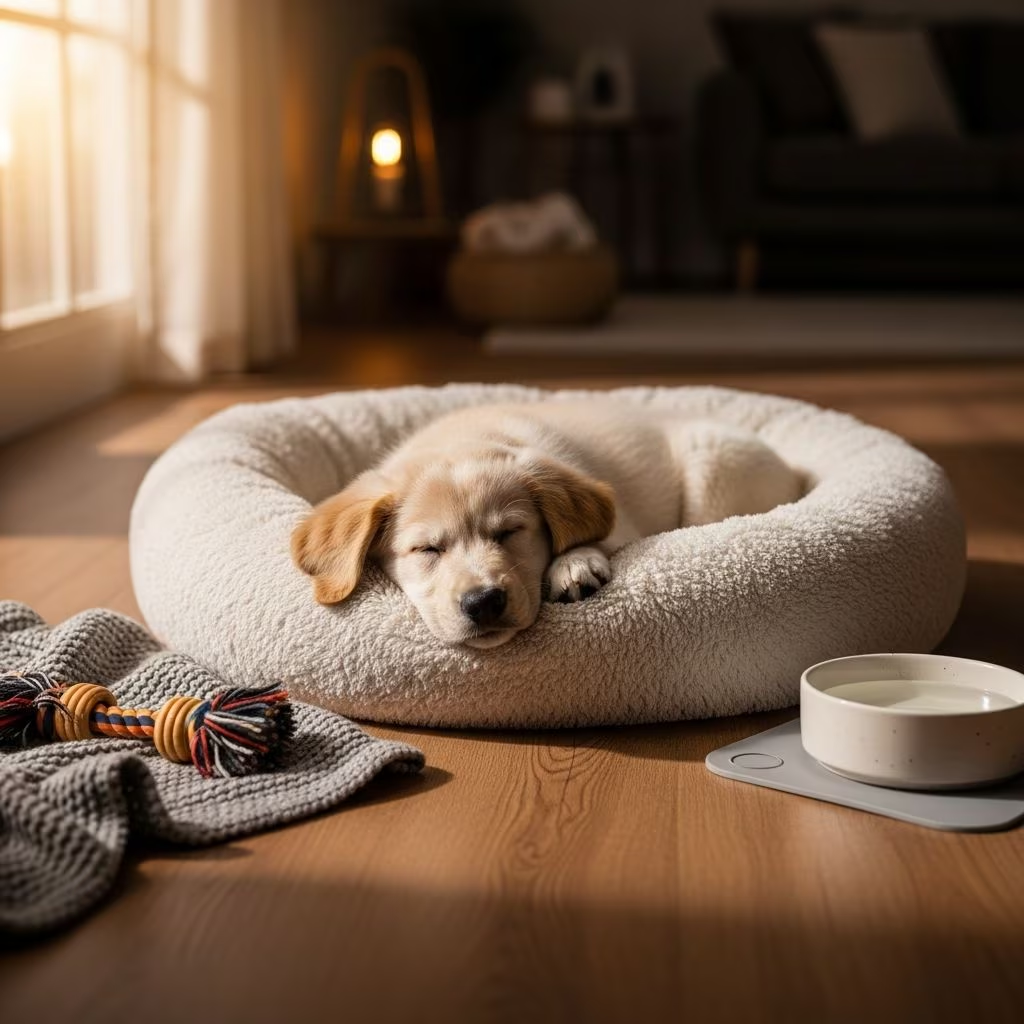
Puppies require significantly more sleep than adult dogs to fuel their rapid growth and development, typically ranging from 18 to 22 hours per day depending on age.
The Science Behind Puppy Sleep Needs
During early life stages, puppies undergo intense physical and neurological changes, making rest a cornerstone of healthy maturation. Sleep supports tissue repair, immune function, and cognitive processing, much like in human infants. Veterinary experts note that depriving puppies of adequate rest can hinder muscle development and learning abilities.
Dogs exhibit a polyphasic sleep pattern, cycling through multiple short periods of rest rather than consolidated nighttime sleep. This aligns with their evolutionary needs for vigilance while allowing recovery in bursts. Puppies amplify this with even shorter cycles, often dozing off mid-play due to exhaustion.
Sleep Requirements Across Puppy Stages
Sleep demands decrease progressively as puppies age, transitioning from near-constant napping to more structured adult-like patterns. The table below outlines average daily totals, broken into daytime and nighttime estimates based on canine health data.
| Age Range | Total Sleep (Hours) | Daytime Naps (Hours) | Nighttime Sleep (Hours) |
|---|---|---|---|
| 0-4 weeks | 20-22 | 10-12 | 10-12 |
| 5-8 weeks | 18-20 | 8-10 | 10-12 |
| 9-12 weeks | 18-20 | 8-10 | 10-12 |
| 13-16 weeks | 16-18 | 6-8 | 10-12 |
| 17-24 weeks | 14-16 | 4-6 | 10-12 |
| 6+ months | 12-14 | 2-4 | 10-12 |
Large breeds often need extra time at the higher end due to faster growth rates, while smaller ones may settle quicker.
Newborn and Early Weeks: Building Foundations
In the first four weeks, puppies mirror human newborns, sleeping up to 22 hours amid frequent nursing sessions. Their tiny bladders and developing thermoregulation demand constant proximity to the dam for warmth and milk. Eyes closed most of the time, they enter deep non-REM sleep rapidly, prioritizing body building blocks like proteins and hormones.
Owners adopting at 8 weeks encounter pups still needing 18-20 hours, split into 4-6 active hours for exploration and potty training. Interruptions here risk overtiredness, leading to cranky behavior or biting.
Adolescent Shifts: Energy Bursts and Fewer Naps
By 13-16 weeks, many puppies hold bladders overnight, signaling a milestone toward 10-12 hour nights. Daytime naps drop to three or fewer, allowing longer play and training windows. Hormonal surges around 6 months further reduce totals to 12-14 hours, mimicking adult recovery sleep.
This phase tests routines: increased independence means more wakeful mischief if naps are skipped. Consistency prevents sleep deficits that exacerbate teething discomfort or separation anxiety.
Decoding Puppy Sleep Cycles
Canine sleep comprises non-REM (deep restoration) and REM (dreaming, with twitches and whines). Cycles last 45 minutes, far shorter than human 90-minute loops, enabling 20+ daily rounds. Puppies favor non-REM for growth hormone release, observable as limp muscles and slow breaths.
REM phases, vivid with paddling legs, consolidate memories from daytime lessons. Monitoring these ensures quality rest—prolonged wakefulness signals stress or health issues.
Signs of Healthy Puppy Sleep
- Quick onset after activity, without resistance.
- Balanced twitching in REM, not excessive thrashing.
- Waking refreshed, eager for interaction.
- Consistent cycles aligning with meals and potty times.
Creating the Ideal Sleep Environment
A dedicated, dim crate mimics den safety, curbing nighttime wanderings. Place it in a quiet family area for security, lined with soft bedding away from drafts. White noise machines or covered crates block stimuli, promoting deeper non-REM dives.
Temperature control matters: 68-72°F suits most breeds. Toys? Minimal at bedtime to avoid stimulation; reserve for daytime.
Daily Routines for Optimal Rest
Anchor schedules around age-appropriate wake windows—2 hours max for 8-week-olds, extending to 4 by 16 weeks. Sample for a 12-week pup:
- 7 AM: Wake, potty, breakfast.
- 8-10 AM: Play/train, then 2-hour nap.
- 12 PM: Lunch, short walk, 1-2 hour nap.
- 3 PM: Socialization, potty, another nap.
- 6 PM: Dinner, evening play/potty.
- 9 PM: Bedtime routine, crate for 8-10 hours (with midnight potty if needed).
Last meal 3 hours pre-bed prevents accidents. Dim lights signal wind-down.
Troubleshooting Sleep Disruptions
Frequent wakings? Rule out potty needs first—pups under 16 weeks max 6-8 hour stretches. Hunger from growth spurts calls for measured increases. Overtired zoomies mean enforced naps; ignore pleas for play.
Breed variations: brachycephalics (e.g., Bulldogs) snore more due to airways, needing elevated beds. Giants like Great Danes demand orthopedic support for joint health.
Health Red Flags in Sleep
- Sudden increases: Pain or illness.
- Restlessness: Parasites, allergies.
- Excessive lethargy: Nutritional gaps or infection.
- Consult vets for patterns persisting beyond adjustment periods.
Long-Term Benefits of Good Sleep Habits
Puppies trained to self-soothe early mature into calm adults with fewer anxiety issues. Quality rest bolsters immunity, curbing vet visits, and enhances trainability via better focus. By one year, expect 11-13 total hours, mostly nocturnal.
Track progress weekly; apps or journals log nap durations, aiding tweaks. Parental modeling—your calm bedtime cues theirs.
Frequently Asked Questions
How many naps does a puppy need daily?
8-week-olds take 5 naps; this drops to 3-4 by 16 weeks, consolidating further.
Can puppies sleep too much?
Within age norms, no—but excesses signal illness. Balance with gentle stimulation.
When do puppies outgrow nighttime potty breaks?
Typically 16-20 weeks, varying by size and training.
Is crate training essential for sleep?
Highly recommended for safety and routine, fostering independence.
Do all breeds sleep the same amount?
No—larger breeds need more due to growth; working breeds stay alert longer.
References
- Puppies Sleep a Lot—This Is What Their Sleep Schedule Is Like — Rover.com. 2023. https://www.rover.com/blog/how-much-sleep-do-puppies-need/
- Puppy Sleep Schedule by Age — PetPLAY.com. 2023. https://www.petplay.com/blogs/tips/puppy-sleep-schedule-by-age
- National Puppy Day: How Long Do Puppies Need to Sleep? — Freshpet.com. 2023. https://www.freshpet.com/blog/how-long-do-puppies-need-to-sleep
- How much sleep do puppies need? — Vets4Pets. 2024-01-15. https://www.vets4pets.com/pet-health-advice/dog-advice/how-much-do-puppies-sleep/
- Understanding Sleep Cycle in Dogs — Soothe and Settle. 2023. https://sootheandsettle.com/blogs/anxiety-in-dogs/understanding-sleep-cycle-in-dogs
- Understanding Your Dog’s Sleeping Patterns — AKC Reunite. 2023. https://www.akcreunite.org/dogs-sleeping-patterns/



