

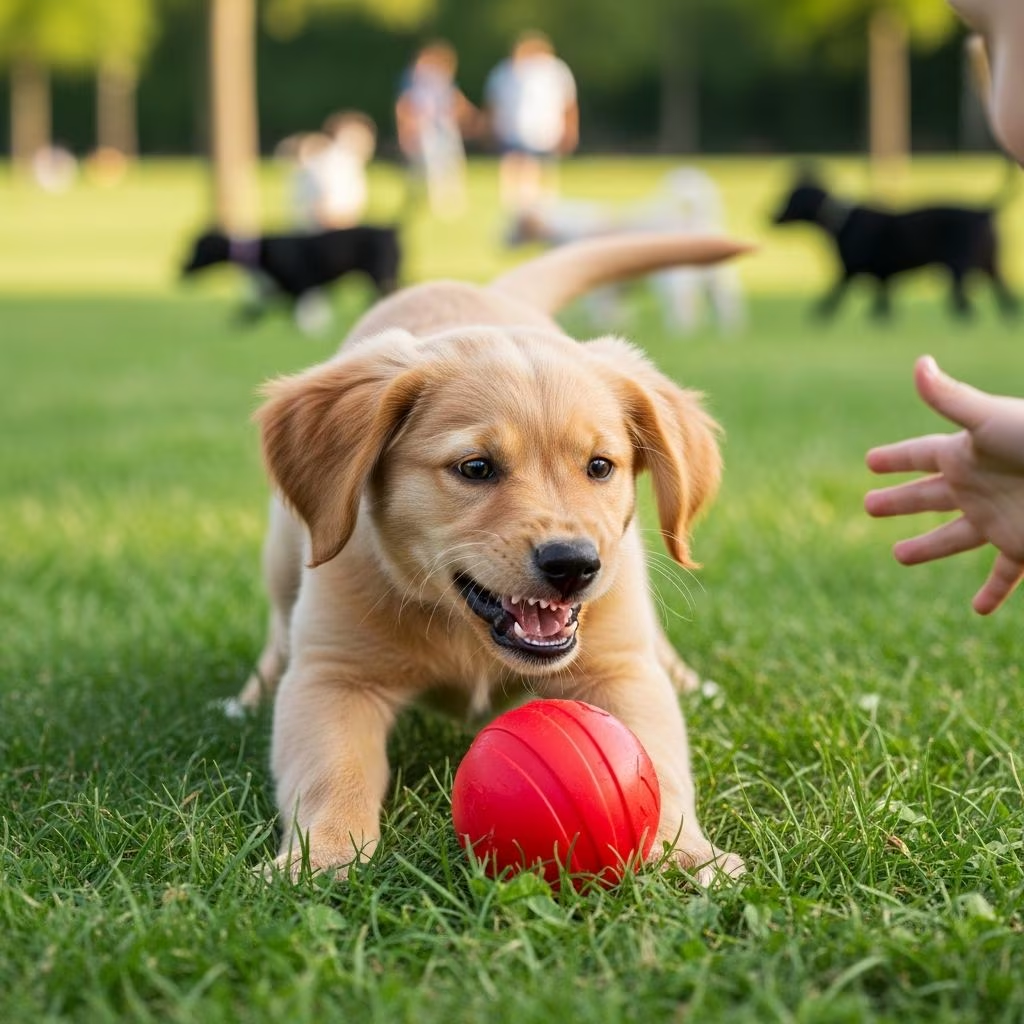
Resource guarding occurs when puppies protect items they value, such as food, toys, or spaces, often displaying growls, stiff postures, or snaps to deter others. Early intervention through prevention and positive training prevents escalation into serious aggression.
Understanding the Instinct Behind Resource Guarding
Puppies naturally guard resources as a survival instinct inherited from wild ancestors who competed for limited food and shelter. In domestic settings, this manifests when a pup perceives a threat to their bowl, chew, or resting spot.
Common triggers include high-value items like bones or favorite toys. Unlike play, guarding shows tense body language: raised hackles, hard stare, or lip curling. Recognizing these early signs allows owners to address issues before they intensify.
Why Puppies Develop Guarding Behaviors
Several factors contribute to resource guarding in young dogs. Genetic predispositions vary by breed; some herding or terrier types show stronger tendencies due to selective breeding for protective traits.
- Early Environment: Puppies from competitive litters or stressful breeding situations learn to defend resources aggressively from a young age.
- Socialization Gaps: Limited exposure to other dogs or people can heighten possessiveness, viewing approaches as threats.
- Past Experiences: If resources were scarce or forcibly taken, anxiety builds, leading to defensive reactions.
- Accidental Reinforcement: Owners backing away from a growl inadvertently teaches the puppy that aggression works.
Multi-dog homes amplify risks, as competition for shared items sparks conflicts. Management like separate feeding areas is crucial.
Spotting Early Warning Signs in Your Puppy
Observe your puppy during meals or play. Subtle cues include freezing over an item, avoiding eye contact while hovering, or rapid eating. Escalation might involve low growls or air snaps.
| Behavior Level | Description | Action Needed |
|---|---|---|
| Mild | Stiff body, avoids approach | Begin prevention trades |
| Moderate | Growl or snap warning | Management + training |
| Severe | Bite or lunge | Professional help immediately |
Use this table to assess severity and respond appropriately. Never punish, as it worsens fear.
Proactive Prevention Strategies for New Puppy Owners
Prevention starts on day one. Hand-feeding meals builds positive associations with human hands near food. Approach calmly, offer treats, and step away without removing the bowl.
Provide abundance: multiple toys, water stations, and rest areas reduce scarcity mindset. In multi-pet homes, feed separately using crates or gates.
- Rotate toys to prevent over-attachment.
- Practice daily “touch” games where you handle items gently.
- Avoid free-feeding; use scheduled meals for control.
Step-by-Step Training Techniques to Build Trust
Focus on counterconditioning: change emotional responses from fear to anticipation. Start at a distance where puppy stays relaxed.
- Teach “Drop It” and “Leave It”: Use low-value items first. Offer trade with higher-value treat, praise heavily upon compliance.
- Desensitization Drills: Walk by food bowl at safe distance, tossing treats. Gradually close gap over sessions.
- Trading Protocol: Never force removal. Say “drop,” present better item, allow return if desired to empower choice.
- Recall Integration: Call puppy away from guarded item for rewards, preventing guarding scenarios.
Consistency across household members is key. Document progress in a journal to track improvements.
Management Tools for Immediate Safety
While training, use barriers: baby gates for feeding zones, crates for chew time. Remove triggers like high-value bones during unsupervised periods.
In multi-dog setups, supervised interactions only. Shared positive activities like walks strengthen bonds without resource competition.
Handling Resource Guarding in Multi-Pet Households
Dogs instinctively avoid sharing valuables. Prevent rehearsed guarding by eliminating opportunities: separate play areas, no communal toys.
Strengthen inter-dog relationships through joint training or playdates in neutral spaces. Monitor for bullying dynamics and adjust accordingly.
Common Mistakes to Avoid
Don’t wrestle items away—this heightens fear. Punishing growls suppresses warnings, risking bites without cues.
- Avoid chasing puppy with contraband; trade instead.
- Never disturb during meals without prior conditioning.
- Consistent rules prevent mixed signals.
When to Seek Professional Help
If growls progress to bites or occur frequently, consult a certified trainer using force-free methods. Severe cases may need veterinary behaviorists for underlying anxiety.
Early professional input prevents bites, ensuring safety around kids or visitors.
FAQs on Puppy Resource Guarding
Is resource guarding normal in puppies?
Yes, it’s a common instinct but should be managed to prevent aggression.
Can resource guarding be cured?
With consistent training and management, most cases improve significantly.
How long does training take?
Weeks to months, depending on severity and consistency.
Does neutering help?
It may reduce some aggression but doesn’t address guarding directly; training is essential.
What if my puppy guards me from others?
This may be fear reactivity, not true guarding; professional assessment recommended.
Long-Term Success Tips
Maintain training lifelong. Enroll in obedience classes for socialization. Regular vet checks rule out pain contributing to irritability.
Celebrate small wins to stay motivated. A well-adjusted puppy grows into a confident adult dog.
References
- Preventing Puppy Resource Guarding — American Kennel Club. 2023-05-15. https://www.akc.org/expert-advice/training/preventing-resource-guarding/
- Why Resource Guarding in Dogs Is a Problem & What to Do About It — Cincinnati Family Vet. 2024-02-10. https://www.cincinnatifamilyvet.com/services/dogs/blog/why-resource-guarding-dogs-problem-what-do-about-it
- How to Prevent Resource Guarding in a Multiple-dog Household — Clicker Training. 2023-11-20. https://clickertraining.com/how-to-prevent-resource-guarding-in-a-multiple-dog-household/
- Resource Guarding Prevention in Puppies — DeMarinis Dog Training. 2024-01-08. https://www.demarinisdogtraining.com/blog/possession-prevention-in-puppies
- How to Prevent Resource Guarding in Dogs — Every Dog Austin. 2023-09-12. https://www.everydogaustin.org/post/how-to-prevent-resource-guarding-in-dogs
- Food Guarding — ASPCA. 2022-07-18. https://www.aspca.org/pet-care/dog-care/common-dog-behavior-issues/food-guarding
- Resource Guarding in Dogs: What to Do and NOT Do — Preventive Vet. 2024-03-05. https://www.preventivevet.com/dogs/resource-guarding-in-dogs



