

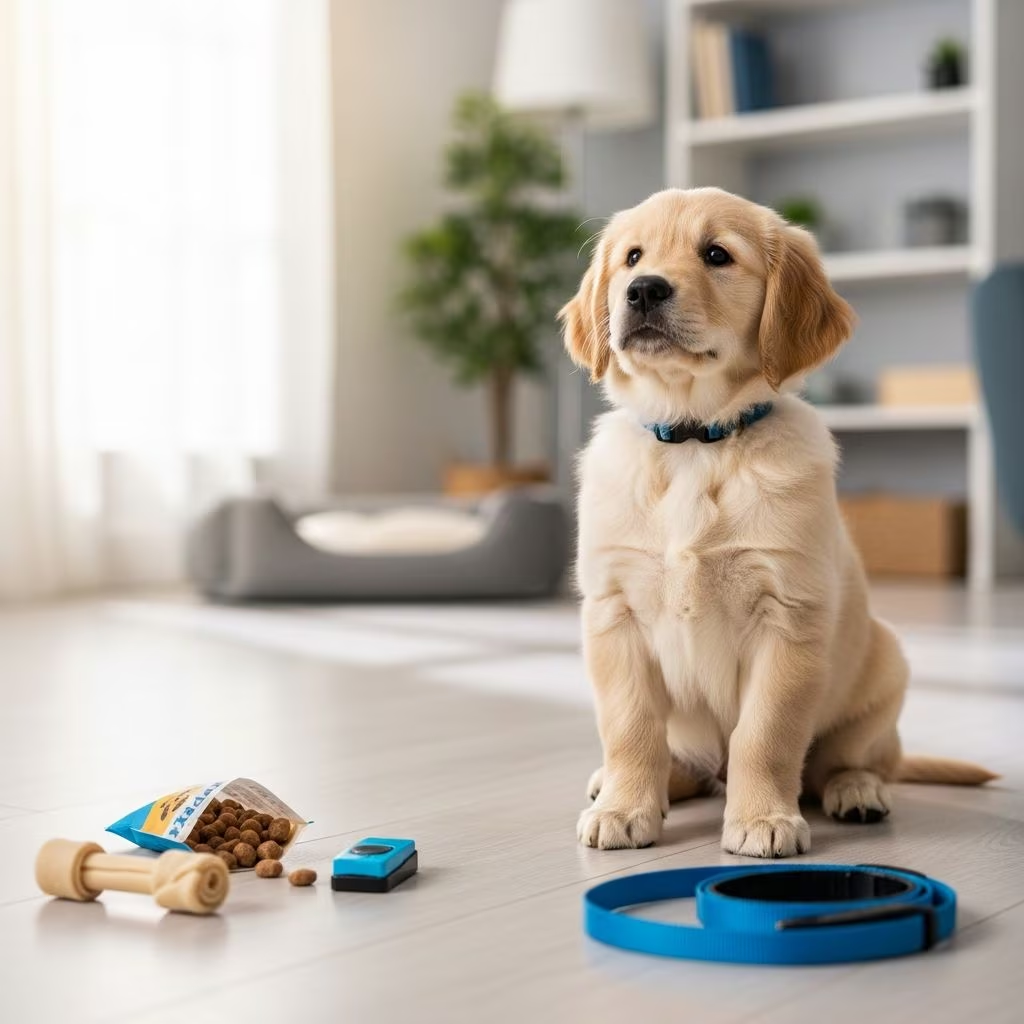
Bringing a young puppy into your home marks the start of an exciting journey filled with learning and bonding. Effective preparation and structured training lay the foundation for a harmonious relationship, preventing common issues like destructive chewing or poor leash manners. This guide outlines key steps from initial setup to advanced skills, tailored to your puppy’s developmental stages.
Setting Up Your Home for Puppy Success
Before your puppy arrives, create a safe environment to ease the transition. Designate a quiet area with easy-to-clean flooring for initial confinement, equipped with essentials like food and water bowls, bedding, and toys. Secure hazards such as electrical cords, small objects, and toxic plants to avoid accidents.
- Essential supplies: Collar, leash, crate, food, treats, chew toys, enzyme cleaner for accidents.
- Safety measures: Baby gates for room access, puppy-proof trash cans, closed toilet lids.
A well-prepared space reduces stress and allows focus on positive experiences from the outset.
Establishing Daily Routines Early On
Consistency in feeding, play, and rest builds security for your puppy. Feed three to four meals daily in the same spots and times to predict potty needs. Incorporate short play sessions interspersed with naps, mimicking their natural sleep patterns of up to 20 hours a day.
| Time | Activity | Purpose |
|---|---|---|
| 7 AM | Potty break, breakfast | Start day with routine |
| 9 AM | Play and training | Burn energy, learn basics |
| 12 PM | Lunch, short walk | Maintain schedule |
| 3 PM | Nap in crate | Rest and independence |
| 6 PM | Dinner, evening play | Wind down |
| 9 PM | Final potty, bedtime | Overnight success |
This sample schedule, adaptable by breed and age, promotes predictability and speeds housetraining.
Mastering Housetraining Fundamentals
Housetraining relies on frequent outdoor trips tied to meals, naps, and excitement. Praise immediately after elimination in the designated spot, using a cue like “go potty” to associate the action. Accidents are learning opportunities—clean thoroughly without scolding to avoid fear.
- Observe signs: Sniffing, circling, whining.
- Carry puppy outside quickly, especially under 12 weeks.
- Reward profusely; ignore indoor mistakes.
- Gradually extend intervals as control improves.
Most puppies achieve reliability by 4-6 months with patience.
Introducing the Crate as a Safe Haven
A crate mimics a den, aiding housetraining and preventing mischief when unsupervised. Select one fitting your puppy’s adult size, with a divider for growth. Make it inviting with treats and meals inside, starting with short, positive sessions.
- Feed meals in crate.
- Practice door closures briefly.
- Extend to naps and overnight.
- Avoid using as punishment.
Proper introduction fosters self-soothing and travel readiness.
Socialization: Building a Fearless Foundation
The critical window from 3-14 weeks shapes lifelong confidence. Expose puppies to diverse stimuli—people, animals, noises, surfaces—positively and gradually. Enroll in puppy classes for safe interactions post-vaccinations.
Track exposures in a journal:
- Umbrellas, strollers, crowds.
- Gentle children, friendly dogs.
- Car rides, household appliances.
Under-socialization risks fear aggression; proactive steps ensure adaptability.
Age-Specific Training Milestones
Weeks 8-12: Building Core Skills
Focus on name recognition, sitting, and gentle handling. Use high-value treats for 3-5 minute sessions. Teach boundaries by redirecting mouthing to toys, withdrawing attention for rough play.
Key commands:
- Sit: Lure with treat over nose, reward butt-to-ground.
- Come: Call cheerfully, reward approach.
- No: Redirect, not yell.
Short attention spans demand fun, frequent reps.
Weeks 12-16: Expanding Obedience
Introduce leash walking indoors, down, and leave-it. Practice bite inhibition by yelping and pausing play. Rotate chews to manage teething.
Progress to combined sequences like sit-stay-come for engagement.
Months 4-6: Refining and Proofing
Master stay with distance/distraction, heel on walks, drop-it for safety. Short public outings build real-world skills. Energy management via puzzles and walks curbs jumping.
Common Challenges and Solutions
Puppies test limits; address issues proactively.
| Issue | Solution |
|---|---|
| Nipping/Jumping | Freeze attention, reward calm; teach sit for greetings. |
| Chewing | Provide varied toys, supervise, bitter sprays if needed. |
| Leash Pulling | Stop walking, reward slack leash. |
| Fearfulness | Desensitize slowly with treats. |
Consistency across family prevents confusion.
Tools and Techniques for Lasting Results
Positive reinforcement—treats, praise, play—outperforms punishment. Clickers mark exact behaviors precisely. Track progress weekly to celebrate wins and adjust.
Mealtime training: Require sits before kibble release, building impulse control.
Health and Nutrition Support for Training
Balanced puppy food fuels brain development. Regular vet checkups ensure vaccinations align with socialization. Exercise matches energy levels to enhance focus.
FAQs
How often should I train my puppy?
Multiple 5-15 minute sessions daily, integrated into routines for best retention.
When can I start obedience classes?
After initial vaccines, around 10-12 weeks for safe socialization.
What if my puppy regresses in housetraining?
Revisit schedule, rule out medical issues, increase supervision.
Is crate training cruel?
No, when introduced positively; it’s a comforting space, not isolation.
How do I choose the right toys?
Variety in textures/sizes; supervise to teach appropriate chewing.
Long-Term Commitment to Excellence
Training evolves beyond puppyhood into lifelong refinement. Patient, joyful methods yield a devoted companion. Consistent effort now prevents future headaches, fostering mutual trust.
References
- Puppy Training Guide & Behavior Timeline — Spot & Tango. 2023. https://www.spotandtango.com/blog/puppy-training-guide
- Complete Puppy Training Schedule by Age — The Puppy Academy. 2020-08-24. https://www.thepuppyacademy.com/blog/2020/8/24/complete-puppy-training-schedule-by-age
- The Ultimate 8-Week Puppy Schedule & Training Guide — Zigzag. 2023. https://zigzag.dog/en-us/blog/puppy-training/training-basics/ultimate-puppy-training-guide/
- Complete Puppy Training Guide for New Dog Owners — Sniffspot. 2023. https://www.sniffspot.com/blog/dog-training/complete-puppy-training-guide-for-new-dog-owners
- Basic Puppy Training 101 — Purina US. 2023. https://www.purina.com/articles/dog/puppy/training/puppy-training
- Puppy Training Timeline — American Kennel Club (AKC). 2023. https://www.akc.org/expert-advice/training/puppy-training-timeline-teaching-good-behavior-before-its-too-late/



