
Puppy Power: How Veteran Dogs Mentor Newcomers
Discover how seasoned dogs naturally guide puppies in manners, routines, and social skills for faster, stress-free training.
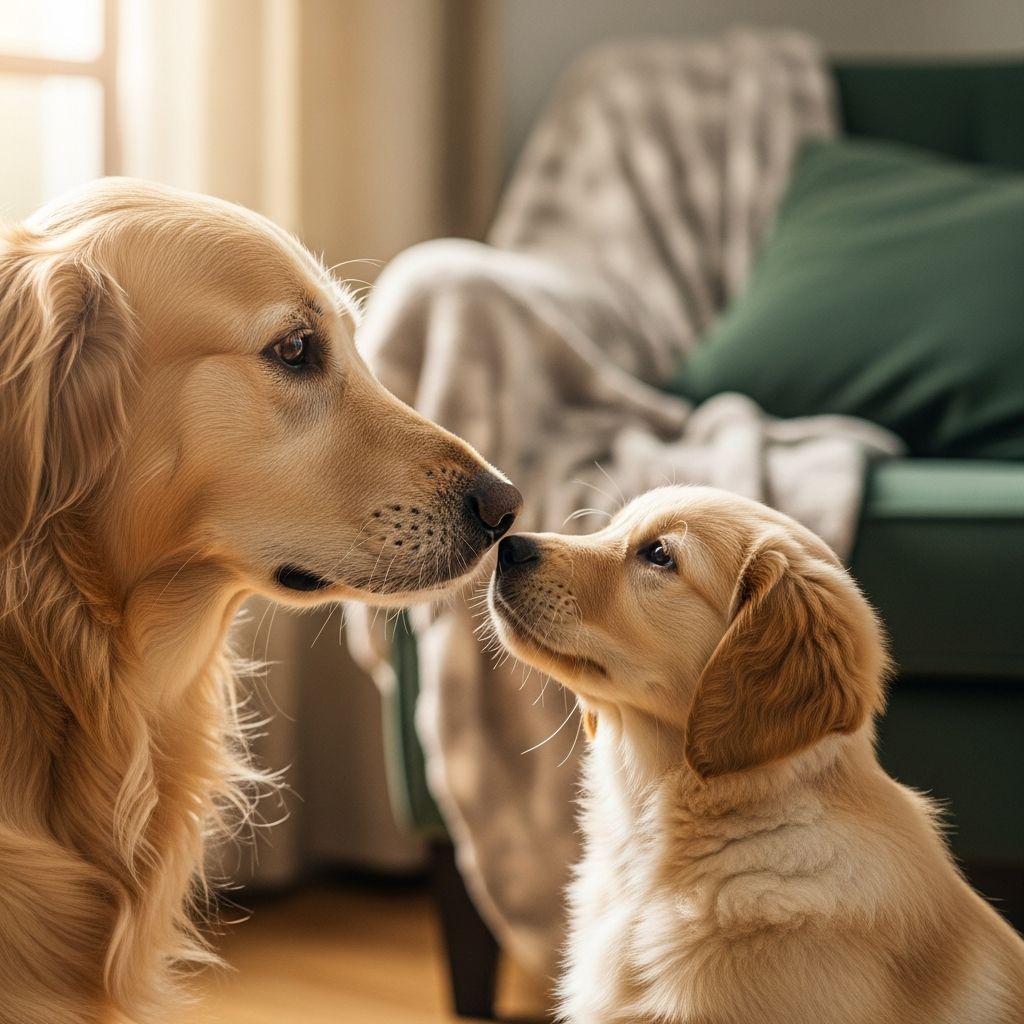
Bringing a new puppy into a home with an established dog can transform the training process. Seasoned canines act as living tutors, demonstrating proper conduct through everyday interactions. This natural mentorship leverages a puppy’s innate drive to observe and copy, leading to quicker adaptation and fewer behavioral hiccups.
The Instinctive Drive Behind Canine Copying
Dogs are wired for social connectivity, making them keen observers of pack mates. From birth, puppies tune into the actions of their mother and siblings, picking up survival basics like eating, eliminating, and playing appropriately. This foundational instinct extends to adult households, where a resident dog becomes the puppy’s primary role model.
Research highlights that young dogs excel at emulating calm, confident behaviors from elders. For instance, a puppy watching an older dog settle quietly during mealtime learns to wait patiently instead of lunging. This process, rooted in evolutionary social dependency, fosters pack harmony and eases owner efforts.
Key Mechanisms of Inter-Dog Learning
Social learning in dogs unfolds through specific pathways, each contributing uniquely to a puppy’s development.
- Allelomimetic Behavior: This refers to the automatic tendency to mirror group actions. Puppies naturally join in when an older dog runs, sits, or explores, reinforcing coordinated pack dynamics.
- Local Enhancement: Here, a puppy’s attention is drawn to a rewarding activity demonstrated nearby. Seeing an elder dig or hop into a vehicle prompts active participation, blending observation with hands-on trial.
- Social Facilitation: The mere presence of a composed adult boosts a puppy’s performance in familiar tasks, like speeding up car entry or door etiquette.
These mechanisms differ from solitary trial-and-error, as the older dog’s example provides context and motivation, shortening the learning curve significantly.
Real-World Applications in Daily Routines
Owners can harness these instincts by structuring environments for positive modeling. Start with basic household protocols:
| Activity | Older Dog’s Role | Puppy Benefit |
|---|---|---|
| House Training | Leads to designated potty spot | Follows scent and location cues instinctively |
| Leash Walking | Maintains steady heel pace | Matches rhythm, reduces pulling |
| Door Manners | Sits calmly before exit | Imitates sit-stay for safe passage |
| Mealtime | Waits patiently for bowl | Learns impulse control |
Supervise these sessions to ensure the veteran dog remains comfortable. Reward both for successes, strengthening the mentorship bond.
Building a Balanced Multi-Dog Dynamic
While older dogs offer invaluable lessons, balance is key to prevent overburdening the mentor. Puppies instinctively follow adults for safety, mirroring elimination spots or play boundaries. However, excessive reliance can lead to frustration if the elder grows intolerant.
Introduce interactions gradually. Short, supervised playdates allow puppies to absorb cues without overwhelming the senior. Separate rest times preserve the older dog’s energy, ensuring sustained positive influence.
Advanced Skills Through Pack Observation
Beyond basics, veteran dogs impart nuanced behaviors. Hunting pairs demonstrate scent tracking, while rescue teams in alpine settings self-organize tasks—two lie protectively, one seeks aid—purely from observed precedents. In homes, this translates to alerting to doorbells or ignoring distractions.
Owners amplify this by pairing commands with demonstrations. Call the elder first during recalls; the puppy shadows eagerly. Over time, direct the novice independently, fading the model’s presence.
Potential Pitfalls and How to Avoid Them
Not all lessons are ideal. An anxious elder might teach fear of strangers or noises, imprinting avoidance. Assess your dog’s temperament beforehand; confident, well-adjusted mentors yield best results.
Watch for signs of elder irritation: stiffening, growling, or avoidance. Intervene promptly to redirect, preventing escalation. Never force corrections onto the older dog—puppies lack finesse to read limits, risking conflicts.
Science-Backed Strategies for Success
Studies affirm dogs’ observational prowess peaks in youth, with litter dynamics teaching bite inhibition via yelps and pauses. Extend this to adults by proximity training: leash both side-by-side for walks, praising calm parallels.
For recall, exercise in secure areas. Veteran dashes on cue; puppy pursues, earning joint treats. This group reinforcement cements obedience.
Long-Term Benefits for Household Harmony
Multi-dog homes with mentorship see reduced separation anxiety and enhanced cooperation. Puppies mature faster, adopting routines seamlessly. Elders gain purpose, often revitalizing playfulness.
Track progress weekly: note improvements in sit-stays or potty accuracy. Adjust as puppy gains independence, transitioning to solo drills.
FAQs on Dog-to-Dog Mentoring
Q: At what age does social learning peak in puppies?
A: From 3-12 weeks during socialization, but allelomimetic tendencies persist into adulthood, especially with adult guides.
Q: Can a shy older dog mentor effectively?
A: Limited; confident elders model best. Pair with professional training if needed.
Q: How long until the puppy trains independently?
A: 4-8 weeks for basics, varying by breed and consistency.
Q: What if they fight during learning?
A: Separate immediately; consult a behaviorist for structured intros.
Q: Does this work for rescues?
A: Yes, but assess elder’s tolerance first for smooth integration.
Enhancing the Mentorship with Owner Input
While dogs teach peers organically, human guidance refines outcomes. Use clickers for precise timing during joint sessions. Teach names distinctly to avoid confusion.
Incorporate enrichment: puzzle toys solved by the elder spark puppy curiosity. Group agility builds teamwork, with veteran navigating obstacles first.
Health checks ensure elders handle added activity. Senior diets support stamina, preventing fatigue.
References
- Young Dogs Learn From Older Well-Behaved Dogs — Whole Dog Journal. 2023. https://www.whole-dog-journal.com/training/young-dogs-learn-from-older-well-behaved-dogs/
- Adult Dogs are Great Puppy Teachers — The Honest Kitchen. 2022-10-15. https://www.thehonestkitchen.com/blogs/pet-tips-training/adult-dogs-great-puppy-teachers
- How Dogs Learn from Other Dogs — Holiday Barn Pet Resorts. 2024. https://holidaybarn.com/blog/how-dogs-learn-from-other-dogs/
- Adult Dogs and New Puppies: Understanding Both Dogs’ Needs — American Kennel Club (AKC). 2023-05-20. https://www.akc.org/expert-advice/training/adult-dogs-and-new-puppies/
- Do older dogs guide younger dogs? — Doggie Dude Ranch. 2023. https://dogcatranch.com/do-older-dogs-guide-younger-dogs/
Similar Articles








Read full bio of Sneha Tete




