

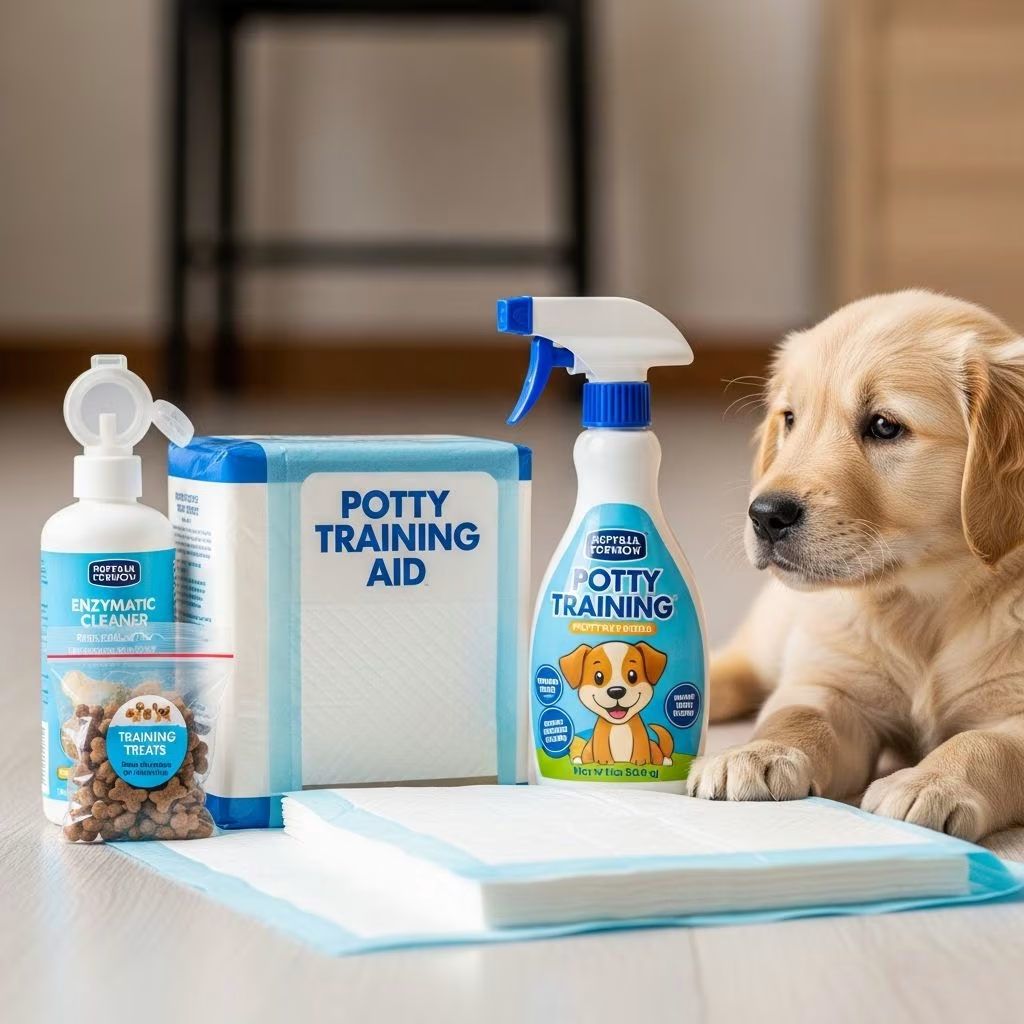
Housebreaking a new puppy ranks among the most critical tasks new dog owners face, and while traditional methods like establishing schedules and positive reinforcement remain essential, modern training products can significantly accelerate the process. Potty training sprays, enzymatic cleaners, and specialized aids work together with behavioral techniques to create an effective housebreaking strategy that sets puppies up for long-term success.
Understanding Puppy Bladder Control Development
Before exploring training products, it’s important to understand canine physiology. Puppies cannot control their bladder capacity until they mature, which means realistic expectations are crucial for successful housebreaking. Young puppies typically can hold their bladder for approximately one hour per month of age. A two-month-old puppy should be capable of holding it for roughly two hours, while a three-month-old can manage about three hours. This biological reality means that frequent outdoor breaks are non-negotiable during early training stages.
Understanding these developmental stages helps owners recognize that accidents are inevitable during the early weeks and are not indicators of failure. Patience combined with strategic use of training aids creates the optimal environment for successful housebreaking.
The Role of Scent-Marking Products in Training
Puppy potty training sprays serve a specific function in housebreaking by leveraging dogs’ natural inclination to eliminate in areas where they detect previous bathroom activity. These products contain scent markers that signal to puppies that a particular location is an appropriate elimination zone. When applied to designated potty areas, these sprays create olfactory cues that guide puppies toward correct bathroom behavior.
The mechanism works by tapping into canine instinct. Dogs naturally prefer to eliminate where they smell previous waste, which is why outdoor potty spots become increasingly effective as they accumulate scent over time. Commercial training sprays accelerate this natural process by immediately establishing a strong olfactory marker.
Key benefits of potty training sprays include:
- Establishing a clear elimination zone through scent communication
- Reducing the time needed for puppies to identify appropriate bathroom locations
- Working effectively in apartment settings where outdoor space is limited
- Providing consistency when moving to new homes or environments
- Supporting puppies with learning disabilities or anxiety-related housebreaking delays
Enzymatic Cleaners: Preventing Repeat Accidents
Perhaps equally important as training sprays are enzymatic cleaners designed specifically for pet accidents. Standard household cleaners may eliminate visible stains and odors perceptible to humans, but they often fail to completely break down the uric acid crystals in pet urine. These residual odor compounds remain detectable to dogs’ highly sensitive noses, effectively marking those spots as appropriate elimination zones.
Enzymatic cleaners contain biological enzymes that chemically break down uric acid and other organic compounds in urine and feces, eliminating odors at the molecular level. This prevents puppies from returning to previously soiled areas and is critical for breaking the cycle of repeated accidents in the same locations.
When using enzymatic cleaners:
- Apply thoroughly to affected areas and allow adequate contact time as directed
- Use sufficient product to penetrate flooring or carpet rather than just surface treatment
- Follow manufacturer instructions regarding dilution and application methods
- Test on inconspicuous areas first to ensure no discoloration occurs
- Allow complete drying before reintroducing the puppy to the area
Potty Pads and Indoor Training Alternatives
For apartment dwellers or situations where immediate outdoor access is challenging, potty pads represent a transitional training tool. These absorbent mats are designed for indoor use and come in various materials, sizes, and features. Some pads include scent attractants to encourage puppy use, while others have protective backing to prevent floor damage.
Potty pads work most effectively when integrated with a structured training schedule. The process involves establishing a designated indoor elimination zone where puppies learn to use the pads consistently. Many owners later transition puppies from indoor pads to outdoor elimination by gradually moving the pad closer to the door, then outside.
Considerations for potty pad training:
- Pads should be placed in easily accessible, quiet locations away from sleeping or eating areas
- Multiple pads may be needed initially to increase probability of success
- Puppies should be taken to pads frequently, especially after eating, playing, or waking
- Soiled pads should be replaced regularly to maintain hygiene and effectiveness
- Transition to outdoor elimination typically takes several additional weeks
Establishing Effective Potty Training Schedules
While products support the training process, successful housebreaking fundamentally depends on consistent scheduling. Taking puppies out at predictable times creates the behavioral foundation upon which all training products become more effective.
A comprehensive potty schedule should include outdoor breaks:
- Immediately upon waking, especially after overnight crate confinement
- Within 10 minutes after playing or vigorous activity
- Approximately 15 minutes after eating or drinking
- Before bedtime and before extended crate confinement
- At regular intervals during the day, based on age-appropriate bladder capacity
Young puppies benefit from hourly outdoor breaks during initial training phases, while older puppies can gradually extend intervals as bladder control develops.
Recognizing Pre-Elimination Signals
Successful training depends on owners learning to interpret their puppy’s communication signals. Puppies typically display distinctive behaviors before they need to eliminate, and recognizing these cues allows owners to provide timely outdoor access.
Common pre-elimination signals include:
- Sniffing the ground or their rear end
- Walking in circles or pacing
- Whining, barking, or scratching at doors
- Sudden stops during play or activity
- Sudden running or rushed movement across the room
- Sniffing along walls or corners
- Restlessness or inability to settle
Having a leash readily accessible near doors enables rapid response to these signals. Quick action when detecting these cues significantly accelerates the training timeline.
Crate Training as a Potty Management Tool
Crates serve multiple functions in puppy housebreaking beyond providing safe confinement. Dogs naturally avoid eliminating in their sleeping areas, making appropriately sized crates valuable training aids. A crate should be large enough for the puppy to stand, turn around, and lie down comfortably, but not so spacious that the puppy can eliminate in one corner while sleeping elsewhere.
Crate training principles:
- Always take puppies directly to outdoor potty areas immediately after crate release
- Never use the crate as punishment, which creates negative associations
- Gradually extend crate time as bladder capacity improves
- Use the month-plus-one rule: a puppy’s age in months plus one equals maximum comfortable crate hours
- Maintain nighttime crate schedules even after daytime training progresses
Positive Reinforcement and Reward Systems
While training products create physical and olfactory frameworks for housebreaking, positive reinforcement provides the behavioral motivation that makes training successful. Immediate praise and rewards when puppies eliminate outdoors teach them that this behavior produces desirable outcomes.
Effective reinforcement strategies include:
- Providing high-value treats immediately after successful outdoor elimination
- Offering enthusiastic verbal praise such as “good boy” or “good girl”
- Allowing immediate playtime or outdoor activity as reward
- Maintaining consistency so puppies learn to expect rewards for correct behavior
- Avoiding punishment for accidents, which creates fear and complicates training
Managing Feeding Schedules for Predictable Elimination
Strategic meal timing directly correlates with successful housebreaking. When puppies eat at consistent times, they develop predictable elimination schedules, allowing owners to anticipate potty breaks more accurately. Most puppies produce bowel movements within 30 minutes after eating, making post-meal outdoor time particularly effective.
Feeding schedule best practices:
- Establish consistent meal times and stick to them daily
- Provide meals in the same location to create routine associations
- Remove uneaten food after 15-20 minutes to maintain predictability
- Stop feeding at least three hours before bedtime to reduce nighttime accidents
- Remove water access one hour before sleep
- Always take puppies outside 10-15 minutes after meals
Addressing Training Challenges and Special Situations
Weather conditions can complicate potty training, particularly for puppies experiencing their first exposure to rain or snow. Many puppies develop anxiety about eliminating in adverse weather, requiring additional patience and encouragement. Keeping an umbrella handy to provide weather protection and offering extra treats for outdoor elimination during inclement conditions helps overcome these challenges.
When traveling with puppies, maintaining consistent potty schedules and providing frequent breaks preserves training progress. If leaving puppies with caregivers, providing detailed written instructions about schedules and routines ensures consistency during the owner’s absence. Moving to new homes requires restarting training elements, as puppies must learn new layouts and outdoor locations.
Training Bells and Communication Tools
Once puppies understand the basic concept of designated potty spots, training bells offer a communication bridge between puppy and owner. These specialized bells allow puppies to independently signal their need for outdoor access by nudging or “touching” the bell.
Introducing training bells involves ringing the bell each time you take the puppy outside, creating an association between the sound and outdoor access. Many puppies learn to ring the bell themselves within weeks, providing clear signals when they need to go. However, some puppies may use bells for fun rather than genuine elimination needs, requiring owners to adjust their response accordingly.
Nighttime Training Timeline
Nighttime dryness typically develops later than daytime housebreaking and represents a physiological rather than behavioral achievement. Puppies gradually develop nighttime bladder control as they mature, usually between 4-6 months of age, though some breeds require longer.
Supporting nighttime training:
- Maintain consistent bedtime routines with final outdoor breaks before sleep
- Keep puppies crated at night, which encourages bladder control
- Use waterproof bedding protections if nighttime accidents occur
- Do not restrict water excessively, as puppies need adequate hydration
- Avoid punishing nighttime accidents, which are physiologically inevitable
- Gradually extend nighttime periods as bladder capacity increases
Frequently Asked Questions
How long does puppy potty training typically take?
The timeline varies based on individual puppy development, breed, and owner consistency. Most puppies achieve reliable daytime control between 4-6 months, though complete housebreaking may require 6-12 months or longer. Using training aids and maintaining consistent schedules typically accelerates progress.
Can training sprays be used indoors with potty pads?
Yes, training sprays work effectively with indoor potty pads by creating scent associations that encourage pad use. This is particularly valuable when transitioning puppies from indoor pads to outdoor elimination.
What should I do if my puppy has frequent accidents despite using training products?
Consistent accidents may indicate insufficient schedule frequency, incomplete enzymatic cleaning of soiled areas, or underlying medical issues. Consulting a veterinarian helps rule out urinary tract infections or other health conditions that complicate housebreaking.
Are enzymatic cleaners necessary, or will regular cleaners work?
Regular cleaners are insufficient because they don’t eliminate uric acid crystals that remain detectable to dogs. Without complete odor removal, puppies continue to use previously soiled areas. Enzymatic cleaners are strongly recommended for consistent success.
Should I punish accidents or use corrective techniques?
Punishment is counterproductive and often makes training harder by creating fear and teaching puppies to hide when eliminating. Positive reinforcement focused on rewarding outdoor elimination produces superior long-term results.
References
- Tips for Potty Training Your New Puppy — Hill’s Pet Nutrition. https://www.hillspet.com/dog-care/training/puppy-potty-training-tips
- Puppy Potty Training Timeline and Tips — American Kennel Club. https://www.akc.org/expert-advice/training/puppy-potty-training-timeline/
- Free Tips for Training a Puppy; Obedience to Potty Training — Dogsgone Problems. https://www.doggoneproblems.com/olive/
- How To Toilet Train Your Puppy or Dog — Royal Society for the Prevention of Cruelty to Animals (RSPCA). https://www.rspca.org.uk/adviceandwelfare/pets/dogs/training/toilettraining
- Potty-Pad Training Your Dog — Animal Humane Society. https://www.animalhumanesociety.org/resource/potty-pad-training-your-dog



