

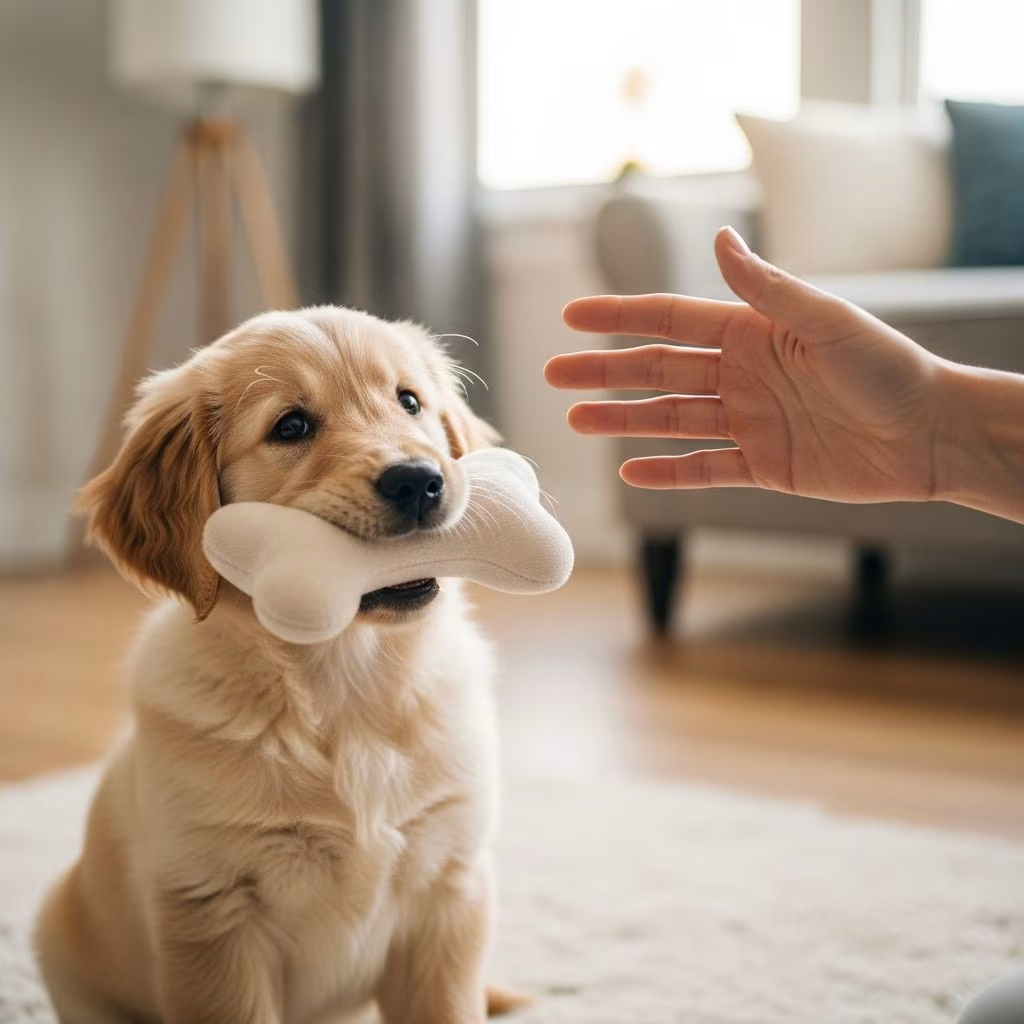
One of the most common behavioral challenges dog owners face is when their puppy begins displaying protective tendencies over toys, food bowls, beds, and other valued items. This behavior, known as resource guarding or possession aggression, can develop into a serious problem if left unaddressed during the critical early months of a puppy’s life. Understanding what triggers these behaviors and implementing preventative strategies from the outset creates a foundation for a well-adjusted adult dog that trusts its human companions and responds appropriately to handling and sharing.
Recognizing the Early Warning Signs
Resource guarding manifests through a progression of behavioral indicators that escalate in severity if ignored. Initial signs may appear subtle—a slight stiffening of the body, a pause in eating, or a direct stare when a person approaches. These early warning signals are crucial opportunities to intervene before the behavior solidifies. As the behavior develops without correction, puppies may progress to growling, showing teeth, snapping, and ultimately biting to maintain control over their possessions.
The critical insight from behavioral professionals is that each escalation reinforces the puppy’s perception that defensive behaviors work. When an owner backs away after their puppy growls—even unintentionally—the puppy learns that growling successfully protects their resources, making the behavior more likely to occur and intensify in future situations.
Understanding the Root Causes and Risk Factors
Resource guarding does not emerge randomly. Several interconnected factors contribute to its development in puppies. Genetic predisposition plays a significant role; certain breeds have been selectively bred for behaviors that involve resource control, making them naturally more inclined toward possessive tendencies. Additionally, puppies from poor breeding backgrounds or those exposed to stressful early environments show higher probabilities of developing guarding behaviors.
Beyond genetics, learned associations shape behavior dramatically. If a puppy experiences repeated instances of having items taken away, they learn to anticipate loss and protect accordingly. This learned behavior can become self-perpetuating: the puppy guards because items have been taken before, and owners take items away because the puppy guards. Breaking this cycle requires understanding that prevention and early intervention are far more effective than attempting to correct established patterns.
The Foundation: Establishing Your Household Framework
Before implementing specific training techniques, puppies benefit from a clear household structure that sets expectations for all interactions. One foundational concept involves recognizing that all household items belong to the owner and are temporarily loaned to the puppy. This mental framework, while straightforward, influences how owners approach daily interactions with their pets.
Establishing this structure means maintaining calm, controlled access to toys and other items rather than allowing puppies to accumulate possessions or freely demand play. Owners should direct when play sessions begin and end, determining which toys are available at specific times rather than allowing puppies constant access to everything in the house.
Critical Practices to Avoid
Numerous well-intentioned strategies can inadvertently worsen resource guarding. Understanding what not to do is equally important as knowing proper techniques:
- Hand-snatching from the mouth: Reaching into a puppy’s mouth to remove items teaches the puppy that your approach signals danger to their possessions, directly conditioning them to guard more intensely. When someone repeatedly removes items forcefully, puppies learn that their defensive response is justified.
- Dominance-based corrections: Physically flipping puppies over, grabbing them forcefully, or other confrontational tactics create fear and confusion rather than understanding. These methods damage the human-dog bond and often trigger defensive aggression as the puppy protects itself from perceived threats.
- Chasing puppies with contraband: Pursuing a puppy who has grabbed your sock or other forbidden items teaches them to avoid you when possessing anything. The chase becomes rewarding through play, and the puppy learns that keeping distance while holding items prevents retrieval.
- Interfering with meals: Repeatedly reaching into food dishes or handling puppies while eating creates anxiety around mealtimes and reinforces the need to protect food sources.
Foundational Training Approaches
Effective prevention relies on teaching puppies that human approach and interaction around their possessions predict positive outcomes rather than loss. Two complementary training methodologies accomplish this:
Desensitization and Counter-conditioning: These techniques work together to change a puppy’s emotional response to potentially triggering situations. Desensitization involves gradually exposing puppies to the approach of humans near their resources in controlled, non-threatening ways. Counter-conditioning simultaneously pairs these approaches with positive experiences—treats, praise, or continued play—so the puppy’s automatic emotional reaction shifts from defensive anticipation to positive expectation.
Rather than teaching puppies that humans taking items is acceptable, this approach teaches puppies that humans approaching while they possess items means good things happen. The puppy’s internal dialogue transforms from “Oh no, they’re going to take my toy!” to “Great! When they come near, something wonderful occurs!”
The Give and Take Exchange: Regular practice with controlled exchanges builds puppy confidence and trust. During designated play sessions, the owner occasionally asks the puppy to “give,” briefly removes the toy (three to five seconds), praises the puppy, and immediately returns the toy along with additional reward. This teaches that surrendering items temporarily does not mean permanent loss.
Obedience Skills as Behavioral Foundation
Basic obedience commands serve dual purposes: they establish communication and provide tools for managing problematic situations. Commands such as “sit,” “down,” “sit-stay,” and “down-stay” create structure that helps manage puppy possessiveness in real-world scenarios. When a puppy learns to respond reliably to these cues, owners can redirect attention away from valued items before guarding behaviors intensify.
Additionally, teaching a reliable “drop it” command on verbal cue—reinforced through extensive practice with both low-value and high-value items—provides essential safety tools. Puppies that confidently follow this cue even with their most prized possessions can be quickly removed from escalating situations.
Environmental Management Strategies
Preventing resource guarding does not rely solely on training; thoughtful environmental design significantly reduces opportunities for the behavior to develop. Practical management approaches include:
- Feeding puppies in isolated spaces where they eat undisturbed, away from other family members and pets
- Storing toys and chews so they are unavailable when puppies are unsupervised, preventing them from accumulating possessions
- Separating multiple puppies or household dogs during meals and high-value chew times using barriers, separate rooms, or crates
- Limiting access to items prone to triggering guarding behaviors until puppies demonstrate trustworthy behavior
- Rotating toy availability so puppies do not become possessively attached to specific items
Addressing Food-Specific Guarding
Food guarding often requires specialized approaches because feeding time is inherently associated with resource protection. Rather than traditional recommendations to hand-feed puppies or repeatedly reach into bowls—practices that can increase anxiety—modern approaches emphasize creating positive associations:
- Feed puppies in calm, quiet environments without interference or interruption
- Place food bowls down and walk away, returning them only after meals are complete
- Practice “trade-ups” by offering higher-value food items in exchange for lower-value ones, teaching that human approach means upgrades, not loss
- Gradually desensitize puppies to nearby movement by slowly and silently approaching food areas only during non-feeding times, rewarding calm responses
Recognizing When Professional Help is Necessary
While prevention strategies are highly effective for puppies without established guarding behaviors, some situations warrant immediate professional intervention. Resource guarding that involves actual biting, unpredictable severity levels, or widespread guarding across multiple resource types indicates underlying factors that may require veterinary or behavioral specialist assessment.
Additionally, if initial prevention efforts are ineffective or a puppy shows signs of escalation, consulting a qualified behavior professional prevents minor issues from developing into serious aggression problems. Professional trainers can assess whether the guarding stems from anxiety, learned patterns, or other factors and design individualized management and training plans.
Long-Term Management and Maintenance
Preventing resource guarding is not a one-time effort but an ongoing commitment throughout the puppy’s development. Consistency across all household members ensures that mixed messages do not confuse puppies about expectations. Every family member should follow identical protocols for toy exchange, feeding procedures, and responses to early warning signs.
Regular practice of “give” exchanges, trading exercises, and obedience commands maintains the puppy’s understanding that resource interaction with humans is positive. As puppies mature and demonstrate trustworthy behavior, restrictions can gradually loosen, but the foundation of appropriate responses must remain established through continued reinforcement.
Frequently Asked Questions
Can all puppies develop resource guarding?
While genetic predisposition and early environment increase likelihood, virtually any puppy can develop resource guarding if inadvertently trained to do so through repeated removal of possessions. Prevention through proper handling is therefore essential regardless of breed or background.
Is resource guarding the same as normal territorial behavior?
No. While puppies naturally become more aware of possessions as they mature, resource guarding—characterized by growling, defensive posturing, or aggressive responses—goes beyond normal development and requires intervention.
How long does prevention training take?
Prevention through proper handling and environmental management typically requires consistent application over several months. Many puppies show secure, non-possessive behavior within three to six months of consistent implementation.
What should I do if my puppy already shows guarding behaviors?
If warning signs appear, immediately cease any hand-snatching or confrontational approaches and implement management strategies (separate feeding, limited toy access). Consult a qualified behavior professional to assess severity and develop a desensitization and counter-conditioning plan tailored to your puppy.
Can desensitization training eliminate resource guarding completely?
Properly implemented desensitization and counter-conditioning can reduce resource guarding to near-zero incidents through a combination of training and ongoing management practices. However, some genetic predisposition may persist, requiring lifetime management strategies.
References
- Preventing Puppy Resource Guarding — American Kennel Club. Accessed January 2026. https://www.akc.org/expert-advice/training/preventing-resource-guarding/
- Academy Vet Talk: Resource Guarding in Dogs — Academy for Dog Trainers. Accessed January 2026. https://academyfordogtrainers.com/veterinarian-talks-resource-guarding-in-dogs/
- Resource Guarding Prevention in Puppies — DeMarinis Dog Training. Accessed January 2026. https://demarinisdogtraining.com/possession-prevention-in-puppies/
- How to Prevent Resource Guarding in Dogs — Everyday Dog Austin. Accessed January 2026. https://www.everydogaustin.org/post/how-to-prevent-resource-guarding-in-dogs
- Expectations for the Resource Guarder Dog — Aggressive Dog. Updated February 2025. https://aggressivedog.com/2025/02/01/expectations-for-the-resource-guarder-dog/



