

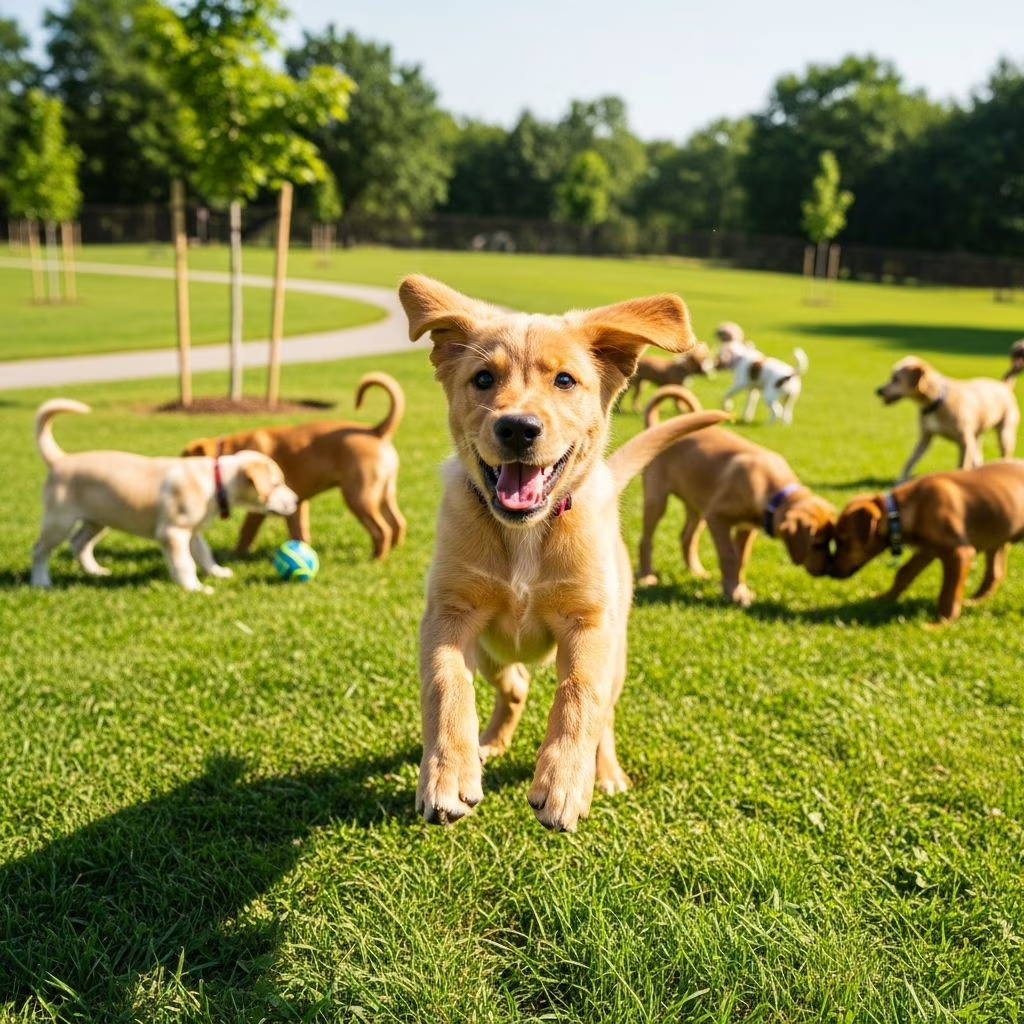
Proper socialization and play during a puppy’s early weeks lay the foundation for a confident, adaptable adult dog. The critical window from 3 to 16 weeks is when puppies form lasting impressions of their world, making structured play and exposure vital for preventing fear and behavioral issues.
Understanding the Critical Socialization Window
Puppies between 3 and 16 weeks enter a prime developmental phase where experiences shape their temperament. During this period, neural pathways solidify based on positive or negative encounters, influencing how they respond to people, animals, and environments long-term.
Exposures must be gradual to avoid overwhelming the pup. Rushing can lead to fear responses like freezing or avoidance, while consistent, rewarding interactions build resilience. Veterinary behaviorists emphasize brief, frequent sessions over intense marathons to mimic natural learning.
Daily Playtime Recommendations by Age
Play needs evolve with a puppy’s growth. Here’s a breakdown tailored to energy levels and physical limits:
- 3-8 weeks: 15-20 minutes total, split into 5-minute bursts. Focus on gentle handling and household sounds to foster security.
- 8-12 weeks: 30-45 minutes, including short walks and toy play. Introduce varied textures like grass or rugs.
- 12-16 weeks: 45-60 minutes, incorporating supervised dog interactions. Build endurance with fetch or tug in controlled settings.
Monitor for fatigue signs like yawning or disinterest, adjusting to prevent overexertion that risks injury to developing joints.
| Age Range | Play Duration | Focus Areas | Sample Activities |
|---|---|---|---|
| 3-8 weeks | 15-20 min | Handling, sounds | Gentle petting, household noises |
| 8-12 weeks | 30-45 min | Textures, people | Short walks, family interactions |
| 12-16 weeks | 45-60 min | Dogs, environments | Supervised playdates, public outings |
Building Confidence Through Human Interactions
Exposure to diverse humans is foundational. Puppies thrive when meeting people of varying ages, sizes, and appearances without pressure. Instruct visitors to let the pup approach first, offering treats to associate strangers with rewards.
Key elements include:
- Different demographics: Children, seniors, bearded individuals, hat-wearers.
- Polite play: Teach toy use over mouthing hands.
- Calm settling: Reward quiet petting sessions after active play.
Practice object trades: Show a treat while the pup holds a toy, praising the drop. This prevents resource guarding and encourages cooperation.
Safe Play with Other Dogs
Controlled dog interactions prevent roughhousing traumas. Select calm, vaccinated adults who gently correct puppy antics. Watch body language—relaxed tails and play bows signal fun; stiff postures mean intervene.
Start with one-on-one in fenced yards, limiting to 10-15 minutes. Group puppy classes offer structured play with size-matched peers, supervised by trainers. Avoid dog parks until fully vaccinated and socially mature.
Environmental Exposure Strategies
Broaden horizons safely. Carry young pups in arms or carriers to pet stores, exposing them to carts, crowds, and scents without ground risks pre-vaccination.
- Surfaces: Carpet, tile, gravel—pair with treats.
- Sounds: Vacuums, sirens at low volumes, increasing gradually.
- Travel: Short car rides ending in positive outings.
Twice-weekly outings to new spots build adaptability. If hesitation appears, retreat and retry later with higher-value rewards.
Recognizing Stress Signals and Recovery
Puppy body language reveals comfort levels. Positive signs: Wagging tail, relaxed ears, eager exploration. Stress indicators demand pause:
- Freezing or tucked tail.
- Excessive yawning, lip licking.
- Growling, hiding, or snapping.
Counter with desensitization: Distance from trigger, pair with treats until calm, then approach slowly. Consistency turns fears into neutral or positive associations.
Role of Family and Routine in Socialization
Distribute responsibilities across household members for varied experiences. Children can log daily novelties like “met someone with sunglasses,” gamifying the process.
Incorporate play into routines: Pre-meal engagement with treats builds focus. Use exercise pens for family TV time, teaching calm amid activity without crating isolation.
Puppy Classes and Professional Guidance
Enroll in vaccine-appropriate classes by 8-10 weeks. These provide safe peer play, novel obstacles, and trainer feedback. Benefits include off-leash reliability and reduced adult fear issues.
Common Mistakes to Avoid
Flooding with stimuli or unsupervised dog meets can imprint negativity. Punishment during fear amplifies anxiety—opt for rewards. Neglecting quiet time post-play leads to overstimulation.
Long-Term Benefits of Early Socialization
Well-socialized pups mature into dogs resilient to travel, visitors, and changes. Reduced aggression and separation anxiety mean fewer training headaches and vet visits.
Frequently Asked Questions
What if my puppy seems scared during socialization?
Slow down exposures, increase distance, and use high-value treats. Consult a vet behaviorist if persistent.
Can I socialize before full vaccinations?
Yes, via carrying, private playdates with known healthy dogs, and clean environments.
How much play is too much?
Watch for panting, slowing, or avoidance. Puppies need nap breaks equaling playtime.
What’s the best age for dog park visits?
After 16 weeks, fully vaccinated, and with proven social skills—start supervised.
Do adult dogs need socialization?
Yes, via desensitization, but early puppy work is far easier and more effective.
References
- How to Socialize a Puppy to People, Dogs — Best Friends Animal Society. 2023-05-15. https://bestfriends.org/pet-care-resources/puppy-socialization-how-socialize-puppy-people-dogs
- Puppy Behavior and Training – Socialization and Fear Prevention — VCA Animal Hospitals. 2024-02-10. https://vcahospitals.com/know-your-pet/puppy-behavior-and-training—socialization-and-fear-prevention
- A Guide to Successful Puppy Socialization — IndeVets. 2023-11-20. https://indevets.com/blog/puppy-socialization-how-to-ensure-your-new-canine-companion-is-well-adjusted-and-confident/
- How to Socialize a Puppy — American Kennel Club. 2024-01-05. https://www.akc.org/expert-advice/training/puppy-socialization/
- How to Socialize Your New Puppy — Leerburg. 2022-08-12. https://leerburg.com/socializepuppies.htm
- Puppy Socialization Timeline: Critical Windows & Milestones — Wagbar. 2023-09-18. https://www.wagbar.com/puppy-socialization-timeline-critical-windows-milestones-3-16-weeks



