

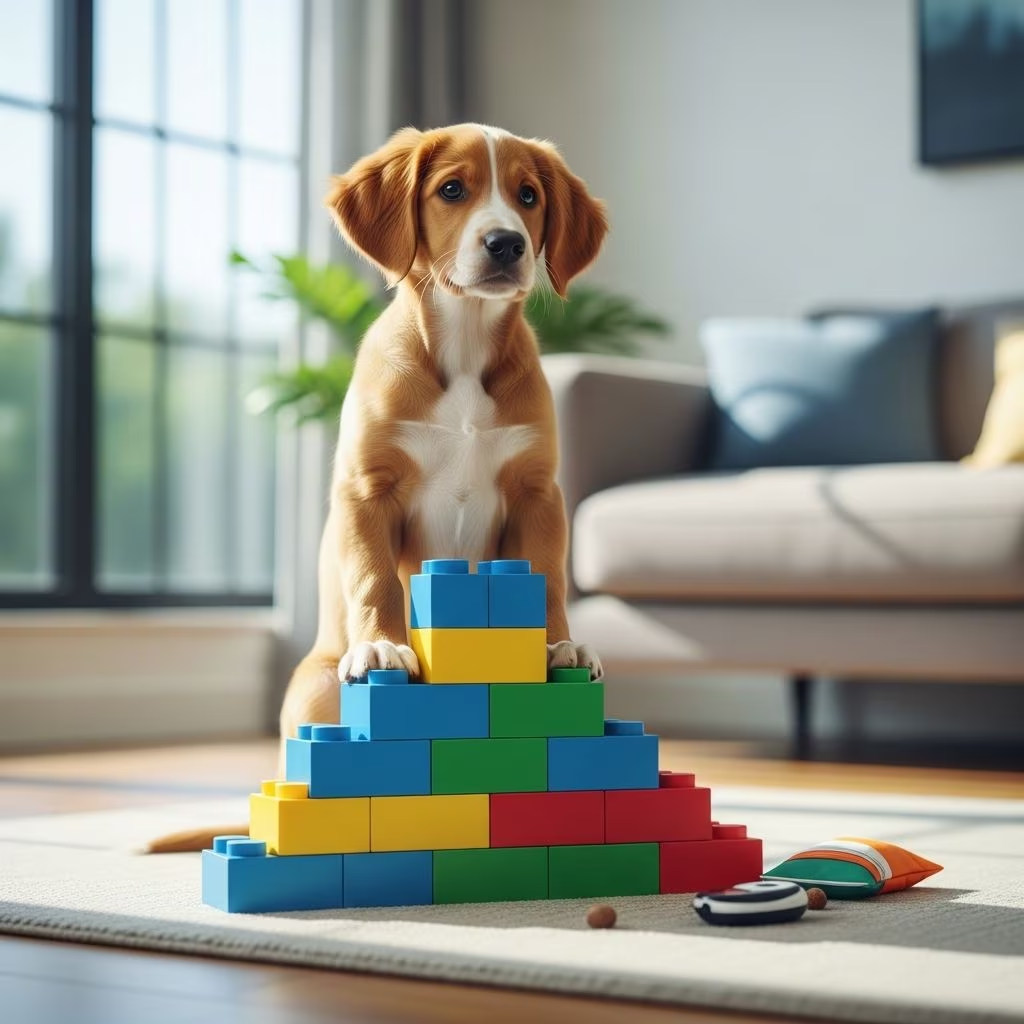
Bringing a new puppy home is an exciting milestone, but establishing a solid behavioral foundation requires patience, consistency, and strategic planning. The early months with your puppy represent a critical window for learning, during which you can shape lifelong habits and strengthen your relationship. Understanding how to effectively communicate expectations and reinforce desired behaviors sets the stage for a harmonious household and a confident, well-adjusted adult dog.
Creating an Effective Training Foundation
The cornerstone of successful puppy training rests on several fundamental principles that transcend specific commands or techniques. Before diving into instruction methods, recognizing these foundational elements ensures your training efforts build upon solid ground rather than shifting sand.
Starting at the Right Time
Puppies are cognitively ready to begin learning very early in their lives. Most puppies can start simple training around 8 weeks of age, though the scope and complexity should match their developmental stage. This doesn’t mean launching into advanced obedience immediately; rather, it means introducing basic concepts through play and positive interaction. The earlier you establish this learning relationship, the more natural it becomes for your puppy to view training as an enjoyable part of daily life rather than an obligation.
Session Duration and Frequency
Puppies possess short attention spans and limited mental stamina. Training sessions should last only 5 to 10 minutes initially, with some trainers recommending sessions no longer than 10 to 15 minutes even as puppies mature. Multiple short sessions distributed throughout the day prove far more effective than single lengthy sessions. This approach prevents boredom and frustration while capitalizing on peak learning moments when your puppy’s mind is fresh and receptive.
Maintaining Emotional Consistency
Your demeanor during training directly influences your puppy’s response and willingness to engage. Remaining calm and composed—even when progress seems stalled—helps your puppy stay focused rather than becoming anxious or overstimulated. When your puppy successfully completes a behavior, offer praise in a controlled manner rather than with unbridled enthusiasm, which can paradoxically undo the training by exciting them into distraction.
The Mechanics of Effective Command Teaching
Teaching commands follows a predictable sequence that leverages your puppy’s natural instincts and desire for rewards. Understanding this progression helps you troubleshoot obstacles and adjust your approach when needed.
The Three-Step Teaching Sequence
Every command or behavior follows this basic framework. First, you present the cue—the verbal command, hand signal, or other trigger. Second, you physically guide or encourage your puppy toward the desired behavior, typically using food lures or gentle body positioning. Third, the moment your puppy completes the behavior correctly, you provide immediate reinforcement through treats, praise, or both.
This sequence works because it creates a clear cause-and-effect relationship in your puppy’s mind. They begin to understand that performing the specific behavior produces a positive outcome. Over many repetitions, the behavior becomes automatic, and your puppy will execute it on command rather than requiring guidance.
Timing and Reward Strategy
The window for reinforcement is remarkably narrow. Your puppy must receive the reward within seconds of completing the desired behavior for the association to solidify. Delayed rewards create confusion about which action earned the positive outcome. Similarly, the type of reward matters—some puppies respond intensely to food treats, others to play or praise. Experimenting with different reinforcers helps you identify your puppy’s highest-value motivators, which you can then reserve for teaching new or particularly challenging behaviors.
Teaching the Essential Sit Command
The sit command represents the foundation upon which many other behaviors build. It’s relatively intuitive for puppies and provides an early success that boosts both their confidence and your morale.
The Luring Method
Begin by capturing your puppy’s attention with a treat held near their nose. Slowly move the treat upward and slightly backward toward the crown of their head. As their eyes follow the treat and their head tips back, their rear naturally lowers to the ground—physics does the work for you. The instant their hindquarters touch the floor, deliver the treat and enthusiastic praise. Repeat this sequence 5 to 10 times per session. After several sessions, begin adding the verbal cue “sit” precisely as their bottom touches the ground, not before. Eventually, they’ll associate the word with the behavior.
The Capturing Method
An alternative approach involves observation and timing rather than guidance. Stand with a treat in your hand and wait—doing nothing. The moment your puppy sits naturally (which they will, eventually), mark the moment with “yes!” or a clicker sound, then deliver the reward. Repeat this many times. Once your puppy sits frequently in anticipation, begin saying “sit” as they’re descending into the position. This method works with your puppy’s natural behaviors rather than engineering them, and some puppies respond better to this less-directive approach.
Mastering the Stay Command
The stay command teaches impulse control and patience. It builds naturally from the sit, making sit a prerequisite.
Progression Through Distance and Duration
Start with your puppy already in a sit. Place your hand flat in front of their face and clearly state “stay.” Immediately step back one pace while maintaining eye contact. If they remain in position, return and reward them generously. If they break the stay, simply return to the starting position without punishment and try again. Once they consistently hold the stay for one step back, progress to two steps. Gradually increase distance over multiple sessions rather than rushing progression.
Simultaneously, work on duration by asking them to stay for a few seconds before rewarding, gradually extending this time. Some trainers suggest mentally reciting the alphabet as a timing guide, extending one letter further in subsequent repetitions. This dual progression—both distance and duration—requires patience but produces solid results.
The Release Word
Equally important as the stay itself is the release command—a specific word that tells your puppy “training is over, normal behavior resumes.” Choose a word like “free” or “break” and introduce it consistently. Initially, use it in low-pressure situations: say your release word and immediately toss a treat on the ground, making the release exciting and desirable. This ensures your puppy doesn’t anticipate and break the stay prematurely.
The Down Command: Building on Success
Down represents a more challenging position for many puppies because it places them in a vulnerable stance. Teaching it methodically builds confidence alongside compliance.
Using Positional Guidance
Begin with your puppy already sitting. Hold a treat near their nose and slowly lower it to the ground, positioning it just in front of their front paws. Rather than moving the treat straight down, draw it along the ground away from them in an “L” shape—forward and then slightly to the side. This motion encourages them to lower their body to maintain contact with the lure. As their elbows and chest touch the ground, praise calmly and immediately provide the treat.
Never push your puppy’s rear end or chest downward; allow the lure to create the positioning naturally. After several successful sessions using this method, begin adding the verbal cue “down” as they’re lowering, gradually transitioning to a command rather than a lure-following response.
Perfecting Leash Walking Behavior
Loose leash walking—walking without pulling—requires different training mechanics because it involves sustained movement rather than a static position.
Pre-Training Energy Management
Before beginning a formal training walk, burn excess energy through unstructured play. A tired puppy is naturally calmer and more focused, making the training session more productive. This isn’t about exhaustion; rather, it’s about directing their energy so they approach training in a receptive state.
Building Loose Leash Habits
Start indoors or in a quiet environment free from distractions. Put the leash on and stand still. The moment your puppy stops pulling on the leash or sits beside you, mark this behavior with “yes!” or a clicker and immediately offer a treat at the level of your knee or hip. This teaches them that keeping slack in the leash produces rewards.
Take a few steps forward, then stop and repeat. If your puppy pulls forward, immediately turn and walk in the opposite direction, calling their name and rewarding them for reorienting toward you. This redirects their attention without punishment and teaches that pulling doesn’t get them where they want to go. Gradually increase the ratio of reward-free walking by spacing treats further apart—from every step to every other step to every third step, progressively reducing dependence on constant reinforcement.
The Come Command: Establishing Recall Reliability
A reliable recall—the ability to call your puppy back regardless of distractions—is a safety essential that requires sustained effort to maintain.
Foundation Building Through Repetition
Begin with minimal expectations. In a quiet indoor space, say your puppy’s name or “come” and immediately provide a treat. They don’t need to do anything yet except hear the word paired with a reward. Repeat this dozens of times daily. Next, drop a treat on the floor near you. As your puppy finishes eating it and looks up, say “come” or their name again and give another treat. This continues building the association without requiring active movement toward you.
Adding Movement and Distance
Once the word is established, make the behavior fun. Toss a treat on the ground and quickly step away while enthusiastically calling their name. Most puppies naturally chase you to catch you and the treat. When they reach you, provide extensive praise and play, making being caught highly rewarding. Continue expanding distances and adding environmental distractions gradually. Always practice recall in secure, enclosed areas until reliability is established.
Common Training Obstacles and Solutions
| Challenge | Likely Cause | Solution Strategy |
|---|---|---|
| Puppy loses focus mid-session | Session too long or boredom setting in | End immediately on a positive note by reviewing a known behavior, then praise generously |
| Inconsistent response to known commands | Lack of consistency from handlers or insufficient repetitions | Ensure all family members use identical commands and reward patterns; increase daily practice frequency |
| Puppy seems confused or stressed | Commands unclear or expectations too advanced for their age | Simplify the behavior, increase luring guidance, or break into smaller steps |
| Treats not motivating anymore | Reward satiation or discovery of more exciting alternatives | Switch to higher-value rewards, rotate treat types, or use play as reinforcement |
Choosing Professional Training When Needed
While many owners successfully train puppies independently, professional guidance provides several advantages. Training classes expose your puppy to other dogs and handlers in controlled environments, facilitating socialization alongside skill development. Instructors can identify and correct subtle mistakes in technique that owners might miss. They also adapt methods based on your individual puppy’s temperament and learning style.
Look for trainers who exclusively use reward-based, positive reinforcement methods rather than aversive techniques. Accredited training programs provide structured curricula and qualified instruction that accelerates learning and prevents the development of problematic behaviors.
Building Consistency Across Your Household
Training success depends heavily on consistency. Every family member must use the identical command words, employ the same reward protocols, and maintain aligned expectations. Inconsistency confuses puppies—when one person rewards jumping for attention while another redirects it, your puppy receives contradictory messages and learning stalls.
Create a simple reference guide documenting your command words, reward types, and session timing. Review it with anyone who regularly interacts with your puppy. This unified approach transforms training from an individual effort into a household system that reinforces learning across all contexts.
Frequently Asked Questions
What if my puppy isn’t responding to treats as rewards?
Not all puppies are food-motivated. Experiment with other rewards: some puppies respond strongly to specific toys, verbal praise, or brief play sessions. Rotate reward types to maintain motivation and prevent satiation. Higher-value rewards—reserved for new or particularly challenging behaviors—create stronger associations than everyday treats.
How old should my puppy be before beginning training?
Simple training can begin around 8 weeks of age, though the complexity should match developmental stage. Very young puppies benefit from short, play-based learning rather than formal command instruction. Gradually increase structure and duration as they mature.
Is punishment ever appropriate during puppy training?
Punishment-based methods risk creating anxiety, fear, or aggression and are generally counterproductive. Reward-based training is more effective, humane, and enjoyable for both dog and handler. When your puppy makes mistakes, simply withhold the reward and try again.
How long until my puppy reliably obeys commands?
Timeline varies by individual puppy, command complexity, and training frequency. Simple commands like sit may show reliable responses within one to two weeks of consistent daily practice. More complex behaviors or those involving impulse control require weeks or months. Consistency matters far more than speed.
Conclusion: Patience and Persistence Pay Dividends
Puppy training is fundamentally about communication and building trust. The time and effort invested during these early months establish patterns that persist throughout your dog’s life. By maintaining calm consistency, keeping sessions brief and positive, and adapting your methods to your individual puppy’s needs and motivations, you’ll build not just an obedient companion but a confident, secure family member who understands their place in your household and trusts your leadership.
References
- Basic Puppy Training 101 — Purina US. 2024. https://www.purina.com/articles/dog/puppy/training/puppy-training
- Teach Your Puppy These 5 Basic Cues — American Kennel Club. 2024. https://www.akc.org/expert-advice/training/teach-your-puppy-these-5-basic-commands/
- How to Train a Dog: Tips and Tricks for Beginners — Nylabone. 2024. https://www.nylabone.com/dog101/dog-training-for-beginners
- Basic training for puppies — PDSA. 2024. https://www.pdsa.org.uk/pet-help-and-advice/looking-after-your-pet/puppies-dogs/basic-training-for-puppies



