

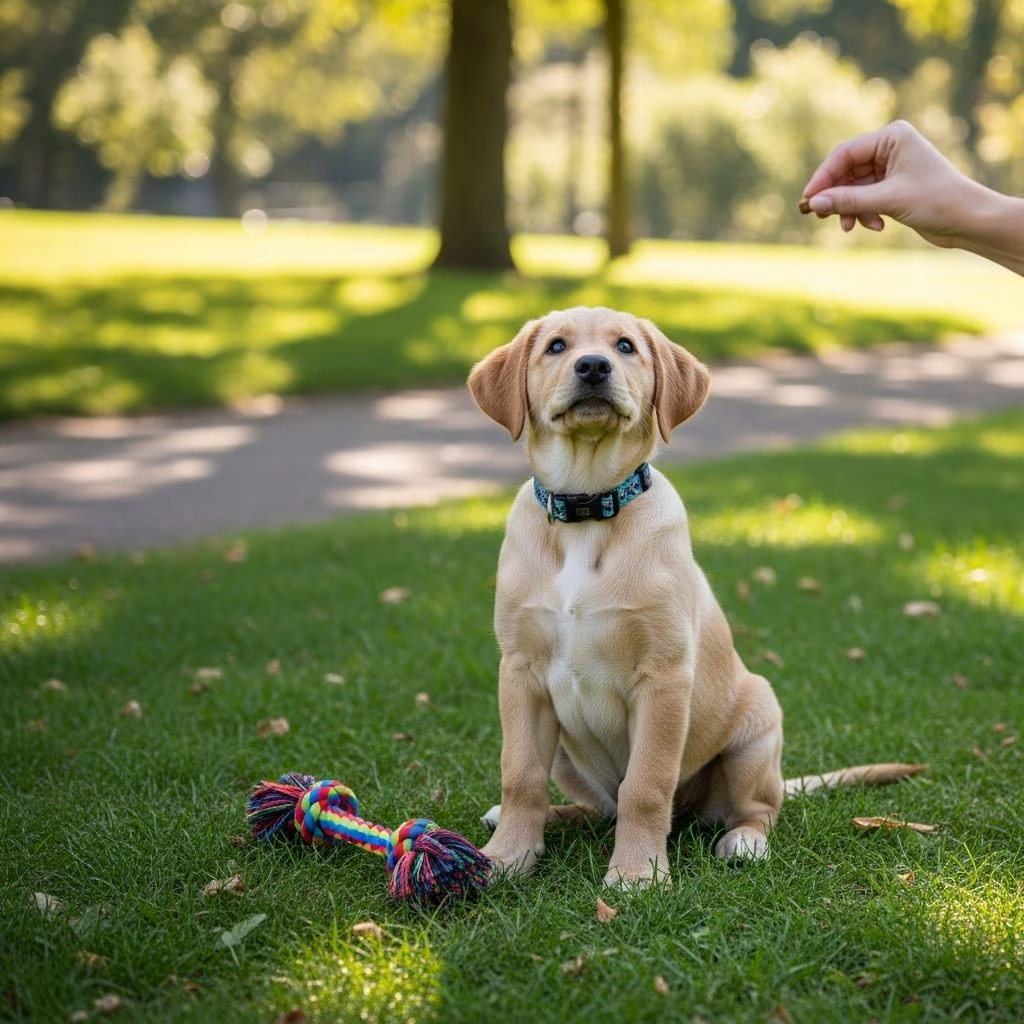
Obedience training forms the cornerstone of a harmonious relationship between you and your puppy, promoting safety, enhancing communication, and preventing behavioral issues. Beginning as early as possible with positive methods ensures your young dog grows into a confident, responsive adult.
Why Early Training Matters for Puppies
Puppies absorb information rapidly from birth, making the initial weeks critical for establishing good habits. Training introduces structure, reduces destructive tendencies, and fosters trust, ultimately leading to a safer environment for both pet and owner. Delaying can result in ingrained bad behaviors that are harder to correct later.
- Boosts safety by teaching recall in dangerous situations.
- Strengthens the human-dog bond through mutual respect.
- Provides mental stimulation, complementing physical exercise for high-energy breeds.
Experts recommend starting with simple interactions like handling and name recognition to build a foundation of positive experiences.
Core Principles of Effective Puppy Training
Positive reinforcement stands as the gold standard, scientifically supported method for teaching obedience. This approach rewards desired actions with treats, praise, or play, encouraging repetition without instilling fear. Avoid punitive measures like shock collars, which can cause lasting anxiety.
| Training Method | Benefits | Examples |
|---|---|---|
| Positive Reinforcement | Builds confidence, long-term reliability | Treats for sitting, praise for coming |
| Avoid Punishment | Prevents fear-based responses | No yelling or harsh corrections |
| Consistency | Clear expectations for puppy | Same cue word every time |
Consistency across family members is vital—use identical cues and rewards to avoid confusion.
Selecting the Right Training Environment
Begin in a distraction-free zone, such as a quiet room, gradually progressing to busier areas as proficiency grows. Short sessions of 5 minutes for puppies keep engagement high and prevent overwhelm. Monitor body language: yawning or avoidance signals stress, prompting a pause.
Mastering the Sit Command
The sit command ranks as one of the easiest and most useful basics, curbing jumping and earning attention politely. Hold a treat above the puppy’s nose, moving it back until their bottom drops naturally, then reward immediately.
- Say “sit” clearly.
- Lure with treat in hand gesture.
- Praise and treat upon compliance.
- Fade lure by using empty hand over time.
Practice before meals to leverage hunger motivation, repeating 5-10 times per session.
Teaching a Reliable Stay
Stay builds impulse control, essential for doorways or vet visits. From a sit position, say “stay” with an open palm signal, stepping back briefly before returning to reward.
- Increase duration gradually from 1-2 seconds.
- Introduce distance and distractions slowly.
- Always release with “okay” to end the stay.
Persevere with patience; reliability develops through repetition in varied settings.
Perfecting the Come Recall
Recall proves challenging yet lifesaving, practiced from puppyhood with enthusiasm. Call the name followed by “come” happily, backing away to entice approach, then reward lavishly.
Never call for punishment; reserve high-value treats for this cue to ensure eagerness. In trials, use a long leash for safety while guiding success.
Additional Foundational Commands
Down or Lie Down
Encourages calm, useful for grooming or relaxation. From sit, lure downward with a treat between paws, praising the full down position. Leash assistance can gently press shoulders if needed, but prioritize willingness.
Heel for Leash Manners
Heeling prevents pulling during walks. Start with treats at your left side, rewarding position as you move, varying pace to maintain focus. Incorporate turns and halts for polish.
Leave It for Impulse Control
Teach ignoring temptations by placing a low-value item down, covering with foot if grabbed, rewarding for looking away. Progress to higher distractions.
Daily Training Routines and Schedules
Incorporate obedience into everyday life: before feeding, during play, or potty breaks. Aim for multiple brief sessions daily rather than lengthy ones. Track progress in a journal to note improvements and adjust.
- Morning: Name recognition and sit.
- Afternoon: Stay and down practice.
- Evening: Recall games in yard.
Mental fatigue from training equals physical tiredness, promoting better rest.
Overcoming Common Puppy Training Hurdles
Puppies distract easily; counter with higher-value rewards and quieter starts. If regression occurs, revert to basics without frustration—progress isn’t linear.
For stubborn pups, enlist professional trainers certified in positive methods. High-energy breeds benefit from puzzle toys alongside commands.
Tools and Supplies for Success
Stock treats, clickers (optional, equally effective without), leashes, and toys. Clicker training marks precise moments: sound followed by treat accelerates learning.
| Tool | Purpose | Tips |
|---|---|---|
| High-Value Treats | Motivation | Small, soft, smelly pieces |
| Clicker | Behavior Marker | Charge first: click-treat repeatedly |
| Long Leash | Recall Practice | 20-30 feet for safe freedom |
Integrating Training with Socialization
Pair obedience with exposure to new people, sounds, and dogs between 3-14 weeks for well-rounded development. Reward calm responses to build positive associations.
Long-Term Maintenance and Advancement
Once basics solidify, advance to off-leash reliability, tricks like roll over, or agility. Lifelong practice prevents skill fade; vary scenarios for generalization.
Frequently Asked Questions
How soon can I start training my puppy?
Immediately upon bringing them home, even at 8 weeks, focusing on positive interactions.
What if my puppy ignores commands?
Ensure clarity, high rewards, and practice in low-distraction areas. They may not generalize yet—revisit basics.
How long are ideal training sessions?
5 minutes or less for puppies; 10 for adults, multiple times daily for best retention.
Is professional training necessary?
Not always, but helpful for challenges or group socialization.
Can older dogs learn these commands?
Yes, obedience benefits all ages with patience and consistency.
Advanced Tips for Puppy Parents
Use your puppy’s name to prompt attention before cues, enhancing focus. Incorporate family training to unify rules. Celebrate milestones to sustain motivation.
Obedience training transforms chaotic puppyhood into joyful companionship, safeguarding health and happiness long-term.
References
- Puppy Training Guide: How and When To Start — PetMD. 2023. https://www.petmd.com/dog/general-health/when-start-training-puppy
- The Basics of Training Your Dog — Wisconsin 4-H Extension. 2021-05-01. https://4h.extension.wisc.edu/files/2021/05/The-Basics-of-Training-Your-Dog.pdf
- Your Essential Guide to Basic Dog Obedience Training — Chewy. 2023. https://www.chewy.com/education/dog/training-and-behavior/sit-stay-and-beyond-weve-got-the-essential-guide-to-basic-dog-obedience-training
- Basic Obedience Training For Puppies: Where to Start — American Kennel Club (AKC). 2023. https://www.akc.org/expert-advice/training/basic-obedience-training-for-your-dog/
- Dog Training 101: How to Train ANY DOG the Basics — YouTube (Video Description). 2023. https://www.youtube.com/watch?v=jFMA5ggFsXU
- Puppy Behavior and Training Basics — VCA Animal Hospitals. 2023. https://vcahospitals.com/know-your-pet/puppy-behavior-and-training-training-basics



