

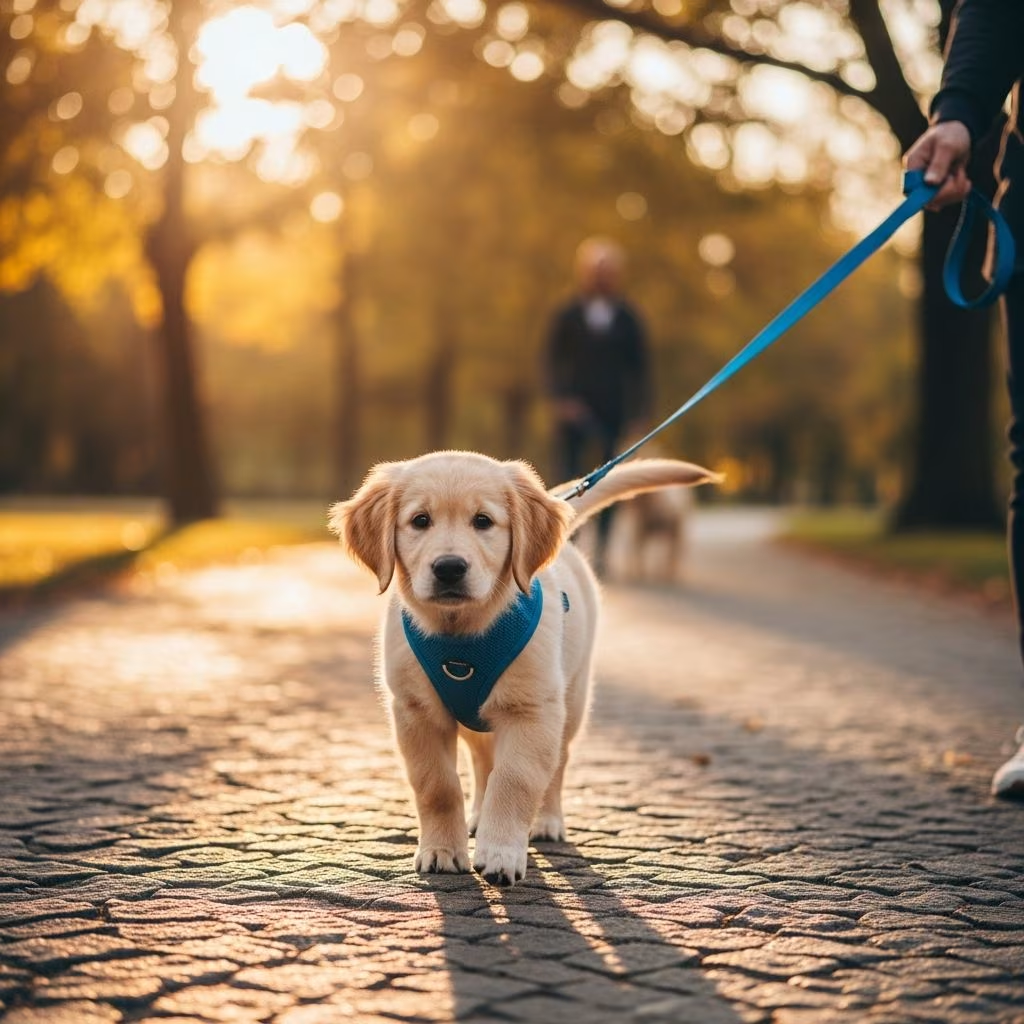
Leash training represents one of the most fundamental skills your puppy will learn, establishing the groundwork for safe, enjoyable walks and reinforcing the bond between you and your young canine companion. Many new puppy owners underestimate the importance of proper leash training, assuming it will come naturally over time. However, investing time in structured training during your puppy’s early months pays dividends throughout their life, preventing behavioral issues and creating positive associations with outdoor exploration.
Building the Foundation: Collar Familiarity
Before any leash work begins, your puppy must become completely comfortable wearing a collar. This foundational step cannot be rushed, as puppies who feel anxious about their collar will carry that tension into every subsequent training session. The process should feel like play rather than a chore, transforming the collar into something your puppy eagerly anticipates.
When first introducing a collar, select a non-tightening option designed specifically for puppies. The fit matters considerably—too tight and your puppy experiences discomfort; too loose and they risk slipping free. The industry standard for proper fit involves ensuring you can comfortably slide two fingers beneath the collar when fastened around your puppy’s neck. This spacing provides safety without causing restriction or discomfort during normal movement and play.
Begin by placing the collar on your puppy for brief periods while engaging in positive activities. Associate collar time with treats, praise, and playtime. Many puppies will initially resist the sensation of something around their neck, so patience proves essential. Allow your puppy to adjust gradually, removing the collar if they show significant stress and reintroducing it after a short break. This approach prevents negative associations that could complicate future training efforts.
Introducing the Leash: Gradual Acclimation
Once your puppy demonstrates comfort wearing their collar, introduce the leash itself indoors where distractions remain minimal. Allow your puppy to investigate the leash by sniffing it while you offer treats and verbal encouragement. The leash should feel like an exciting addition rather than a constraint, so maintaining an upbeat, positive tone during this introduction proves crucial.
The next phase involves attaching the leash while remaining indoors. Let your puppy drag the leash around the house under your watchful supervision. This allows them to become accustomed to the weight and sensation of the leash without pressure to move in any particular direction. Reward your puppy frequently for simply wearing the leash—treats and enthusiastic praise help establish the leash as a positive element of their environment.
During these indoor sessions, avoid any pulling or forcing your puppy to move in specific directions. Allow them to explore at their own pace, building confidence and comfort. Many puppies will initially show caution or confusion, but patience during this phase establishes trust and prevents anxiety that could manifest as resistance during later outdoor training.
Establishing Walking Patterns and Position
Professional dog handlers traditionally train puppies to walk on the left side of their handlers. While this convention may seem arbitrary, consistency in position helps establish clear communication and makes puppies more responsive to directional cues. Begin guiding your puppy toward your left side during every outdoor opportunity, using treats and praise to reinforce correct positioning.
Rather than forcing your puppy into position, make that location rewarding. When your puppy naturally moves to your left side, immediately reward with treats and verbal praise. This positive reinforcement teaches them that walking beside you on your left generates good things, making them more likely to seek that position independently. Over time, this becomes habitual, requiring less active management.
Maintain a short but loose leash during walks. A short leash keeps your puppy from straying far, while the looseness prevents tension and discomfort. A loose leash indicates trust and calm leadership, whereas a tight leash communicates anxiety that your puppy will absorb. Think of the leash as a safety tether rather than a control mechanism—it’s there if needed, but shouldn’t be constantly taut.
Essential Equipment: Collars and Leashes
Selecting appropriate equipment significantly impacts training success. Different collar and leash options serve different purposes and suit different training philosophies and puppy temperaments.
Collar Types
Flat Collars represent the most traditional option and work well for most puppies. These simple collars buckle or snap around your puppy’s neck, providing a straightforward attachment point for the leash. Their simplicity and comfort make them ideal for young puppies just beginning their training journey.
Head Collars (also called halters) loop around your puppy’s muzzle and neck, offering greater control for puppies that struggle with pulling. By directing the head, head collars help prevent forward lunging and pulling—common challenges during the learning phase. However, puppies require adjustment time before walks, and some initially resist this equipment. Never force a head collar onto a puppy that shows significant distress; instead, gradually acclimate them indoors with positive reinforcement.
Leash Options
Traditional Leashes come in nylon, leather, or cotton materials and typically measure 4-6 feet in length. These standard leashes provide reliable control and are widely available at reasonable prices. The fixed length makes them ideal for teaching leash manners, as your puppy understands the boundaries of their movement.
Retractable Leashes extend up to 30 feet with a button mechanism, offering more freedom of movement. However, many trainers caution against retractable leashes during the learning phase, as the extendable line can inadvertently reward pulling by allowing puppies to move farther away. For puppies still mastering loose leash walking, traditional fixed-length leashes provide better communication and control.
Stretch Leashes feature elastic material designed to soften the impact when puppies reach the leash’s end. These work particularly well for high-energy puppies prone to sudden lunging, reducing strain on both the puppy’s neck and your arm during training sessions.
Systematic Training Methods
Effective leash training follows a structured progression that builds skills incrementally. Rushing through steps or advancing before your puppy demonstrates readiness often results in regression and frustration for both handler and puppy.
Establishing Attention and Recall
Begin by teaching your puppy to focus on you during walks. This foundational skill makes every subsequent training goal easier to achieve. Establish a consistent sound cue—some handlers use clicker training, others use verbal markers like “yes,” and some use tongue clicks. Pair this sound with immediate treats and praise in quiet, controlled environments.
Practice having your puppy come toward you while on-leash by backing up slowly and rewarding any movement in your direction. Keep sessions extremely short, ending while your puppy still wants more rather than when they show fatigue. Puppies have limited attention spans, and quality matters far more than duration.
Managing Distractions Progressively
Build your puppy’s ability to focus on you gradually by introducing distractions slowly. Start in familiar indoor spaces with minimal stimulation, then progress to quiet outdoor areas like empty yards. Only after your puppy demonstrates reliable attention in low-distraction environments should you introduce more challenging settings like neighborhoods or parks.
Progressing too quickly overwhelms puppies and creates negative associations with walks. A puppy that becomes overstimulated or frustrated during training may develop behavioral issues that require extensive remediation later. Patience in gradually increasing difficulty prevents these problems.
Teaching Directional Commands
The “heel” command represents a valuable skill for structured leash walking. Begin teaching heel indoors, using treats held close to your body to keep your puppy at your side. Once your puppy understands the concept indoors, gradually practice in progressively more stimulating environments. Consistent practice and reward-based reinforcement establish heel as a reliable command.
Addressing Common Training Obstacles
Not all puppies progress through training at identical rates, and some behaviors require specific interventions. Understanding common challenges and their solutions helps you troubleshoot effectively.
Persistent Pulling
Pulling ranks among the most frequently reported leash training challenges. Many handlers’ instinct is to pull back on the leash in response, but this approach often escalates the behavior. Instead, respond to pulling by becoming immobile—simply stand still until your puppy relaxes and returns to your side. Only then resume walking. This method teaches puppies that pulling stops forward progress, while calm walking allows the walk to continue.
Practice this technique in low-distraction environments like your yard before tackling busier areas. Pulling often decreases significantly with patience, consistency, and time. Some puppies respond dramatically within days, while others require weeks of consistent reinforcement. Avoid expressing frustration, as puppies absorb your emotional state and may develop anxiety around walks.
Lunging and Reactive Behavior
Puppies sometimes lunge toward or react aggressively to triggers like other dogs, skateboarders, or cyclists. Rather than waiting for your puppy to notice a trigger and react, proactive management works more effectively. Watch your puppy’s attention and the environment carefully, spotting potential triggers before your puppy does. When you anticipate a trigger, create distance and offer high-value treats to redirect focus.
This preventive approach teaches your puppy to look to you when potential triggers appear, converting reactive behavior into attentive behavior. Over time, your puppy learns that seeing other dogs or unpredictable moving objects signals that good things come from focusing on you rather than reacting to stimuli.
Leash Biting and Mouthing
Some puppies bite or mouth their leashes due to excitement, anxiety, or playfulness. Address this behavior by calmly showing your puppy the leash at home before walks, rewarding calm responses. Practice having your puppy sit while you attach the leash, rewarding patience and calmness. This approach separates the leash itself from the excitement of walking, reducing mouthing behavior.
Environmental Considerations and Timing
Strategic timing and environmental selection significantly impact training efficiency and success rates. A tired puppy naturally exhibits fewer unwanted behaviors and greater focus than an overly energetic one. Before beginning a formal training session, allow your puppy to burn energy through play or fetch, creating a more receptive student.
Weather also influences training quality. Extreme heat or cold causes discomfort that distracts from training focus. Rainy conditions may frighten some puppies or make outdoor surfaces slippery and unpleasant. Selecting pleasant weather when possible makes training more enjoyable for both handler and puppy.
The time of day matters as well. Morning sessions when your puppy has energy but hasn’t yet become overstimulated often produce better results than evening training when accumulated excitement or fatigue interferes with focus.
Building Long-Term Success
Leash training isn’t a destination reached after a certain number of sessions—it’s an ongoing skill that strengthens through consistent reinforcement and practice. Even after your puppy masters basic leash walking, continue rewarding good behavior, varying your routes and environments, and maintaining clear communication through your leash and positioning.
Different situations require different approaches. A quiet residential street differs significantly from a dog park or downtown area in terms of distractions and complexity. Your puppy’s skills need ongoing development across varied environments to build true reliability.
Remember that each puppy develops at their own pace. Some puppies naturally take to leash training within weeks, while others require months of consistent effort. Genetics, personality, prior experiences, and handler consistency all influence the timeline. Comparing your puppy’s progress to others rarely proves helpful; instead, focus on incremental improvement in your specific puppy’s behavior.
Frequently Asked Questions About Puppy Leash Training
- At what age should I start leash training my puppy?
- Begin introducing your puppy to a collar as soon as they arrive home, typically around 8 weeks old. Formal leash training can start once your puppy shows comfort wearing a collar, usually within a few weeks.
- How long should leash training sessions last?
- Keep sessions short—5 to 10 minutes for young puppies. Quality matters far more than duration. End sessions while your puppy still shows enthusiasm rather than allowing them to become mentally exhausted.
- What should I do if my puppy refuses to walk?
- Never force your puppy to walk. Instead, kneel to their level, use an encouraging voice, and offer treats to entice movement. If they remain resistant, end the session positively and try again later. Forcing creates negative associations.
- How do I stop my puppy from pulling on the leash?
- Stand still when your puppy pulls, only resuming movement when they calm down and return to your side. This teaches that pulling halts progress while calm behavior allows walking to continue. Consistency is essential for this method to work.
- Are retractable leashes suitable for puppies?
- Retractable leashes are generally not recommended during the learning phase, as they can reward pulling by allowing greater freedom of movement. Standard fixed-length leashes provide better control and clearer communication during training.
- What if my puppy shows fear during leash training?
- Proceed slowly and patiently. Don’t force your puppy into situations that cause significant distress. Build confidence gradually through positive associations and short, low-pressure exposure. Consider consulting a professional trainer if fear persists.
References
- How to Leash Train Your Puppy — Purina. Accessed February 17, 2026. https://www.purina.com/articles/dog/puppy/training/leash-training-your-puppy
- How to Train a Dog or Puppy to Walk on a Leash — American Kennel Club. https://www.akc.org/expert-advice/training/teach-puppy-walk-leash/
- Leash Training a Puppy: A Simple Guide to Loose Leash Walking — Halo Collar. https://www.halocollar.com/blog/dog-training/leash-training-a-puppy-a-simple-guide/



