

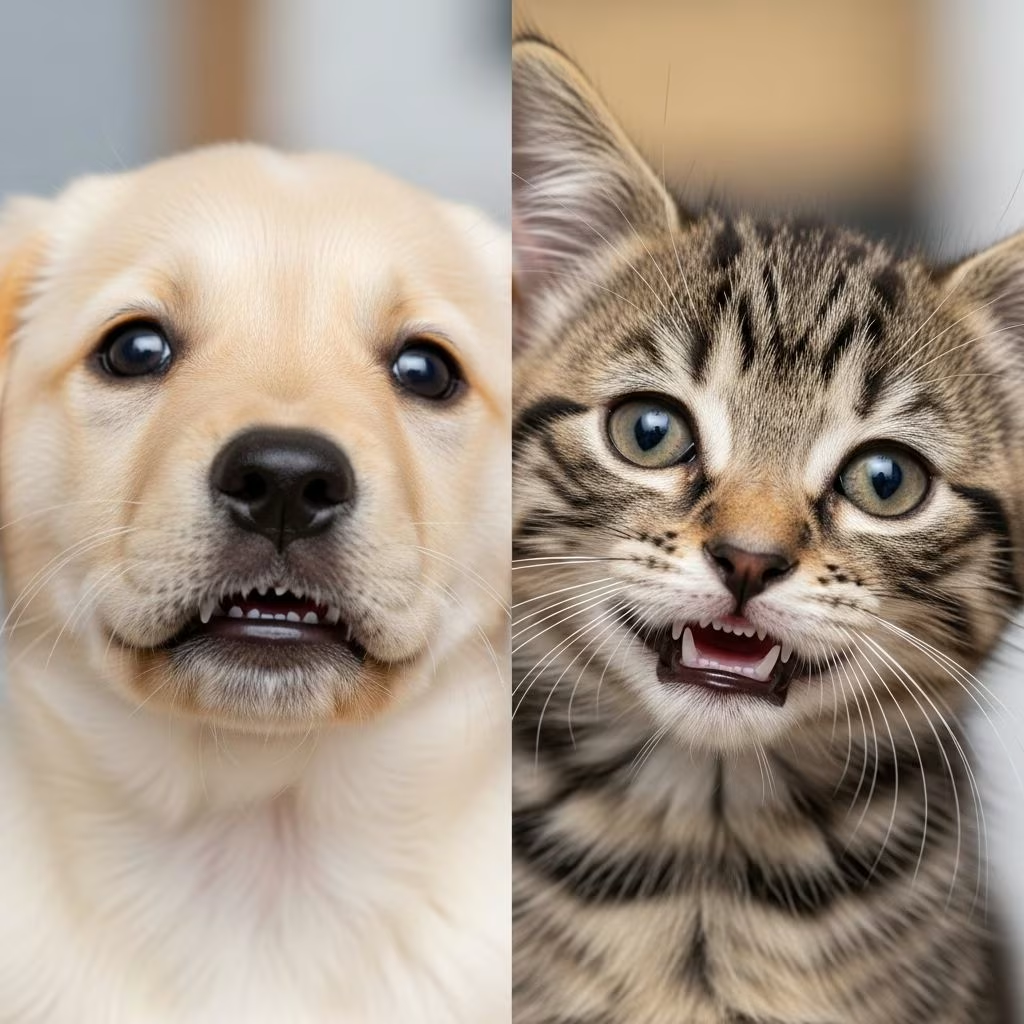
The dental evolution of puppies and kittens mirrors their growth from helpless newborns to active hunters and explorers. Born edentulous, these young pets quickly develop primary dentition suited for initial solid foods, which later gives way to stronger permanent teeth designed for lifelong use. Understanding this process helps pet owners support their companions through teething and beyond.
The Birth of Primary Dentition: When and How Baby Teeth Emerge
Puppies and kittens enter the world without teeth, a adaptation that protects nursing mothers from discomfort. Primary or deciduous teeth begin erupting shortly after birth, marking the shift to weaning.
In puppies, these 28 sharp, needle-like teeth appear between 3 and 6 weeks of age, enabling the consumption of softened kibble or puppy mush. Kittens follow a slightly earlier timeline, with their 26 baby teeth surfacing around 2 to 4 weeks, often by 6 to 7 weeks for a complete set.
- Puppies: Incisors first, followed by canines and premolars; no deciduous molars.
- Kittens: Incisors lead, then canines and premolars; similarly lacking milk molars.
This eruption aligns with weaning, as the tiny, whiter teeth slice through soft foods effectively.
Structural Traits of Deciduous Teeth in Young Pets
Baby teeth in both species are smaller, sharper, and more delicate than their successors. Their roots are proportionally longer and thinner, facilitating eventual resorption by developing permanent teeth beneath.
These teeth prioritize function over durability: pointed for grasping and tearing during play and early feeding. In dogs, the set totals 28, while cats have 26, reflecting subtle dietary preparatory differences—omnivorous tendencies in pups versus carnivorous precision in kittens.
| Feature | Dogs (Puppies) | Cats (Kittens) |
|---|---|---|
| Total Baby Teeth | 28 | 26 |
| Eruption Start | 3-6 weeks | 2-4 weeks |
| Key Shape | Needle-like, sharp | Smaller, pointed |
| Roots | Longer, thinner | Similar, resorbable |
Such design aids motor skill development but demands gentle handling during this phase.
Transition Phase: Mixed Dentition and Tooth Shedding
Around 3 to 4 months, permanent teeth initiate eruption, triggering root resorption in deciduous ones. This mixed dentition period, lasting until about 6 months, sees both sets coexisting briefly.
Puppies shed starting at 12-16 weeks, canines first, then incisors, premolars, with full 42 adult teeth by 6-7 months. Kittens begin at 11-16 weeks, achieving 30 permanent teeth by 6 months.
Owners may spot loose teeth on toys or floors, alongside chewing fervor and mild gingival bleeding—normal signs of progress.
Adult Dentition: Power and Permanence
Permanent teeth boast larger size, greater strength, and off-white hue, engineered for rigorous use. Dogs’ 42 teeth include robust molars for grinding varied diets, while cats’ 30 emphasize slicing carnivorous tools.
Dogs feature pointed incisors, prominent canines, shearing premolars, and crushing molars. Cats exhibit scissor-like premolars and molars, fewer grinders suiting obligate carnivory.
- Dogs: Omnivore-adapted; flat molars crush kibble, bones.
- Cats: Carnivore-specialized; blade teeth shear meat efficiently.
Variability in buccal surface area is higher in pets than humans, with feline teeth notably smaller.
Key Contrasts: Baby vs. Adult Teeth Across Species
| Aspect | Baby Teeth (Both) | Adult Teeth – Dogs | Adult Teeth – Cats |
|---|---|---|---|
| Number | Dogs: 28; Cats: 26 | 42 | 30 |
| Size/Strength | Smaller, sharper, temporary | Larger, durable | Larger, slicing-focused |
| Color | Whiter | Off-white | Off-white |
| Function | Weaning transition | Tearing, grinding | Shearing, hunting |
These disparities underscore evolutionary diets: dogs’ versatility versus cats’ precision.
Navigating Teething: Signs, Comfort, and Monitoring
Teething brings discomfort: excessive gnawing, drooling, pawing at mouth. Provide chilled chew toys, frozen carrots for pups (supervised), or kitten-safe alternatives.
Monitor for prolonged bleeding, swelling, or refusal to eat—potential red flags. By 7 months, verify full permanent set via gentle inspection.
Persistent Deciduous Teeth: A Common Concern
Retained baby teeth occur when permanent ones erupt without displacing primaries, often in small breeds. This misalignment invites plaque, fractures, orthodontic issues.
Veterinary extraction post-permanent eruption prevents complications. Routine 6-8 month checks catch this.
Breed Variations and Anomalies in Dentition
Miniature dogs face crowding, boosting retention risk. Tooth count may vary slightly in brachycephalics. Cats show less variance but resorptive lesions uniquely.
Enamel in pets is thinner than humans’, heightening fracture susceptibility.
Dental Disease Risks: Prevention from the Start
Over 80% of pets over three suffer periodontal disease, from plaque to root damage. Dogs prone to abscesses, swollen gums; cats to resorptive lesions, stomatitis.
Dogs signal overtly: drooling, soft-food preference. Cats mask pain, demanding vigilance.
- Daily brushing with pet toothpaste.
- Dental diets, treats, chews.
- Annual professional cleanings.
Long-Term Oral Wellness Strategies
Initiate care early: examine during teething, transition to dental products by adulthood. Omnivore dogs need grinding aids; carnivore cats benefit from slicing toys.
Water additives, prescription rinses supplement brushing. Home checks reveal tartar, redness early.
FAQs on Pet Dental Development
How many baby teeth do puppies have?
Puppies have 28 deciduous teeth.
When do kittens lose their milk teeth?
Around 11-16 weeks, completing by 6 months.
Is teething painful for pets?
Mild discomfort is common; provide safe relief options.
What if a baby tooth doesn’t fall out?
Consult a vet for extraction to avoid malocclusion.
How to check for full adult teeth?
Inspect at 7 months; puppies should have 42, kittens 30.
Conclusion: Building Lifelong Healthy Smiles
Grasping dental milestones empowers owners to foster robust oral health. From primary eruption to permanent establishment, proactive monitoring averts issues, ensuring pain-free chewing for years.
References
- Tooth eruption and exfoliation in dogs and cats — DVM360. N/A. https://www.dvm360.com/view/tooth-eruption-and-exfoliation-dogs-and-cats
- Baby Teeth vs. Adult Teeth – What’s Normal for Puppies and Kittens? — WellPets. N/A. https://www.wellpets.com/blog/baby-teeth-vs-adult-teeth-whats-normal-for-puppies-and-kittens/
- Dogs’ and Cats’ Teeth: Oral Health & Tips — MP Labo. N/A. https://www.mplabo.com/en/emag/dogs-and-cats-teeth/
- Understanding the Difference Between Dog and Cat Teeth — Express Vets North Canton. N/A. https://www.expressvetsnorthcanton.com/blog/understanding-the-difference-between-dog-and-cat-teeth-express-vets-north-canton
- Who Has More Teeth, Dogs or Cats? — The Plaque Buster. N/A. https://theplaquebuster.com/who-has-more-teeth-dogs-or-cats/
- Shape and size of teeth of dogs and cats-relevance to studies of tooth wear — PubMed (NCBI). 2003. https://pubmed.ncbi.nlm.nih.gov/12593095/
- Dental Health: The Difference Between Cats and Dogs’ Teeth — Greenway Animal Hospital. N/A. https://www.greenwayah.com/blog/dental-health-the-difference-between-cats-and-dogs-teeth



