

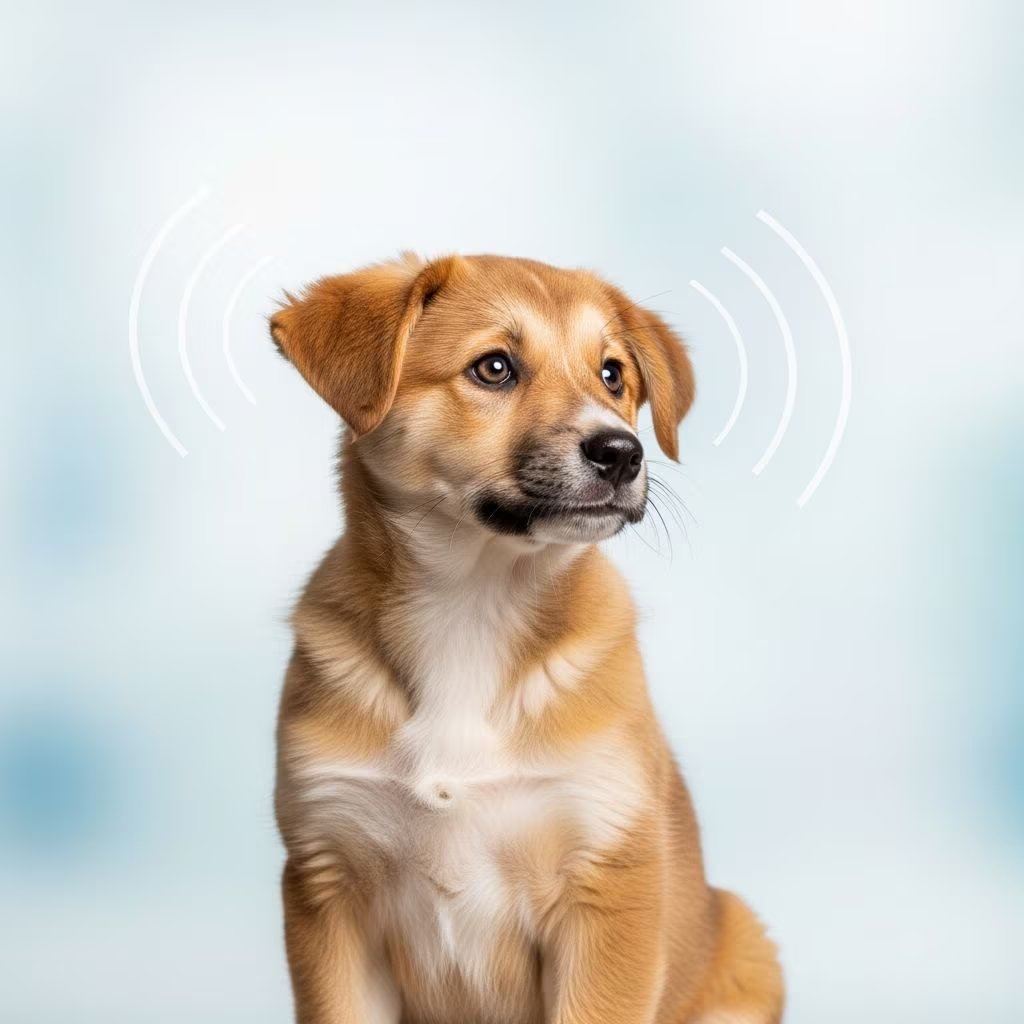
Puppies begin developing hearing around 2 to 3 weeks of age, transitioning from sensing vibrations to full auditory perception.
Neonatal Foundations: Birth to Hearing Awakening
From birth, newborn puppies enter the world with most senses underdeveloped, relying heavily on touch and maternal care for survival. Their ear canals remain sealed, preventing sound waves from reaching the inner ear structures. Instead, they detect low-frequency vibrations through their bodies, which helps them locate their mother during nursing.
This neonatal phase, spanning the first two weeks, focuses on basic survival. Puppies crawl instinctively toward warmth and milk scents, with taste and touch operational from day one. Hearing development lags behind, as the ear canals gradually open, typically starting between 18 and 21 days.
- Vibration sensitivity: Puppies respond to mom’s movements and littermate activity via physical cues.
- Ear canal status: Closed at birth to protect delicate inner structures from debris and infection.
- Maternal dependence: Full reliance on dam for cleaning, feeding, and thermoregulation.
During this time, minimal environmental noise is ideal to avoid stressing the pups, whose auditory nerves are maturing beneath sealed flaps.
Transitional Milestones: When Ears First Open
Around day 18, a pivotal shift occurs as ear flaps begin to unfurl, allowing initial sound entry. By 2.5 to 3 weeks, hearing sharpens dramatically, enabling puppies to distinguish high-pitched whines from littermates or mom’s calls.
This transitional stage (2-4 weeks) coincides with eye opening (14-21 days) and the emergence of motor skills like standing and wobbling steps. Hearing integrates with these senses, fostering exploration. Pups start reacting to claps or whistles, cocking heads toward noises beyond human range—up to four times our frequency sensitivity once mature.
| Age Range | Hearing Milestone | Associated Developments |
|---|---|---|
| Birth-14 days | Vibration only; ears sealed | Crawling, nursing, touch/taste active |
| 18-21 days | Ears open; basic sounds detected | Eyes open, teeth budding, weaning starts |
| 21-28 days | Clear hearing emerges | Walking, playing, barking begins |
Owners welcoming litters at this stage should monitor for symmetric ear opening and prompt responses to gentle sounds, signaling healthy progress.
Full Auditory Maturation: Weeks 4 to 8
By four weeks, puppies exhibit confident auditory awareness, perking ears at distant footsteps or toy squeaks. This period marks socialization’s peak, where sounds from household items build resilience.
Hearing fully activates by week 3, surpassing human capabilities in range and acuity. Pups discern subtle tones, aiding pack hierarchy learning through vocal cues like growls or yips. Weaning introduces solid foods, often paired with novel noises from bowls or kibble crunches, enhancing sensory integration.
- Play barking: Vocal experimentation strengthens ear muscles and social bonds.
- Environmental exposure: Controlled introductions to vacuums or doors prevent future fears.
- Nutritional support: Diets rich in DHA promote neural growth, including auditory pathways.
At six to eight weeks, pre-adoption vet checks confirm hearing via startle tests or BAER (Brainstem Auditory Evoked Response) if concerns arise. Vaccinations and microchipping align with this mobile, sound-responsive phase.
Factors Influencing Hearing Development
Genetics play a primary role, with breeds like Cocker Spaniels prone to congenital deafness linked to merle or white coat genes. Premature litters or infections (e.g., canine distemper) can delay ear opening or impair nerves.
Maternal health matters: Well-nourished dams pass vital antibodies, protecting pups’ ears from otitis. Overly noisy whelping areas risk stress-induced delays, while optimal 72-78°F environments support steady growth.
Nutrition impacts myelin sheath formation around auditory nerves—omega-3s from fish oil accelerate this. Avoid toxins like loud fireworks exposure before 8 weeks, as developing cochleae are vulnerable.
Signs of Healthy vs. Problematic Hearing
Healthy puppies whirl toward hand claps by 3 weeks, track squeaky toys, and avoid obstacles via sound by 5 weeks. Uneven responses or ignoring all noises warrant vet evaluation.
| Healthy Indicators | Warning Signs |
|---|---|
| Head tilt to sounds by day 21 | No reaction to loud claps at 4 weeks |
| Plays chase with squeakers | Asymmetric ear perking |
| Startles to sudden noises | Frequent head shaking/infections |
Congenital deafness affects 1-2% of pups, often unilateral. Early BAER testing (post-6 weeks) diagnoses via electrode-measured brain waves to clicks.
Supporting Auditory Growth in Young Pups
Minimize whelping disturbances initially, then gradually introduce varied sounds: soft music at 3 weeks, household appliances at 4-6 weeks. Positive pairings (sound + treat) build confidence.
Enrichment toys with rattles promote ear training. Handle ears gently from day 10 to normalize touch, preventing infections. Puppies in quiet rural homes may need extra urban sound socialization before adoption.
For hearing dog programs, temperament assessments at 6 weeks gauge sound responsiveness, ensuring suitability for alert roles.
Breed-Specific Hearing Patterns
Dalmatian and Australian Cattle Dog pups risk pigment-linked deafness, with 10-20% affected—test litters early. Conversely, Labrador Retrievers typically hit milestones on schedule, aiding service training.
Small breeds like Chihuahuas open ears slightly earlier (16-18 days), while giants like Great Danes lag to 22 days due to slower maturation.
Long-Term Sensory Integration
Post-8 weeks, hearing refines with life experiences. Fear periods at 4-6 months test sound tolerance—consistent exposure prevents phobias. Adult dogs hear 67 Hz-45 kHz vs. humans’ 20 Hz-20 kHz, excelling at whistles.
Annual ear exams maintain health, as chronic issues degrade acuity over time.
Frequently Asked Questions
When do puppies’ ears physically open?
Ears open around 18-21 days, enabling sound conduction.
Can deaf puppies recover hearing?
Congenital deafness is permanent; no treatments restore it.
How to test newborn puppy hearing at home?
Use claps or squeaks from 3 weeks; lack of response needs vet confirmation.
Does breed affect hearing timeline?
Yes, white-coated breeds face higher risks and variable onset.
Is early noise exposure harmful?
Controlled variety helps; extremes stress developing ears.
References
- The first 8 weeks of a hearing dog’s life — Hearing Dogs for Deaf People. 2023. https://www.hearingdogs.org.uk/support/hearingdogs/care/newborns
- A puppy’s first eight weeks — Dogs for Good. 2023. https://www.dogsforgood.org/good-advice/a-puppys-first-eight-weeks/
- Puppy Senses: How Your Puppy Sees, Hears, and Smells the World — American Kennel Club (AKC). 2023-10-01. https://www.akc.org/expert-advice/health/puppy-senses/
- Puppy Development Stages From Birth to 2 Years Old — Best Friends Animal Society. 2024. https://bestfriends.org/pet-care-resources/puppy-development-stages-birth-2-years-old
- 7 Stages of Puppy Development — Woofz. 2024. https://www.woofz.com/blog/7-stages-of-puppy-development/



