

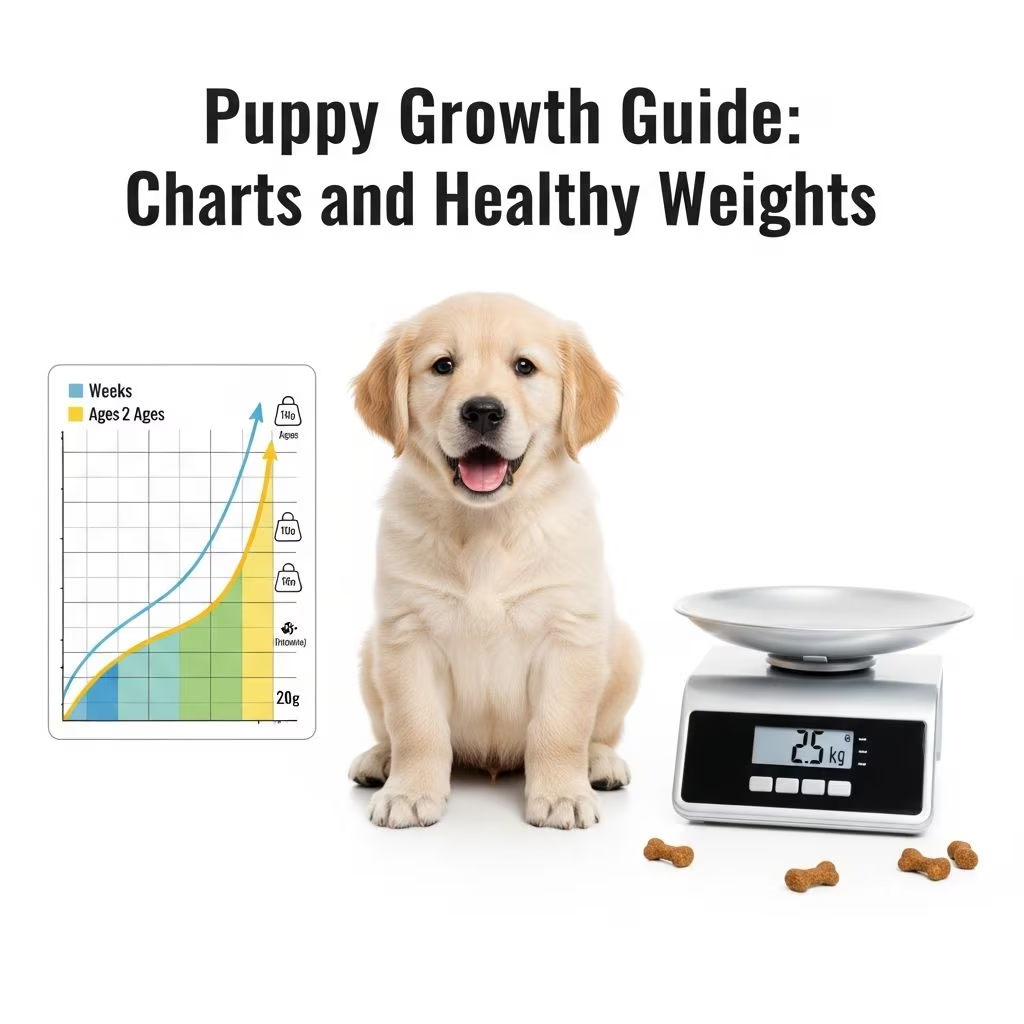
Understanding your puppy’s growth trajectory is essential for providing the best care during their formative months. Puppies grow rapidly, often doubling or tripling their birth weight in just a few weeks, and tracking this progress helps identify potential health concerns early. This guide offers detailed growth charts segmented by breed size categories, practical methods to estimate adult size, and strategies for maintaining a healthy weight.
Why Monitor Puppy Weight and Growth?
Regular weight checks serve multiple purposes beyond simple curiosity. They allow owners to spot deviations from normal patterns, which could signal issues like parasites, poor nutrition, or underlying medical conditions. Consistent tracking also informs feeding adjustments, ensuring your puppy receives the right caloric intake for their stage of development.
- Early Health Detection: Sudden stalls in weight gain might indicate intestinal worms or metabolic problems, prompting timely veterinary intervention.
- Precise Medication Dosing: Accurate weights are crucial for administering dewormers, vaccines, or other treatments safely.
- Nutrition Optimization: Growth data reveals if a puppy needs more frequent meals or a formula switch to support bone and muscle development.
Breeders and owners alike benefit from these insights, fostering transparency and responsible pet parenting.
Growth Phases Across Breed Sizes
Puppies from different breed sizes follow distinct growth curves. Small breeds mature faster, reaching near-adult weight by 6-9 months, while giant breeds may continue growing up to 15-18 months. These phases are typically divided into basic growth, exponential growth, fast growth, and stabilization.
Small Breed Growth Patterns
Examples include Beagle, French Bulldog, and Jack Russell Terrier. These puppies hit about 23-60% of their adult weight by 6 months.
| Age Range | % of Adult Weight | Typical Examples |
|---|---|---|
| 0-6 months | 23-60% | Australian Terrier, Lhasa Apso |
| 6-9 months | 60-84% | Boston Terrier |
| 9-11 months | 84-100% | Most small breeds |
Medium Breed Development
Breeds like Border Collie, Bulldog, and Siberian Husky grow to 24-76% by 6-10 months.
| Age Range | % of Adult Weight | Typical Examples |
|---|---|---|
| 0-6 months | 24-76% | Cocker Spaniel, Australian Cattle Dog |
| 6-12 months | 76-96% | American Pit Bull Terrier |
| 12+ months | 96-100% | Irish Terrier |
Large Breed Trajectories
German Shepherd, Labrador, and Golden Retriever puppies reach 32-70% at 3-7 months.
| Growth Stage | Age | % of Adult Weight |
|---|---|---|
| Basic | 0-3 months | 0-32% |
| Exponential | 3-7 months | 32-70% |
| Fast | 7-11 months | 70-88% |
| Stable | 11+ months | 88-100% |
Giant Breed Milestones
Akita, Great Dane, and Saint Bernard grow slower initially, hitting 22-53% by 6-12 months.
- 0-6 months: 22-53%
- 6-12 months: 53-83%
- 12-15+ months: 83-100%
Predicting Your Puppy’s Adult Size
Estimating final size helps prepare for space, exercise, and food needs. Simple formulas provide reliable approximations, though breed variations apply.
- 4-Month Rule: Double your puppy’s weight at 4 months. A 15 lb puppy at this age may reach 30 lbs as an adult. Adjust for giants, who grow longer.
- Calculator Tools: Input current weight, age, breed, and gender for predictions based on AKC data.
- Weight Percentages: Use charts to project based on age milestones.
Factors like genetics, spay/neuter status, and diet influence outcomes. Toy breeds finish early (8 months), giants later (2 years).
Assessing Healthy Body Condition
Weight alone isn’t enough; evaluate overall condition using body condition scoring (BCS). This hands-on method checks fat coverage and muscle tone.
- Underweight (BCS 1-3): Ribs prominent, waist exaggerated, no fat on hips.
- Ideal (BCS 4-5): Ribs palpable with slight fat cover, visible waist, abdominal tuck.
- Overweight (BCS 6-9): Ribs hard to feel, no waist, fat deposits on base of tail.
Weigh at home with bathroom scales (weigh yourself, then with puppy) or use vet/pet store scales.
Nutrition for Optimal Growth
Puppies need 2-3 times adult calories, calculated via DER formula: DER = 130 × (weight in kg)^0.75 × multiplier × activity factor.
| Breed Size | Phase 1 Multiplier (0-3 mo) | Phase 2 (Exponential) |
|---|---|---|
| Small | 2.4-1.8 | 1.8-1.2 |
| Medium | 2.6-2.3 | 2.3-1.6 |
| Large | 2.7-2.3 | 2.1-1.4 |
| Giant | 2.6-2.1 | 2.3-1.7 |
Feed 2-3% of ideal adult weight daily for adults, more for puppies. Adjust if no improvement after 2 weeks. Transition to adult food post-growth to prevent obesity.
Adult Weight Benchmarks by Breed
Reference these ranges for goal weights.
| Breed | Male (kg) | Female (kg) |
|---|---|---|
| Schnauzer (Giant) | 27-48 | 25-34 |
| Labrador | 25-36 | 25-32 |
| Great Dane | 54-90 | 45-59 |
| Yorkshire Terrier | 3-3.5 | 3-3.2 |
When to Consult a Veterinarian
Seek advice if growth lags charts by 10-20%, sudden drops occur, or BCS is off. Regular check-ups align tracking with professional assessments.
Frequently Asked Questions
How often should I weigh my puppy?
Weigh weekly until 6 months, then bi-weekly. Use consistent methods for accuracy.
Can mixed breeds use these charts?
Estimate based on parent sizes or dominant traits. Calculators help refine predictions.
What if my puppy is overweight?
Reduce portions by 10%, increase exercise, and monitor BCS. Vet consultation recommended.
When do puppies stop growing?
Small: 9-11 months; Large/Giant: 12-18 months.
Does neutering affect growth?
It may slightly increase adult weight due to metabolic changes; adjust calories accordingly.
References
- Puppy Weight Chart — Responsible Pet Breeders. 2023. https://responsiblepetbreeders.com/puppy-weight-chart/
- Puppy Growth Charts — UnoDogs. 2024. https://www.unodogs.com/puppy-growth-charts
- The Complete Dog Weight Guide With Charts by Breed and Sex — Bella + Duke. 2023. https://www.bellaandduke.com/dogs/expert-advice/dog-health/how-much-should-my-dog-weigh/
- Puppy Weight Calculator — Sydney Animal Hospitals. 2024. https://sydneyanimalhospitals.com.au/puppy-weight-calculator/
- 3 Ways to Predict How Big Your Puppy Will Get — Wisdom Panel. 2023. https://www.wisdompanel.com/en-us/blog/predicting-puppy-size-potential
- Dog Body Condition Scoring — Pet Obesity Prevention. 2024. https://www.petobesityprevention.org/dogbcs



