

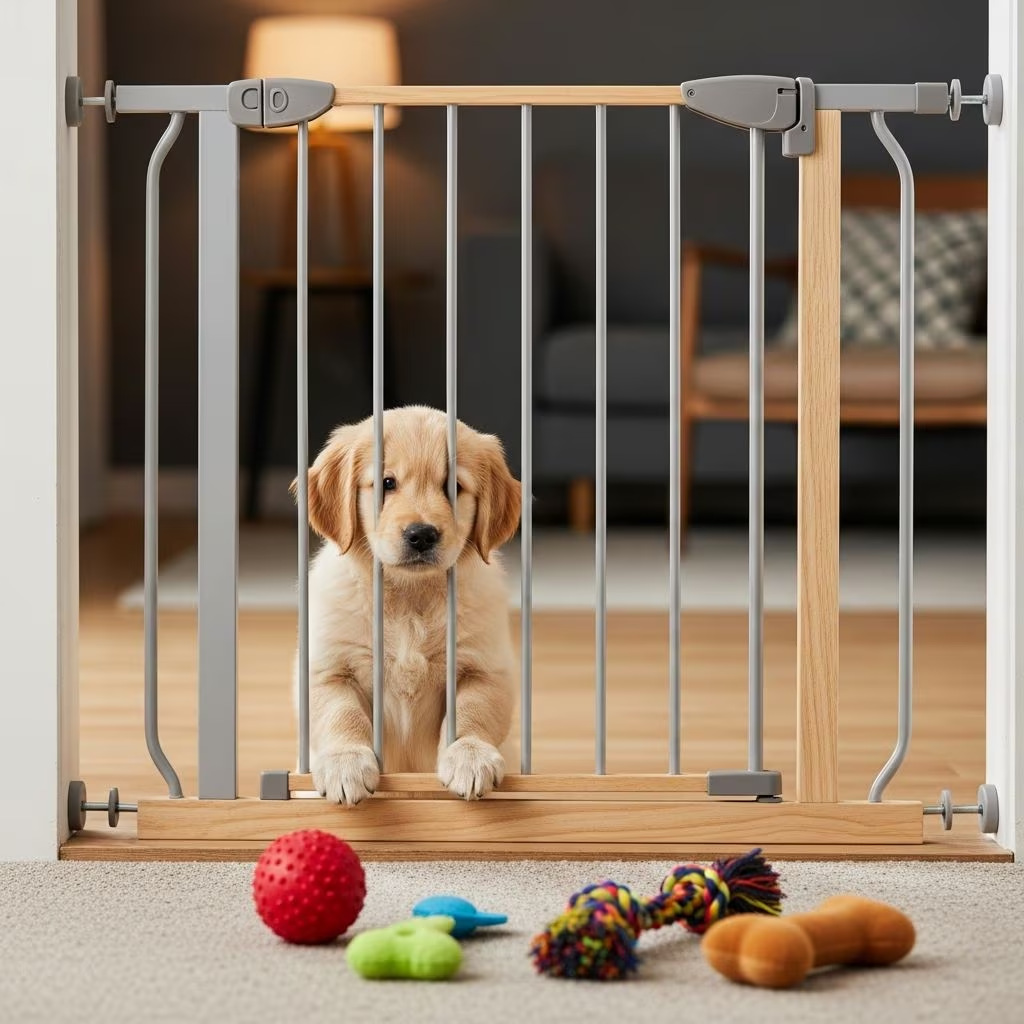
Bringing a puppy into your home marks the start of an exciting yet demanding journey. These energetic bundles of fur come with endless curiosity, which often leads to chewed furniture, indoor accidents, and constant supervision needs. One of the most practical solutions for new owners is incorporating puppy gates into daily routines. These versatile barriers offer a humane way to create safe zones, allowing puppies to learn boundaries while giving owners peace of mind.
Puppy gates serve as essential tools in early training phases, supporting positive reinforcement techniques recommended by experts. By confining access to certain areas, they prevent unwanted behaviors before they occur, setting the stage for successful habit formation. This approach aligns with veterinary advice emphasizing management alongside rewards for desired actions.
Why Containment Matters in Puppy Development
Puppies explore their world through senses and movement, often getting into trouble without guidance. Unsupervised access to the entire home can result in destructive chewing, ingestion of hazardous items, or elimination in inappropriate spots. Containment tools like gates address these issues proactively.
According to animal behavior specialists, early management prevents the development of bad habits that are harder to correct later. Positive reinforcement thrives when puppies succeed rather than fail, and gates ensure this by limiting opportunities for mistakes. For instance, restricting a puppy to a kitchen or laundry area during alone time reduces risks and promotes calm settling.
Beyond safety, gates aid in house training. Puppies naturally avoid soiling their immediate sleeping or play areas, a principle known as “cleanliness instinct.” Designating a gated space with bedding and toys leverages this, encouraging outdoor elimination. Consistency in such setups reinforces routines, making training smoother.
Choosing the Ideal Puppy Gate for Your Setup
Selecting the right gate depends on your home layout, puppy size, and lifestyle. Pressure-mounted gates suit doorways and wide openings without permanent installation, while hardware-mounted options provide sturdier barriers for stairs or expansive areas.
| Gate Type | Best For | Pros | Cons |
|---|---|---|---|
| Pressure-Mounted | Doorways, hallways | Easy install/removal, no tools needed | Less secure for climbers/jumpers |
| Hardware-Mounted | Stairs, wide spans | Very stable, expandable | Requires drilling |
| Freestanding | Room dividers | Portable, stylish designs | May tip if not weighted |
| Extra-Tall | Large/energetic breeds | Prevents jumping | Bulkier storage |
Measure openings accurately—standard widths range from 24 to 72 inches. Opt for gates at least 36 inches tall for most breeds, taller for breeds like Labs or Huskies. Materials matter: metal for durability, wood for aesthetics, plastic for lightweight portability. Safety certifications ensure no pinch points or toxic coatings.
Strategic Placement for Maximum Effectiveness
Placement is key to success. Gate off kitchens or utility rooms as central hubs—easy-to-clean floors handle spills, and proximity to exits facilitates potty breaks. Avoid bedrooms initially to prevent separation whining, introducing them gradually.
- High-Traffic Zones: Block access to living rooms during chew phases.
- Stairways: Essential for multi-level homes until recall is reliable.
- Crate Area: Enclose crates within gated spaces for supervised freedom.
- Multi-Dog Homes: Separate puppies from resident pets during introductions.
Rotate placements to build adaptability, always pairing with positive associations like treats upon entry. This prevents gates from becoming punishment symbols.
Integrating Gates with Positive Training Methods
Gates shine when combined with proven training. Positive reinforcement—rewarding good behavior with treats, praise, or play—forms the backbone. For example, lure a puppy into the gated area with a treat, then reward calm settling.
Clicker training enhances precision: click for entering the gate willingly, followed by rewards. This marks exact moments of compliance, accelerating learning. Sessions should be brief, 5-10 minutes, multiple times daily, in low-distraction settings.
Housebreaking benefits immensely. Gate puppies in small areas post-meals or naps, watching for elimination signals, then rushing outside with praise upon success. Gradually expand freedom as reliability grows.
Overcoming Common Hurdles with Puppy Gates
Puppies test boundaries, often crying or pawing at gates. Respond calmly—never release during fussing, as it reinforces the behavior. Instead, wait for quiet moments, then reward with attention.
For escape artists, upgrade to taller or angled-top gates. Covering portions with blankets muffles visual triggers. If jumping persists, add deterrents like aluminum foil on floors outside gates for startling effect without harm.
Noise complaints from neighbors? White noise machines or classical music inside the space soothe puppies. Exercise before confinement tires them out, reducing protests. Patience pays off; most adapt within days.
Building Independence: From Gates to Freedom
Gates aren’t forever. As puppies master cues like “sit,” “stay,” and reliable recall, phase them out. Test by removing for short periods, increasing duration with success. This progression builds confidence in both puppy and owner.
Incorporate mealtime training: require sitting at gates before meals, fading treats to verbal praise. Practice in varied environments to generalize skills, ensuring off-leash reliability indoors first.
Real-Life Benefits and Long-Term Gains
Owners report fewer accidents, less stress, and faster training with gates. They foster mental maturity by encouraging self-settling, crucial for adult dogs. Multi-pet households see reduced conflicts through controlled interactions.
Health-wise, gates prevent access to toxins like cleaners or plants. They’re cost-effective compared to repairs from mischief. Invest in quality for longevity—many last through multiple pets.
Frequently Asked Questions
When should I start using puppy gates?
Immediately upon bringing your puppy home, ideally from 8 weeks, to establish routines early.
Are puppy gates safe for all breeds?
Yes, with proper sizing. Choose chew-proof materials for teething pups.
How long until my puppy stops crying at the gate?
Typically 3-7 days with consistent positive reinforcement.
Can gates replace crate training?
No, they complement crates. Use gates for supervised play, crates for sleep.
What if my puppy jumps over the gate?
Select extra-tall models or combine with training to improve impulse control.
Enhancing Your Puppy’s World Inside the Gate
Make the space inviting: rotate toys to prevent boredom, include puzzle feeders for mental stimulation. Elevated beds promote rest, while pee pads serve as backups during training. Monitor via cameras for remote checks.
Socialization starts here—invite calm visitors to the gate for treats, building positive human associations without overwhelm.
References
- The Best Training Methods for Puppies — K9 Training Institute. 2023. https://k9ti.org/blog/the-best-training-methods-for-puppies/
- Basic Puppy Training 101 — Purina US. 2023. https://www.purina.com/articles/dog/puppy/training/puppy-training
- 5 Tips for Successful Dog Training — Virginia Tech Vet Med. 2023-10-01. https://vetmed.vt.edu/news/2023/dog-training-tips.html
- Puppy Behavior and Training Basics — VCA Animal Hospitals. 2023. https://vcahospitals.com/know-your-pet/puppy-behavior-and-training-training-basics
- Dog Training Methods and Beliefs — DeMarinis Dog Training. 2023. https://www.demarinisdogtraining.com/blog/dog-training-methods-and-beliefs-what-are-the-differences
- How to Train a Puppy – Tips & Tricks — American Kennel Club. 2023. https://www.akc.org/expert-advice/training/puppy-training/



