

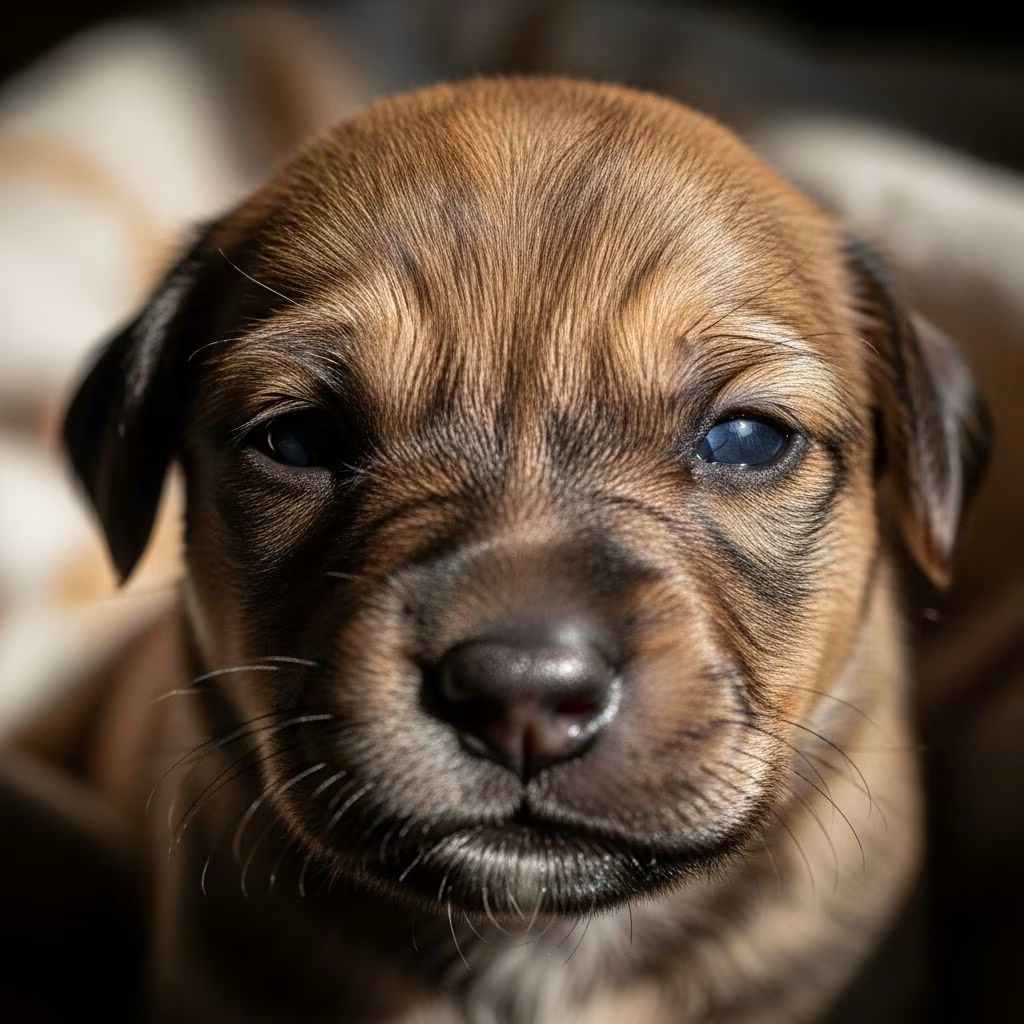
Newborn puppies emerge into the world with their eyes firmly shut, a natural adaptation that protects their delicate visual systems during the earliest, most vulnerable days. This closure lasts until around 10 to 14 days of age, when the eyelids begin to separate, marking the onset of sight. Understanding this timeline helps new dog owners monitor progress and provide the right environment for healthy development.
The Biology Behind Closed Eyes at Birth
Puppies, unlike human babies, are born in a more premature state regarding sensory maturity. Their eyes remain sealed to shield immature ocular structures, including the retina and optic nerves, from overstimulation and potential damage. This evolutionary trait aligns with canine reproduction, where litters are large and mothers need time to bond and nurse without puppies scattering.
During gestation, the eyelids fuse together early on, a process driven by genetic and neurological maturation. Separation occurs gradually as fluid pressure behind the lids diminishes and muscles strengthen. Veterinary experts note that this coincides with broader brain development, ensuring puppies aren’t overwhelmed by visual input before other senses like smell and touch are established.
Typical Timeline for Eye Opening
Most puppies crack open their eyes between days 10 and 14 postpartum. The process isn’t instantaneous; one eye might peek first, followed by the other over hours or a day. Initially, the eyes appear hazy or blue-tinged due to a high water content in the cornea and underdeveloped pigmentation in the iris.
| Age Range | Eye and Vision Milestones |
|---|---|
| Birth to 10 days | Eyes fully closed; sensitive to light but no vision. Puppies rely on scent and warmth for navigation. |
| 10-14 days | Eyelids separate; cloudy vision detects light, motion, and shapes. Blue eyes common; avoid bright lights. |
| 2-4 weeks | Improving focus; tracks objects; depth perception emerges. Cornea clears gradually. |
| 4-8 weeks | Sharper details, color differentiation begins; adult eye color starts forming. |
| 8 weeks to 6 months | Full visual maturity; precise tracking, low-light capability, and breed-specific color vision. |
This staged progression, supported by veterinary observations, ensures puppies adapt safely to their surroundings.
Factors Influencing Eye Opening Variations
While 10-14 days is standard, breed size plays a role. Smaller breeds like Chihuahuas or Pomeranians often open eyes on the earlier side, around day 10, due to faster maturation rates. Larger breeds, such as Great Danes or fox terriers, might delay until day 14 or even 21.
- Genetics: Inherited traits dictate precise timing within litters.
- Litter Dynamics: Healthier, well-nourished puppies from strong dams open sooner.
- Environmental Stress: Overly bright or noisy whelping areas can slightly postpone separation.
- Maternal Health: Complications in pregnancy may impact pup development.
Monitor all puppies individually; outliers warrant vet attention if eyes stay shut past two weeks.
What Vision Is Like Right After Opening
Freshly opened puppy eyes grant minimal sight—think grayscale blurriness. Pups detect brightness changes, large movements, and silhouettes but lack acuity for fine details or distance judgment. This fuzzy start protects against sensory overload while other senses sharpen.
Over the next weeks, neural pathways refine: by three weeks, puppies track toys or siblings; by four, they navigate obstacles better. Full color vision—favoring blues and yellows—solidifies around eight weeks, with low-light prowess unique to dogs emerging by six months.
Caring for Puppies During Eye Development
A dim, stable whelping space is crucial. Harsh lights irritate sensitive retinas, potentially causing discomfort or long-term issues. Use soft, indirect lighting and skip flash photos until eyes clear.
Gentle handling builds confidence, but never pry sealed lids—doing so risks infection, scarring, or corneal scratches. Keep the area clean with vet-approved wipes if discharge appears, signaling normal separation.
- Maintain 75-80°F whelping temperature for comfort.
- Ensure dam’s colostrum intake for immune support.
- Observe for equal opening; asymmetry might indicate issues.
Recognizing and Addressing Eye Opening Delays
If a puppy’s eyes remain closed beyond day 14, or if excessive swelling/discharge occurs, consult a vet promptly. Causes include congenital defects, infections like canine herpesvirus, malnutrition, or eyelid fusion anomalies.
Early intervention is key: exams might involve fluorescein staining for ulcers or antibiotics for infections. Most healthy pups catch up quickly with support.
Breed-Specific Eye Development Insights
Variations abound across breeds:
- Toy Breeds (e.g., Yorkies): Often day 9-12; rapid developers.
- Medium (e.g., Beagles): Standard 10-14 days.
- Giant Breeds (e.g., Mastiffs): Up to day 16; slower growth.
- Terriers (e.g., Fox Terrier): Can extend to 21 days.
Brachycephalic breeds like Bulldogs face extra risks due to facial structure; proactive breeder monitoring helps.
Integrating Vision with Other Senses
Eye opening dovetails with ear unseal (around day 14-21) and motor skills. By week three, puppies stand, toddle, and explore, using emerging sight alongside smell and hearing. This multisensory integration fosters socialization and learning.
Enrich the environment post-opening with safe toys to stimulate visual tracking, boosting brain growth.
Long-Term Eye Health Tips
Beyond infancy, nurture vision through balanced nutrition rich in omega-3s and antioxidants. Regular vet checks screen for hereditary issues like cataracts or progressive retinal atrophy, more common in breeds like Labradors.
Protect from UV exposure outdoors and maintain grooming to prevent irritants near eyes.
Frequently Asked Questions
Is it normal for puppy eyes to look cloudy after opening?
Yes, corneal haze from fluid is temporary, clearing in 1-4 weeks as pigmentation develops.
Can I help my puppy open its eyes?
No—forcing risks injury. Patience and cleanliness suffice for normals.
When do puppies get their permanent eye color?
Around 8-12 weeks, though some breeds take months.
What if only one eye opens first?
Common; the other follows soon. Persistent lag needs vet review.
How does eye development affect puppy behavior?
New sight spurs exploration, play, and litter bonding by weeks 3-4.
References
- When Do Puppies Open Their Eyes? Eye Development Explained — Rover.com. 2023. https://www.rover.com/blog/when-do-puppies-open-their-eyes/
- When Do Puppies Open Their Eyes — Petcube. 2023. https://petcube.com/blog/when-do-puppies-open-their-eyes/
- Eye Sight Development in Puppies and Dogs — Sierra Pet Meds. 2023. https://sierrapetmeds.com/blog/eye-sight-dogs/
- When Do Puppies Open Their Eyes? — Outward Hound Furtropolis. 2023. https://outwardhound.com/furtropolis/dogs/when-do-puppies-open-their-eyes
- Puppy Development Stages From Birth to 2 Years Old — Best Friends Animal Society. 2023. https://bestfriends.org/pet-care-resources/puppy-development-stages-birth-2-years-old
- Puppy development from birth to adulthood — Royal Canin US. 2023. https://www.royalcanin.com/us/dogs/puppy/puppy-development-from-birth-to-adulthood



