

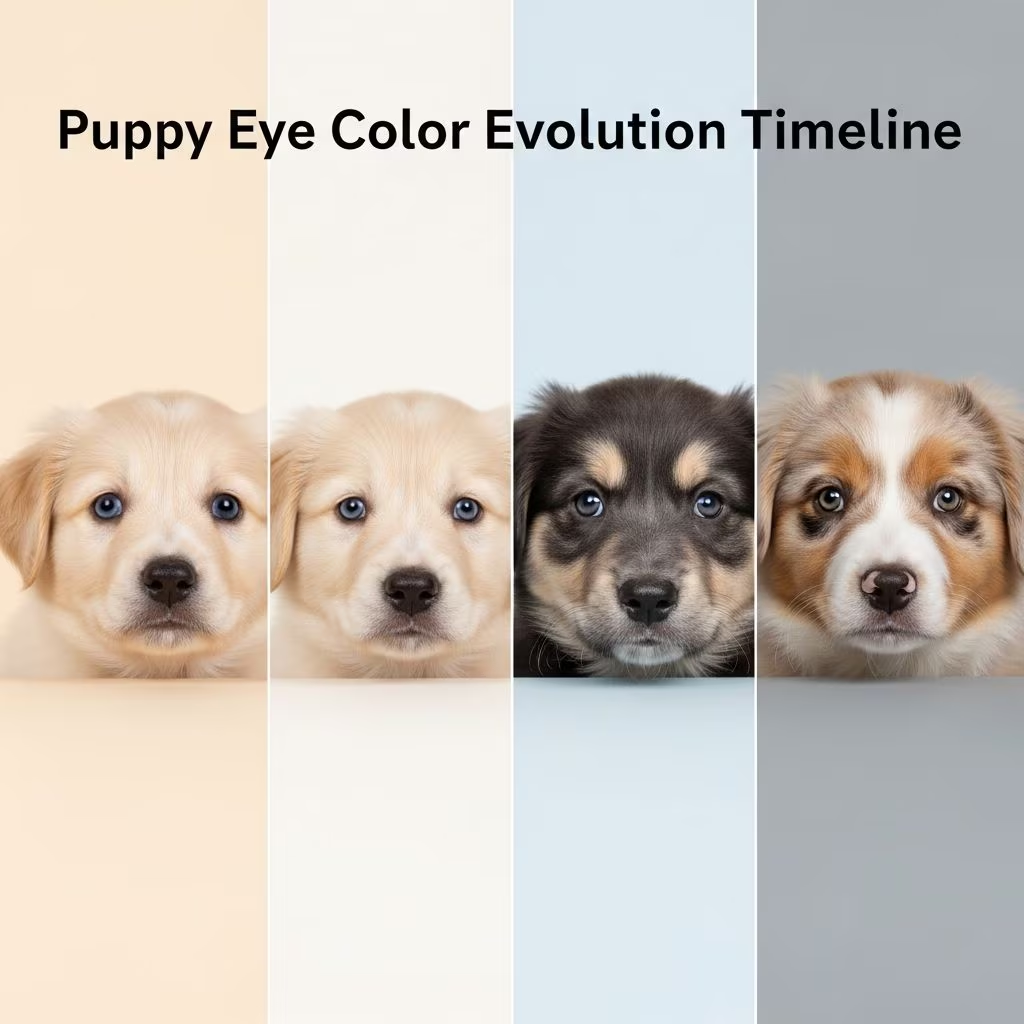
The enchanting blue eyes of newborn puppies captivate many new pet owners, but this hue is often temporary. Eye color in puppies undergoes a remarkable transformation driven by pigment development, typically stabilizing between 3 to 6 months of age. Understanding this process helps owners track healthy growth and spot potential issues early.
Birth to Eye Opening: The Hidden Development Phase
Newborn puppies enter the world with their eyes firmly shut, a protective measure as their visual systems mature. This closure lasts from birth until around 7 to 14 days, allowing the optic nerves and retina to form without light overload. During this period, the iris—the colored part of the eye—begins laying down melanin, the pigment responsible for final coloration, though it’s invisible behind sealed lids.
- Days 0-7: Eyes closed; puppies navigate via scent and touch.
- Days 7-14: Gradual opening starts; initial vision detects only light and shadow.
At opening, eyes appear hazy blue-gray due to minimal pigment and light scattering in the iris, similar to a human baby’s eyes. This isn’t the permanent color but a starting point for further changes.
Initial Eye Opening: First Glimpses of Blue
Between 10 and 14 days, puppies’ eyes crack open, revealing a uniform slate-blue or dark gray shade. Vision remains blurry, with focus limited to 6-12 inches—ideal for spotting mom. The blue arises from low melanin levels; light reflects off the eye’s tapetum lucidum (the glow-in-dark layer) and scatters like the sky.
Breeds vary slightly: some like Siberian Huskies show vivid sky blue early, hinting at retention, while others darken faster. Owners often mistake this for the final color, but pigment granules multiply rapidly post-opening.
| Age Range | Typical Eye Appearance | Vision Capability |
|---|---|---|
| 10-14 days | Blue-gray, hazy | Light/dark detection |
| 2-3 weeks | Steel blue, subtle green tinge | Basic shapes, movement tracking |
Early Changes: From Blue to Emerging Tones (Weeks 3-4)
By 3-4 weeks, melanin production accelerates upon light exposure, triggering the first shifts. Eyes transition from pure blue to grayish-green or yellowish hints. Puppies with eventual dark eyes show olive-gray flecks, while lighter breeds linger paler.
This phase reveals litter differences: siblings may diverge based on genetics. Sky-blue persistence signals potential permanent blue eyes, rare outside breeds like Australian Shepherds.
- Observe parents’ eyes for clues—dark eyes breed true more reliably.
- Subtle green rims indicate building eumelanin (brown pigment).
Mid-Development: Golden and Amber Phases (Weeks 4-12)
From 4 to 12 weeks, colors intensify. Blue fades to golden, honey, or amber as pheomelanin (yellow-red pigment) and eumelanin balance. Black-coated dogs (D/- B/- genotype) shift blue → olive → brown swiftly. Liver or chocolate breeds (b/b) go blue → green → amber → hazel slower.
At 8-10 weeks, pale eyes in dilute breeds (like Weimaraners) may still evolve. Full color lock-in varies: 9-12 weeks for most, up to 16 weeks for lights.
Maturity Milestone: Final Color Set (3-6 Months)
By 3 months, 80-90% of puppies near adult color; 6 months confirms it. Browns dominate, but blues, ambers, and heterochromia (split colors) persist in select lines. Post-6 months changes are exceptional, possibly signaling health concerns.
Dogs perceive blues/yellows best, aiding low-light hunting—a evolutionary holdover refined by puppyhood.
Genetic Foundations of Canine Eye Shades
Eye color stems from melanin types and quantity, coded in genes like TYRP1 (B locus for black/brown) and dilution factors. High melanin yields dark brown; low yields blue via scattering.
- Eumelanin: Black/brown base; dictates dark eyes.
- Pheomelanin: Yellow/red; lightens to amber/hazel.
- Merle gene: Often causes blue or split eyes.
Breeds like Dalmatians risk heterochromia from piebald spotting. Family lines predict outcomes better than averages.
Breed-Specific Patterns in Eye Transformation
| Breed Group | Starting Color | Final Common Shades | Timeline Notes |
|---|---|---|---|
| Black/Tan (e.g., Labs) | Dark blue | Brown | Fast: 4-8 weeks |
| Liver (e.g., Vizslas) | Blue-gray | Amber/Hazel | Slower: 10-16 weeks |
| Merle (e.g., Collies) | Sky blue | Blue/Multi | Often retains blue |
These patterns reflect coat-eumelanin links, with exceptions from polygenic traits.
Eye Health Monitoring During Color Shifts
Normal changes are gradual; abrupt shifts, cloudiness, or redness warrant vet checks for infections, cataracts, or glaucoma. Puppies’ sensitive eyes need dim lighting early.
- Clean gently with vet saline.
- Avoid bright flashes.
- Schedule wellness at 6-8 weeks.
Blue retention isn’t always merle-related; rule out albinism or congenital defects.
Common Myths About Puppy Eye Colors
Myth 1: All puppies start blue and turn brown. Reality: Some brown-eyed pups open brown; blues stay in breeds.
Myth 2: Diet speeds changes. Reality: Genetics rule; nutrition supports overall health.
Myth 3: Adult changes mean issues. Reality: Rare; consult vet for haze or color loss.
Frequently Asked Questions
Can a puppy’s eyes change color after 6 months?
Rarely; by then, melanin stabilizes. Changes post-maturity may indicate cataracts or uveitis—see a vet promptly.
Why do some litters have varying eye colors?
Genetic recombination; each pup inherits unique allele combos from parents, amplified by modifiers.
Do blue-eyed adult dogs have vision problems?
No; functional vision persists, though low melanin slightly reduces contrast in bright light.
How to predict final eye color early?
Check 3-week green tinges (dark future) vs. sky blue (likely permanent). Parentage offers best odds.
Is heterochromia harmful?
Usually cosmetic; linked to white/merle patterns but not inherently vision-impairing.
Supporting Vision Growth in Puppies
Enhance development with safe play, omega-3 foods, and routine exams. By 6 months, expect adult acuity: 20/75 vision, motion-savvy, dichromatic color sense.
This journey from veiled newborn to keen-eyed companion underscores canine growth’s wonders. Track yours closely for joy and health.
References
- Eye Sight Development in Puppies and Dogs — Sierra Pet Meds Blog. 2023. https://sierrapetmeds.com/blog/eye-sight-dogs/
- When Do Puppies Eyes Open? — Purina Articles. 2024. https://www.purina.com/articles/dog/puppy/health/when-do-puppies-eyes-open
- Puppy Eye Color Change — Coats and Colors. 2023. https://coatsandcolors.com/puppy-eye-color-change/
- Which Eye Colors Are Most Common in Dogs? — Orivet Genetic Testing Blog. 2024. https://blog.orivet.com/which-eye-colors-are-most-common-in-dogs/
- When Do Puppies’ Eyes Change Color? Average Age & … — Dogster. 2025. https://www.dogster.com/dog-health-care/when-do-puppies-eyes-change-color



