

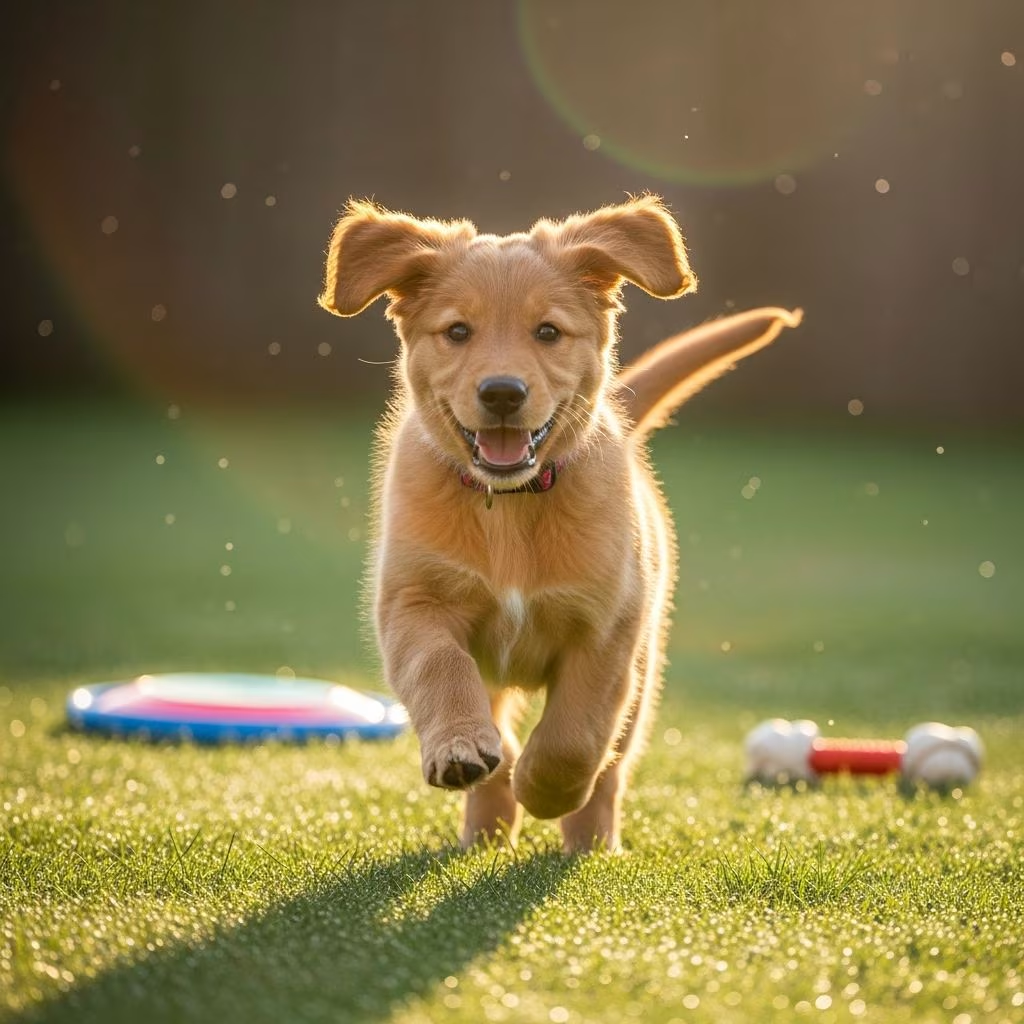
Proper exercise is essential for puppies to develop strong muscles, healthy joints, and balanced energy levels. During their rapid growth phase, activities must prioritize safety to protect developing bones and growth plates, which close at different times based on breed size. This guide outlines tailored routines by age, blending physical activity with mental engagement to foster well-rounded development.
Understanding Puppy Growth and Exercise Needs
Puppies experience explosive growth in their first year, making them vulnerable to injuries from excessive strain. Growth plates—soft areas at bone ends—remain open until maturity, typically 7 months for small breeds and up to 14-22 months for large ones, especially if neutered early. Overdoing high-impact activities can lead to long-term issues like hip dysplasia or stunted growth. Instead, focus on low-stress exercises that build coordination and strength gradually.
A common benchmark is 5 minutes of structured exercise per month of age, twice daily—for a 3-month-old, that’s 15 minutes per session. Always observe your puppy’s cues: enthusiasm indicates readiness, while lagging or excessive panting signals rest time. Consult a veterinarian for breed-specific advice, as larger dogs need more caution.
Exercise Recommendations by Puppy Age
Tailor activities to developmental stages for optimal results. Use soft surfaces like grass or dirt to minimize joint stress, and incorporate frequent sniff breaks for natural exploration.
8-12 Weeks: Gentle Introductions
At this stage, puppies tire quickly and need mostly rest—up to 18-20 hours daily. Prioritize short, supervised sessions to build confidence without fatigue.
- Sustained Walks: 50-200 feet at a time on soft ground, with sniffing pauses. Limit formal leash training to 2 minutes.
- Play: Roll balls gently or drag toys in circles. Keep tugging low to maintain neck alignment.
- Jumping/Stairs: Ground-level bars only; supervise single staircases, no unsupervised descents.
- Mental Stimulation: Basic commands like sit or stay, plus puzzle toys.
Carry puppies in public until fully vaccinated, and limit to home/garden play.
12-16 Weeks: Building Stamina
Puppies gain coordination; extend sessions slightly while monitoring for reluctance.
- Sustained Walks: Up to 100-200 feet, volunteer-based; formal heeling at 2-5 minutes.
- Sniff and Stroll: 15-20 minutes informally, slow pace.
- Running/Chasing: Allow self-paced running; gentle ball rolls only.
- Other: Introduce simple stretches like puppy downward dog at 8 weeks.
4-6 Months: Increasing Variety
Energy peaks, but avoid repetition. Adventure walks on varied terrain promote natural movement.
- Sustained Walks: 200-400 feet, up to 20-30 minutes on soft surfaces if puppy leads.
- Sniff Sessions: Up to 45 minutes slow-paced.
- Agility: Wrist-height jumps, ramps, wobble boards; 1-2 obstacles max.
- Training: Short command sessions (sit, recall) with treats.
| Age | Walk Duration (Soft Surface) | Leash Training | Impact Activities |
|---|---|---|---|
| 8-12 Weeks | 50-200 ft | 2 min | Ground bars |
| 12-16 Weeks | 100-200 ft | 2-5 min | Ground bars |
| 4-6 Months | 200-400 ft / 20-30 min | 5-10 min | Elbow-height jumps |
| 6-12 Months | 20-30 min+ / 60 min sniff | 10+ min | Supervised stairs |
6-12 Months: Advanced Conditioning
As growth plates near closure, introduce endurance cautiously. For large breeds, delay until 10-14 months.
- Walks/Hikes: 20-60 minutes with sniffing; introduce dirt/turf hiking.
- Strength: Core exercises post-6 months, like limb strengthening.
- Play: Gentle lobs for fetch, low tugging; discourage ball launchers.
Top Safe Activities for Puppies
Emphasize low-impact options to engage body and mind.
- Leash Walks: Short, exploratory outings several times daily.
- Swimming: Supervised with life jacket; ideal cardio without joint load.
- Puzzle Play: Snuffle mats, treat dispensers for mental fatigue.
- Hide-and-Seek: Boosts problem-solving and gentle movement.
- Off-Leash Exploration: Enclosed areas with longline for safety.
- Social Play: With vaccinated dogs, supervised to prevent roughhousing.
Avoid: High-speed chasing, repetitive jumping, hard surfaces, or unsupervised stairs.
Mental Stimulation: Equally Vital
Brain games tire puppies as effectively as runs, preventing boredom-induced mischief. Start formal training early: 6-week programs like AKC S.T.A.R. Puppy teach sit, down, recall in fun bursts. Use small treat pieces for quick sessions—repetitions build habits without overwhelm.
- Basic commands via positive reinforcement.
- Interactive toys and feeders.
- Socialization with controlled guest visits or vaccinated playmates.
Signs of Overexercise and Rest Tips
Watch for limping, reluctance, heavy panting, or stiffness—these demand immediate rest. Puppies self-regulate but may push too far; intervene by leashing and retreating. Ensure 18+ hours sleep, especially under 16 weeks. Cover slippery floors at home.
Breed and Individual Considerations
Small breeds mature faster; giants like Great Danes need extended caution. Neutering may delay plate closure. Overweight puppies face higher risks—maintain lean body via portion control alongside activity.
Common Myths Debunked
- Myth: Puppies need hours of fetch. Reality: Repetitive impact harms joints.
- Myth: More exercise prevents hyperactivity. Reality: Rest is crucial for growth.
- Myth: All breeds follow same timelines. Reality: Size dictates maturity.
Frequently Asked Questions
How often should I walk my puppy?
Several short sessions daily, starting at 5 minutes per month of age, twice a day. Adjust by energy levels.
Can puppies go swimming?
Yes, supervised with a life jacket—excellent low-impact exercise.
When to start agility training?
Low obstacles at 4-6 months; full after growth plates close.
Is training exercise enough?
Mental work counts—short sessions tire effectively.
What if my puppy seems hyper?
Balance with rest and puzzles, not more physical output.
References
- Guidelines for exercising pups: separating myths from science — Veterinary Ireland Journal. 2023. https://www.veterinaryirelandjournal.com/small-animal/392-guidelines-for-exercising-pups-separating-myths-from-science
- Puppy Exercise Chart By Age — Freedom Service Dogs. 2022-04. https://freedomservicedogs.org/wp-content/uploads/2022/04/Puppy-Exercise-Chart-By-Age-Exercise-Chart.pdf
- The Puppy Workout Plan: How Much Exercise is Too Much? — Toronto Vet Rehab. 2023. https://torontovetrehab.com/blog/the-puppy-workout-plan-how-much-exercise-is-too-much
- Exercising your puppy — PDSA. 2024. https://www.pdsa.org.uk/pet-help-and-advice/looking-after-your-pet/puppies-dogs/exercising-your-puppy
- Puppy Exercise & Activities for Training Your Puppy — AKC. 2024. https://www.akc.org/expert-advice/training/puppy-active-stimulation-and-exercise/



