

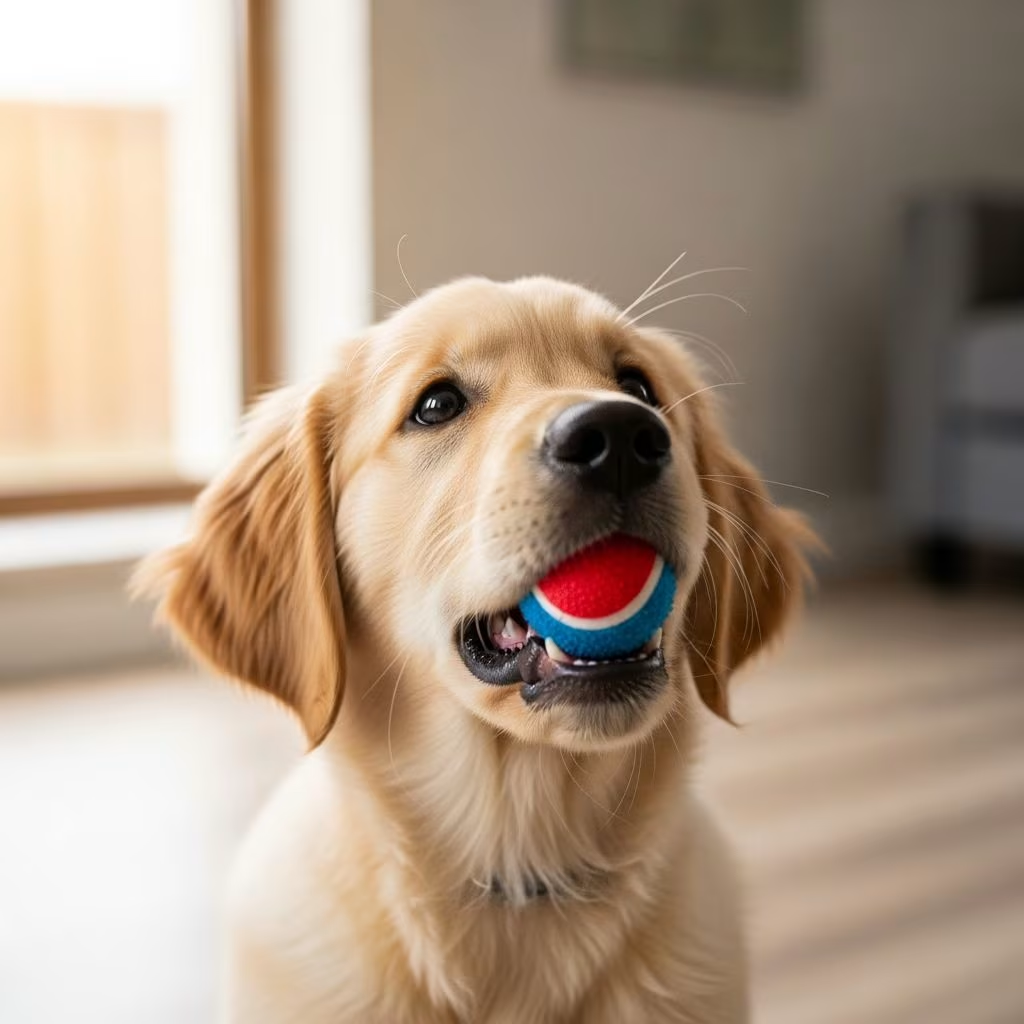
Teaching your puppy to release objects on command is one of the most critical skills for safety and harmony in your home. This command prevents ingestion of harmful items, reduces chasing games that escalate mischief, and fosters a responsive relationship built on trust rather than force.
Why the Drop It Command Matters for Puppy Owners
Puppies explore the world primarily through their mouths, often grabbing socks, shoes, or worse—toxic substances. A reliable **drop it** cue ensures they let go promptly, averting veterinary emergencies and property damage. Unlike ‘leave it,’ which prevents picking up items, drop it addresses situations where something is already in their mouth, making it indispensable for daily life.
Statistics from veterinary reports highlight the risks: thousands of dogs annually require treatment for swallowing foreign objects, many preventable with basic obedience. Early training during the impressionable puppy phase (8-16 weeks) yields the best results, as their brains are wired for learning through play and rewards.
Foundational Principles of Positive Reinforcement Training
Effective puppy training relies on positive reinforcement, where desired behaviors earn rewards, strengthening neural pathways. Avoid punishment, which can lead to resource guarding or fear-based responses. Key principles include:
- Timing: Reward within 1-2 seconds of the behavior to create clear associations.
- Consistency: Use the same cue and response every time across household members.
- High-Value Rewards: Match treats or toys to the item’s appeal—use chicken for a sock, a squeaky toy for a chew.
- Short Sessions: 5-10 minutes, 3-4 times daily to maintain engagement without fatigue.
Start in low-distraction environments like a quiet room, gradually increasing challenges to build reliability.
Step-by-Step Method to Teach Drop It with Toys
Begin with toys, as puppies love them and they’re safe for practice. This builds the cue’s foundation before tackling forbidden items.
- Engage in Play: Toss or offer a toy, letting your puppy grab and enjoy it briefly (10-30 seconds).
- Issue the Cue: Calmly say “drop it” while holding the toy still—no tugging, which keeps play mode active.
- Present Trade: Immediately show a high-value treat near their nose. Most puppies release instinctively for food.
- Mark and Reward: Say “yes!” or use a clicker the instant they drop, then deliver the treat. Praise enthusiastically.
- Resume Play: Return the toy to show dropping ends play only momentarily, encouraging compliance.
Repeat 10-15 times per session. After 2-3 days, test by saying “drop it” without an immediate trade. If they drop, jackpot reward (multiple treats). Gradually fade trades, rewarding randomly to prevent anticipation dependency.
Adapting for Food-Driven vs. Toy-Driven Puppies
| Puppy Type | Primary Reward | Training Adjustment |
|---|---|---|
| Food-Motivated | Treats (e.g., cheese, hot dog bits) | Use toys as initial item; trade up to better food. |
| Toy-Motivated | Another toy (equal or higher value) | Two-toy trade: offer squeakier or tug-style toy. |
| Mixed | Alternate treats/toys | Vary rewards to prevent predictability. |
For toy lovers, select lower-value practice toys first (e.g., old rope vs. favorite ball). If resistance persists, immobilize gently by holding the collar and saying “settle” to pause play, then retry the cue.
Progressing to High-Value and Real-Life Items
Once toys are mastered (90% success rate), introduce tempting items like tissues or sticks under supervision.
- Supervised Access: Allow brief chewing, then cue “drop it” with a superior trade (e.g., bone for a sock).
- Practice with edibles cautiously—only if no guarding history. Use liver treats for a stolen snack.
- Distance Training: Start 3 feet away, progressing to 10+ feet. Use a long leash for control.
Incorporate movement: toss toys for retrieval, cue drop before chewing. Add distractions like park noises after indoor proficiency.
Overcoming Common Puppy Challenges
Puppies may run, guard, or ignore cues. Solutions:
- Running Off: Never chase—drop to the ground or run opposite to redirect. Use a drag line for gentle reeling.
- Guarding: Build trades as always better; consult a trainer if aggression appears.
- Ignoring Cue: Return to basics with easier items; ensure rewards outvalue the object.
- High Arousal: Pause play by collar hold and “settle,” resetting focus.
Table of Troubleshooting:
| Issue | Solution | Timeline |
|---|---|---|
| Refuses trade | Higher value reward; lower item value | 1-2 sessions |
| Runs with item | Ignore chase; recall alternative | 3-5 days |
| Slow release | Fade trades; random jackpots | Ongoing |
Integrating Drop It into Everyday Routines
Embed training seamlessly: during fetch, walks, or clean-up. Pair with “leave it” for comprehensive control—leave it for ground items, drop it for mouthed ones. For distance, practice verbal cues during play, rewarding off-leash drops.
Advanced: Teach during tug by stopping motion on cue, transitioning to hands-free releases for sports like disc dog.
Safety First: When to Seek Professional Help
If your puppy shows resource aggression, stiffens, or growls, pause self-training. Certified trainers (CPDT-KA) use force-free methods. American Veterinary Society of Animal Behavior endorses positive techniques, citing reduced fear in studies.
FAQs
What age should I start drop it training?
As early as 8 weeks; puppies learn fastest young.
Drop it vs. leave it—what’s the difference?
Leave it prevents touching; drop it releases what’s held.
What if my puppy swallows things anyway?
Supervise constantly; use crate training for absences.
How long until reliability?
1-4 weeks with daily practice; lifelong maintenance needed.
Can I use this for adult dogs?
Yes, but address history; older dogs may need patience.
Long-Term Maintenance and Proofing
Randomize rewards, practice weekly in new settings. Track progress in a journal: success rate, items, environments. This ensures the cue generalizes, keeping your puppy safe indefinitely.
References
- Teach Your Dog to Drop Anything — Even at a Distance! ("out" without …) — YouTube (McCann Dogs). 2023. https://www.youtube.com/watch?v=ExeOy_KdpP4
- Drop It! Teaching Your Dog to Drop Anything Quickly and Easily — McCann Dogs. 2024. https://www.mccanndogs.com/blogs/articles/drop-it-teaching-your-dog-to-drop-anything-quickly-and-easily
- How to Teach a Dog to Drop It: My Labrador’s Sock Obsession — K9 Connoisseur. 2024. https://k9connoisseur.com/blogs/news/how-to-teach-a-dog-to-drop-it
- Teaching "Drop It" Shouldn’t Look Like THIS — YouTube (McCann Dog Training). 2023. https://www.youtube.com/watch?v=askd7ENYXpQ



