Puppy Crate Training Guide: Expert Tips For Happy Puppies
Transform crate time into a positive experience for your puppy with proven, step-by-step strategies to overcome resistance and build confidence.
Puppy Crate Training Guide
Many new puppy owners face the challenge of a pet that shows discomfort or outright aversion to the crate. This essential tool for house training, safety, and travel can become a source of stress if introduced incorrectly. With patience and positive methods, you can turn the crate into a comforting den-like space your puppy willingly enters.
Why Crate Training Matters for Puppies
Crate training leverages a puppy’s natural instinct to seek enclosed, secure spaces, mimicking a den where wild canines rest and feel protected. When done right, it aids potty training by preventing accidents, reduces destructive chewing during alone time, and eases travel by providing familiarity. Puppies under six months generally cannot hold their bladder longer than their age in months, making short crate periods ideal for scheduled breaks.
Beyond practicality, a well-trained puppy views the crate as a retreat, lowering separation anxiety risks. Studies from animal behavior experts note that properly acclimated dogs sleep better and exhibit fewer stress behaviors like excessive barking. Skipping this step can lead to long-term issues, including reluctance to settle or heightened fear responses.
Selecting the Perfect Crate for Your Puppy
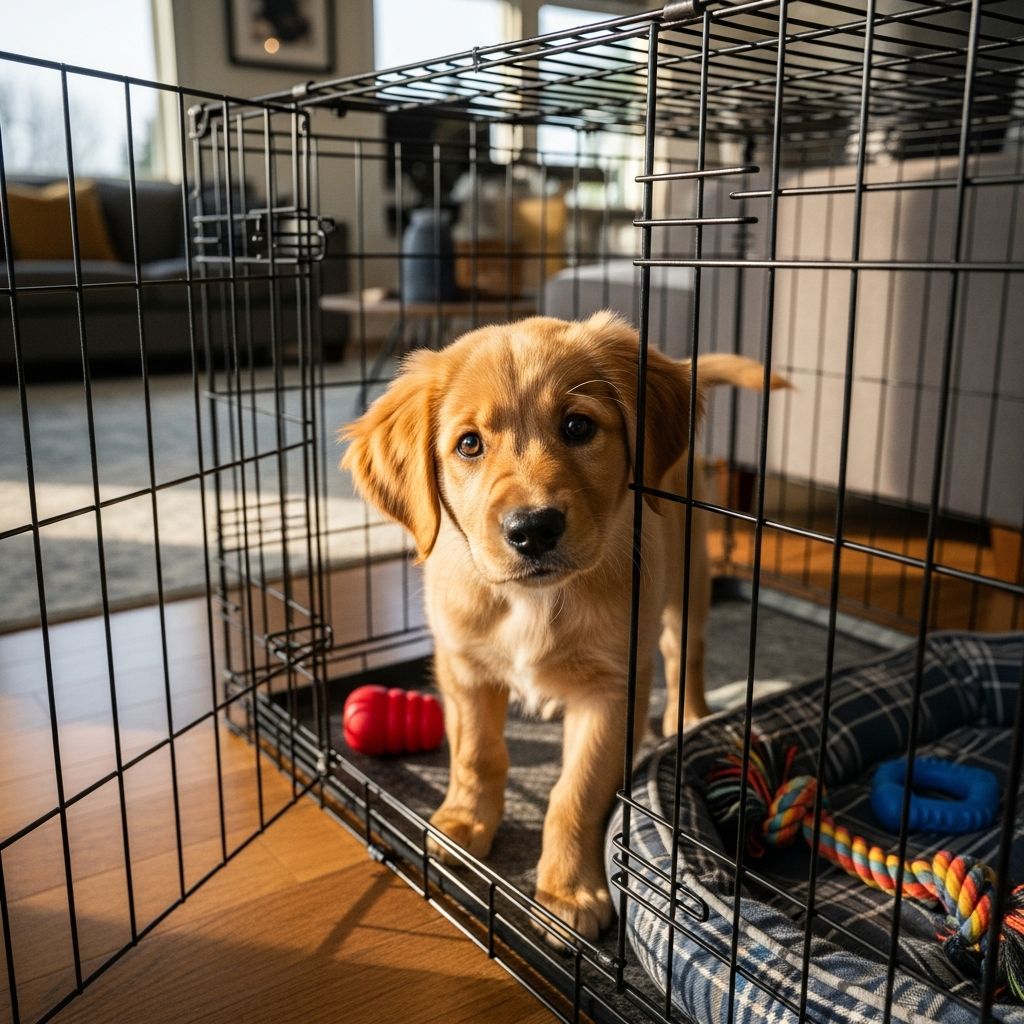
Choose a crate sized just right: large enough for your puppy to stand, turn around, and lie down comfortably, but not so spacious they can soil one end and sleep in the other. For growing breeds, opt for divider panels to adjust space as they mature.
- Wire crates with trays offer ventilation and easy cleaning; cover partially for coziness.
- Plastic kennels suit travel with their solid sides for security.
- Soft-sided options work for small, non-chewing dogs but avoid for heavy chewers.
Placement is key—position in a family area for social comfort, avoiding isolation that breeds anxiety. Add a soft, washable bed and familiar toys to enhance appeal.
Building Positive Associations from Day One
Start slow to prevent aversion. Never force entry; instead, make the crate irresistible through rewards.
- Leave the door open and drop high-value treats near the entrance, progressing inside over days.
- Speak cheerfully, praising voluntary entry without luring aggressively.
- Incorporate food-dispensing toys randomly to encourage lingering.
Feed meals inside with the door open initially, closing briefly as comfort grows. This ties the space to nourishment and safety. Sessions should occur when the puppy is calm, not mid-play, to associate it with rest.
Step-by-Step Crate Training Process
Follow this gradual progression for success, repeating steps as needed.
| Step | Duration | Goal | Tips |
|---|---|---|---|
| 1. Free Exploration | Days 1-3 | Voluntary entry | Treats/toys inside; door propped open |
| 2. Short Closures | 1-5 minutes | Door tolerance | Praise quiet moments; ignore whines |
| 3. Alone Time | 5-30 minutes | Separation comfort | Stay nearby initially, then step out |
| 4. Nap/Meal Crating | 30-60 minutes | Routine integration | Use when tired; extend gradually |
| 5. Overnight & Daytime | Hours | Full reliability | Potty breaks every 2-4 hours for young pups |
Consistency across family members prevents confusion. Track progress in a journal to note triggers and improvements.
Handling Resistance and Common Setbacks
Puppies may whine, paw, or vocalize initially—these are normal extinction bursts. Respond by waiting for quiet before release, rewarding silence.
- Persistent barking: Cover crate fully at night; use white noise to drown out stimuli.
- Escape attempts: Ensure secure latches; reinforce with chew-proof barriers.
- Fear from past trauma: For rescues, regress to exploration; consult vets for anxiety aids.
Avoid punishments like yelling, which heighten fear. If issues persist beyond two weeks, check for medical causes like urinary infections.
Advanced Techniques for Reluctant Puppies
For tough cases, layer methods: pair entry with a clicker for precise rewards, or use puzzle feeders to extend stay times. Gradually introduce absence by staggering door closures—sometimes latch, sometimes not—to reduce predictability anxiety.
Transport training: Carry the covered crate around the house before car trips, feeding inside during short drives. For multi-dog homes, train separately to avoid competition.
Daily Routines and Long-Term Success
Integrate crating into schedules: naps after play, overnight post-potty, and brief daytime holds mirroring your absences. Puppies 8-12 weeks manage 2-3 hours max; adults up to 6-8.
Exercise first prevents restlessness—tire them physically and mentally. Rotate toys to maintain interest, ensuring nothing hazardous remains. Fade crating as house manners solidify, using it optionally for downtime.
Safety Essentials and Best Practices
Remove collars to prevent snags; provide water bowls for long periods but freeze for spills. Monitor temperature—crates shouldn’t exceed 80°F or drop below 60°F.
- Never use as punishment.
- Clean weekly with pet-safe products.
- Supervise chewers; upgrade sizes timely.
Crate limits: Not for puppies under 8 weeks without frequent checks, or over 8 hours routinely.
Frequently Asked Questions
Can I crate train an older puppy?
Yes, adults follow similar steps but may need longer acclimation. Place bedding and meals inside first.
How long until my puppy settles?
Days to weeks with daily practice; patience yields results.
Should I cover the crate?
Yes, especially nights, for den-like security.
What if whining continues?
Ignore until quiet; reinforce calm with release.
Is bedding necessary?
Absolutely—a cozy bed boosts positivity.
Real-World Tips from Experts
Behaviorists stress random rewards to mimic natural reinforcement, preventing demand barking. Videos demonstrate tossing treats progressively deeper, building confidence organically. Track breed traits—hounds may need more space, terriers more mental stimulation.
Success stories abound: Owners report puppies self-crating for naps post-training, slashing house soiling by 90% in weeks.
References
- Crate Training a Puppy — Whole Dog Journal. 2023-05-15. https://www.whole-dog-journal.com/puppies/crate-training-a-puppy/
- Puppy Crate Training — Carver Street Animal Hospital. 2024-02-10. https://www.carverstreetanimalhospital.com/resources/puppy-crate-training
- How to Crate Train Your Dog or Puppy — Humane World for Animals. 2025-01-20. https://www.humaneworld.org/en/resources/crate-training-101
- How To Crate Train Your Dog — PAWS. 2023-11-08. https://www.paws.org/resources/how-to-crate-train-your-dog/
- Crate Training 101 — Dog Trick Academy. 2024-07-12. https://www.dogtrickacademy.com/forum/threads/crate-training-101.2442/
- How to Crate Train Your Dog in Nine Easy Steps — American Kennel Club (AKC). 2025-03-05. https://www.akc.org/expert-advice/training/how-to-crate-train-your-dog-in-9-easy-steps/
- EVERYTHING You Need To Know Crate Training Plan — YouTube (Zak George’s Dog Training Revolution). 2024-09-18. https://www.youtube.com/watch?v=q_xesmK0BYg
Similar Articles








Read full bio of medha deb