
Puppy Crate Duration Guide
Discover safe crate times for puppies by age, plus proven training steps to build confidence and prevent mishaps.
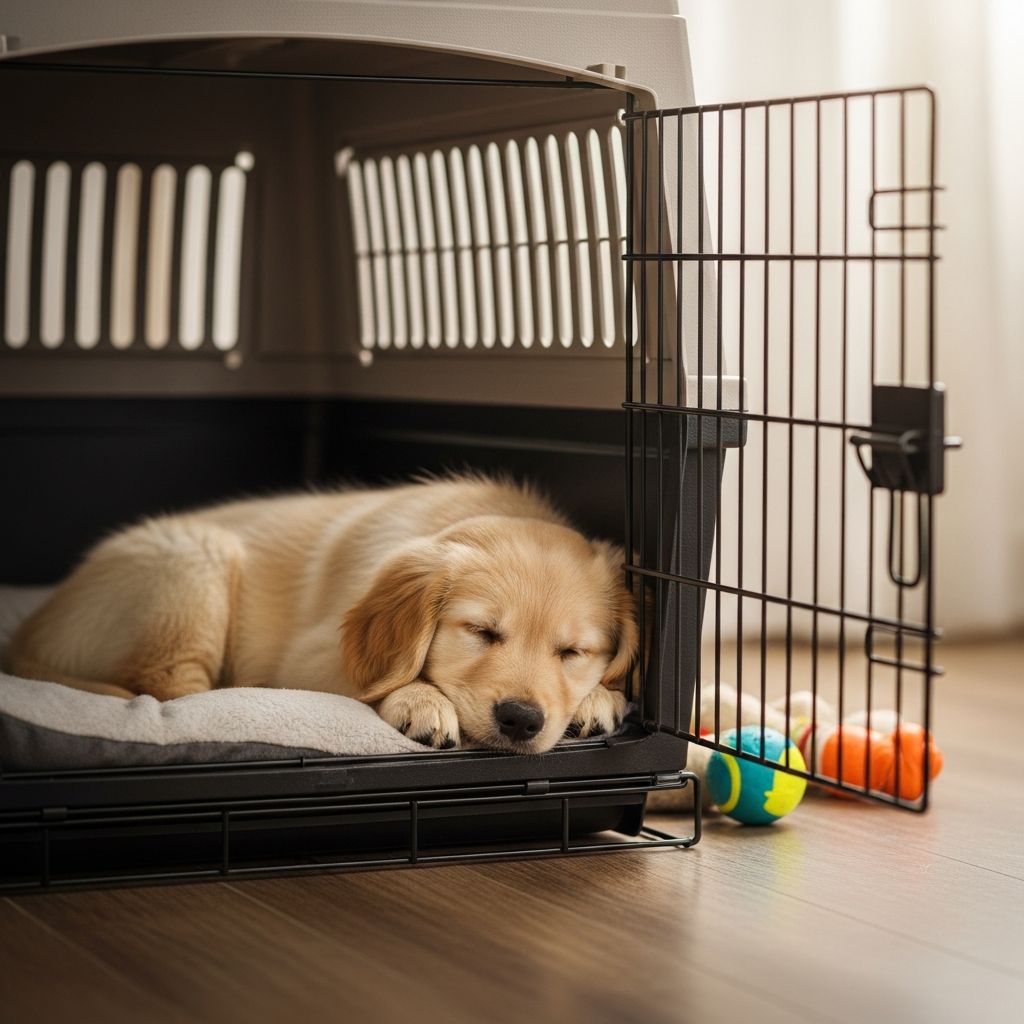
Determining how long a puppy can safely remain in a crate is essential for their physical comfort, bladder control development, and emotional well-being during house training. Puppies under six months generally should not exceed 3-4 hours in a crate at a time due to limited bladder capacity, with stricter limits based on age to avoid accidents or anxiety.
Why Crate Training Matters for Young Dogs
Crate training leverages a puppy’s natural instinct to keep their sleeping area clean, accelerating potty training while providing a secure space when supervision isn’t possible. When done correctly, it fosters independence without causing distress. However, exceeding appropriate time limits risks health issues like urinary tract infections or behavioral problems such as separation anxiety.
Start crate training as early as 8 weeks old, ideally upon bringing your puppy home. This early exposure helps them associate the crate with safety and positivity from the outset.
Age-Based Crate Time Limits
Puppies’ bladder control improves with age, roughly aligning with one hour per month of life plus one additional hour. Here’s a breakdown:
| Puppy Age | Max Daytime Crate Time | Notes |
|---|---|---|
| 8-12 weeks | 1-2 hours | Frequent potty breaks every 30-60 minutes; overnight up to 4-6 hours near your bed. |
| 3 months | 3 hours | Follow the one-hour-per-month rule; exercise before and after. |
| 4-6 months | 3-4 hours | Avoid longer to prevent anxiety; integrate with play and walks. |
| 6+ months | 4-6 hours | Adult dogs up to 6-8 hours max with ample exercise; phase out as needed. |
These guidelines prevent physical strain and promote positive crate associations. Always prioritize exercise and potty breaks post-crating.
Selecting the Ideal Crate Setup
Choose a crate sized for your puppy to stand, turn, and lie down comfortably—too large encourages accidents, too small causes discomfort. Divider panels allow growth adjustments. Place it in a high-traffic family area like the living room for initial training, making it inviting with soft bedding, toys, and a familiar blanket.
- Wire crates offer ventilation and visibility.
- Plastic kennels suit travel or noise-sensitive pups.
- Soft-sided options for portability post-training.
Cover partially with a breathable sheet at night to enhance den-like security.
Step-by-Step Puppy Crate Introduction
Introduce gradually over days or weeks, using positive reinforcement to build trust. Patience prevents resistance.
- Day 1-2: Free Access – Leave door open; toss treats inside. Feed meals nearby to link crate with good things.
- Day 3-5: Short Stays – Lure with a command like “crate,” reward entry, close door for seconds, then release with praise.
- Week 1+: Extend Time – Sit nearby 5-10 minutes, then step away briefly. Increase absences gradually to 30 minutes.
- Real Absences – Once calm for 30+ minutes, test short errands. Return before distress.
Use high-value treats and remain calm—never force entry, as it builds fear.
Sample Daily Crate Training Schedule
A consistent routine aligns crating with natural potty needs and naps. Adjust for your lifestyle.
| Time | Activity |
|---|---|
| 7 AM | Potty, breakfast in crate (10 min), potty out. |
| 8-10 AM | Play/supervised time. |
| 10-11 AM | Crate nap (1 hour). |
| 11 AM | Potty, short walk. |
| 12-1 PM | Lunch in crate, potty. |
| 1-3 PM | Training/play. |
| 3-4 PM | Crate rest. |
| Evening | Repeat pattern; bedtime crate by 10 PM. |
Overnight crating near your bed aids quick potty trips. Feed last meal 2-3 hours before bed.
Nighttime Crating Best Practices
Puppies can hold longer at night due to sleeping patterns, but limit to age-appropriate max. Position crate bedside for reassurance—your presence signals safety. Ignore minor whines to avoid reinforcing; respond only to genuine need signals.
Set a midnight potty alarm for young pups. By 4-6 months, many sleep 6-8 hours uninterrupted.
Solving Common Crate Training Hurdles
Challenges like whining, escapes, or soiling arise but are fixable with consistency.
- Whining: Differentiate need from attention-seeking. Ignore if recently pottied; release quietly after calm. Never reward cries.
- Accidents: Clean thoroughly with enzymatic cleaners. Shorten sessions; more frequent breaks.
- Fear/Anxiety: Revert to basics—more treats, shorter times. Consider calming aids like pheromone diffusers after vet consult.
- Chewing/Boredom: Provide safe Kongs with frozen treats. Ensure pre-crate exercise.
Training typically succeeds in 1-3 weeks with daily reps.
Long-Term Crate Use and Phasing Out
Many dogs benefit from crates up to 2 years or beyond for travel/security. Once house-trained (around 6-12 months), test unsupervised freedom gradually. Use for naps or departures as needed.
Success signs: Enters on cue, relaxes calmly 4+ hours, no distress.
Frequently Asked Questions
Can I crate my puppy while at work?
Only if under 6 months with a midday dog walker for breaks—no more than 3-4 hours straight.
What if my puppy hates the crate?
Go ultra-slow: meals only inside, door open. Consult a trainer if persistent.
Is overnight crating cruel?
No, when age-appropriate and positive—mimics denning instinct.
How often to clean the crate?
Daily bedding wash; spot clean accidents immediately.
When to stop crate training?
When reliable alone; often 1-2 years for full maturity.
Advanced Tips for Success
Incorporate puzzle toys for mental stimulation. Pair with obedience classes for socialization. Monitor for signs of over-crating: lethargy, aggression. Consult vets for breed-specific needs (e.g., brachycephalic breeds need more air).
Track progress in a journal to adjust timings. Consistency across family members is key.
References
- The Ultimate Guide To Crate Training Your Puppy — Eukanuba. Accessed 2026. https://www.eukanuba.com/articles/training/how-to-crate-train-your-new-puppy
- Puppy Crate Training Schedule: A How-To Guide — Diggs Pet. Accessed 2026. https://www.diggs.pet/blogs/posts/puppy-crate-training-schedule
- Crate Training A Puppy — Guide Dog Foundation. Accessed 2026. https://www.guidedog.org/gd/events-and-news/Crate_Training_A_Puppy.aspx
- Positive Crate Training Guide — Karen Pryor Academy. 2018-05. https://karenpryoracademy.com/wp-content/uploads/2018/05/Karen_Pryor_Academy_Crate_Training_Guide-PDF.pdf
- How To Crate Train Your Dog — PAWS. Accessed 2026. https://www.paws.org/resources/how-to-crate-train-your-dog/
- Crate Training Your Puppy — UC Davis Veterinary Medicine. Accessed 2026. https://www.vetmed.ucdavis.edu/sites/g/files/dgvnsk491/files/inline-files/Crate_Training_Your_Puppy.pdf
- Let’s Talk Crates – How long will my dog need one? — Baxter & Bella. Accessed 2026. https://www.baxterandbella.com/post/let-s-talk-crates-how-long-will-my-dog-need-one
Similar Articles








Read full bio of medha deb




