

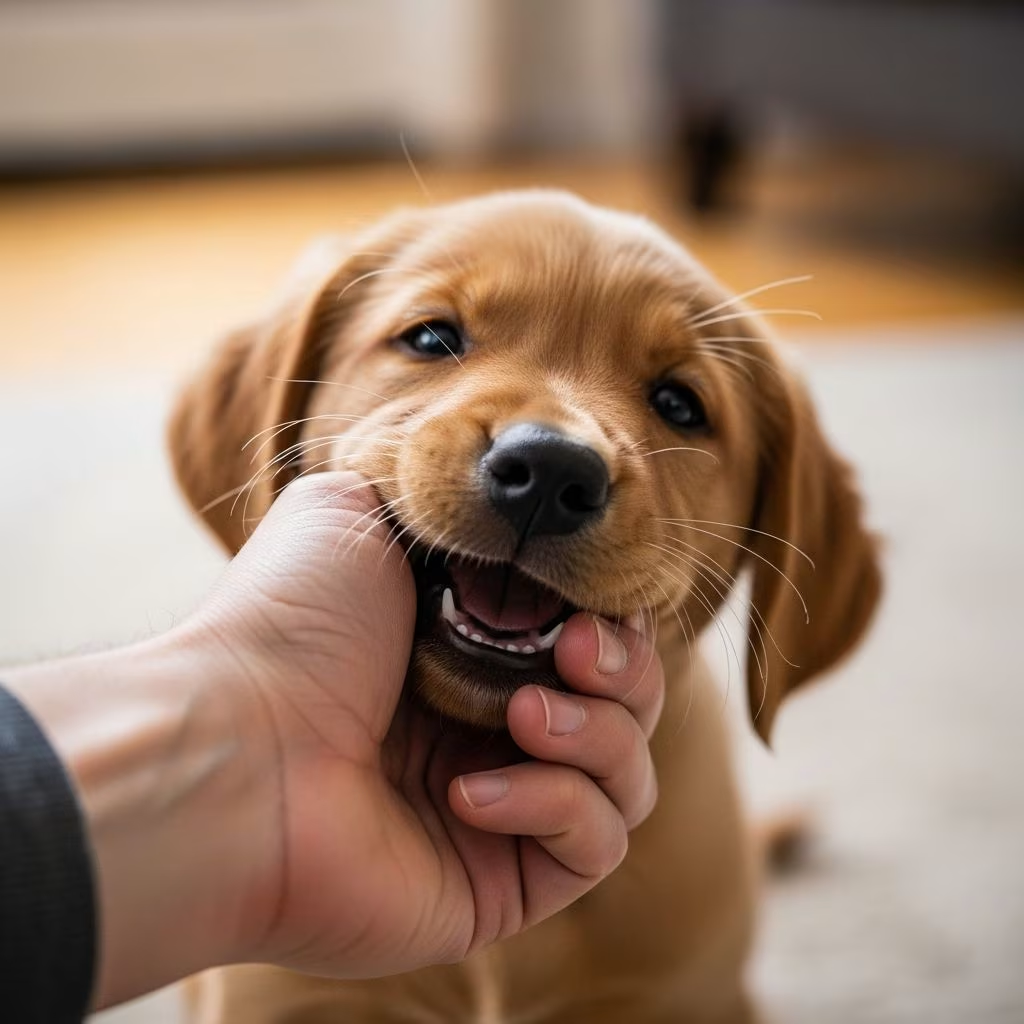
Puppies explore the world with their mouths, and mouthing is a completely normal part of their development. However, teaching a puppy to control the force and frequency of their biting—a skill known as bite inhibition—is one of the most critical lessons you can instill during their early months. A puppy who understands how to moderate bite pressure is significantly safer around children, other pets, and adults throughout their lifetime.
Understanding Why Bite Inhibition Matters
Bite inhibition is not about preventing a puppy from ever using their mouth; rather, it’s about teaching them to regulate the force they apply when they do bite or mouth. This skill becomes essential if a dog ever experiences pain, fear, or stress later in life. A dog with well-developed bite inhibition will naturally apply less pressure, reducing the severity of any accidental or defensive bite.
In natural pack settings, puppies learn bite inhibition from their littermates and mother. When a puppy bites a sibling too hard during play, that littermate yelps loudly, signaling pain. This immediate feedback teaches the puppy that hard bites end playtime. As a pet owner, you replicate this natural learning process through consistent training and feedback.
Research and professional dog training organizations emphasize that the window for establishing bite inhibition is relatively narrow—typically between 3 to 5 months of age. While it’s possible to teach this skill later, the process becomes substantially more challenging, as the puppy has already rehearsed careless mouthing habits.
The Gradual Pressure Reduction Method
Rather than attempting to eliminate mouthing entirely, the most effective approach involves gradually reducing the acceptable level of bite pressure over time. This incremental process teaches your puppy that softer mouthing is always preferable to harder biting.
Stage One: Establishing the Baseline
Begin by allowing gentle mouthing during play. Your goal is to set a clear threshold for what constitutes “too hard.” Most trainers recommend starting with a tolerance level where the puppy’s teeth make contact but apply minimal pressure. When your puppy exceeds this threshold, provide immediate feedback.
Stage Two: Introducing Feedback
When your puppy bites harder than the acceptable level, respond with a high-pitched “ouch” sound—similar to a yelp. The volume should startle but not frighten your puppy; adjust your tone based on your individual dog’s sensitivity. Immediately after the vocalization, stop all movement and interaction. Do not pull your hand away; simply freeze and become unresponsive.
The key is consistency. Every time your puppy applies pressure above your established threshold, repeat this feedback sequence. Many puppies quickly learn that hard bites terminate the fun interaction, and they begin self-regulating their bite force.
Stage Three: Progressive Tightening
As your puppy demonstrates consistent control at one pressure level, gradually lower the acceptable threshold. If your puppy successfully maintains gentle mouthing for several days without hard bites, begin providing the “ouch” feedback for bites that are only slightly harder than what you previously allowed. Continue this weekly progression, systematically reducing acceptable pressure until your puppy reliably delivers only the gentlest contact.
Managing Play Sessions and Time-Outs
Structured play sessions are the ideal context for teaching bite inhibition. However, when a puppy bites too hard despite your feedback, you must be prepared to interrupt play and implement a consequence.
Immediate Play Cessation
If your puppy bites hard after you’ve given the “ouch” feedback, stop playing immediately. The most effective technique is to stand up and walk away or step out of reach. If you have an exercise pen or baby gate in place, step over it so your puppy cannot follow. This creates a clear association: hard bites end the interaction entirely.
Time-Out Protocol
When mouthing persists despite your corrections, implement a brief time-out lasting approximately 30 to 60 seconds. Place your puppy in a puppy-proofed area, their crate, or a designated space where they cannot access you or toys. The goal is not punishment but rather a calm reset period that removes the excitement and opportunity to continue biting.
During the time-out, avoid speaking to or making eye contact with your puppy. This removes all attention, which is often the primary reinforcer for continued biting. After the period expires and your puppy has calmed, you can resume play or training. If biting escalates again, repeat the time-out.
The Role of Positive Redirection
Teaching your puppy what not to do is only half the equation. Equally important is teaching them what to do instead. Offering appropriate chewing outlets directly channels your puppy’s natural mouthing instincts into acceptable behaviors.
Chew Toy Introduction During Petting
One highly effective technique involves offering a safe chew toy whenever you pet or handle your puppy. As you reach out to scratch behind their ears with one hand, present the chew toy with the other. This teaches your puppy to associate human contact with the presence of an appropriate chewing object. Alternate which hand provides petting and which offers the toy to maintain variety and prevent your puppy from always expecting the toy in a specific location.
Treat-Based Gentleness Training
Use treat-delivery exercises to reinforce soft-mouth behavior. Hold a treat in the base or palm of your hand rather than between your fingers, making it easier for your puppy to contact it gently. Offer the treat to your dog. If you feel teeth or pressure, immediately withdraw your hand and wait a few seconds before trying again. Release the treat only when your puppy demonstrates a gentle approach. Repeat this exercise multiple times daily to build the association between soft contact and reward.
Handling Persistent or Escalating Mouthing
Most puppies respond well to consistent feedback and redirection. However, some may require additional strategies when biting becomes more frequent or intense.
The Calm Freeze Technique
When a puppy continues nipping despite your efforts, try the calm freeze method: fold your arms across your chest, turn away at a 45-degree angle, and completely ignore your puppy. Do not look at them or speak. Remain in this position, calm and quiet, until all four of your puppy’s feet are on the ground. Once they settle, calmly praise them and offer a treat. If your puppy knows “sit,” you can request that behavior before providing attention, as this gives your puppy an alternative action to perform.
Adapting Your Approach Based on Temperament
Not all puppies respond identically to training methods. Some puppies become more aroused when they hear a high-pitched “ouch” sound, interpreting it as continued play rather than correction. If your puppy escalates rather than ceases biting after you make the yelp sound, switch to a quiet approach: silently turn away, walk out of reach, or gently place your puppy in their crate without verbal fanfare. Observe your individual puppy’s response and adjust your technique accordingly.
Preventing Excessive Mouthing Through Environmental Management
While direct training is essential, managing your puppy’s environment reduces opportunities for rehearsing unwanted biting behavior.
- Limit Overstimulation: Extended play sessions increase arousal levels and the likelihood of hard biting. Keep initial play periods brief, especially with young or high-energy puppies. Gradually extend duration as your puppy develops better self-control.
- Ensure Adequate Exercise: A tired puppy is often a calmer puppy. Daily exercise appropriate to your breed and age helps burn excess energy that might otherwise fuel excessive mouthing.
- Provide Suitable Chewing Outlets: Maintain a variety of puppy-safe chew toys available during times when your puppy is likely to mouth, such as after meals or during transition periods.
- Practice Handling Desensitization: Regularly touch your puppy’s paws, ears, and mouth in calm settings to build positive associations with human contact and reduce defensive mouthing.
When to Seek Professional Guidance
Most puppies master bite inhibition through consistent home training. However, certain situations warrant consultation with a professional dog trainer or veterinary behaviorist:
- Your puppy’s biting causes injury despite consistent training efforts
- Your puppy shows signs of resource guarding or defensive biting rather than playful mouthing
- Your puppy demonstrates extreme fear responses or aggression
- You’re uncertain whether your puppy’s behavior falls within normal developmental ranges
A certified professional can assess your puppy’s temperament, identify underlying causes of excessive biting, and develop a customized training plan suited to your specific situation.
Frequently Asked Questions
What age should I start teaching bite inhibition?
Begin teaching bite inhibition as early as possible, ideally between 8 weeks and 5 months of age. This critical window coincides with when puppies are most receptive to learning and before hard biting habits become entrenched.
Is it normal for puppies to bite during play?
Yes, mouthing and playful biting are completely normal puppy behaviors. However, the force must be controlled. Uncontrolled hard biting should be addressed through the training techniques described above.
How long does it typically take to teach a puppy bite inhibition?
With consistent daily practice, most puppies show noticeable improvement within 2 to 4 weeks. However, fully reliable bite inhibition may take several months to establish completely.
Should I ever physically punish my puppy for biting?
No. Physical punishment is ineffective and can increase fear-based or defensive aggression. Focus instead on consistent feedback, redirection, and natural consequences like play cessation.
What if my puppy bites harder after I say “ouch”?
Some puppies become more aroused by the vocalization. If this occurs, abandon the “ouch” technique and instead respond with quiet, calm withdrawal. Your puppy’s individual temperament determines which approach works best.
References
- Teaching Bite Inhibition and Dealing with Rough Puppy Play — Oregon Humane Society and Seattle Humane Society. Accessed March 2026. https://www.oregonhumane.org/portland-training/teaching-bite-inhibition-and-dealing-with-rough-puppy-play/
- How to Stop Puppy Biting and Train Bite Inhibition — American Kennel Club. Accessed March 2026. https://www.akc.org/expert-advice/training/stop-puppy-biting/
- Creating Good Bite Inhibition — McCann Professional Dog Trainers. Accessed March 2026. https://www.mccanndogs.com/blogs/articles/creating-good-bite-inhibition
- Mouthy Pups – It’s Normal. Let’s Teach Them Bite Inhibition — Seattle Humane Society. Accessed March 2026. https://www.seattlehumane.org/resource-library/mouthy-pups-its-normal-lets-teach-them-bite-inhibition/



