

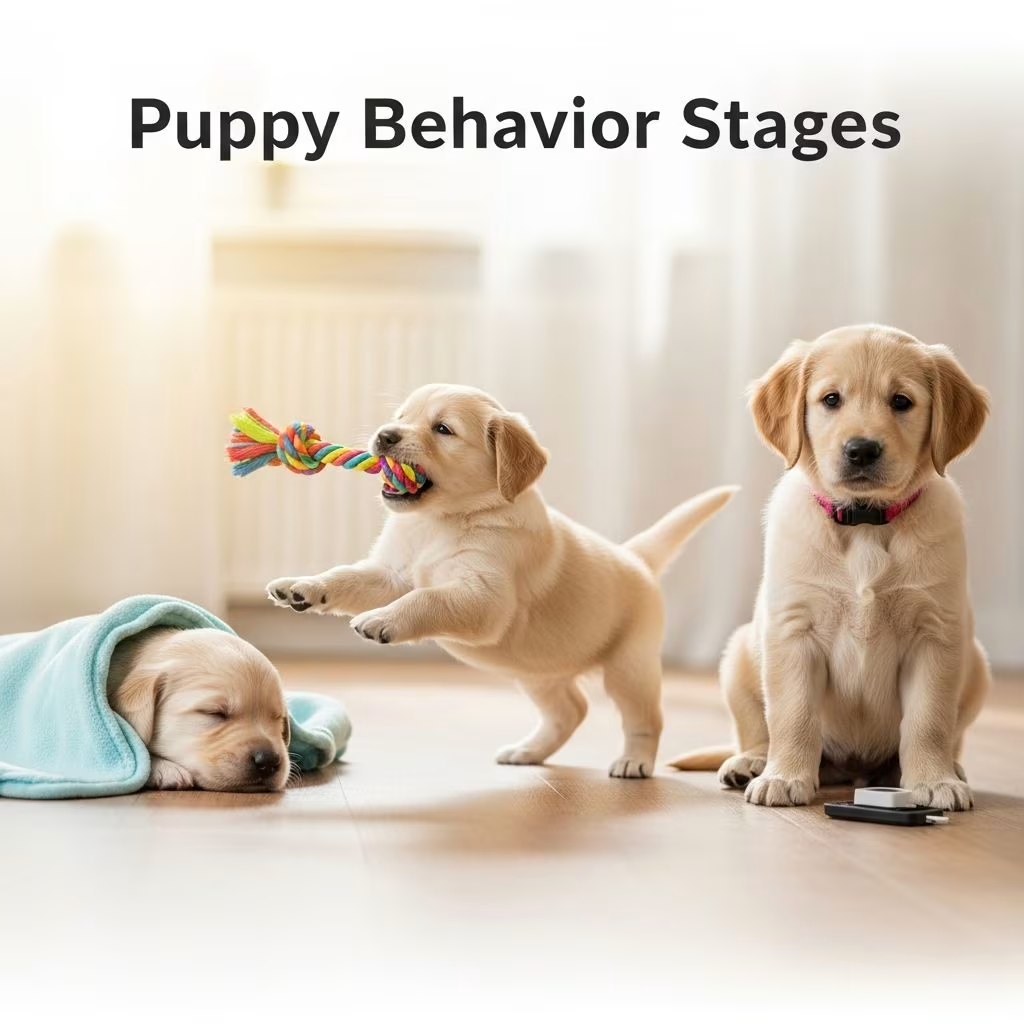
Your new puppy’s journey from tiny newborn to energetic adolescent is filled with predictable behavioral milestones. Understanding these stages helps you provide the right support, preventing issues like anxiety or poor socialization later in life. This guide outlines each phase, drawing from established canine development timelines to equip you with practical insights.
The Earliest Days: Neonatal Phase (Birth to 2 Weeks)
In the initial neonatal stage, puppies are utterly dependent on their mother. Their world is limited to basic senses of touch and taste, enabling them to nurse and feel warmth. They cannot eliminate waste independently; the dam stimulates this by licking, promoting hygiene and health.
Activity is minimal—puppies spend over 90% of their time sleeping in a huddled pile for body heat regulation. Crawling is their only movement, inching toward the mother’s milk source. Vision, hearing, and smell remain undeveloped, with eyes and ears sealed shut.
- Sleep patterns: 20-22 hours daily to fuel rapid growth.
- Mother’s role: Provides nourishment, cleaning, and protection.
- Owner tip: If hand-rearing, mimic dam’s care with gentle wiping after feeding.
This phase sets the foundation for physical health; disruptions like separation from the litter can impact later stress responses.
Opening Eyes and Ears: Transitional Phase (2 to 4 Weeks)
Around day 14, eyes flutter open, revealing initially hazy blue irises that sharpen by week 5. Ears unclog, introducing sounds, while emerging milk teeth signal weaning’s approach. Smell strengthens, guiding puppies to solid food.
Motor skills advance: wobbly standing evolves to short walks, tail wags express joy, and tentative barks emerge. Puppies interact more with littermates, practicing gentle play bites that teach bite inhibition.
Independence grows as they eliminate without stimulation. By 4 weeks, they’re aware of surroundings, influenced heavily by dam and siblings.
| Milestone | Age Range | Behavior Change |
|---|---|---|
| Eyes open | 10-14 days | Visual exploration begins |
| Teeth erupt | 3-4 weeks | Weaning starts |
| Walking | 3 weeks | Coordination improves |
Expose puppies gently to household noises now to build confidence.
Building Bonds: Primary Socialization Window (3 to 12 Weeks)
This critical period shapes lifelong attitudes toward people, dogs, and environments. From 3 weeks, puppies explore boldly, forming attachments. Peak sensitivity hits 4-9 weeks, when positive exposures create lasting comfort.
Litter play teaches dog language: inhibited bites, play bows, and ranking cues. Human interactions must be frequent and varied—introduce strangers, surfaces, sounds. By 7-9 weeks, curiosity peaks; housetraining begins as coordination refines.
- Key influences: Littermates (dog skills), humans (people skills).
- Fear imprint: Around 8-10 weeks, sudden aversions to normal items; counter with treats and calm praise.
- Training start: Basic commands like sit thrive here.
Missing this window risks fearfulness or aggression. Aim for 100+ positive encounters by 12 weeks.
Testing Limits: Ranking and Juvenile Stage (3 to 6 Months)
Rapid growth brings teething misery, spurring chewing on everything. Puppies assert themselves in playgroups, establishing dominance hierarchies with humans and dogs. Commands may be ignored as independence surges.
A second fear period around 4 months amplifies reactions to familiar things—never punish, instead desensitize gradually. Energy is boundless, but joints are vulnerable; limit high-impact exercise.
Sexual maturity looms for unsterilized pups, with mounting behaviors. Consistent rules reinforce your leadership.
| Challenge | Solution |
|---|---|
| Chewing | Provide varied chew toys; redirect immediately |
| Fear flare-up | Short, positive exposures; no forcing |
| Boundary testing | Firm, calm corrections; reward compliance |
This phase tests patience but builds resilience.
Teen Turbulence: Adolescence and Maturity (6 to 18 Months)
Adulthood nears, but hormonal shifts mimic human teens. A third chew phase and dominance challenges peak at 7-9 months. Small breeds mature emotionally faster than giants, who may act puppyish until 2-3 years.
Mood swings, leg-lifting urination, and selective deafness demand reinforced training. Spay/neuter timing affects behavior; consult vets. Exploration intensifies, including escape attempts.
- Physical cues: Growth spurts strain bones—measured exercise.
- Social shifts: Less litter reliance; adult dog playgroups aid polish.
- Maturity markers: Stable temperament by 18 months.
Patience yields a balanced adult.
Navigating Fear Periods in Puppy Development
Fear stages—8-12 weeks, 4-6 months, 6-14 months—wire temporary hypersensitivity. Puppies may cower at vacuums or shadows once loved. These are normal, neurologically driven imprints.
Strategies:
- Stay calm; anxiety transfers.
- Use high-value treats for approaches.
- Avoid floods; tiny steps build trust.
Post-fear recoveries are swift with positivity.
Practical Training Tips Across Stages
Tailor methods to developmental readiness:
- Neonatal/Transitional: Passive handling for trust.
- Socialization: Puppy classes for variety.
- Juvenile/Adolescent: Impulse control games like “leave it.”
Positive reinforcement trumps punishment always.
Nutrition and Health’s Role in Behavior
Development demands nutrient-dense food matching growth rates. Deficiencies exacerbate chewing or hyperactivity. Vet checkups catch issues like parasites mimicking misbehavior.
Common Puppy Quirks and Fixes
- Nipping: Freeze, yelp, withdraw attention.
- Housetraining slips: Frequent outs, crate training.
- Zoomies: Channel into structured play.
Frequently Asked Questions (FAQs)
What are the main puppy development stages?
Neonatal (0-2 weeks), Transitional (2-4 weeks), Socialization (3-12 weeks), Ranking/Juvenile (3-6 months), Adolescence (6-18 months).
When is the best time for puppy socialization?
3-12 weeks, especially 4-9 weeks, for optimal fear-free bonds.
How do I handle fear periods?
Positive, gradual exposures without pressure; confidence rebuilds quickly.
Is my puppy’s chewing normal?
Yes, peaks at 3-6 and 7-9 months due to teething and exploration.
When does a puppy become an adult?
Emotionally by 12-18 months; physically varies by breed size.
Choosing the Right Breed for Your Lifestyle
Behavior stages vary by breed—high-energy herders need outlets, lap dogs crave cuddles. Research matches expectations.
Word count: 1678 (excluding metadata and references).
References
- Puppy Development Stages & Behaviour Into Adulthood — Eukanuba. 2023. https://www.eukanuba.com/au/articles/puppy-development-stages-and-behaviour-into-adulthood
- Developmental Stages of Puppy Behavior — Seattle Humane. 2024. https://www.seattlehumane.org/resource-library/developmental-stages-of-puppy-behavior/
- Puppy Development Stages From Birth to 2 Years Old — Best Friends Animal Society. 2023. https://bestfriends.org/pet-care-resources/puppy-development-stages-birth-2-years-old
- The complete guide to puppy behavior and development stages — Banfield Pet Hospital. 2025. https://www.banfield.com/puppy-hub/puppy-behavior-and-training
- Developmental Stages — Purdue University Canine Welfare Science. 2024. https://caninewelfare.centers.purdue.edu/behavior/puppy-development/developmental-stages/



