

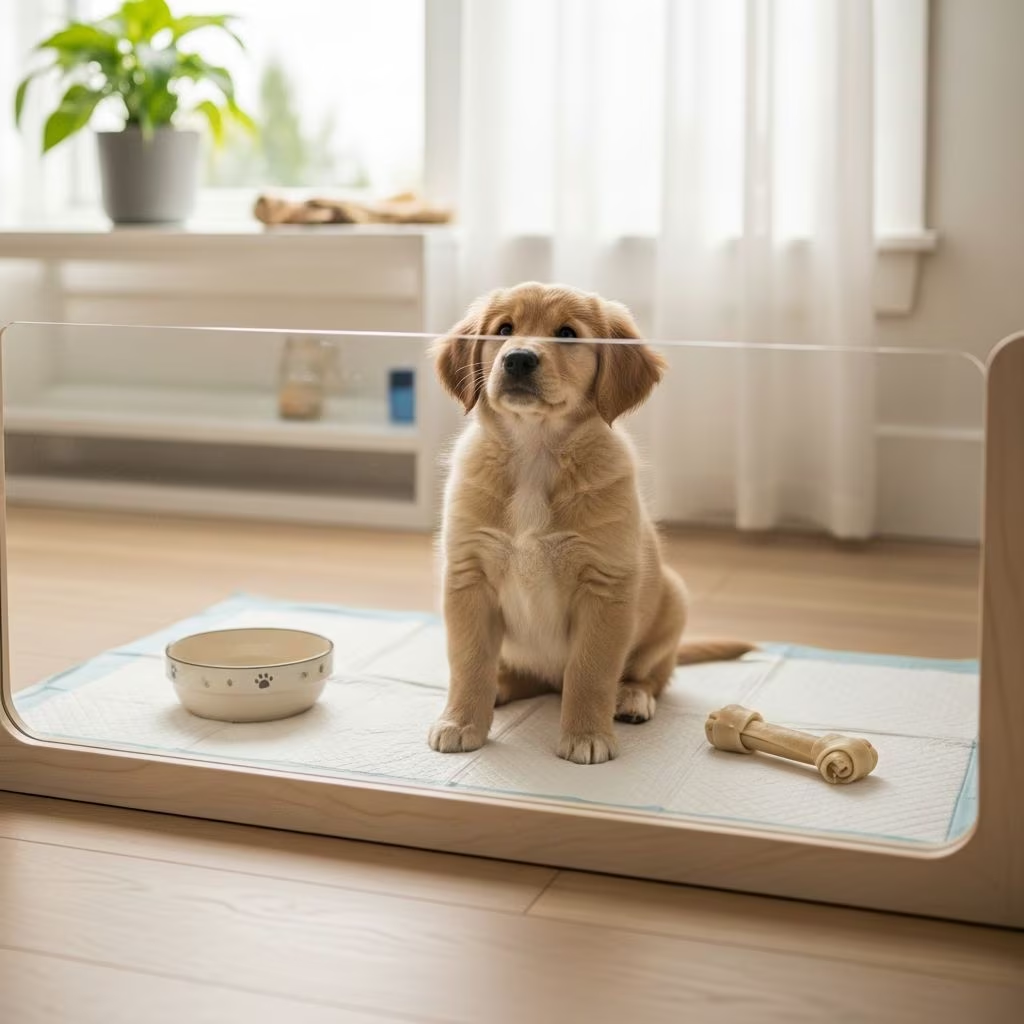
Bringing a new puppy into your home is an exciting milestone, but it also comes with significant responsibilities—chief among them being house training. Unlike adult dogs, puppies haven’t yet developed the physical ability or learned behaviors necessary to control their elimination habits consistently. Understanding this fundamental truth is the cornerstone of successful bathroom training. Rather than viewing accidents as behavioral failures, recognizing them as natural developmental stages helps you approach training with realistic expectations and patience.
Understanding Your Puppy’s Biological Development
Puppies are not born with the capacity to hold their bladder and bowels for extended periods. Their physiological systems are still maturing, which directly impacts how frequently they need bathroom breaks. The general rule used by trainers and veterinarians is that a puppy can physically hold their elimination for approximately one hour for every month of age they’ve reached. For example, a three-month-old puppy might reasonably hold it for three hours, while a six-month-old could potentially manage six hours. Large breed puppies often have slightly greater capacity, allowing an additional hour beyond their age.
This biological constraint means that very young puppies require bathroom trips at least every two hours during the day, with even more frequent breaks during active play or after meals. Overnight, puppies can typically extend their holding capacity by an additional two to three hours beyond their age-based limit, though this still means multiple nighttime trips during early development. Understanding these physiological limitations prevents the frustration of expecting too much too soon and sets realistic timelines for full housebreaking success.
Creating a Structured Elimination Schedule
Consistency forms the backbone of successful house training. Puppies thrive on predictable routines, and establishing a reliable bathroom schedule accelerates the learning process significantly. The key is taking your puppy outside at specific times each day, particularly during moments when they’re most likely to need elimination.
Optimal times for bathroom breaks include:
- Immediately upon waking in the morning and before bedtime at night
- Within fifteen to thirty minutes after eating or drinking
- After play sessions and active exercise
- Upon exiting the crate or sleeping area
- Before and after training sessions
- Before confinement to a crate for extended periods
A consistent feeding schedule directly supports predictable bathroom patterns. By feeding your puppy at the same times each day, you create a predictable rhythm for when they’ll need to eliminate. Additionally, removing water dishes approximately two and a half hours before bedtime reduces the likelihood of nighttime accidents while still maintaining proper hydration throughout the day. This combination of predictable meals and bathroom breaks creates a structured environment where your puppy can learn the expected patterns.
Selecting and Using an Appropriate Potty Location
Designating a specific outdoor bathroom area is crucial for helping puppies understand where elimination is appropriate. Always take your puppy to this same location on a leash, as the scent markers left from previous bathroom visits help trigger the elimination reflex. This familiar spot becomes a powerful environmental cue that communicates the purpose of the outing.
An important consideration: avoid limiting bathroom trips to only one location, such as your backyard. While convenient, this approach can create confusion where puppies believe elimination is only appropriate in that specific spot. When visiting other locations—a friend’s house, a dog park, or a boarding facility—your puppy may struggle to recognize these as appropriate elimination areas and hold it longer than healthy, sometimes resulting in accidents. Instead, vary the locations where you allow bathroom breaks, always using a leash and allowing adequate time for your puppy to settle and eliminate.
Recognizing Pre-Elimination Signals
Careful observation of your puppy’s behavior patterns reveals individual signals indicating an impending need for elimination. These signs vary between puppies but commonly include sniffing the ground intensely, circling in a particular pattern, whining or barking, restlessness, or pausing during play activities. Some puppies might scratch at doors or move toward the designated bathroom area. Recognizing these signals allows you to proactively take your puppy outside before accidents occur, setting them up for success.
Supervisory vigilance during indoor time is essential for catching these signals. If your puppy is out of sight in another room, you miss the opportunity to respond to behavioral cues and prevent accidents. Keeping your puppy in your line of sight when indoors—either in the same room or through baby gates that allow visual monitoring—enables you to respond quickly to signs of need.
The Strategic Use of Crate Training
Crate training represents one of the most effective tools for accelerating house training success when implemented correctly. Dogs possess a natural instinct to avoid soiling their sleeping area, a trait inherited from their wolf ancestry where cleanliness in the den was essential for survival and health. The crate leverages this innate behavior, teaching bladder and bowel control through environmental structure rather than punishment.
However, crate size matters significantly. A crate that is too large allows puppies to use one end as a bathroom while sleeping in the other, defeating the training purpose. The ideal crate provides enough space for your puppy to stand, turn around, and lie down comfortably, but not so much space that they can create a bathroom area separate from their sleeping space. Many training crates include dividers that allow you to adjust the size as your puppy grows, maintaining the appropriate ratio between sleeping and living space throughout development.
Introducing your puppy to the crate should be gradual and positive. The crate should never be used as punishment but rather as a safe, secure refuge. When used appropriately—primarily during times when you cannot actively supervise—the crate dramatically reduces accidents and teaches your puppy to communicate their bathroom needs through whining or other signals rather than soiling their environment.
Implementing Positive Reinforcement Strategies
Positive reinforcement is the most effective approach to house training, creating positive associations with appropriate elimination behavior. When your puppy successfully uses the designated outdoor potty area, immediate praise and treats reinforce that they performed the desired behavior. This reinforcement should occur immediately after elimination, during those first few seconds when your puppy can still connect the reward with the action they just completed.
Establishing a specific verbal cue—such as “go potty,” “do your business,” or “outside”—spoken gently as your puppy begins to eliminate helps build an association between the command and the action. Over time and with repetition, this cue becomes a powerful tool that allows you to encourage elimination on command, beneficial in situations where time is limited or when traveling. Consistent use of the same phrase during outdoor bathroom trips builds this association efficiently.
The quality and timing of rewards matter significantly. High-value treats—small pieces of chicken, cheese, or commercial training treats—provide motivation greater than kibble. Enthusiastic verbal praise communicates approval and strengthens the positive association. Reserve these special rewards specifically for successful outdoor elimination rather than using them during general play or training, making them distinctly associated with this particular behavior.
Managing Accidents With Appropriate Responses
Despite your best efforts, accidents will occur during the training process. How you respond to these incidents directly impacts your puppy’s progress and emotional wellbeing. Puppies cannot connect a punishment given after the fact with the earlier accident; they only understand present-moment consequences. Scolding or punishing your puppy for an accident that happened hours ago—or even minutes ago if discovered after the fact—creates confusion and fear rather than learning.
When you catch your puppy in the act of eliminating indoors, immediately interrupt with a calm verbal cue and quickly carry them outside to the designated potty spot. If they finish eliminating outside, provide immediate praise and rewards. This approach teaches appropriate location without creating fear or anxiety around elimination itself.
Thorough cleaning of indoor accident sites is essential for preventing repeat incidents. Puppies are attracted to previously soiled areas by residual scent, increasing the likelihood they’ll use the same spot again. Enzymatic cleaners specifically designed for pet urine break down the compounds causing odor, eliminating the scent markers that trigger elimination in that location. Simple surface cleaning with household products doesn’t remove the deep odor, leaving invisible cues that encourage repeat accidents.
Timeline Expectations for House Training Success
Most puppies can achieve consistent house training between four and six months of age, though individual variation exists based on breed, size, and previous exposure to training. Smaller breeds sometimes require extended training periods, potentially taking eight months or longer to achieve complete reliability. Larger breeds may progress slightly faster. Consistency during these early months creates the foundation for lasting success, and the effort invested during this phase prevents months of ongoing frustration and cleanup later.
Recognizing the difference between occasional accidents and genuine training setbacks is important. A puppy having one accident per week at four months represents normal development, not training failure. Complete house training reliability—perhaps one accident every few weeks at worst—indicates successful learning. Patience during the intermediate stages, where progress appears slow, maintains the consistency necessary for breakthrough progress.
Addressing Special Circumstances and Challenges
Toy breed puppies sometimes present particular challenges with house training, sometimes called “piddle accidents” where they eliminate small amounts frequently throughout the day. Some trainers recommend teaching toy breed puppies to use indoor potty options—such as pee pads, newspapers, or specialized dog potty boxes—before or alongside outdoor training. Keep in mind that indoor potty training can extend the timeline for reliable outdoor house training, as puppies may need to learn multiple appropriate elimination locations. If using indoor options, maintain consistency with location and cleaning protocols identical to outdoor training.
For households where owners work long hours or have extended absences, consider hiring a dog walker or arranging for a trusted friend or neighbor to provide midday bathroom breaks. Puppies left alone for more than their physiological capacity often experience accidents not from lack of training but from biological impossibility of control. Removing this barrier allows your puppy to succeed despite your schedule limitations.
Frequently Asked Questions About Puppy House Training
How long does typical house training take?
Most puppies achieve basic house training reliability between four and six months of age, though complete consistency may take longer depending on individual development, breed size, and training consistency. Smaller breeds sometimes require extended timelines of eight months or more.
What should I do if my puppy has repeated accidents in the same spot?
Thoroughly clean the area with enzymatic cleaners designed for pet urine to eliminate residual scent markers. Place soiled paper towels in the outdoor potty spot to help your puppy associate scent with the correct location. Restrict access to the problem area temporarily until training progresses further.
Can I house train my puppy without using a crate?
While crate training significantly accelerates house training, it is possible without one through intensive supervision, frequent outdoor breaks, and careful management. However, crate training remains one of the most effective and humane tools available for this purpose.
What age should I start house training?
Begin house training the moment your puppy comes home, regardless of age. Even very young puppies can begin learning the concepts and routines, though their physical capacity to control elimination develops gradually over months.
Summary: Building Your House Training Foundation
Successful puppy house training combines understanding your puppy’s biological development, maintaining consistent schedules and locations, using positive reinforcement effectively, and managing setbacks without punishment. The effort invested during these early months creates years of living comfortably with your dog, free from the stress and mess of ongoing accidents. Approach training with realistic expectations, patience, and compassion, recognizing that your puppy is not being willfully difficult but is genuinely learning complex new skills. With consistent application of these principles, your puppy will reliably understand where and when appropriate elimination occurs, transitioning from dependent infant to reliable household companion.
References
- How to Potty Train Your Dog — Scott Brand. Accessed February 2026. https://www.scottbrand.com/en-us/tips-and-advice/pet-care/guide-to-potty-training-dog
- How to Potty Train a Puppy: A Step-by-Step Guide — My Loyal Hound. Accessed February 2026. https://myloyalhound.com/how-to-potty-train-a-puppy/
- Complete Guide to Potty Training Your Puppy — Playtime Paws. Accessed February 2026. https://www.playtimepaws.com/potty-training-puppy/
- How to Potty Train a Puppy — Humane World. Accessed February 2026. https://www.humaneworld.org/en/resources/how-potty-train-your-dog-or-puppy
- Potty Training a Puppy: How to Housetrain — American Kennel Club (AKC). Accessed February 2026. https://www.akc.org/expert-advice/training/how-to-potty-train-a-puppy/



