
Puppies Thrive by Watching Expert Canines
Discover how young dogs rapidly pick up essential skills and manners by observing and imitating well-trained adult dogs in everyday settings.
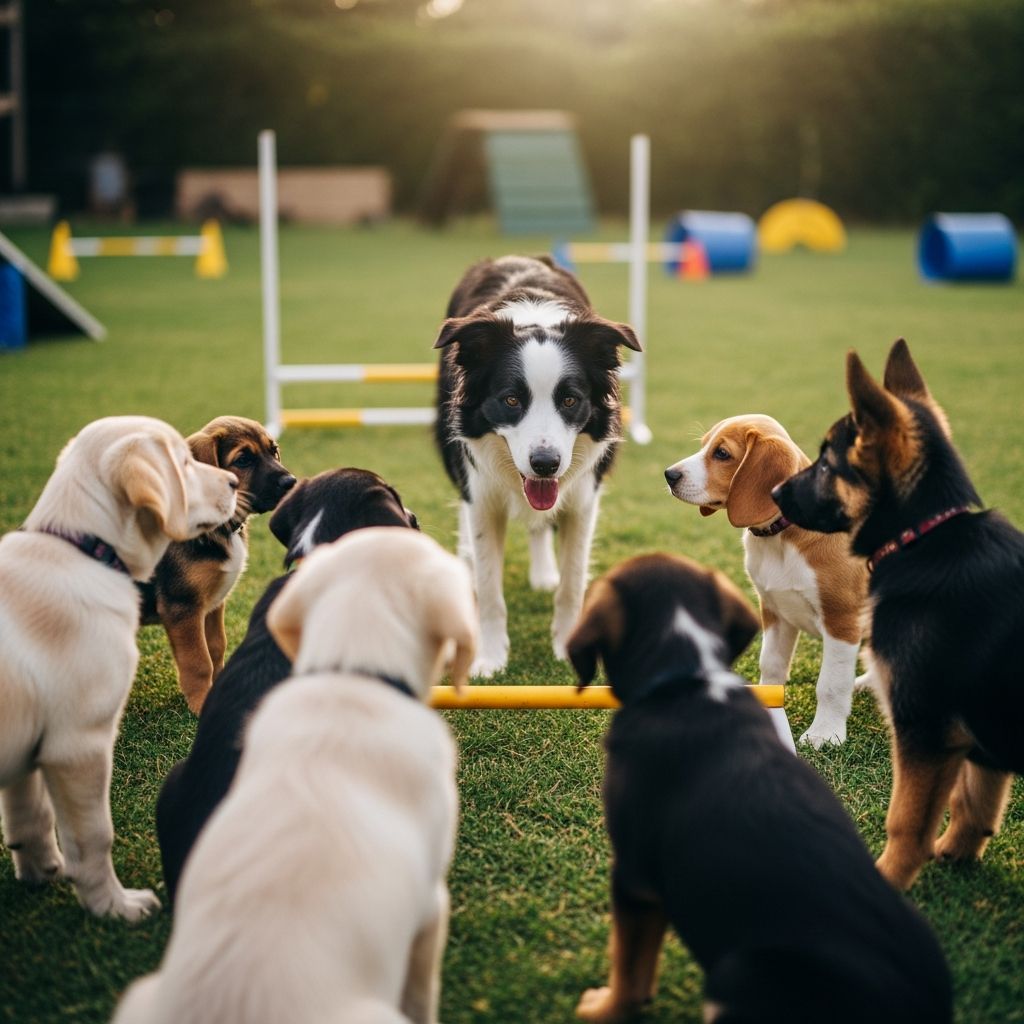
Young dogs possess an innate ability to absorb behaviors from their more seasoned counterparts, turning multi-dog homes into natural classrooms. This process, rooted in canine social dynamics, allows puppies to quickly adopt good habits like polite greetings, proper potty spots, and relaxed leash walking simply by being in proximity to polite adults.
The Science Behind Canine Social Absorption
Dogs evolved as pack animals, making them highly attuned to group behaviors. Research highlights how juveniles instinctively mirror actions of elders, a survival mechanism that speeds adaptation to household rules and environments. Unlike solitary learning, this group dynamic amplifies retention through shared experiences.
Key mechanisms include heightened arousal from peers, which boosts focus, and instinctive copying drives present from birth. Puppies don’t just watch; they join in, reinforcing lessons through participation. Studies confirm this leads to faster skill acquisition compared to isolated training sessions.
Core Mechanisms of Puppy Imitation
- Group Synchronization: Pups naturally align movements with adults, such as trotting calmly on walks or settling quietly after play, fostering herd-like harmony.
- Arousal Boost: Presence of a composed adult elevates a puppy’s engagement, making rewards from good behavior more memorable and repeatable.
- Environmental Cueing: Adults draw attention to key spots or objects—like doors for exits or yards for elimination—guiding pups to success without direct human prompts.
Practical Applications in Daily Routines
Integrate adult mentors into everyday activities for seamless learning. Start with low-pressure scenarios where the elder dog’s poise shines, allowing the pup to follow suit organically.
| Scenario | Adult Dog’s Role | Puppy Benefit | Owner Tips |
|---|---|---|---|
| Door Manners | Sits patiently before exit | Learns to pause and wait | Release both only after calm |
| Potty Breaks | Goes to designated area | Identifies right spot quickly | Praise shared success |
| Leash Walking | Walks steadily without pulling | Matches pace and tension | Keep leashes parallel |
| Greeting Guests | Sits calmly for attention | Avoids jumping frenzy | Ignore pup until mimicking |
Setting Up Successful Mentoring Sessions
Prepare your household for effective peer teaching by ensuring the adult dog exemplifies top-tier conduct. Schedule short, supervised interactions focusing on one skill at a time to prevent overwhelm.
- Assess adult dog’s reliability: Confirm solid basics like sit, stay, and house etiquette.
- Introduce gradually: Use baby gates or leashes for controlled proximity.
- Observe and intervene minimally: Let natural flow occur, stepping in only for safety.
- Reinforce collectively: Treat or praise the pair to link efforts positively.
For instance, during mealtimes, have the adult wait composedly at their bowl. The pup, seeing this, hesitates from lunging, learning impulse control through example. Over days, this builds into habit.
Navigating Challenges in Multi-Dog Dynamics
Not all pairings yield instant results; mismatches in energy or tolerance can hinder progress. Watch for signs of adult fatigue, like growling or avoidance, and provide solo breaks to recharge.
Common pitfalls include over-reliance on the elder, leading to resentment, or mismatched play styles sparking conflicts. Balance by dedicating individual training time, ensuring neither feels sidelined.
- Age Gaps: Gentle seniors suit mellow pups; high-drive adults pair best with energetic youngsters.
- Health Checks: Vet clearance prevents injury during rowdy mimicry sessions.
- Resource Guarding: Feed separately initially to avoid food-based tensions.
Long-Term Benefits for Household Harmony
Beyond immediate skills, this method cultivates mutual respect and pack cohesion. Pups internalize boundaries from corrective nudges, while adults gain companionship without full parenting duties. Owners report reduced training time and fewer behavioral regressions.
Quantitatively, puppies in mentored setups often achieve potty proficiency weeks earlier and exhibit 40-50% less leash reactivity in the first months, per anecdotal breeder logs aligned with behavioral studies.
Enhancing Learning with Human Guidance
While peer influence excels, human oversight accelerates outcomes. Use clickers or markers during joint successes to bridge canine and owner cues, creating a unified language.
Incorporate play structures like parallel toy chases, where the adult demonstrates fetch restraint, teaching pups to drop on command via observation. This hybrid approach maximizes retention.
Understanding Limits of Pure Observation
True hands-off watching rarely suffices for complex tasks in dogs, unlike primates. Effective uptake demands active involvement—sniffing, joining, repeating—fueled by motivation like treats or fun.
For advanced obedience, supplement with direct sessions. Elders model basics; humans refine nuances, ensuring comprehensive development.
FAQs on Puppy-Adult Mentoring
Can any adult dog mentor a puppy?
Prefer well-adjusted, trained adults. Untrained or reactive dogs may impart poor habits; select based on temperament compatibility.
How long until I see results?
Basic mimicry emerges in days; solid habits form over 2-4 weeks with consistency.
What if my adult dog seems annoyed?
Grant separate spaces and one-on-one time. Don’t force interactions; respect signals.
Does this work for older rescue puppies?
Yes, though prior experiences may slow uptake. Patience and positive reinforcement aid integration.
Should I separate them for training?
Mix group observations with solo drills to build independence alongside social skills.
Building a Lasting Pack Foundation
Harnessing inter-dog learning transforms chaotic introductions into structured growth. By thoughtfully pairing pups with proficient adults, owners leverage biology for effortless progress. Monitor dynamics, celebrate milestones, and adjust as needed to sustain benefits across years.
This approach not only eases puppy phases but enriches adult lives with purposeful roles, yielding balanced, joyful multi-dog families.
References
- Young Dogs Learn From Older Well-Behaved Dogs — Whole Dog Journal. 2023-05-15. https://www.whole-dog-journal.com/training/young-dogs-learn-from-older-well-behaved-dogs/
- Dogs Learn by Modeling the Behavior of Other Dogs — Psychology Today. 2013-01-26. https://www.psychologytoday.com/us/blog/canine-corner/201301/dogs-learn-modeling-the-behavior-other-dogs
- Adult Dogs are Great Puppy Teachers — The Honest Kitchen. 2022-08-10. https://www.thehonestkitchen.com/blogs/pet-tips-training/adult-dogs-great-puppy-teachers
- Can Old Dogs Learn New Tricks? — One Shot Retrievers. 2024-03-12. https://www.oneshotretrievers.com/post/can-old-dogs-learn-new-tricks
- 7 Effective Dog Training Methods for Old Dogs and New Dogs — Best Friends Pet Care. 2023-11-05. https://bestfriendspetcare.com/7-effective-dog-training-methods-for-old-dogs-new-dogs/
- Adult Dogs and New Puppies: Understanding Both Dogs’ Needs — American Kennel Club (AKC). 2024-07-20. https://www.akc.org/expert-advice/training/adult-dogs-and-new-puppies/
Similar Articles








Read full bio of Sneha Tete




