

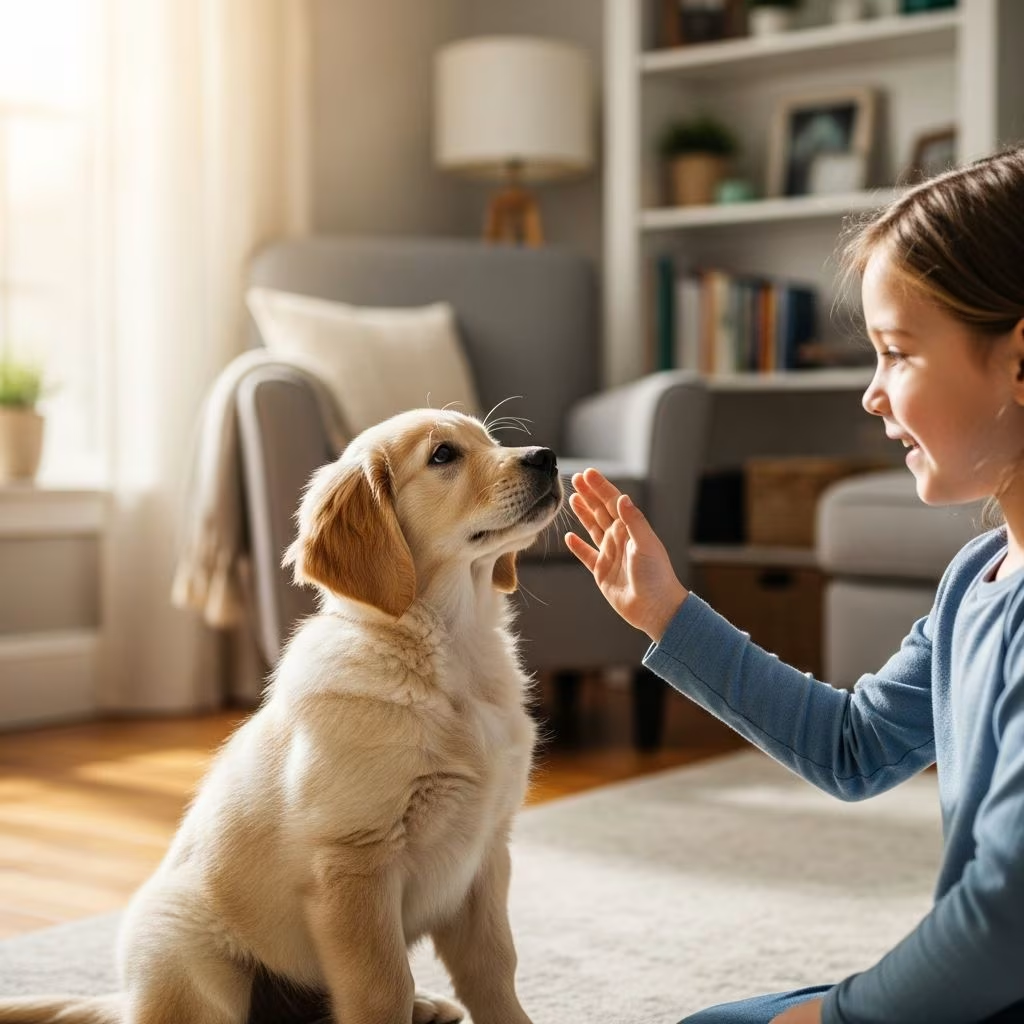
Bringing a puppy into a home with children requires careful planning to ensure safety and build lasting bonds. Effective strategies focus on training, supervision, and education for both the puppy and kids, creating positive experiences from the start.
Understanding the Dynamics Between Puppies and Young Kids
Puppies and children share high energy levels, but their interactions can lead to misunderstandings without proper guidance. Puppies explore the world through mouthing and jumping, while children may not recognize canine boundaries. The American Kennel Club emphasizes early exposure to children during socialization to foster comfort and appropriate behavior around kids.
Key factors include the puppy’s age, breed tendencies, and the children’s ages. Puppies in their 3-16 week sensitive period benefit most from controlled child interactions, forming positive associations that last a lifetime. Toddlers pose unique challenges due to unpredictable movements, squeals, and grabs, which can overwhelm even gentle puppies.
Preparing Your Home Environment for Safe Coexistence
A puppy-proofed home sets the foundation for success. Create designated safe spaces where the puppy can retreat from active play, such as a crate or gated area equipped with toys and bedding. Teach children to respect these zones, preventing invasions during rest times.
Supervision is non-negotiable, especially with infants. Never leave babies unsupervised on the floor near a puppy, as small movements can trigger play instincts that risk injury. For older kids, establish household rules like no hugging sleeping puppies or disturbing meals, reducing stress triggers.
- Install baby gates to separate play areas during high-energy times.
- Provide puppy chew toys to redirect mouthing away from kids.
- Set up feeding stations in quiet, inaccessible spots.
Essential Training Commands for Puppies Around Children
Train core obedience commands tailored to child interactions. The ‘sit’ command teaches impulse control during greetings, preventing jumping. ‘Leave it’ stops unwanted chasing or nipping, crucial for excited encounters.
Introduce ‘go to place’ or ‘back up’ for instant safe distancing. Practice in low-distraction settings first, using treats to reward compliance, then add child presence gradually. Consistent hand signals alongside verbal cues ensure reliability even in noisy environments.
| Command | Purpose | Training Tips |
|---|---|---|
| Sit | Prevents jumping on kids | Use treats; practice before greetings |
| Leave It | Stops chasing or mouthing | Start with toys; progress to kids |
| Go to Place | Sends to safe spot | Designate mat; reward stays |
| Back Up | Creates space | Lure with treats; increase distance |
Socialization Techniques for Positive Puppy-Child Bonds
Socialization goes beyond exposure; it pairs new experiences with rewards to build confidence. Start at home with calm family members, using food and play to associate children with good things. Avoid forcing interactions—let the puppy approach at its pace.
For optimal results, expose puppies to diverse children during the critical 3-16 week window under controlled conditions. Neutral locations like parks work for planned meetups, with adults managing leashes and treats.
- Begin sessions short (1-2 minutes), extending as comfort grows.
- Have children sit still, tossing treats for the puppy to collect.
- Monitor body language: relaxed ears and tail wags signal positivity.
Teaching Children Safe Interaction Rules
Children must learn respect for a puppy’s space and signals. Demonstrate proper approaches: side-on, palm out for sniffing, gentle chest pets avoiding heads. Role-play scenarios where kids ask permission before petting.
Emphasize no hugging, pulling tails, or disturbing rests—actions that provoke defensive responses. Hand-feeding meals builds trust, with kids participating under supervision to reinforce calm behavior.
- Practice ‘gentle hands’ with stuffed animals first.
- Use phrases like ‘ask first’ for all dogs, owned or not.
- Reward kids for recognizing puppy yawns or lip licks as stress signs.
Recognizing and Managing Stress Signals in Puppies
Puppies communicate discomfort through subtle cues: whale eye (whites showing), tucked tails, yawning, or freezing. Teach kids these mean ‘give space’. Intervene early by redirecting the puppy to its safe zone.
Avoid tools like rattle cans that scare rather than teach, as they erode trust. Positive reinforcement maintains a willing learner, especially around unpredictable kids.
Structured Play and Daily Routines for Harmony
Organize play under supervision: fetch games or treat hunts keep energy channeled positively. Daily walks prevent pent-up frustration that leads to rough play. Involve older children in routines like leashing or short training sessions to strengthen bonds.
For toddlers, position adults as buffers, guiding hands for petting while praising both parties. As kids age, grant more responsibility while maintaining oversight.
Common Pitfalls and How to Avoid Them
Mistakes like unsupervised floor time with babies or exciting puppies with floor play invite trouble. Don’t allow kids to remove items from puppy mouths, risking bites. Overlooking breed energy levels or skipping recall training amplifies risks.
Proactive measures: regular vet checks for health issues mimicking aggression, and ongoing training refreshers.
Age-Specific Guidelines for Family Stages
| Child Age | Key Rules | Supervision Level |
|---|---|---|
| Infants | No floor time; hold during pets | Constant, never alone |
| Toddlers (1-3) | Hand-guided pets; no chasing | Direct intervention ready |
| 4-7 Years | Teach rules; short sessions | Close watch |
| 8+ Years | Assist training; respect signals | Ongoing oversight |
FAQs
What if my puppy nips at my child?
Redirect immediately with ‘leave it,’ provide chew toys, and increase exercise. Consult a trainer if persistent.
How young can kids help train the puppy?
From age 4, with simple tasks like treat tossing under guidance.
Is crate training helpful?
Yes, it offers a secure retreat and aids house training.
What breeds suit families best?
Choose based on energy match; research herding vs. companion traits.
Can I socialize an older puppy?
Yes, though early is ideal; use gradual, positive methods.
Long-Term Success Tips
Consistency across family members ensures rules stick. Annual refreshers and modeling calm behavior yield confident, gentle family dogs. Celebrate milestones like first calm playdate to reinforce progress.
References
- The Ultimate Guide To Dog-Child Safety: Building Trust And Understanding — Dog Trainers Milwaukee. 2023. https://dogtrainersmilwaukee.com/the-ultimate-guide-to-dog-child-safety-building-trust-and-understanding/
- How to Help Your Dog Love Children — American Kennel Club. 2023-10-15. https://www.akc.org/expert-advice/training/helping-your-dog-love-children/
- 6 Dos and 6 Don’ts for Puppy Socialization — Puppy Socialization. 2022. https://puppysocialization.com/6-dos-and-6-donts-for-puppy-socialization/
- Dogs and Toddlers: A realistic (and honest) guide — Oh My Dog Blog. 2020-05-01. https://ohmydogblog.com/2020/05/dogs-and-toddlers/
- How to Prepare for a Puppy with Kids — Animal Kingdom AZ. 2024. https://www.animalkingdomaz.com/blogs/how-to-prepare-for-a-puppy-with-kids-safety-responsibility-and-respect/
- 10 Tips for Keeping Your Children Safe When You Have Pets — Crow Hill Veterinary. 2023. https://crowhillvet.com/10-tips-for-keeping-your-children-safe-when-you-have-pets/



