

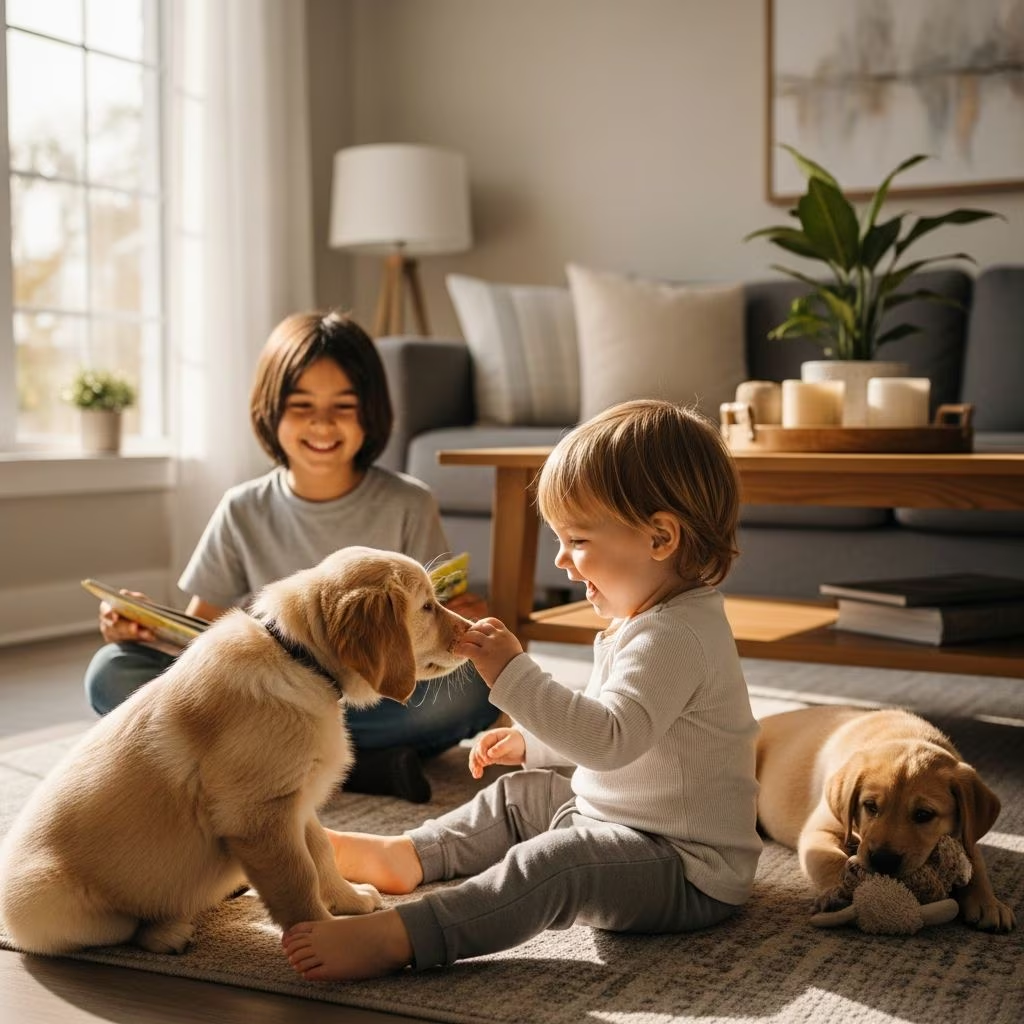
Bringing a puppy into a household with children represents one of life’s most rewarding experiences, yet it also demands thoughtful preparation and ongoing management. The foundation for a successful relationship between puppies and children begins long before the first interaction and continues throughout the puppy’s development. This comprehensive guide explores the essential elements needed to foster a safe, respectful environment where both children and puppies can flourish.
Understanding the Critical Socialization Window
Puppies experience a transformative period between five and twelve weeks of age that fundamentally shapes their lifelong responses to people, environments, and experiences. During this sensitive developmental stage, puppies demonstrate heightened openness to new stimuli and display greater moldability in their temperaments compared to older dogs. This window represents an invaluable opportunity for intentional exposure and positive reinforcement that can prevent fear-based behaviors later in life.
The goal during this critical period extends beyond mere exposure. Socialization specifically involves creating positive associations rather than simply introducing puppies to new people or situations. A puppy meeting children while feeling scared or uncomfortable may develop lasting anxiety toward kids, even though technically the puppy “met” children during the socialization window. The quality and emotional context of these early interactions matter far more than quantity.
Parents and puppy owners must recognize that this window closes gradually. While the period from five to twelve weeks represents peak responsiveness, socialization efforts continue to benefit puppies well into their teenage months and beyond. Early experiences provide the foundation, but consistent positive interactions throughout the first year cement behavioral patterns.
Reading Your Puppy’s Communication: The Foundation of Safety
One of the most overlooked aspects of puppy-child relationships involves understanding canine body language. Adults must learn to recognize stress signals in puppies before situations escalate to problematic behaviors. A puppy exhibiting stress demonstrates a characteristic progression of signals that, when recognized early, allows for intervention before the puppy feels forced to defend itself.
Common stress indicators in puppies include:
- Avoiding children or showing reluctance to approach
- Cowering or attempting to hide behind furniture or adults
- Lip licking or yawning when not tired
- Panting during calm periods when temperature doesn’t explain the behavior
- Moving in slow motion or walking stiffly near children
- Low-level growling, which represents communication rather than aggression
When children understand these signals, they can adjust their behavior accordingly. A puppy showing avoidance behaviors needs space and time, not encouragement to interact. Teaching children to recognize and respect these communications transforms the dynamic from potentially conflictual to collaborative, with kids becoming active participants in maintaining the puppy’s comfort.
Establishing Physical Boundaries and Safe Spaces
Every puppy requires designated areas where children cannot access them, providing essential psychological relief from constant stimulation. These child-free zones serve multiple purposes: they give puppies escape routes when overwhelmed, create predictable quiet time for rest and decompression, and establish clear household structure that both puppies and children can understand and respect.
Practical approaches to creating safe spaces include:
- Using baby gates to establish areas where only the puppy can access via a small door or by stepping over
- Designating the puppy’s crate as an off-limits sanctuary that children cannot disturb
- Establishing a quiet bedroom or corner where the puppy retreats during downtime
- Creating multiple rest areas throughout the home to prevent the puppy from feeling trapped in one location
The critical element involves consistent enforcement. When young children are involved, adult supervision ensures that the boundaries remain respected. Over time, children learn these invisible boundaries as readily as they learn other household rules, and the puppy gains confidence knowing predictable refuge exists.
Beyond spatial separation, puppies must have clear escape routes during interactions with children. Cornering a puppy removes their option to leave, creating a situation where they may resort to defensive behaviors. Arranging furniture and supervising play in open areas where puppies can move away prevents the sense of being trapped.
Teaching Children Appropriate Interaction Techniques
Children don’t naturally understand how to interact with puppies; they require explicit, repeated instruction. Most children have been hugged by adults and have stuffed animals they can handle roughly, so puppies initially appear to them as another form of companion animal to be hugged, picked up, and played with vigorously.
The foundation for appropriate interaction begins with teaching children that puppies are living creatures deserving respect and gentle handling. Rather than abstract lessons, concrete demonstrations prove far more effective. Children “soak up our behavior and imitate it,” so modeling gentle petting, calm approaches, and respectful boundaries demonstrates the standards you expect.
Specific techniques to teach children include:
- Approaching puppies from the side rather than head-on, which feels less threatening
- Offering an extended hand for the puppy to investigate before touching begins
- Petting gently with the direction of hair growth, using flat hands rather than grabbing or pinching
- Never pulling ears, tails, or legs, which hurt the puppy and teach fear of children
- Avoiding face-to-face contact and hugging, which most dogs find uncomfortable
One highly effective method involves having children hand-feed puppies under supervision. This activity teaches puppies that children are sources of good things, builds positive associations, and naturally reinforces calm behavior from both parties. Children learn gentle delivery of treats, and puppies learn that children mean rewards.
Discouraging High-Energy Play Patterns
Children move erratically, use high-pitched voices, and naturally gravitate toward rough, energetic play—behaviors that naturally excite puppies. While age-appropriate play represents an important part of childhood and puppyhood, unsupervised or unstructured play between children and puppies often reinforces problematic behaviors that create challenges throughout the dog’s life.
Specific activities to actively discourage include:
- Chase games, which teach puppies that running from children is entertaining
- Wrestling or rough physical contact, which escalates arousal levels
- Encouraging the puppy to jump on children for interaction
- Games where children lie on the floor at dog level, which puppies find intensely exciting and may respond to with nipping
- Allowing the puppy to be chased, which undermines later recall and obedience training
Instead, guide children toward interactive play focused on toys. Playing fetch, gentle tug-of-war with proper rules (where the puppy learns “leave it”), and training games channel the puppy’s energy constructively while keeping the puppy’s focus on objects rather than the child themselves.
Involving Children in Puppy Training
Children can become valuable partners in puppy training when given age-appropriate responsibilities and clear instruction. This involvement deepens the bond between child and puppy while teaching the child that the puppy is a family member requiring guidance, not entertainment.
Before children participate in training, they must understand that puppies respond to consistency and gentle corrections rather than punishment or force. Teaching children how to call the puppy to them and initiate play with toy focus transfers some training responsibility to the child while maintaining the positive association between child and puppy.
Appropriate training activities for children include:
- Practicing “sit” for greetings, which children can reinforce with treats and praise
- Calling the puppy to come, with rewards making the child a positive presence in the puppy’s mind
- Throwing toys for the puppy to retrieve, building relationship through play
- Participating in clicker training under adult guidance, which teaches both child and puppy through positive reinforcement
- Helping establish and maintain household rules consistently
Teaching children to understand that training requires patience and repetition develops their own impulse control and responsibility. When the puppy responds correctly to a child’s command, both experience genuine accomplishment that strengthens their bond.
Managing the Transition from Babies to Toddlers to Older Children
The relationship between puppies and children evolves as both age. Puppies brought into homes with newborns begin developing associations with babies’ sounds, smells, and presence from the beginning. As those infants become mobile toddlers, the dynamics shift significantly.
During the infant stage, keep babies off the floor when the puppy is present, as a baby at floor level can appear toy-like to a curious puppy. Never leave babies and puppies unsupervised together, and maintain constant visual monitoring of all interactions.
Toddlers present different challenges. They move unpredictably, fall frequently onto dogs, grab without understanding consequences, and often fail to respect boundaries despite instruction. Young children benefit from practicing gentle handling on stuffed animals or their own arms before interacting with the living puppy, developing muscle memory for gentle touch.
As children mature into school age and beyond, they can assume greater responsibility for appropriate interaction and even participate in training and care. However, supervision remains necessary until the child demonstrates consistent understanding of the puppy’s needs and communication.
Preparing the Physical Environment
The home environment itself should facilitate positive interactions and prevent problematic situations. Thoughtful arrangement of furniture, puppy supplies, and child spaces creates natural structure that supports safety without requiring constant verbal reminders.
Environmental considerations include:
- Positioning the puppy’s crate in a location where children cannot easily access it but the puppy can see family activity
- Storing children’s toys separately from the puppy’s toys to prevent confusion and competition
- Using baby gates to create different zones for puppies and children during separate activities
- Keeping the puppy’s food and water bowls in an area where children cannot interfere
- Establishing a designated play area with adequate space for both children and puppies to move freely
The goal involves creating an environment where appropriate behavior happens naturally due to physical layout and structure, rather than requiring constant correction and redirection.
Understanding the Puppy’s Perspective
Children represent unusual creatures from a puppy’s perspective. They make high-pitched noises, move erratically and unpredictably, lack obvious canine communication skills, and behave in ways that seem chaotic or threatening to a dog. A puppy may interpret a running, squealing child as either a playmate worth matching in energy or a source of anxiety worthy of avoidance.
Teaching children to approach puppies calmly—taking deep breaths, walking at a normal pace, and speaking in regular tones—helps puppies interpret children as calm, predictable companions rather than sources of stress. When children can modulate their energy around puppies, the puppy responds by matching that calm demeanor rather than escalating their own arousal.
Frequently Asked Questions
At what age can puppies safely interact with children?
Puppies benefit from carefully managed exposure to children from a young age, ideally during the five to twelve week socialization window. However, interactions should be brief, calm, and supervised, with the puppy’s comfort prioritized over extended playtime.
What should I do if my puppy shows fear of children?
Never force a scared puppy to interact with children. Instead, create positive associations by having children offer treats from a distance while the puppy remains calm. Let the puppy approach at their own pace, and respect their boundaries while gradually building confidence.
How can I stop my child from approaching sleeping puppies?
Teach children early that sleeping puppies and puppies in their crates are off-limits. Make this rule consistent, use physical barriers if necessary, and supervise enforcement until the child reliably respects the boundary. Explain that waking puppies suddenly can startle them and potentially cause them to respond defensively.
Is it safe for children to take toys from the puppy’s mouth?
No. Putting hands in a puppy’s mouth or taking items away can cause the puppy to feel threatened and defend their possession. Teach children never to reach into the puppy’s mouth, and instead redirect the puppy’s attention with a more desirable toy or treat.
What training commands benefit children and puppies most?
“Sit” for greetings, “leave it” for impulse control, and “go to your place” for creating distance provide immediate safety and behavior management benefits. Children can participate in reinforcing these commands, deepening their involvement in the puppy’s development.
References
- Children and Dogs – How to Keep Interactions Safe — Maddie’s Fund. 2024. https://www.maddiesfund.org/children-and-dogs-how-to-keep-interactions-safe.htm
- How to Help Your Dog Love Children — American Kennel Club. 2024. https://www.akc.org/expert-advice/training/helping-your-dog-love-children/
- Introducing Puppies and Children — Arizona Animal Welfare League. https://aawl.org/sites/default/files/introducing_puppies_and_children.pdf
- 6 Dos and 6 Don’ts for Puppy Socialization — Puppy Socialization. 2024. https://puppysocialization.com/6-dos-and-6-donts-for-puppy-socialization/
- Dogs and Toddlers: A Realistic Guide to Keeping Them Safe — Oh My Dog Blog. 2020. https://ohmydogblog.com/2020/05/dogs-and-toddlers/
- How to Prepare for a Puppy with Kids – Safety, Responsibility and Respect — Animal Kingdom. 2024. https://www.animalkingdomaz.com/blogs/how-to-prepare-for-a-puppy-with-kids-safety-responsibility-and-respect/
- 10 Tips for Keeping Your Children Safe When You Have Pets — Crow Hill Veterinary Clinic. 2024. https://crowhillvet.com/10-tips-for-keeping-your-children-safe-when-you-have-pets/
- Dog Safety Tips for Young Children — Sophie’s Circle. 2024. https://sophiescircle.org/dog-safety-tips-for-young-children/



