

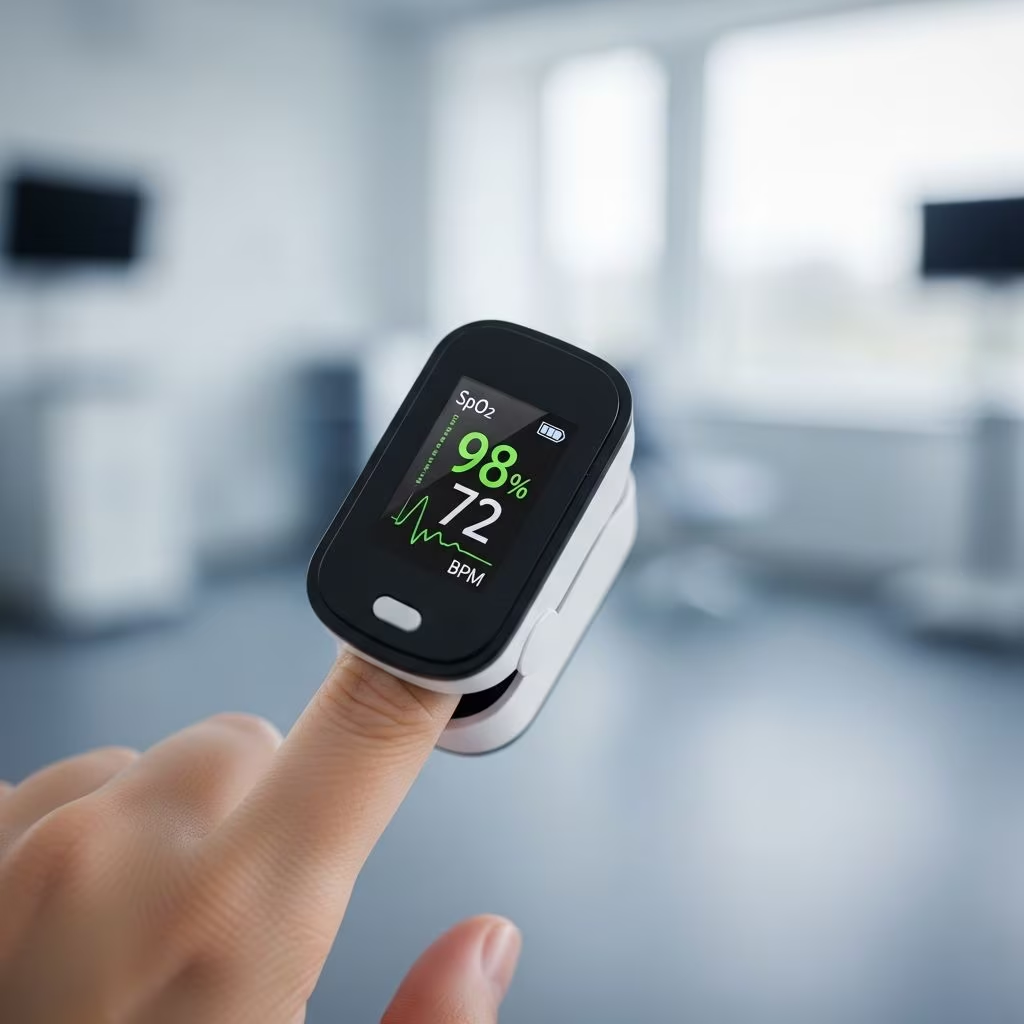
Pulse oximetry provides a quick, non-invasive way to measure blood oxygen saturation, often called the ‘fifth vital sign,’ helping detect low oxygen levels before symptoms appear.
The Science Behind Oxygen Measurement
Pulse oximeters use light to assess how much oxygen is bound to hemoglobin in the blood. The device shines red and infrared light through a thin body part, like a fingertip, where deoxygenated hemoglobin absorbs more red light at 660 nm and oxygenated hemoglobin absorbs more infrared at 940 nm. A sensor on the other side calculates the ratio, displaying oxygen saturation (SpO2) as a percentage and pulse rate.
This optical method avoids needles, delivering results in seconds. It’s standard in anesthesia per the American Society of Anesthesiologists and World Health Organization guidelines.
Key Applications in Healthcare Settings
In hospitals, pulse oximetry monitors patients during surgery, in ICUs, and on wards, especially those on opioids or with respiratory issues. It evaluates ventilator effectiveness, supplemental oxygen therapy, and medication impacts on breathing.
- Assessing chronic conditions like COPD, asthma, pneumonia, and heart failure.
- Detecting sleep apnea during studies by spotting momentary breathing stops.
- Titrating oxygen in acute respiratory distress or post-anesthesia recovery.
- Evaluating exercise tolerance in cardiac or pulmonary patients.
Evidence shows its use reduces unrecognized desaturations and mortality in children when paired with oxygen therapy.
Interpreting Your Pulse Oximeter Readings
Normal SpO2 is 95-100% at sea level for healthy individuals. Levels below 90% indicate hypoxemia, warranting medical attention.
| SpO2 Range | Interpretation | Action Needed |
|---|---|---|
| 95-100% | Normal | Continue monitoring if at risk |
| 91-94% | Mild impairment | Consult provider |
| Below 90% | Hypoxemia | Seek immediate care |
| Below 85% | Severe | Emergency intervention |
Pulse rate typically ranges 60-100 bpm at rest; irregularities may signal other issues. Factors like altitude lower normal baselines.
Devices for Professional and Home Use
Medical-grade oximeters are FDA-cleared for clinical trending and spot-checks in hospitals. Consumer models for home use suit chronic lung disease patients under doctor guidance.
Placement options include finger (most common), toe, earlobe, or forehead probes for infants. FDA distinguishes medical from over-the-counter devices; choose those validated for accuracy.
Factors Affecting Reading Accuracy
While reliable, pulse oximetry has limitations. Poor peripheral perfusion from cold, hypotension, or dark skin tones can cause inaccuracies.
- Motion artifacts or nail polish skew results.
- Anemia or carbon monoxide poisoning yields falsely high readings.
- Low battery or poor fit affects sensor detection.
For best results, warm hands, remove polish, stay still, and ensure good fit.
Home Monitoring: Guidelines and Benefits
Patients with COPD, asthma, or post-COVID issues benefit from home use to track trends and avoid ER visits. Doctors prescribe targets, like maintaining above 92%.
Log readings with symptoms, activity, and time for pattern spotting. Pair with apps for data sharing. Not a substitute for arterial blood gas tests in critical cases.
Historical Evolution and Modern Advances
Developed in the 1970s, pulse oximetry became routine in the 1980s, slashing anesthesia hypoxia incidents. Recent wearables integrate continuous SpO2 with fitness trackers, aiding sleep and altitude monitoring.
Research focuses on improving accuracy for darker skin and low perfusion.
Safety Considerations and When to Seek Help
Safe and painless, with no known side effects. Use FDA-cleared devices; clean clips post-use. Sudden drops, chest pain, or shortness of breath demand immediate care.
Frequently Asked Questions (FAQs)
What is a normal pulse oximeter reading?
95-100% for healthy adults; consult your doctor for personalized targets.
Can I use a pulse oximeter at home?
Yes, if recommended for chronic conditions; follow provider instructions.
Why might my reading be inaccurate?
Cold extremities, movement, nail polish, or skin pigmentation can interfere.
Is pulse oximetry reliable for COVID-19 monitoring?
Useful for trends but misses early drops in some; combine with symptoms.
How often should I check my levels?
As advised—e.g., daily for stable patients, more if symptomatic.
Pulse oximetry empowers proactive health management across settings.
References
- Pulse Oximetry: Uses, Readings, and How It Works — Healthline. 2023-10-10. https://www.healthline.com/health/pulse-oximetry
- Pulse Oximetry – StatPearls — NCBI Bookshelf, NIH. 2023-08-08. https://www.ncbi.nlm.nih.gov/books/NBK470348/
- Pulse Oximetry: Function, Method & Readings — Cleveland Clinic. 2023-05-15. https://my.clevelandclinic.org/health/diagnostics/pulse-oximetry
- Pulse Oximetry | Fact Sheets — Yale Medicine. 2023-11-20. https://www.yalemedicine.org/conditions/pulse-oximetry
- Pulse Oximetry — American Lung Association. 2024-01-12. https://www.lung.org/lung-health-diseases/lung-procedures-and-tests/pulse-oximetry
- Pulse Oximetry — MedlinePlus, NIH. 2023-09-05. https://medlineplus.gov/lab-tests/pulse-oximetry/
- Pulse Oximeter Basics — FDA. 2024-02-14. https://www.fda.gov/consumers/consumer-updates/pulse-oximeter-basics



