

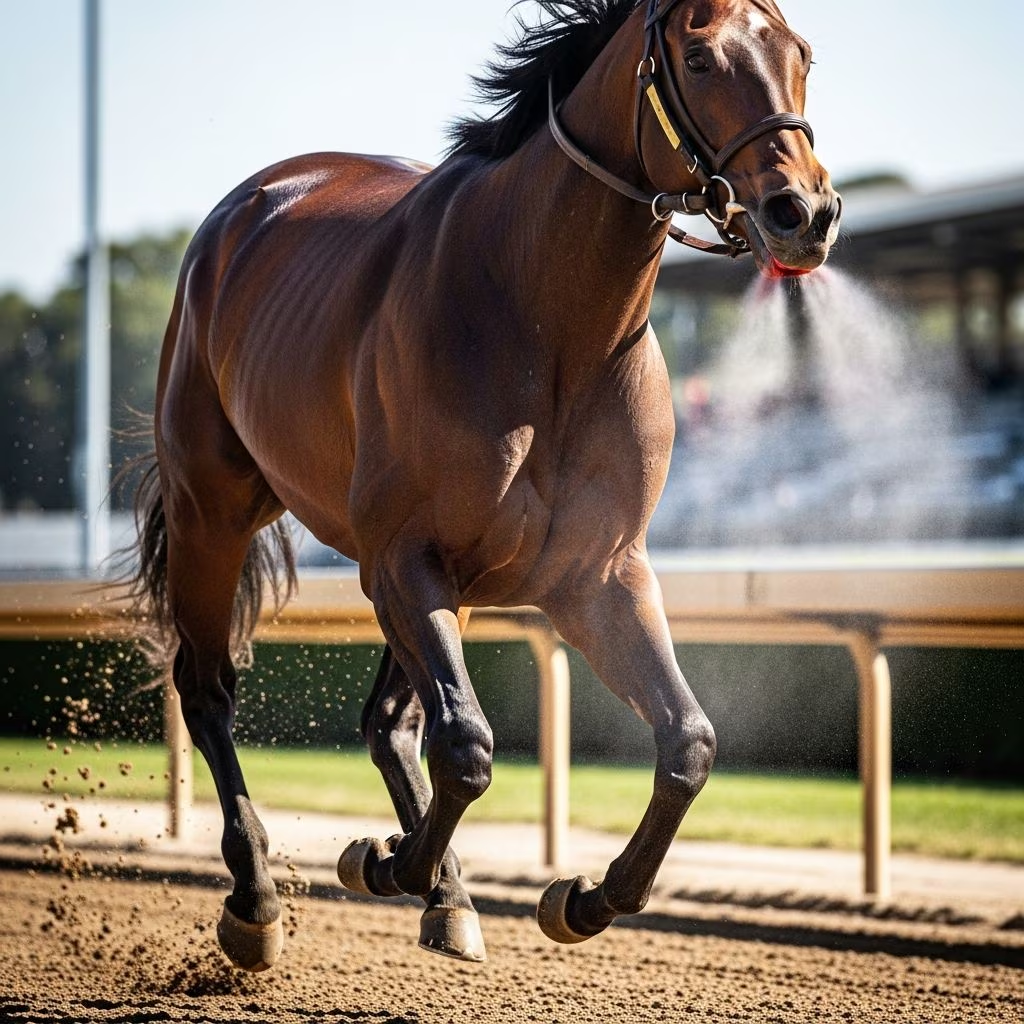
Athletic performance in horses demands exceptional cardiovascular and respiratory capacity. However, the intense physiological demands placed on the equine body during competition can trigger a serious medical condition affecting the lungs. Exercise-induced pulmonary hemorrhage (EIPH) represents one of the most significant health challenges facing performance horses today, yet many horse owners and trainers remain unaware of its prevalence and consequences. This condition silently affects the majority of racehorses and other high-performance athletes, making it essential for anyone involved with competitive or working horses to understand its mechanisms, recognition, and management approaches.
Defining the Condition and Its Prevalence
Exercise-induced pulmonary hemorrhage occurs when the delicate blood vessels within the horse’s lungs rupture during or immediately following strenuous physical activity, allowing blood to escape into the pulmonary spaces and airways. This bleeding happens at the microscopic level in the vast majority of cases, making it invisible to the naked eye unless diagnostic imaging is performed. The condition represents a breach in the blood-gas barrier—the critical interface where oxygen exchange occurs between the lungs and bloodstream.
The prevalence of this condition is staggering when examined through scientific investigation. Research indicates that approximately 75% of Thoroughbred racehorses experience some degree of EIPH during their racing careers, while 26% of Standardbred horses are affected. The condition transcends breed boundaries and extends beyond racing applications; Quarter Horses, Appaloosas, three-day event horses, barrel racers, and polo ponies all experience documented cases. A significant proportion of affected horses show no outward signs whatsoever, with clinical manifestations appearing only in more severe instances.
The Physiological Mechanisms Behind Lung Bleeding
Understanding how intense exercise triggers pulmonary bleeding requires examining the extraordinary demands placed on the equine cardiovascular and respiratory systems. When horses exercise at maximum intensity, their bodies must deliver oxygen to working muscles at unprecedented rates. This physiological requirement creates a cascade of events within the lungs that can ultimately result in capillary rupture.
The primary mechanism involves dramatic increases in blood pressure within the pulmonary circulation. Unlike human athletes, whose pulmonary artery pressures increase modestly during exercise, horses experience several-fold elevations in pulmonary pressure—rising from normal resting levels of approximately 25 over 10 millimeters of mercury to extraordinary peaks exceeding 120 over 80 millimeters of mercury during maximum exertion. This represents one of the most striking physiological differences between equine and human athletes.
This pressure elevation results from the unique anatomical relationship between the horse’s enormous heart and its proportionally modest lungs. The equine heart, highly adapted for sustained athletic performance, generates massive cardiac output—the total volume of blood pumped per minute. All this blood must circulate through the relatively small pulmonary capillary bed, creating tremendous pressure that the thin-walled vessels struggle to contain.
Adding to this pressure challenge is the substantial tidal volume—the amount of air moved with each breath—during high-intensity exercise. These combined forces create extreme pressure differentials across the fragile capillary walls. The negative pressure generated within the alveoli (air sacs) during the breathing cycle simultaneously pulls outward on the capillary walls while internal blood pressure pushes inward, creating what researchers describe as a “perfect storm” of mechanical forces.
Impact-related trauma contributes another significant factor. When horses gallop at racing speeds, the tremendous force with which their hooves strike the ground reverberates through their entire body and soft tissues, including the lungs. These locomotory impact forces cause microscopic tears in the pulmonary capillaries, directly breaching the blood-gas barrier and allowing hemorrhage into the alveolar spaces.
Recognizing Clinical Manifestations
The clinical presentation of exercise-induced pulmonary hemorrhage varies dramatically depending on bleeding severity. Most affected horses exhibit no noticeable symptoms whatsoever, with blood loss absorbed back into the body without functional consequence. However, when bleeding occurs in substantial quantities, characteristic signs become apparent.
The most commonly observed clinical indicators include:
- Diminished performance—Horses may show reduced speed, decreased willingness to exert themselves, or apparent fatigue developing earlier than expected during training or competition.
- Respiratory signs—Deep coughing originating from the chest cavity and increased respiratory rates following exercise represent frequent presentations.
- Altered behavior post-exercise—Excessive swallowing and prolonged swallowing efforts immediately after strenuous activity suggest blood accumulation in the airways that the horse attempts to clear.
- Extended recovery periods—Horses requiring abnormally lengthy cooling-out periods or showing slow return to normal respiratory and heart rates may be experiencing significant pulmonary bleeding.
- Epistaxis—Nosebleeds represent the most dramatic clinical sign, occurring when bleeding is so severe that blood volume overwhelms the lungs’ capacity to retain it and blood spills from the nostrils.
It is crucial to understand that epistaxis, while visually striking, occurs in only a small percentage of cases. Research indicates that visible nosebleeds develop in fewer than 1% of horses experiencing EIPH, yet bleeding may be occurring internally in substantial quantities. The absence of a nosebleed should never be interpreted as evidence that a horse is free from pulmonary hemorrhage.
In rare instances, particularly severe bleeding can result in sudden death during or immediately following exercise, though this extreme outcome is uncommon.
Diagnostic Approaches and Identification
Definitive diagnosis of exercise-induced pulmonary hemorrhage requires visualization of blood within the airways or lung tissue. The diagnostic method of choice involves endoscopic examination—a procedure where a thin, flexible fiber-optic camera is passed through the nostrils into the trachea to directly visualize the airways.
The ideal timing for endoscopic evaluation occurs between 30 and 120 minutes following strenuous exercise, when blood will still be visible in the airways and trachea. The presence of visible blood in these passages provides definitive confirmation of EIPH. Some veterinarians utilize a grading system to classify bleeding severity, helping owners and trainers understand the extent of the condition in individual horses.
Since most affected horses demonstrate no outward clinical signs, many cases remain undetected unless endoscopic examination is specifically performed. This subclinical nature of EIPH in the majority of horses means that the true scope of the condition in any given stable or training operation likely exceeds what casual observation might suggest.
Risk Factors and Predisposing Conditions
Certain factors increase the likelihood of developing exercise-induced pulmonary hemorrhage. Age appears to play a role, with older horses showing higher incidence rates as accumulated bleeding episodes potentially create cumulative lung damage. Horses with pre-existing airway obstruction or small airway disease face elevated risk, as compromised ventilation contributes to abnormal pressure fluctuations within affected lung regions.
Training intensity and frequency significantly influence hemorrhage occurrence. Horses subjected to maximal-speed work or repeated high-intensity efforts show higher rates of bleeding than those engaged in moderate exercise programs. Environmental factors including poor air quality, high dust concentrations, and inadequate ventilation in stabling areas can predispose horses to respiratory compromise and increase EIPH susceptibility.
Individual variation in susceptibility suggests that genetic factors may influence capillary strength or pulmonary vessel anatomy, explaining why some horses experience repeated episodes while others remain largely unaffected despite similar training regimens.
Long-Term Consequences and Progressive Changes
While individual episodes of exercise-induced pulmonary hemorrhage may resolve without permanent consequences, repeated occurrences carry serious implications for lung tissue integrity. Research has identified that horses experiencing multiple hemorrhage episodes develop lasting pathological changes within pulmonary tissue.
The body’s inflammatory response to bleeding involves specialized immune cells called macrophages that attempt to clear blood from the alveoli. However, this process generates free radicals that damage surrounding lung tissue, creating cells called hemosiderophages—indicators of previous hemorrhage and tissue injury. With repeated episodes, these damaged areas accumulate, progressively reducing lung elasticity and function.
Studies comparing lung tissue from horses with a history of recurrent EIPH to healthy controls have revealed that affected regions become stiffer and more rigid than normal lung tissue. This fibrotic remodeling permanently reduces the tissue’s ability to inflate and deflate efficiently, compromising oxygen exchange capacity and endurance performance. The condition therefore tends to be progressive, with each bleeding episode potentially contributing to cumulative lung damage.
Management and Treatment Considerations
Management of exercise-induced pulmonary hemorrhage encompasses both pharmaceutical and non-pharmaceutical approaches. The most commonly employed pharmaceutical intervention involves furosemide (commonly known by the brand name Lasix), a potent diuretic that reduces blood volume and pulmonary pressure, thereby decreasing bleeding severity. When administered before racing or strenuous exercise, furosemide demonstrably reduces both the frequency and severity of hemorrhage episodes.
However, furosemide use remains highly controversial within the equine community, with substantial debate regarding its appropriateness for treating this condition. Some veterinarians express concerns about masking underlying problems or creating other physiological imbalances through aggressive diuretic use.
Nutritional and management strategies complement pharmaceutical approaches. Adequate hydration before, during, and after exercise helps maintain optimal blood viscosity and cardiovascular function. Supplementation with omega-3 fatty acids may support lung tissue health and reduce inflammatory responses. Electrolyte supplementation becomes particularly important in horses subjected to intense or frequent training.
Progressive conditioning and appropriate training progression represent fundamental management principles. Allowing horses sufficient time to develop cardiovascular and pulmonary capacity through gradual increases in training intensity reduces the likelihood of acute hemorrhage episodes. Rest days between intense efforts permit tissue recovery and adaptation.
Environmental optimization deserves attention as well. Maintaining clean, dust-free stabling with good air circulation, minimizing exposure to irritant gases and particulates, and managing pasture time appropriately all contribute to respiratory health and reduce bleeding risk.
Prevention Strategies for Horse Owners
While complete prevention of exercise-induced pulmonary hemorrhage may not be achievable in high-performance horses, several strategies reduce incidence and severity:
| Prevention Strategy | Expected Benefit | Implementation |
|---|---|---|
| Gradual conditioning progression | Allows lung adaptation to exercise demands | Increase training intensity incrementally over weeks and months |
| Rest and recovery protocols | Permits tissue healing between efforts | Include adequate rest days; avoid consecutive days of maximum intensity |
| Optimized air quality | Reduces respiratory irritation and airway inflammation | Maintain clean stalls; improve ventilation; minimize dust exposure |
| Nutritional support | Supports tissue health and reduces inflammation | Provide omega-3 supplements; ensure adequate electrolytes |
| Hydration management | Optimizes cardiovascular function | Ensure constant access to clean water; supplement during intense work |
| Veterinary monitoring | Early detection of problems | Regular endoscopic checks in competition horses; blood work as indicated |
Frequently Asked Questions
Q: Can a horse with EIPH continue competing?
A: Many horses with EIPH continue performing successfully, particularly those with mild to moderate bleeding. The decision to continue competing depends on severity, frequency of episodes, and individual horse response to management interventions. Consultation with an equine veterinarian is essential for determining appropriateness of continued athletic work.
Q: Is EIPH fatal?
A: While sudden death during or immediately after exercise has been rarely reported in association with severe EIPH, most affected horses do not experience life-threatening episodes. However, the cumulative effects of repeated hemorrhage can progressively compromise lung function and performance capacity.
Q: What does a nosebleed in a horse indicate?
A: A nosebleed indicates significant pulmonary bleeding—occurring only when blood loss reaches volumes that exceed the lungs’ capacity to contain it. However, many horses experience substantial internal bleeding without any nosebleed occurring, so absence of epistaxis does not indicate absence of EIPH.
Q: Can veterinarians treat EIPH permanently?
A: There is no cure for exercise-induced pulmonary hemorrhage, though management strategies can reduce symptom severity and slow progression. Once fibrotic lung changes develop from repeated episodes, those changes are permanent.
Conclusion: Supporting Respiratory Health in Performance Horses
Exercise-induced pulmonary hemorrhage represents a significant challenge for horses engaged in strenuous athletic activity. The condition’s prevalence, combined with its often-subclinical presentation, means that many affected horses remain undiagnosed and potentially at risk for progressive lung damage. Understanding the physiological mechanisms driving this condition—the extraordinary pressure demands placed on pulmonary capillaries during intense exercise—provides a foundation for implementing thoughtful management and prevention strategies.
While pharmaceutical interventions like furosemide offer short-term benefits for managing acute bleeding episodes, long-term respiratory health depends primarily on careful training progression, environmental optimization, and comprehensive nutritional support. Horse owners and trainers who recognize the subtle clinical signs of pulmonary hemorrhage and implement proactive management strategies can significantly influence their horses’ long-term performance and welfare. Regular veterinary consultation, particularly endoscopic screening in competition horses, allows early detection and intervention before cumulative lung damage becomes irreversible.
References
- Exercise-Induced Pulmonary Hemorrhage: Risk Factors, Clinical Signs and Prevention — Vet Times. 2024. https://www.vettimes.com/news/vets/equine/exercise-induced-pulmonary-haemorrhage-risk-factors-clinical-signs-and-prevention
- Exercise-Induced Pulmonary Hemorrhage (EIPH) in Horses — Mad Barn. 2024. https://madbarn.com/exercise-induced-pulmonary-hemorrhage-in-horses/
- Exercise-Induced Pulmonary Hemorrhage in Horses — Merck Veterinary Manual. 2024. https://www.merckvetmanual.com/respiratory-system/respiratory-diseases-of-horses/exercise-induced-pulmonary-hemorrhage-in-horses
- Exercise-Induced Pulmonary Hemorrhage: Where Are We Now? — PubMed Central. 2018. https://pmc.ncbi.nlm.nih.gov/articles/PMC6044800/
- EIPH in Horses | Equine Exercise-Induced Pulmonary Hemorrhage — Platinum Performance. 2024. https://www.platinumperformance.com/articles/managing-bleeders.html



