

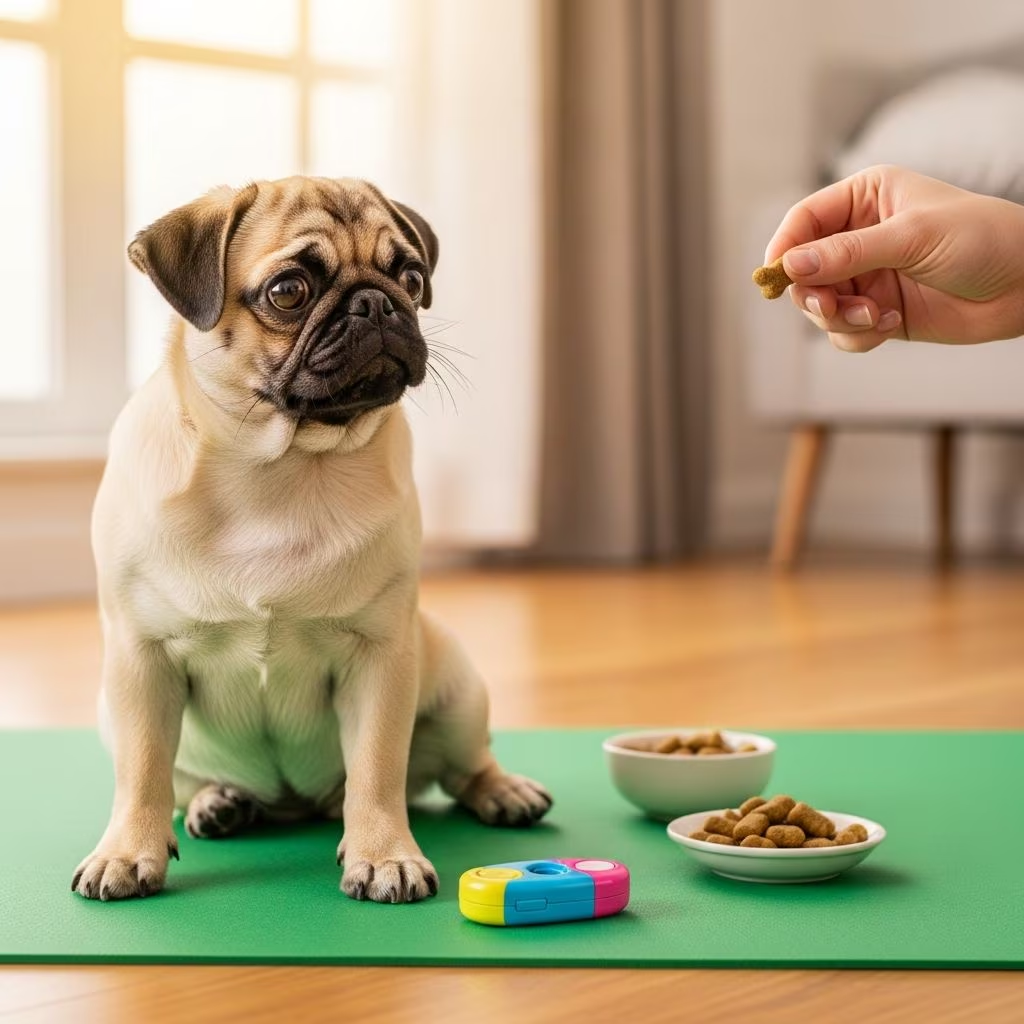
Training a Pug requires understanding the breed’s unique temperament, intelligence level, and motivational triggers. Pugs are compact, affectionate companions known for their independent streak and food-motivated nature. Successfully training a Pug combines patience, consistency, and an appreciation for their sometimes stubborn personality. Whether you’re working with a young puppy or an adult Pug, the fundamental principles of positive reinforcement and clear communication remain essential to achieving behavioral goals.
Understanding the Pug Temperament and Training Readiness
Before implementing any training regimen, it’s crucial to recognize what makes Pugs distinct learners. These dogs possess above-average intelligence but often display a strong independent streak that can be mistaken for stubbornness. Pugs are naturally curious, affectionate animals that form deep bonds with their owners. This emotional connection becomes your greatest asset in training. Their primary motivator is typically food, though praise and physical affection also play important roles in reinforcement.
Pugs are sensitive to their owner’s emotions and respond poorly to harsh corrections or frustrated tones. Creating a positive learning environment where mistakes are redirected rather than punished yields significantly better results. The breed’s brachycephalic (flat-faced) structure means they’re susceptible to overheating and respiratory challenges, influencing how and when training sessions should occur.
Foundation Building: Starting Your Pug’s Training Journey
The optimal window for introducing training concepts begins around 8 weeks of age, though adult Pugs can certainly learn new behaviors. Young puppies absorb information rapidly and establish foundational habits that persist throughout their lives. However, the belief that older Pugs cannot learn effectively is a misconception—adult dogs require only increased patience and consistent repetition to master new commands.
Initiating training early provides several advantages: puppies haven’t yet established problematic behaviors, their neural pathways are maximally plastic, and early positive experiences shape their confidence and social development. That said, rescue or adult Pugs often respond enthusiastically to training when presented with appropriate motivation and consistent guidance.
Setting Realistic Training Expectations
Training duration and frequency significantly impact learning outcomes. Pugs possess relatively short attention spans compared to larger working breeds. Research on canine cognition indicates that sessions lasting 5-10 minutes prove more effective than extended training periods. Multiple short sessions distributed throughout the day outperform single lengthy sessions in terms of retention and enthusiasm.
Training should feel like play rather than work. Ending every session on a positive note—even if it means practicing an already-mastered command—maintains your Pug’s enthusiasm and reinforces the association between training and enjoyment. This approach prevents the frustration that can develop when training becomes monotonous or demanding.
Fundamental Commands and Obedience Training
Establishing a foundation of basic commands provides the framework for all subsequent training. These essential commands—sit, down, stay, come, and leave it—become the vocabulary through which you communicate expectations and ensure safety.
Progressive Command Training
| Command | Typical Learning Age | Key Training Approach | Primary Application |
|---|---|---|---|
| Sit | 8-12 weeks | Lure nose upward with treat, allow hips to lower naturally | Greeting, impulse control |
| Down | 12-16 weeks | Extend “sit” by lowering lure toward paws | Settling, extended calm behavior |
| Stay | 16-20 weeks | Build duration gradually, reward remaining in position | Safety in open areas, focus management |
| Come | 12-16 weeks | Use high-value rewards, practice in secure environments first | Recall, emergency safety |
| Leave It | 16-20 weeks | Reward disengagement from forbidden items | Safety, impulse control |
Each command should be taught in isolation before combining them into sequences. Once your Pug demonstrates consistent understanding in a low-distraction environment, gradually introduce the command in busier settings and real-world scenarios. This progression from controlled training to practical application ensures reliable responses across different contexts.
Motivation and Reward Systems for Pugs
Pugs respond exceptionally well to food-based motivation, though variety in reward types maintains long-term engagement. High-value treats—small portions of chicken, cheese, or commercial training treats—should be reserved specifically for training to maintain their motivational power. Breaking treats into tiny pieces extends the reward supply without overfeeding.
Diversifying Reward Mechanisms
- Small, soft training treats (ideal for quick consumption between repetitions)
- Verbal praise using enthusiastic, high-pitched tones
- Physical affection such as belly rubs or head scratches
- Brief play sessions with favored toys
- Access to preferred activities or locations
Clicker training proves particularly effective with Pugs. The clicker creates a precise auditory marker that identifies the exact moment your dog performed the desired behavior. This clarity accelerates learning compared to verbal markers alone. The sequence typically involves: desired behavior occurs, clicker sounds immediately, treat follows within one second. Pugs quickly associate the click with reward, making it a powerful training tool.
Weight management considerations are paramount with Pugs, as the breed is predisposed to obesity. Using low-calorie treats or reducing meal portions during intensive training prevents excessive caloric intake while maintaining training effectiveness.
Housebreaking and Crate Training Protocols
Establishing reliable bathroom habits and creating a secure den space form the foundation for overall household harmony. Pugs naturally avoid soiling their sleeping areas, making crate training an effective housebreaking tool when implemented correctly.
Systematic Housebreaking Approach
Create a consistent schedule for outdoor bathroom breaks. Puppies typically need to eliminate after meals (usually 15-30 minutes), upon waking, before bedtime, and periodically throughout the day. Taking your Pug outside on a leash to a designated potty spot, using a verbal cue consistently, and offering enthusiastic praise and treats immediately upon successful elimination reinforces the desired behavior.
Accidents will occur—responding with calmness rather than punishment prevents anxiety and confusion about the actual training goal. Simply clean the area thoroughly with enzymatic cleaners to remove scent markers that might encourage repeat incidents.
Crate training should be introduced gradually and positively. Leave the crate door open initially, tossing high-value treats inside to build positive associations. Never force your Pug into the crate or use it as punishment. Once your Pug enters willingly and rests comfortably, begin closing the door briefly while you’re present. Gradually extend the duration and distance from the crate.
Socialization: Creating Confident, Well-Adjusted Pugs
Socialization involves controlled exposure to varied people, environments, other animals, and sensory experiences. This process profoundly influences your adult Pug’s confidence, fear responses, and behavioral patterns. The critical socialization window extends from 3 to 16 weeks of age, though socialization benefits continue throughout life.
Structured Socialization Strategies
- Invite diverse visitors to your home (various ages, appearances, abilities)
- Visit dog-friendly public spaces during calm hours (coffee shops, parks, outdoor retail areas)
- Arrange controlled play sessions with vaccinated, temperament-appropriate dogs
- Expose your Pug to different floor surfaces, sounds, and environments
- Allow positive interactions with children under supervised conditions
During socialization outings, monitor environmental conditions carefully. Pugs cannot tolerate extreme heat or humidity due to their respiratory anatomy. Hot pavement can burn sensitive paw pads, and elevated temperatures increase heat stroke risk. Socialization should occur during cooler parts of the day, with frequent breaks and access to fresh water.
Socialization differs fundamentally from simple exposure. Positive experiences matter more than quantity of exposures. If your Pug seems overwhelmed or frightened, create distance and allow observation from a comfortable vantage point rather than forcing interaction. Forcing uncomfortable situations can create lasting fear associations.
Managing Common Behavioral Challenges
Certain behaviors—jumping on visitors, excessive barking, destructive chewing, and food-based begging—frequently emerge in Pugs without proper management. Early intervention prevents these behaviors from becoming established habits that require extensive retraining.
Addressing Jumping and Door Greeting Behaviors
Pugs often jump on visitors out of excitement rather than dominance-seeking. Consistently teaching an alternative behavior—such as sitting when the doorbell rings—redirects this energy productively. Practice this scenario repeatedly until your Pug automatically sits upon hearing the bell, rewarding calm behavior generously. Visitors should ignore jumping completely, providing attention only when all four paws remain on the floor.
Managing Barking Patterns
Pugs bark to communicate excitement, alert owners to stimuli, or request attention. Rather than attempting to eliminate all barking, teach a “quiet” command. Allow a brief vocalization, then use a verbal cue followed by a reward for silence. Never punish barking with yelling, as this often escalates vocalizations.
Preventing Destructive Chewing
Provide appropriate chewing outlets through durable toys and puzzle feeders. Rotation prevents toy novelty from fading. If you catch your Pug chewing inappropriately, redirect attention to an approved toy and reward the redirected behavior. Never leave your Pug unsupervised with items they might destroy until they demonstrate reliable judgment.
Consistency Across Your Household
Training effectiveness depends critically on consistent rule enforcement and communication across all household members. If one family member allows couch access while another enforces a “floor only” rule, your Pug becomes confused about expectations. This inconsistency frustrates both dog and humans.
Establish clear household rules and ensure everyone implements identical commands, consequences, and rewards. Discuss training goals together and commit to maintaining consistency even when tempted to make exceptions. A house rule enforced inconsistently teaches your Pug to test boundaries repeatedly, seeking the rare moment when the rule doesn’t apply.
Professional Training Considerations
Enrollment in professional puppy training classes provides several advantages beyond command instruction. Group classes offer socialization opportunities while exposing your Pug to a trainer’s expert guidance and systematic methodology. Seek trainers specializing in positive reinforcement techniques and demonstrating experience with small or brachycephalic breeds.
Positive reinforcement-based trainers focus on rewarding desired behaviors rather than punishing mistakes. This approach aligns with modern canine behavioral science and produces more reliable, confident learners than punishment-based methods. Avoid trainers employing aversive tools such as prong collars, choke chains, or shock collars, particularly with sensitive breeds like Pugs.
Grooming Acclimation and Maintenance Training
Building positive associations with grooming processes prevents behavioral challenges during necessary maintenance. Begin handling your Pug’s paws, ears, and face gently during calm moments, rewarding cooperation with treats and praise. This early familiarization reduces stress during nail trimming, ear cleaning, and facial wrinkle maintenance—essential Pug-specific grooming tasks.
Professional groomers and veterinarians appreciate dogs comfortable with handling. Starting grooming acclimation early prevents anxiety and resistance that might develop if grooming is introduced only when necessary medical care arises.
Advanced Training and Enrichment Opportunities
Beyond basic obedience, Pugs enjoy participating in structured activities that provide mental stimulation and physical exercise. Scent work, barn hunt competitions, and low-impact foundational agility classes engage their natural instincts and intelligence. Save high-impact agility training until skeletal maturity around 18 months of age to prevent joint stress on growing frames.
Trick training offers excellent enrichment, as Pugs genuinely enjoy learning novel behaviors and the attention training provides. Puzzle toys, hide-and-seek games with treats, and interactive feeding devices provide mental stimulation that complements formal training.
Troubleshooting Common Training Plateaus
Most Pug owners encounter periods when progress stalls or previously learned behaviors regress. These plateaus typically result from inconsistent practice, unclear communication, or insufficient motivation. Returning to basics, simplifying the training scenario, and verifying treat value usually restarts forward progress.
If your Pug consistently struggles with a particular command despite apparent effort, reconsider your approach. Some Pugs respond better to different reward types, training locations, or command variations. Flexibility and willingness to adjust methodology often unlock breakthroughs that rigid approaches cannot.
Building a Lasting Training Foundation
Successful Pug training balances structured instruction with patience, humor, and genuine affection for your dog’s personality. Pugs are intelligent but independent thinkers who respond best to training presented as collaborative communication rather than commands imposed from above. Small victories deserve celebration, and setbacks represent learning opportunities rather than failures.
The investment in training strengthens your relationship with your Pug while ensuring household harmony and your dog’s safety. A well-trained Pug enjoys greater freedom, more social opportunities, and a deeper bond with their owner—benefits that extend throughout both your lifetimes together.
Frequently Asked Questions
- At what age should I begin training my Pug?
- Pugs can begin learning basic concepts as early as 8 weeks of age. However, training readiness varies by individual puppy. Adult Pugs can also learn effectively, though initial training may require additional patience and repetition.
- How long should typical training sessions last?
- Five to ten minute sessions work best for most Pugs. Multiple short sessions throughout the day prove more effective than single extended sessions. Pugs have moderate attention spans and lose focus during lengthy training periods.
- Are Pugs difficult to housetrain?
- Pugs can be housetrained successfully using consistent scheduling, positive reinforcement, and crate training. While they sometimes display independent streaks that slow progress, systematic approaches typically yield reliable results within several weeks.
- What treats work best for Pug training?
- High-value, small-sized treats work optimally. Pugs respond well to chicken, cheese, or commercial training treats broken into tiny pieces. Since Pugs are prone to weight gain, use low-calorie options or reduce meal portions during intensive training periods.
- How do I prevent overeating during training?
- Account for training treats in your Pug’s daily caloric intake. Reduce regular meal portions proportionally or use low-calorie training alternatives. Small, frequent treats maintain motivation without excessive caloric intake.
- Should I use punishment-based training methods?
- No. Pugs are sensitive dogs that respond poorly to harsh corrections. Positive reinforcement-based training produces more reliable learning and better emotional outcomes. Punishment often creates anxiety or learned helplessness rather than behavioral change.
References
- How to Train a Pug Puppy: Milestones & Timeline — American Kennel Club. 2024. https://www.akc.org/expert-advice/puppy-information/how-to-train-a-pug-puppy-milestones-timeline/
- How to Train Your Pug: 10 Tips for a Well-Behaved Pup — Pug Boxes. 2024. https://pugboxes.com/blogs/pug-life-blog/how-to-train-your-pug-10-tips-for-a-well-behaved-pup
- Pug Puppy: Basic Obedience Training Video — Legends Dog Training (Alyssa Rose, Certified Professional Dog Trainer). 2024. https://www.youtube.com/watch?v=G7xZvXK2gEA



