

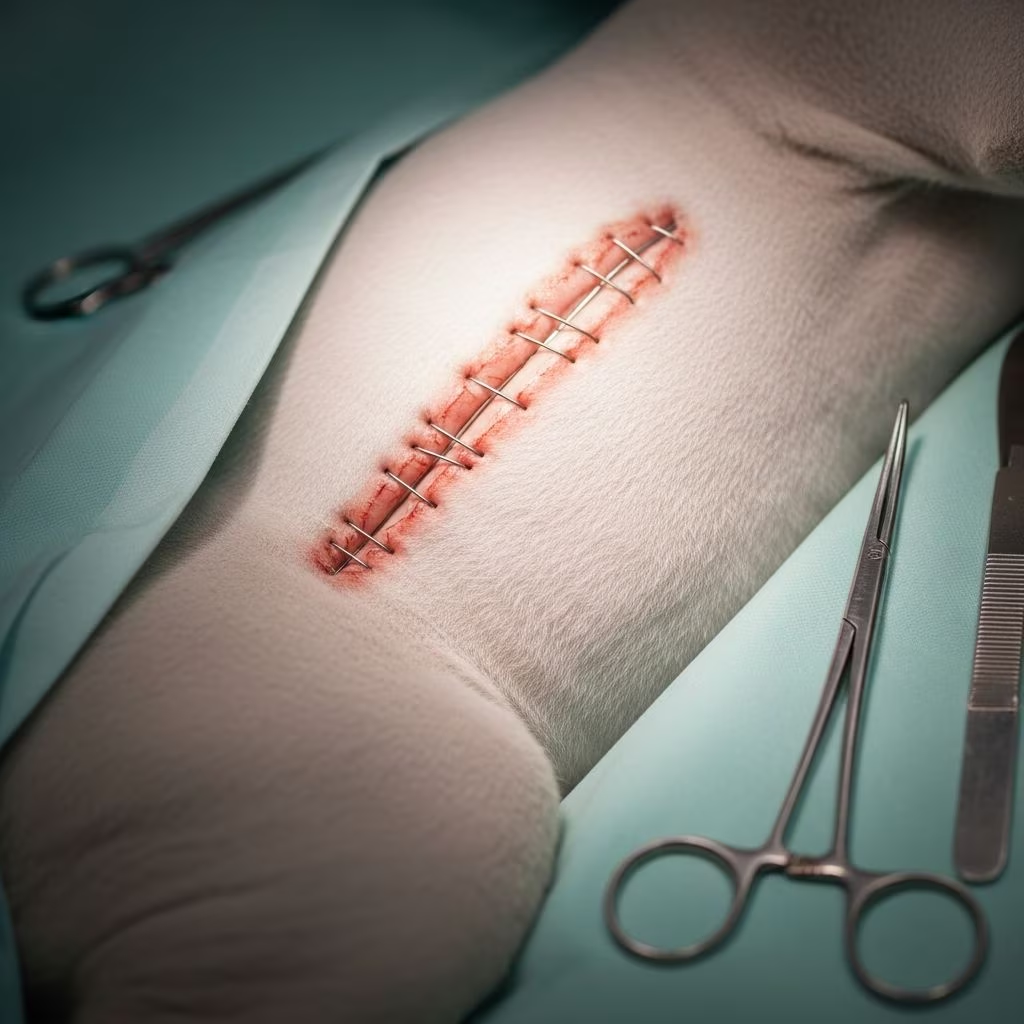
Perineal urethrostomy, commonly known as PU surgery, serves as a critical intervention for male cats prone to repeated urethral blockages. This procedure reconstructs the urethra by creating a wider opening in the perineal region, significantly lowering the chances of future obstructions and enhancing the cat’s quality of life.
Why Cats Develop Urethral Obstructions
Male cats face a higher risk of urinary tract issues due to their anatomy. The feline urethra features a narrow penile segment that can easily become clogged with crystals, stones, mucus, or inflammatory debris from conditions like feline lower urinary tract disease (FLUTD). Recurrent blockages pose life-threatening risks, including bladder rupture or kidney damage if untreated.
Symptoms often include straining without urine production, vocalizing in pain, blood in minimal urine output, lethargy, vomiting, and a distended bladder. Prompt veterinary attention is essential, as obstructions can escalate rapidly within 24-48 hours.
When Is PU Surgery Recommended?
Veterinarians recommend PU surgery for cats experiencing multiple obstructions despite medical management, such as dietary changes, medications, or catheterization. It is a salvage procedure, not a cure for underlying FLUTD, but it bypasses the problematic narrow urethra by connecting the wider pelvic urethra to the skin.
- Recurrent blockages: Cats with two or more episodes in a short period.
- Failure of conservative treatments: When diets or drugs fail to prevent issues.
- Severe trauma: Urethral injuries from accidents requiring reconstruction.
Alternatives like subpubic urethrostomy exist for specific cases, but traditional perineal PU remains standard for most patients.
Preparing Your Cat for PU Surgery
Pre-surgical evaluation ensures safety under anesthesia. This includes blood tests to check kidney function, electrolyte balance, and overall health, plus imaging like radiographs or ultrasound to assess the bladder and urethra.
If obstructed, stabilization precedes surgery: IV fluids correct dehydration, and catheterization relieves pressure. Owners should fast their cat as instructed, typically 8-12 hours beforehand.
| Pre-Op Checklist | Details |
|---|---|
| Physical Exam | Assess hydration, bladder size, pain levels |
| Bloodwork | Kidney values, electrolytes, complete blood count |
| Imaging | X-rays or ultrasound for stones/obstructions |
| Stabilization | Fluids, pain relief if acutely blocked |
The Surgical Procedure Step by Step
Performed under general anesthesia, PU surgery demands precision to minimize complications. The cat is positioned in sternal or dorsal recumbency, with the perineal area clipped, scrubbed sterile, and a purse-string suture placed around the anus to prevent contamination.
- Incision and Exposure: A midline incision exposes the penis and urethra. The penile urethra is dissected free.
- Urethral Incision: Scissors or a scalpel opens the urethra dorsally to the bulbourethral glands, the widest point.
- Reconstruction: The retractor penis muscle is preserved for continence. The wider pelvic urethra is sutured to the skin using fine, atraumatic sutures in a mucocutaneous pattern.
- Penile Amputation: The distal penis is ligated and removed beyond the new stoma.
- Closure: Subcutaneous tissues and skin are approximated, creating a 1.5-2 cm stoma that accommodates a 10-Fr catheter.
The procedure lasts 1-2 hours. A urinary catheter may remain briefly post-op to ensure patency.
Immediate Post-Operative Care at Home
Hospital stays last 1-3 days for monitoring. Discharge instructions emphasize pain management with opioids like buprenorphine and possibly NSAIDs if kidneys are healthy.
- Prevent licking: Use an E-collar; apply petroleum jelly to the stoma to avoid scalding.
- Litter management: Switch to non-clumping, low-dust litter; place box nearby.
- Diet: Prescription urinary diets to reduce crystal formation.
- Monitor urination: Frequent small amounts are normal initially; watch for straining or blood.
Stitches, if external, dissolve or are removed in 10-14 days. Limit activity for 2 weeks.
Potential Complications and How to Spot Them
While success rates exceed 90%, risks exist. Early issues include swelling, bleeding, or urine leakage; late ones involve stricture, incontinence, or infections.
| Complication | Signs | Management |
|---|---|---|
| Stoma Swelling | Reduced urine flow, straining | Cold compresses, anti-inflammatories |
| Urinary Tract Infection | Foul urine odor, fever | Antibiotics based on culture |
| Stricture | Recurrent blockage | Dilation or revision surgery |
| Incontinence | Dribbling urine |
Follow-up visits at 1-2 weeks check stoma size and function. Most cats adapt quickly, urinating voluntarily through the new opening.
Long-Term Prognosis and Lifestyle Adjustments
Post-PU, re-obstruction rates drop dramatically, with many cats enjoying normal lifespans. Owners report high satisfaction with quality of life. However, FLUTD management continues via stress reduction, environmental enrichment, and specialized nutrition.
- Weight control: Obesity exacerbates urinary issues.
- Hydration: Encourage water intake with fountains or wet food.
- Regular vet checks: Annual urinalysis screens for crystals or infections.
The new stoma requires gentle cleaning if soiled, but most cats self-maintain effectively.
FAQs About PU Surgery in Cats
Is PU surgery painful for my cat?
Comprehensive pain control makes it manageable. Multimodal analgesia ensures comfort during recovery.
Will my cat still spray after PU?
Many lose this ability due to penile removal, reducing marking behaviors.
Can female cats get PU surgery?
Rarely, as females have wider urethras; it’s primarily for males.
How much does PU surgery cost?
Varies by location; expect $2,000-$5,000 including hospitalization.
What if my cat blocks again after surgery?
Revisions are possible, but rates are low (<10%).
Preventing Urinary Issues Before Surgery
Early intervention helps avoid PU. Maintain ideal body weight, provide multiple litter boxes, minimize stressors, and use urinary health formulas. If crystals form, dissolve them promptly with targeted feeds.
In multi-cat homes, pheromone diffusers reduce tension. Annual wellness exams catch problems early.
References
- Perineal Urethrostomy in Cats: Guide for Veterinarians — Clinician’s Brief. 2023. https://www.cliniciansbrief.com/article/perineal-urethrostomy-cat
- Perineal Urethrostomy Surgery in Cats — VCA Animal Hospitals. 2024. https://vcahospitals.com/know-your-pet/perineal-urethrostomy-surgery-in-cats
- How to perform a feline perineal urethrostomy — dvm360. 2022. https://www.dvm360.com/view/how-perform-feline-perineal-urethrostomy
- Feline Perineal Urethrostomy Ventral Approach — Today’s Veterinary Practice. 2023. https://todaysveterinarypractice.com/urology-renal-medicine/practical-techniques-from-the-navc-institute-feline-perineal-urethrostomy-ventral-approach/
- Perineal Urethrostomy for Cats — Purdue University Veterinary Hospital. 2023. https://vet.purdue.edu/hospital/small-animal/documents/soft-tissue-surgery/2023-PUVH-PU%20in%20cats.pdf



