
Psittacula Parakeets: Complete Pet Care & Behavior Guide
Everything you need to know about Psittacula parakeets: personality, care requirements, feeding, and health.
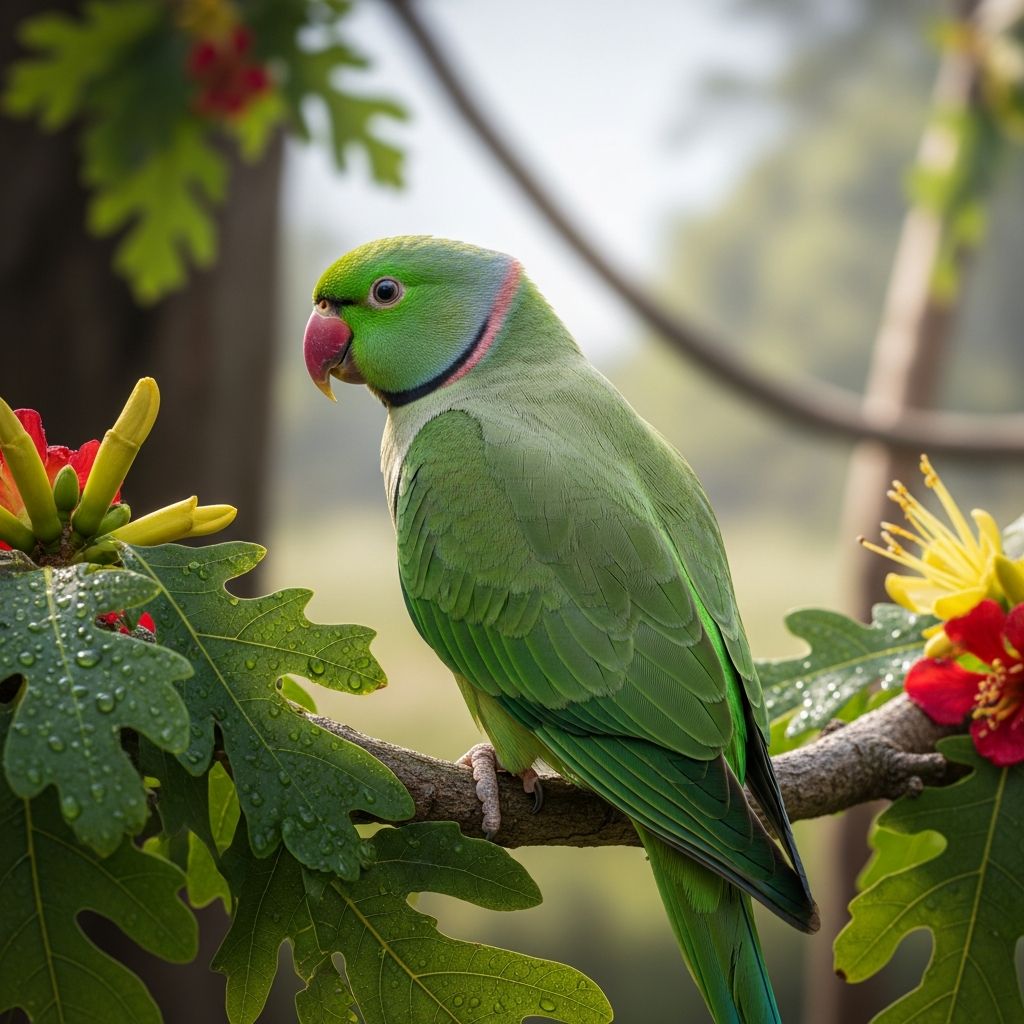
Psittacula parakeets, commonly known as ring-necked parakeets, represent a fascinating genus of medium to large-sized parrots that originate from Africa and Southeast Asia. These elegant birds have gained popularity in the exotic pet trade due to their striking appearance, intelligence, and distinctive personalities. Understanding their characteristics, care requirements, and behavioral traits is essential for anyone considering them as companions or for current pet owners seeking to optimize their birds’ well-being.
What Is A Psittacula?
Psittacula are primarily green birds characterized by their long tail feathers and distinctive rings of dark colored feathering around the neck, which gives them their popular name as ring-necked parakeets. While referred to as parakeets, Psittacula are significantly larger than many people traditionally associate with the term “parakeet.” The genus comprises 16 species, with three species being more commonly available as pets: the Indian ring-necked parakeet, the African ring-necked parakeet, and the Alexandrine parakeet.
These birds possess distinctive physical characteristics that make them easily recognizable. Their stout bills are typically colored red to orange, and their adult plumage displays vibrant coloration with sexually dimorphic features. Male Psittacula typically sport more vividly colored heads and distinctive neck markings, while females display paler coloration and either no neck ring or very light-colored rings.
Physical Characteristics & Identification
Understanding the physical appearance of Psittacula parakeets helps distinguish them from other parrot species and identify age and sex differences within the genus. Different species within the Psittacula genus display varying sizes and colorations, though they share common features.
Size & Build
Psittacula parakeets vary in size depending on species. The Alexandrine parakeet, one of the larger species, measures up to 62 centimeters in length, making it one of the largest parakeets available in the pet trade. The rose-ringed parakeet averages 40 centimeters in length, including tail feathers, with average single-wing lengths of approximately 15 to 17.5 centimeters. These dimensions reflect the bird’s distinctive long-tailed silhouette, with tail feathers comprising a substantial portion of their overall length.
Sexual Dimorphism
Male and female Psittacula display readily apparent differences. Males of the rose-ringed parakeet species sport a distinctive pink and black neck ring, while females and immature birds of both sexes either show no neck rings or display pale to dark grey shadow-like rings. Male Alexandrine parakeets boast a black stripe across their lower cheeks and a pink band on their nape, features absent in females. Juveniles resemble adult females but possess shorter tails. These distinctions make sex determination straightforward for experienced bird enthusiasts.
Color Variations
In their wild state, Psittacula display predominantly green plumage with red beaks and blue-tipped tails. Captive-bred ringnecks exhibit multiple color mutations, including turquoise, cinnamon, olive, white, blue, violet, grey, and yellow variants. The Alexandrine parakeet features a distinctive light blue-grey sheen on the cheeks and nape, with striking red patches on the shoulders.
Care & Housing Requirements
Providing appropriate housing and care is fundamental to maintaining healthy, well-adjusted Psittacula parakeets in captivity. These active birds require substantial space and thoughtful environmental considerations.
Cage Specifications
Psittacula need spacious cages that accommodate their active lifestyle and distinctive physical features. Cages must be wide enough to allow for vigorous play and sufficiently tall to accommodate their long tail feathers. The spatial requirements reflect these birds’ natural inclination toward active movement and flight. Inadequate cage sizing can lead to behavioral problems, feather plucking, and diminished quality of life.
Environmental Enrichment
Psittacula parrots can occupy themselves productively throughout the day when provided with appropriate toys for chewing and destruction. These avid chewers require safe, destructible wood toys to satisfy their natural instincts. Rotating toys regularly maintains novelty and engagement, preventing boredom-related behavioral issues. Environmental enrichment should include foraging opportunities, puzzle feeders, and varied substrates for natural behaviors.
Personality & Behavior
Psittacula have developed a reputation as hands-off birds typically suited for aviary situations with other Psittacula; however, this characterization requires important nuance. Well-socialized Psittacula receiving consistent positive interactions can develop into social, engaging companions displaying high intelligence and outgoing personalities.
These birds may not seek cuddling as enthusiastically as some parrot species, but this does not indicate disinterest in human interaction. Rather, Psittacula express affection and engagement through different modalities than more overtly cuddly species. They form genuine bonds with their human companions through regular interaction and demonstrate enjoyment in activities together. Personality development depends significantly on socialization beginning early in life and maintained consistently throughout the bird’s lifespan.
Social Structure
In their natural habitat, Psittacula typically occur in small flocks but congregate into much larger groups where food sources are abundant. This social flexibility suggests adaptability in captive settings, where individual housing versus aviary arrangements can both support psychological well-being when combined with adequate human interaction or species-appropriate companions.
Speech & Vocalization
Psittacula demonstrate impressive vocal capabilities that warrant careful consideration before acquisition. If a Psittacula parakeet learns to talk, it may become a non-stop talker, requiring patient owners prepared for extensive vocalization. Additionally, these birds are natural whistlers, and some individuals may prefer whistling to articulate speech.
Sound Level Considerations
Psittacula can be loud, necessitating busy work and appropriate toys to maintain occupation throughout the day and potentially moderate vocalization levels. Prospective owners and close neighbors must realistically assess tolerance for frequent chattering and occasional ear-piercing shrills. In their natural environment, rose-ringed parakeets are notably noisy with unmistakable squawking calls. Captive individuals can be trained to moderate volume to some degree but cannot be expected to be quiet birds.
Feeding & Nutrition
Psittacula typically have good appetites and require carefully formulated diets reflecting their natural preferences and nutritional requirements. In the wild, these birds consume fruit, vegetables, seeds, nuts, blossoms, and farm crops. A well-balanced captive diet should replicate this diversity while ensuring appropriate nutrient profiles.
Dietary Components
High-quality pellets formulated for medium to large parrots should comprise the diet foundation, supplemented with fresh fruits and vegetables daily. Appropriate fresh foods include leafy greens, carrots, apples, berries, and other produce. Seeds and nuts should be offered in moderation due to their high fat content. Cuttlebone or mineral supplements support calcium requirements, particularly for breeding females. Fresh, clean water must be available continuously.
Health & Common Conditions
Psittacula are relatively healthy birds; however, they remain susceptible to several avian health conditions requiring veterinary attention when symptoms appear.
Common Health Issues
Psittacula can develop polyomavirus, psittacosis, aspergillosis, and bacterial infections. Polyomavirus particularly affects young birds and those with compromised immune systems. Psittacosis, a zoonotic disease transmissible to humans, presents with respiratory symptoms. Aspergillosis results from fungal infections often associated with poor air quality. Bacterial infections may affect respiratory or digestive systems. Regular veterinary checkups support early detection and treatment intervention.
Safety Considerations
Psittacula are excellent fliers capable of sustained flight even following recent wing-feather trims. Outdoor time should occur exclusively within harnesses or travel carriers to prevent escape and loss. Owners must remain vigilant regarding potential hazards including ceiling fans, open windows, and other environmental dangers that can cause serious injury or death in these powerful fliers.
Origin & Natural Habitat
Psittacula parakeets originate from areas ranging from Africa to Southeast Asia and islands of the Indian Ocean. Different species show varying distributions. The rose-ringed parakeet maintains disjunct native ranges across Africa and the Indian subcontinent. The Alexandrine parakeet inhabits South and Southeast Asian forests, woodlands, agricultural lands, and mangrove forests up to elevations of 900 meters.
These birds prefer forest and open woodland habitats, particularly areas near cultivated farmlands and orchards where food sources concentrate. Their adaptability to various climates has enabled establishment of feral populations far from native ranges, demonstrating their resilience to environmental variation.
Breeding Information
Understanding Psittacula breeding behaviors provides insight into their natural cycles and reproductive requirements for those maintaining breeding programs.
Breeding Season & Nesting
The Alexandrine parakeet breeding season spans from November to April, with nests typically located in tree hollows. Females lay two to four white eggs, with chicks fledging at approximately seven weeks of age. Dependent young remain with parents for several months following fledging. Rose-ringed parakeets function as secondary cavity nesters, accepting or modifying holes in trees, utility poles, or walls where young remain for six to seven weeks.
Frequently Asked Questions
What is the lifespan of a Psittacula parakeet?
Psittacula parakeets commonly live 20 to 30 years in captivity with proper care, diet, and veterinary attention. Some individuals exceed these averages, making them long-term companions requiring significant commitment.
Are Psittacula parakeets good for beginners?
Psittacula can be appropriate for experienced bird owners but may present challenges for beginners due to their size, vocalization levels, and specific care requirements. Prospective owners should thoroughly research species-specific needs before acquisition.
Can Psittacula parakeets live with other birds?
Psittacula can cohabitate with other Psittacula or appropriately-sized compatible birds in aviary settings. Introductions require careful monitoring, and species-specific compatibility must be verified before permanent housing arrangements.
How much space do Psittacula need?
Psittacula require substantially more space than small parakeet species. Minimum cage dimensions should accommodate vigorous flight and movement, with height sufficient for long tail feathers. Aviaries provide optimal space for these active birds.
What toys do Psittacula prefer?
Psittacula particularly enjoy destructible wood toys, foraging toys, and puzzle feeders that engage their intelligence and satisfy chewing instincts. Rotating toys regularly maintains novelty and prevents boredom.
Do Psittacula parakeets bite?
Psittacula possess strong beaks capable of delivering painful bites if frightened, mishandled, or poorly socialized. Proper handling, early socialization, and respect for individual boundaries minimize bite incidents.
Considerations Before Ownership
Prospective Psittacula owners should carefully evaluate their ability to meet these birds’ complex requirements. Consider space availability, noise tolerance in your household and neighborhood, financial capacity for veterinary care and quality nutrition, and personal commitment to 20+ years of daily care and interaction. These intelligent, long-lived birds deserve owners capable of meeting their comprehensive needs throughout their lifespan.
References
- Psittacula — Wikipedia. Accessed 2025. https://en.wikipedia.org/wiki/Psittacula
- Psittacula Parrots: Ring-Necked Parakeets — Parrot Fun Zone. Accessed 2025. https://www.parrotfunzone.com/learn-about-parrots/parrot-species/ring-necked-parakeets
- Rose-ringed Parakeet — Wikipedia. Accessed 2025. https://en.wikipedia.org/wiki/Rose-ringed_parakeet
- Alexandrine Parakeet (Psittacula eupatria) Identification — Birda. Accessed 2025. https://app.birda.org/species-guide/13658/Alexandrine_Parakeet
- Psittacula Personality, Food & Care — Lafeber Co. Pet Birds. Accessed 2025. https://lafeber.com/pet-birds/species/psittacula/
- Rose-ringed Parakeet: Breeding Bird Atlas — USF Libraries. Accessed 2025. https://lib.usf.edu/breeding-bird-atlas/species-accounts/rose-ringed-parakeet/
Similar Articles








Read full bio of Sneha Tete


