

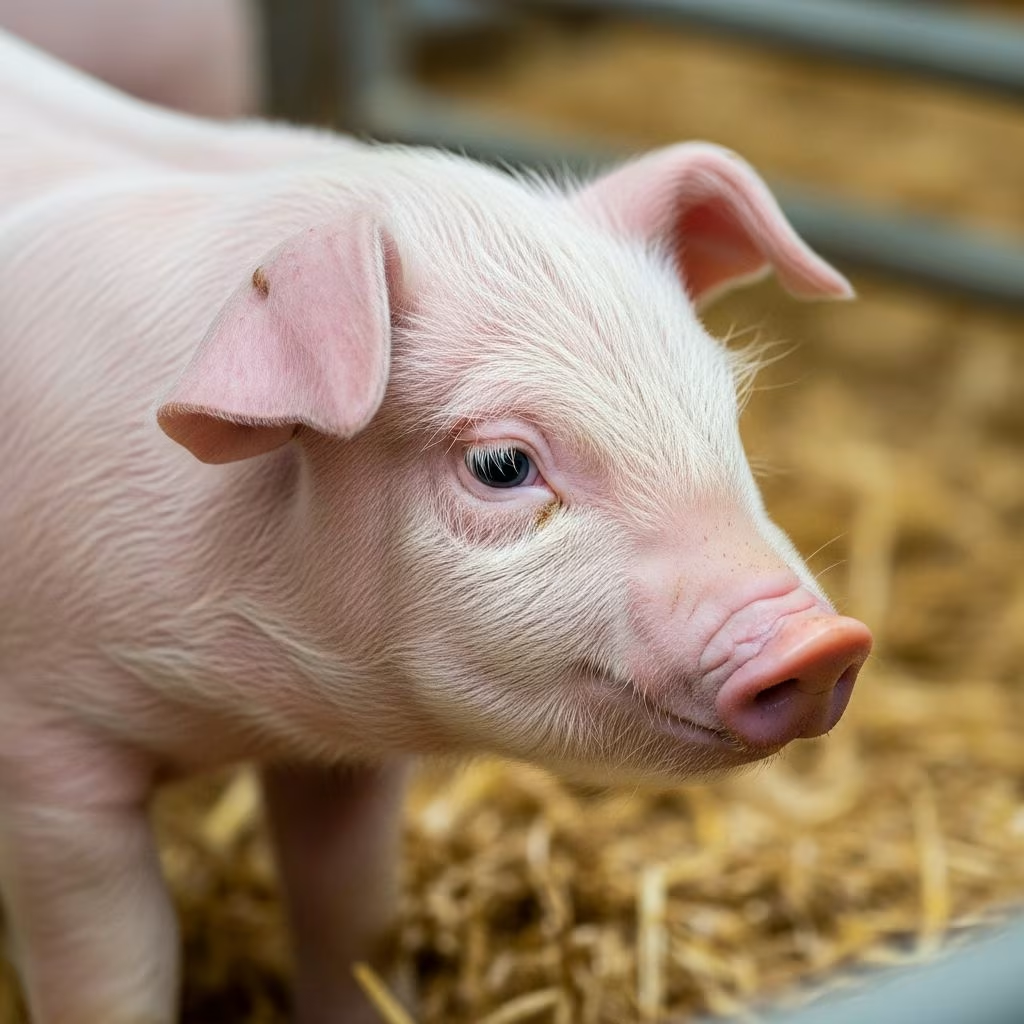
Pseudorabies, also known as Aujeszky’s disease, represents one of the most destructive viral infections affecting domestic pigs globally. Caused by a herpesvirus, it triggers a spectrum of severe symptoms that vary dramatically with the animal’s age, often leading to high mortality in young piglets while establishing lifelong carriers in survivors. This disease has been largely eradicated from commercial U.S. swine operations through rigorous vaccination and testing protocols, yet it persists in feral swine populations, posing ongoing risks.
The Viral Culprit Behind Pseudorabies
The pseudorabies virus (PRV), a member of the Alphaherpesvirinae subfamily, excels at rapid spread within pig herds via respiratory droplets, direct contact, and even vertical transmission from dam to offspring. Once infected, pigs shed the virus through nasal secretions, saliva, milk, urine, and genital fluids for up to two weeks post-infection, with potential reactivation during stress events like transport or farrowing. Unlike many viruses, PRV establishes latency in neural ganglia, allowing carriers to harbor it indefinitely without overt signs until triggered.
In non-swine species such as cattle, dogs, and cats, PRV proves nearly 100% fatal, manifesting as intense itching (mad itch), neurological frenzy, and sudden death, underscoring its zoonotic-like danger despite no human infectivity. Pigs serve as the natural reservoir, amplifying the virus’s threat to mixed livestock farms.
Age-Dependent Clinical Manifestations
Symptom severity hinges on pig age and immunity status, creating distinct disease profiles across herd stages.
Newborn and Suckling Piglets: Near-Total Devastation
The youngest pigs face the harshest outcomes, with mortality approaching 100% in those under one week old lacking maternal antibodies. Classic central nervous system (CNS) signs dominate: paddling limbs, dog-like sitting posture, tremors, seizures, circling, and foaming at the mouth. Respiratory distress compounds the crisis, leading to rapid death within 48-72 hours.
- Paddling and paralysis: Hind leg weakness forces piglets into recumbent or ‘dog-sitting’ positions.
- Neurological frenzy: Incoordination, head pressing, and convulsions signal brain involvement.
- High fever: Temperatures spike to 41-42°C, accompanied by anorexia.
Growing and Weaned Pigs: Respiratory Dominance
In nursery and grower-finisher pigs, PRV shifts to a flu-like respiratory syndrome. Coughing, sneezing, nasal discharge, dyspnea, and pneumonia prevail, often worsened by secondary bacterial invaders due to impaired alveolar macrophage function. Mortality drops to 1-50%, with recovery possible in 10 days for many, though weight loss and fever persist.
Breeding Stock: Reproductive Catastrophe
Sows and boars exhibit subtler signs but inflict herd-level damage through reproductive failure. Depending on gestation stage, outcomes include embryonic resorption, mummified fetuses, abortions, stillbirths, or weak littermates. Adults may show transient fever, inappetence, or mild CNS effects, surviving as carriers.
Pathological Changes and Gross Lesions
Gross necropsy often reveals minimal visible damage, but keen observation uncovers subtle indicators. Serous rhinitis, necrotic tonsils, hemorrhagic lymph nodes, pulmonary edema, and scattered 2-3 mm liver necrotic foci characterize acute cases, especially in neonates. Secondary pneumonia leaves consolidated lungs, while microscopic exams confirm neuronal degeneration and viral inclusions.
| Age Group | Common Lesions | Frequency |
|---|---|---|
| Newborn Piglets | Liver necrosis, rhinitis, CNS edema | High |
| Weaners/Growers | Pneumonia, tonsillitis | Moderate |
| Adults | Minimal; reproductive tract inflammation | Low |
Transmission Dynamics and Risk Factors
PRV spreads explosively via nose-to-nose contact, aerosols, fomites, and venereal routes. In-utero infection occurs through viremic sows, with milk transmission amplifying suckling exposure. Feral swine act as reservoirs, introducing virus via garbage feeding or escaped domestics. Stressors like crowding trigger shedding from latents. Incubation spans 2-5 days, peaking excretion early.
- Direct contact: Primary mode in confined herds.
- Indirect: Contaminated equipment, vehicles, humans.
- Vertical: Transplacental and colostrum/milk.
Diagnostic Approaches for Confirmation
Rapid, accurate diagnosis relies on multifaceted testing. Preferred samples include brain, spleen, lung from necropsies, or nasal swabs from live animals stored cold in antibiotic saline.
- Virus isolation: Gold standard in cell culture.
- PCR: Detects viral DNA with high sensitivity.
- Fluorescent antibody: Targets tonsil/brain smears.
- Serology: ELISA for antibodies in eradication programs.
Differentiate from rabies, classical swine fever via specific assays, as overlapping CNS signs mislead.
Treatment Limitations and Supportive Care
No antiviral cures exist for PRV; supportive measures target secondaries. Antibiotics combat bacterial pneumonia via feed or injection, while fluids address dehydration. Isolation of cases curbs spread, but prognosis remains grave for neonates.
Vaccination: The Cornerstone of Control
Modified-live vaccines (MLV) mitigate severity, slashing shedding and boosting survival. Protocols include intranasal dosing for sows and neonates, intramuscular for others. Gene-deleted versions (thymidine kinase minus) prevent latency, ideal for eradication. Quarterly breeding herd boosts and post-maternal antibody pig vaccination yield robust immunity. Vaccine virus sheds minimally, posing low transmission risk.
Eradication Success Stories and Strategies
U.S. commercial herds achieved PRV-free status by 2014 via test-and-remove: serology identifies latents for culling, paired with sow vaccination. Alternatives encompass whole-herd depopulation, offspring segregation, and feral surveillance. All 50 states now certified free commercially, though wild pigs harbor virus on game lands.
- Test-and-remove: Detect, depopulate carriers.
- Segregated production: Isolate early from late stages.
- Depopulation-repopulation: Total clearance, all-in/all-out.
Biosecurity Essentials to Fortify Herds
Prevent reintroduction through rigid protocols: quarantine newcomers, ban garbage feeding, disinfect rigorously, limit visitors, and monitor ferals. Ongoing serology in endemic zones sustains freedom.
Frequently Asked Questions (FAQs)
What is the fatality rate in newborn piglets?
Up to 100% in unvaccinated, naive sucklings under 7 days.
Can pseudorabies affect humans?
No, it poses no risk to human health.
How long do carriers shed virus?
2-5 days initially, reactivating under stress lifelong.
Is vaccination safe for all pigs?
Yes, MLV types are herd-safe with minimal shedding.
Why monitor feral swine?
They sustain reservoirs threatening domestics.
Future Outlook for Swine Health
Global PRV control hinges on sustained vigilance, advanced diagnostics, and DIVA (differentiating infected from vaccinated) vaccines. Lessons from U.S. eradication guide international efforts, safeguarding pork production amid climate-driven feral expansions.
References
- Pseudorabies – Swine Diseases — University of Minnesota. 2023. https://open.lib.umn.edu/swinedisease/chapter/pseudorabies/
- Pseudorabies in Pigs – Nervous System — Merck Veterinary Manual. 2023-10-15. https://www.merckvetmanual.com/nervous-system/pseudorabies/pseudorabies-in-pigs
- Pseudorabies | Game Commission — Commonwealth of Pennsylvania. 2024. https://www.pa.gov/agencies/pgc/wildlife/wildlife-health/wildlife-diseases/pseudorabies
- Disease Alert: Pseudorabies — USDA APHIS. 2024. https://www.aphis.usda.gov/livestock-poultry-disease/swine/pseudorabies
- Pseudorabies — California Department of Food and Agriculture. 2022. https://www.cdfa.ca.gov/ahfss/animal_health/pdfs/Pseudorabies.pdf
- Pseudorabies fact sheet — Canadian Food Inspection Agency. 2023. http://inspection.canada.ca/en/animal-health/terrestrial-animals/diseases/reportable/pseudorabies/fact-sheet



