
Pseudocowpox In Cattle: Diagnosis, Treatment, Prevention
Essential guide to recognizing, managing, and preventing pseudocowpox outbreaks in dairy herds for optimal cattle health.
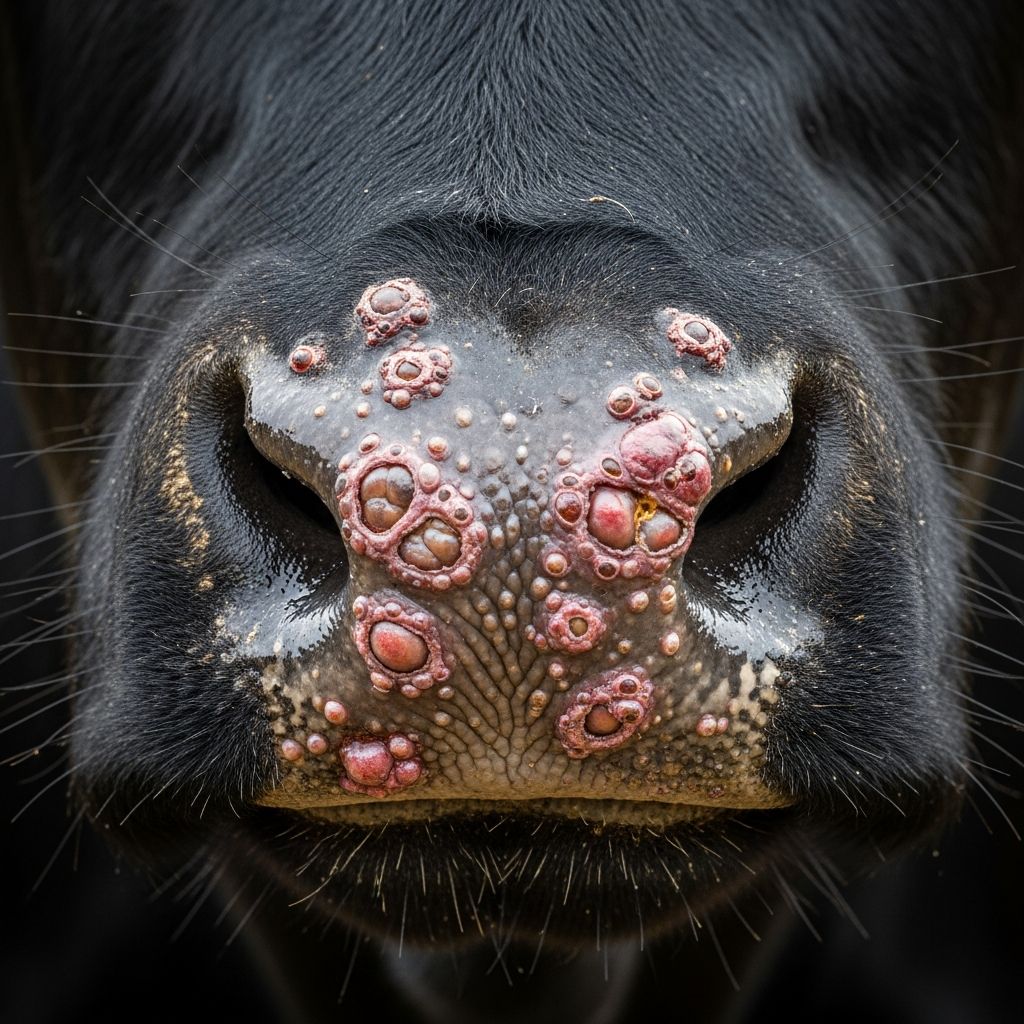
Pseudocowpox, also known as false cowpox or milker’s nodule virus infection, is a viral disease primarily affecting the teats and udders of dairy cattle. Caused by a parapoxvirus, it leads to characteristic skin lesions that can impact milking efficiency and pose zoonotic risks to handlers. This article delves into its etiology, clinical presentation, epidemiology, diagnostic approaches, management strategies, and preventive measures, drawing from veterinary research to equip farmers and professionals with actionable knowledge.
Understanding the Causative Agent
The pathogen behind pseudocowpox is the pseudocowpox virus (PCPV), a member of the Parapoxvirus genus within the Poxviridae family. This enveloped, double-stranded DNA virus targets keratinocytes, the primary cells in the skin’s outer layer, leading to localized proliferative lesions. Unlike more severe poxviruses like cowpox, PCPV causes mild, self-limiting infections in cattle but can persist in herds due to limited immunity development.
PCPV isolates, such as those studied in regions like Russia, demonstrate genetic consistency through B2L gene sequencing, confirming its classification. The virus replicates slowly, with excretion occurring via lesion scabs and fluid, facilitating indirect spread. Electron microscopy of scabs often reveals brick-shaped viral particles, aiding definitive identification.
Clinical Manifestations in Affected Animals
In cattle, pseudocowpox typically manifests on the teats and, less commonly, the udder skin. Initial signs include small, red papules or roseolae—round or oblong areas of redness appearing within hours of infection entry through minor skin abrasions. These progress over 1-3 days into firm nodules or pustules with a red rim and central indentation.
Pustules rupture to form dark, crusty scabs that elevate as granulation tissue develops underneath. This creates the hallmark “horseshoe” or ring-shaped configuration of scabs, often 7-12 days post-onset. Lesions are mildly painful early on, complicating milking, but become less sensitive once scabbed. Healing occurs from the center outward, typically within 3-4 weeks, though some persist for months, imparting a rough texture to teats. Up to 10% of cases involve udder lesions, and coalescence can cover entire teats.
- Early phase (0-2 days): Red swelling and papules on teats.
- Proliferative phase (2-7 days): Pustules and initial scab formation.
- Healing phase (7-30 days): Raised scabs slough off, leaving characteristic rings.
Young calves or bulls rarely show scrotal or oral involvement unless exposed concurrently, but related parapoxviruses like those causing bovine papular stomatitis may produce similar muzzle or palate lesions. Morbidity varies, affecting 13-100% of herds over time, but mortality is negligible as infections resolve without scarring.
Epidemiology and Transmission Dynamics
Pseudocowpox spreads slowly within milking herds, often introduced by asymptomatic carriers bypassing quarantine. Direct transmission occurs via calves nursing multiple cows or nose-to-nose contact, while indirect routes dominate: contaminated milking equipment, hands of milkers, flies, and fomites. The virus enters through micro-abrasions on teats, exacerbated by poor hygiene or mechanical milking trauma.
Endemic in dairy operations worldwide, outbreaks correlate with calving seasons when teat exposure peaks. Surveys indicate farmer awareness is inconsistent; only half recognize scabbed teats as the primary sign, with many resorting to self-treatment. Zoonotic spillover affects milkers, manifesting as painful nodules on hands 1-2 weeks post-exposure, resolving in weeks with stronger human immunity preventing reinfection.
| Transmission Route | Description | Prevention Focus |
|---|---|---|
| Direct Contact | Calves sucking teats; animal-animal | Separate nursing |
| Indirect (Fomites) | Milking machines, gloves, towels | Disinfection protocols |
| Vector (Flies) | Mechanical spread on skin | Insect control |
| Zoonotic | Hand-teat contact during milking | Protective gear |
Diagnostic Approaches
Diagnosis relies on clinical appearance, especially the horseshoe scabs, distinguishing it from trauma, bacterial dermatitis, or true cowpox. Differential diagnoses include ulcerative mammillitis or ringworm, but PCPV’s slow herd spread and teat exclusivity are clues. Confirmatory tests involve scab submission for electron microscopy, PCR targeting the B2L gene, or virus isolation in cell cultures like MDBK or bovine embryonic lung cells, where cytopathic effects (rounding, detachment) appear within 1-4 days.
Phylogenetic analysis of isolates, as in the Irkutsk case, clusters PCPV separately from orf or bovine papular stomatitis viruses, supporting species-specific management. Field vets may use histopathology showing epidermal hyperplasia and intracytoplasmic inclusions.
Treatment and Supportive Care
No specific antiviral exists; management focuses on symptom relief and secondary prevention. Remove loose scabs and apply astringent disinfectants to severe cases. Emollient teat dips or sprays reduce bacterial superinfection and promote healing, outperforming ointments alone. Antibiotics address concurrent mastitis risks, but owners often self-medicate with creams.
Isolate affected cows to curb spread, ensuring gentle handling to minimize pain during milking. Most recover in 7-14 days without intervention, emphasizing hygiene over pharmaceuticals. Human cases require no treatment beyond wound care, as lesions self-resolve.
Prevention Strategies for Dairy Herds
Control hinges on biosecurity and hygiene, as vaccines are unavailable and immunity wanes, allowing reinfections across lactations. Key measures include:
- Quarantine new cattle for 14+ days pre-milking herd entry.
- Post-milking teat dipping with iodophors, proven most effective against PCPV.
- Parlor sanitation: disposable towels, disinfectable gloves, and teat cup cleaners.
- Fly control and prompt lesion treatment to break transmission chains.
Herd monitoring via regular teat inspections detects outbreaks early. Farmer education boosts compliance, as unaware owners delay interventions.
Zoonotic Implications and Public Health
PCPV zoonosis, termed milker’s nodules, affects dairy workers via abraded skin. Lesions progress from macules to firm, red-blue nodules on hands/arms, healing in weeks without scarring. Unlike cattle, humans develop lasting immunity. Vets, slaughterhouse staff, and butchers face lower risks. Report suspected cases to health authorities, emphasizing hand hygiene and gloves.
Research Insights and Future Directions
Recent studies highlight PCPV’s genetic stability but underscore molecular tools for surveillance. Cell culture isolation confirms viability in scabs, informing lab protocols. Challenges persist in vaccine development due to strain variability, but hygiene innovations like automated teat disinfection show promise. Ongoing epidemiology in regions like Russia reveals knowledge gaps, advocating structured farmer training.
Frequently Asked Questions (FAQs)
What does pseudocowpox look like on cow teats?
Red papules evolve into pustules, then elevated scabs forming horseshoe rings, healing in 3-4 weeks.
Is pseudocowpox contagious to humans?
Yes, causing milker’s nodules on hands; use protective gear during milking.
How do you prevent pseudocowpox in a herd?
Quarantine, iodophor teat dips, and strict parlor hygiene are key.
Does pseudocowpox affect milk production?
Indirectly via painful milking early on, but no systemic impact.
Can cattle get pseudocowpox more than once?
Yes, due to short-lived immunity.
References
- Description of Zoonotic Pseudocowpoxvirus Infection of Cattle in Russia — PMC. 2024. https://pmc.ncbi.nlm.nih.gov/articles/PMC10967631/
- Pseudocowpox (false cowpox, milker’s nodule) — The Cattle Site. 2023. https://www.thecattlesite.com/diseaseinfo/228/pseudocowpox-false-cowpox-milkers-nodule
- Pseudocowpox in Cattle — Merck Veterinary Manual. 2023. https://www.merckvetmanual.com/integumentary-system/pox-diseases/pseudocowpox-in-cattle
- Pseudocowpox Fast Facts — CFSPH, Iowa State University. 2022. https://www.cfsph.iastate.edu/FastFacts/pdfs/pseudocowpox_F.pdf
- Bovine Papular Stomatitis — MSD Veterinary Manual. 2023. https://www.msdvetmanual.com/integumentary-system/pox-diseases/bovine-papular-stomatitis
Similar Articles








Read full bio of medha deb


