

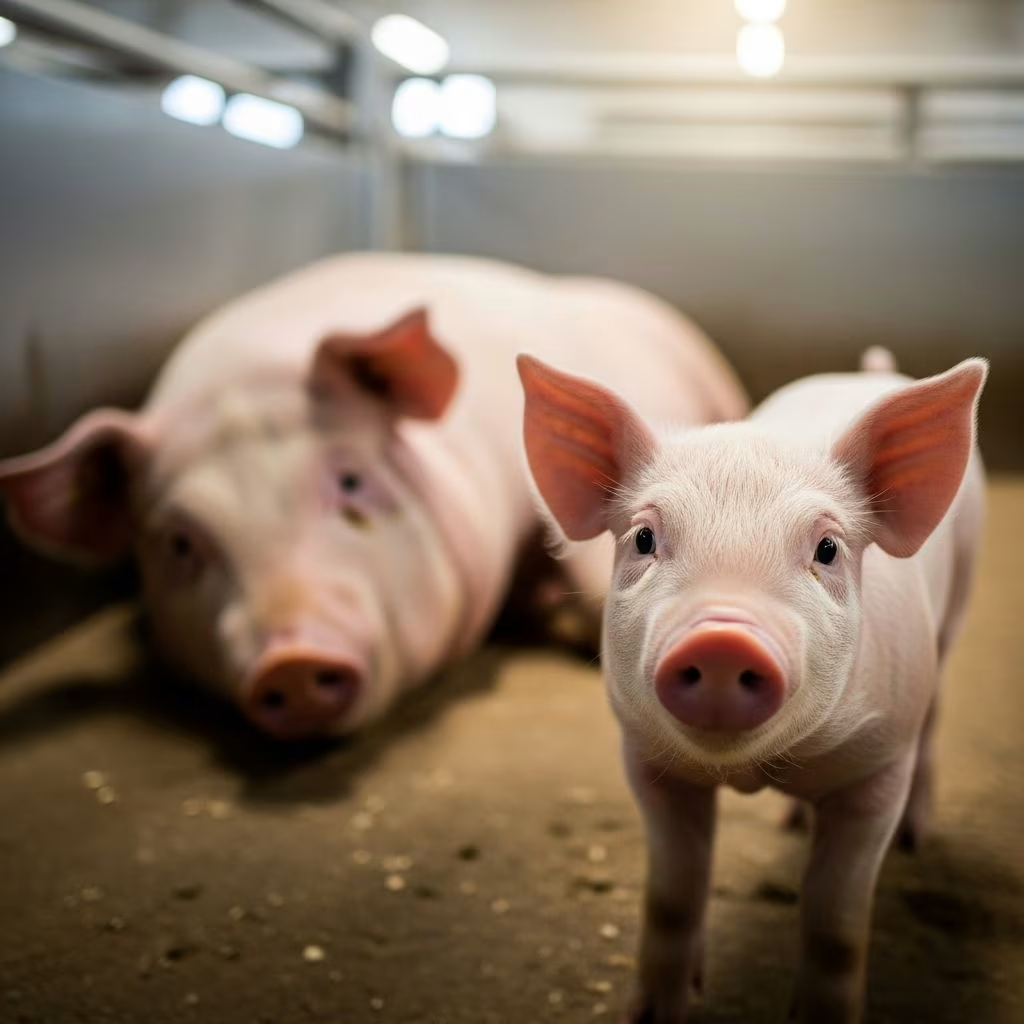
Porcine Reproductive and Respiratory Syndrome (PRRS) stands as one of the most economically devastating viral diseases affecting swine herds globally. First identified in the late 1980s, this illness disrupts both breeding and growing phases of pig production through its dual impact on reproduction and respiration. The causative agent, PRRSV, targets the immune system’s macrophages, weakening defenses and enabling secondary infections that amplify damage.
Understanding the PRRS Virus
PRRSV belongs to the Arteriviridae family and exists in two main genotypes: Type 1 (European) and Type 2 (North American), with ongoing evolution leading to diverse strains. This virus primarily infects alveolar macrophages in the lungs and monocytes in lymphoid tissues, impairing the pig’s ability to fight off pathogens. Transmission occurs via direct contact with infected bodily fluids, including nasal secretions, semen, urine, feces, and colostrum. Vertical transmission from dam to offspring is common, especially in late gestation, resulting in persistently infected piglets that shed the virus for months.
Although not highly contagious—requiring as few as 10 virions for infection—PRRSV spreads efficiently in dense populations through aerosols, fomites like vehicles or equipment, and artificial insemination. In high-density farming areas, prevalence exceeds 60%, underscoring the need for vigilant biosecurity.
Reproductive Impacts Across Breeding Stock
PRRS manifests severely in breeding animals, particularly sows and gilts, leading to substantial reproductive losses. During acute outbreaks, sows experience short episodes of inappetence lasting 12-24 hours, with up to 15% affected simultaneously, accompanied by fevers of 39-40°C. This phase, lasting up to six weeks, triggers late-term abortions (1-6% initially, up to 50% in severe cases), increased stillbirths (up to 30%), mummified fetuses (10-15%), and weak-born piglets with high pre-weaning mortality.
- Acute sow symptoms: Reluctance to eat or drink, agalactia, mastitis, early farrowing (2-3 days premature), skin discoloration, cyanosis in ears, abdomen, and vulva, lethargy, and respiratory distress.
- Endemic effects: 10-15% drop in farrowing rates, reduced live births, poor gilt conception, and elevated returns to estrus (5-10%) persisting for months.
Boars suffer reduced semen quality and fertility, though less dramatically. These disruptions can slash herd productivity by 25-35% in stillbirths and mummies alone.
Respiratory Challenges in Growing Pigs
In weaners, growers, and finishers, PRRS drives the respiratory syndrome, often compounding with porcine respiratory disease complex (PRDC). Piglets lose maternal antibodies around weaning, becoming susceptible and shedding virus for 3-8 weeks. Clinical signs emerge at 4-12 weeks: inappetence, wasting, coughing, dyspnea, and pneumonia unresponsive to antibiotics, with mortality hitting 12-15%.
Secondary bacterial invaders like Actinobacillus pleuropneumoniae or influenza exacerbate damage, forming lung abscesses that spread to joints, causing lameness in 12-16 week olds. A carrier state persists 2-3 months, maintaining high viral loads in continuously occupied housing. Persistent infections in tonsils, spleen, and lungs allow shedding up to 112 days in viremic piglets.
| Age Group | Key Respiratory Signs | Mortality Risk |
|---|---|---|
| Weaners (4-12 weeks) | Inappetence, coughing, pneumonia, wasting | Up to 12% |
| Growers (12-16 weeks) | Abscesses, lameness, secondary infections | 12-15% |
| Finishers | Chronic pneumonia, slow growth | Variable, elevated with co-infections |
Diagnosis of PRRS Infections
Confirming PRRS requires integrating clinical history, serology, and molecular tests. PCR detects viral RNA in serum, tissues, or swabs with high sensitivity during acute viremia (up to 3 weeks post-infection). Serological ELISA identifies antibodies post-7-10 days, useful for herd profiling but not distinguishing active from past exposure.
Postmortem exams reveal interstitial pneumonia, lymphoid depletion, and macrophage inclusions. Differential diagnoses include classical swine fever, Aujeszky’s disease, and bacterial pneumonias—ruled out via multiplex PCR panels.
Prevention and Management Tactics
No curative treatment exists; management hinges on biosecurity, vaccination, and herd stabilization. All-in-all-out production minimizes persistence, while strict fomite control—disinfecting transport and personnel—curbs introduction.
Modified-live vaccines (MLVs) offer partial homologous protection, reducing viremia and shedding when administered strategically: sows pre-breeding, piglets at weaning. Autogenous vaccines target field strains for better efficacy. Genetic selection for PRRS-resistant breeds shows promise, enhancing survivability.
- Biosecurity essentials: Quarantine new stock 30-60 days, monitor via sentinel pigs, limit visitors.
- Vaccination protocols: Mass sow vaccination during stability, segmented pig flow for growers.
- Herd closure: Exclude replacements 6-12 months to clear virus, then repopulate negatives.
Global Prevalence and Economic Toll
PRRS infects herds worldwide, with North America and Europe reporting highest burdens. UK studies note 60%+ herd positivity by 2011, tied to density. Annual US losses exceed $664 million from mortality, retarded growth, and culls. Multifactorial PRDC amplifies costs, demanding integrated control.
Emerging Research and Future Directions
Ongoing trials explore RNA interference, monoclonal antibodies, and CRISPR-edited macrophages for resistance. Immunity studies highlight T-cell responses as key to clearance, informing next-gen vaccines. Surveillance networks track strain drifts, vital for adaptive strategies.
Frequently Asked Questions (FAQs)
What is the main cause of PRRS?
PRRSV, an arterivirus targeting macrophages, leading to immunosuppression and secondary infections.
How long does PRRS virus persist in pigs?
Up to 112 days in piglets; carriers shed 2-3 months, tonsils up to 22 weeks.
Can PRRS be treated with antibiotics?
No, as it’s viral; antibiotics manage secondary bacteria only.
Is there a vaccine for PRRS?
Yes, modified-live vaccines provide partial protection; consult vets for protocols.
How to prevent PRRS outbreaks?
Implement biosecurity, vaccination, all-in-all-out systems, and genetic selection.
References
- Porcine reproductive and respiratory syndrome (PRRS) — The Pig Site. 2023. https://www.thepigsite.com/disease-guide/porcine-reproductive-respiratory-syndrome-prrs
- Porcine reproductive and respiratory syndrome virus — The Pirbright Institute. 2024. https://www.pirbright.ac.uk/our-science/viruses/porcine-reproductive-and-respiratory-syndrome-virus
- Porcine reproductive and respiratory syndrome: a focus on the respiratory syndrome — Texas A&M Veterinary Medical Diagnostic Laboratory. 2023. https://tvmdl.tamu.edu/case-studies/porcine-reproductive-and-respiratory-syndrome-a-focus-on-the-respiratory-syndrome/
- Porcine Reproductive and Respiratory Syndrome — Merck Veterinary Manual. 2024. https://www.merckvetmanual.com/generalized-conditions/porcine-reproductive-and-respiratory-syndrome/porcine-reproductive-and-respiratory-syndrome
- Porcine Reproductive and Respiratory Syndrome Virus: Immunity — PMC (NCBI). 2024-08-15. https://pmc.ncbi.nlm.nih.gov/articles/PMC11359659/
- PRRSV – Veterinary Diagnostic Laboratory — Iowa State University College of Veterinary Medicine. 2024. https://vetmed.iastate.edu/vdl/resources/pathogens-toxins/prrsv/



