

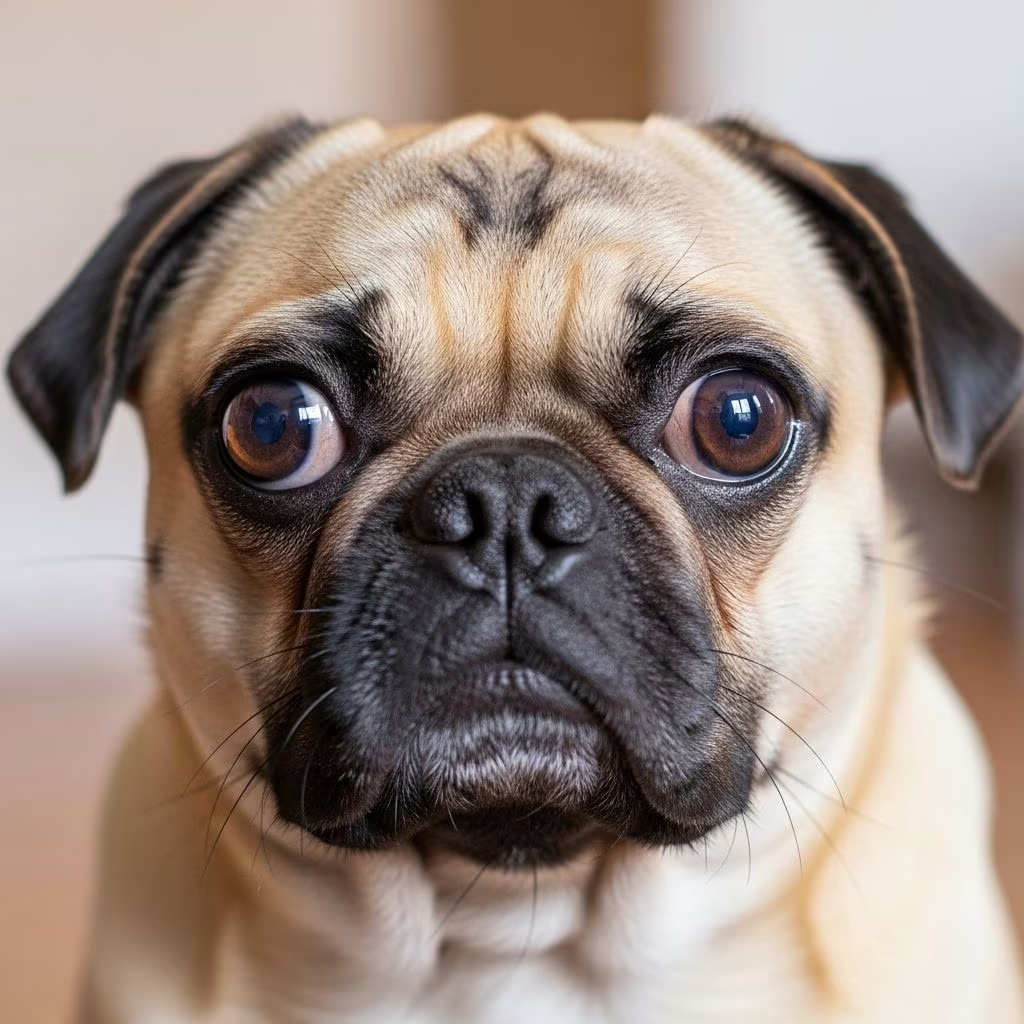
Protruding eyes in dogs, often a sign of serious underlying issues, demand immediate attention to prevent vision loss or worse. This condition can stem from sudden trauma or gradual diseases, affecting dogs of all breeds but hitting flat-faced ones hardest.
Defining Eye Protrusion Conditions
Dogs’ eyes normally sit snugly in their sockets, protected by eyelids that close fully. When they protrude, it signals problems like proptosis, where the eye pops out entirely; exophthalmos, where it bulges forward while staying in place; or buphthalmos, where the eyeball enlarges due to internal pressure. These shifts create pain, swelling, and risks like corneal drying or rupture.
- Proptosis: Eye dislodges from socket, often post-trauma, exposing it to drying and damage.
- Exophthalmos: Forward push from behind-the-eye masses or swelling.
- Buphthalmos: Eyeball expansion from glaucoma-induced pressure buildup.
Common Triggers for Eye Protrusion
Multiple factors force eyes forward or enlarge them. Trauma tops the list, with blunt force common in playful pups or accident-prone pets. Infections like orbital cellulitis create pus pockets behind the eye, shoving it outward.
Tumors, though rarer, grow in orbital spaces, displacing the eye; nose or brain masses can indirectly contribute. Autoimmune disorders such as masticatory myositis swell jaw and eye muscles, prominent in retrievers.
| Condition | Description | Common Breeds |
|---|---|---|
| Trauma/Proptosis | Blunt impact loosens eye | Brachycephalic (Pugs, Shih Tzu) |
| Glaucoma/Buphthalmos | Pressure enlarges globe | Any, hereditary in some |
| Infection/Abscess | Pus buildup pushes eye | All breeds |
| Tumors | Masses displace eye | Older dogs |
| Myositis | Muscle inflammation | Golden Retriever, Labrador |
Hemorrhage from clotting issues or hits pools blood retro-orbitally. Jaw problems like dislocations in Bassets or craniomandibular osteopathy in pups narrow sockets, causing bulge. Salivary gland swells in zygomatic mucoceles add pressure too. Brachycephalic breeds have naturally shallow orbits, making minor incidents catastrophic.
Spotting Warning Signs Early
Owners must recognize cues fast, as delays risk blindness. Key indicators include obvious eye bulge, one or both sides; lids failing to cover the cornea; redness or chemosis (swollen conjunctiva). Discharge, cloudiness, or color shifts signal infection or pressure.
Pain shows via pawing, whining, head tilting, or bite attempts at the face. Vision changes like bumping objects or dilated pupils scream urgency. In proptosis, eyes may dangle, with ruptured nerves or leaking fluid. Swelling extends to face in myositis cases, hampering eating.
- Protrusion beyond lid rim
- Intense redness/injection
- Pain behaviors (pawing, restlessness)
- Discharge or clouding
- Vision impairment signs
Why It’s an Emergency
Bulging eyes count as veterinary crises; exposed corneas dry, ulcerate, or perforate swiftly. Pressure spikes harm optic nerves irreversibly. Infections spread systemically; tumors grow unchecked. Brachycephalic dogs face higher proptosis odds from routine collar pulls. Rush to care within hours maximizes eye salvage odds.
Diagnosis: Veterinary Steps
Vets start with history and exam, noting trauma tales or breed risks. Ophthalmic checks gauge pressure via tonometry, inspect for ulcers with fluorescein dye. Imaging like ultrasound or CT scans reveal retro-orbital culprits—abscesses, tumors, hemorrhage. Bloodwork rules out clotting disorders; biopsies confirm cancers.
Schirmer tear tests assess lubrication deficits. For glaucoma, gonioscopy eyes drainage angles. Differential diagnosis separates proptosis from subtle exophthalmos.
Treatment Approaches
Therapy hinges on cause. Proptosis demands sedation; vets attempt replacement if viable—no optic damage, intact blood supply. Failing that, enucleation prevents pain.
Abscesses need drainage, antibiotics, flushing. Glaucoma uses pressure-lowering drops (e.g., latanoprost), mannitol IV, or surgery like laser therapy. Tumors may require excision, chemo, or removal. Myositis responds to steroids, immunosuppressants.
Supportive care: lubricants, e-collars, pain meds. Hospitalization monitors severe cases. Prognosis varies—trauma early catches save eyes; chronic glaucoma often blinds despite intervention.
Breed Vulnerabilities and Prevention
Flat-faced dogs (Pugs, Boston Terriers, Pekingese) sport prominent eyes in shallow sockets, prone to proptosis from tugs or scratches. Monitor closely; use harnesses over collars.
- Avoid rough play, head shakes.
- Trim facial hair to curb irritants.
- Regular vet eye screens for at-risk breeds.
- Watch for glaucoma breed signals (Cocker Spaniels, Bassets).
General prevention: prompt injury care, infection vigilance, annual exams. Early glaucoma meds delay onset in predisposed lines.
Aftercare and Monitoring
Post-treatment, apply meds religiously, prevent rubbing with cones. Watch for relapse: renewed swelling, discharge, behavior shifts. Frequent rechecks track pressure, healing. Nutrition bolsters immunity; antioxidants aid eye health.
Owners of recovered dogs learn home checks: symmetric positioning, clear corneas, blink ease. Blindness cases adapt via scent training, safe spaces.
Frequently Asked Questions
Can my dog’s bulging eye resolve without treatment?
No—untreated cases lead to drying, ulcers, or blindness rapidly.
Which breeds are most at risk?
Brachycephalics like Pugs, Shih Tzus, and breeds prone to glaucoma such as Cocker Spaniels.
What home remedies help before vet visit?
None substitute professional care; cool compresses might ease but don’t delay.
Is surgery always needed for proptosis?
Often yes, but early mild cases may reposition successfully.
Can tumors cause bilateral bulging?
Yes, systemic issues or symmetric growths affect both eyes.
Long-Term Outlook
Swift action yields best results. Many dogs retain vision post-treatment; others thrive blind with adaptations. Owner education prevents recurrences, ensuring joyful lives.
References
- Bulging Eyes in Dogs: Vet-Approved Causes, Symptoms… — AskAVet. 2025. https://askavet.com/blogs/news/bulging-eyes-in-dogs-vet-approved-causes-symptoms-treatments-2025-guide-%F0%9F%90%B6
- Bulging Eyes in Dogs — PetMD. Accessed 2026. https://www.petmd.com/dog/conditions/eyes/bulging-eyes-dogs
- Bulging Eye in Dogs – Causes, Treatment… — Vetster. Accessed 2026. https://vetster.com/en/symptoms/dog/bulging-eye
- Exophthalmos in Dogs – Symptoms, Causes… — WagWalking. Accessed 2026. https://wagwalking.com/condition/exophtalmos
- Reasons Your Dog’s Eye is Puffy — Partners Animal Hospital. Accessed 2026. https://partnersvetavl.com/?p=4022
- Ocular Proptosis: Why is My Dog’s Eye Bulging! — Pet Health Network. Accessed 2026. https://www.pethealthnetwork.com/dog-health/dog-diseases-conditions-a-z/ocular-proptosis-why-my-dog%E2%80%99s-eye-bulging
- ‘Bulging’ eye – and the diseases that can cause it — Vet Times. Accessed 2026. https://www.vettimes.com/news/vets/small-animal-vets/bulging-eye-and-the-diseases-that-can-cause-it



