

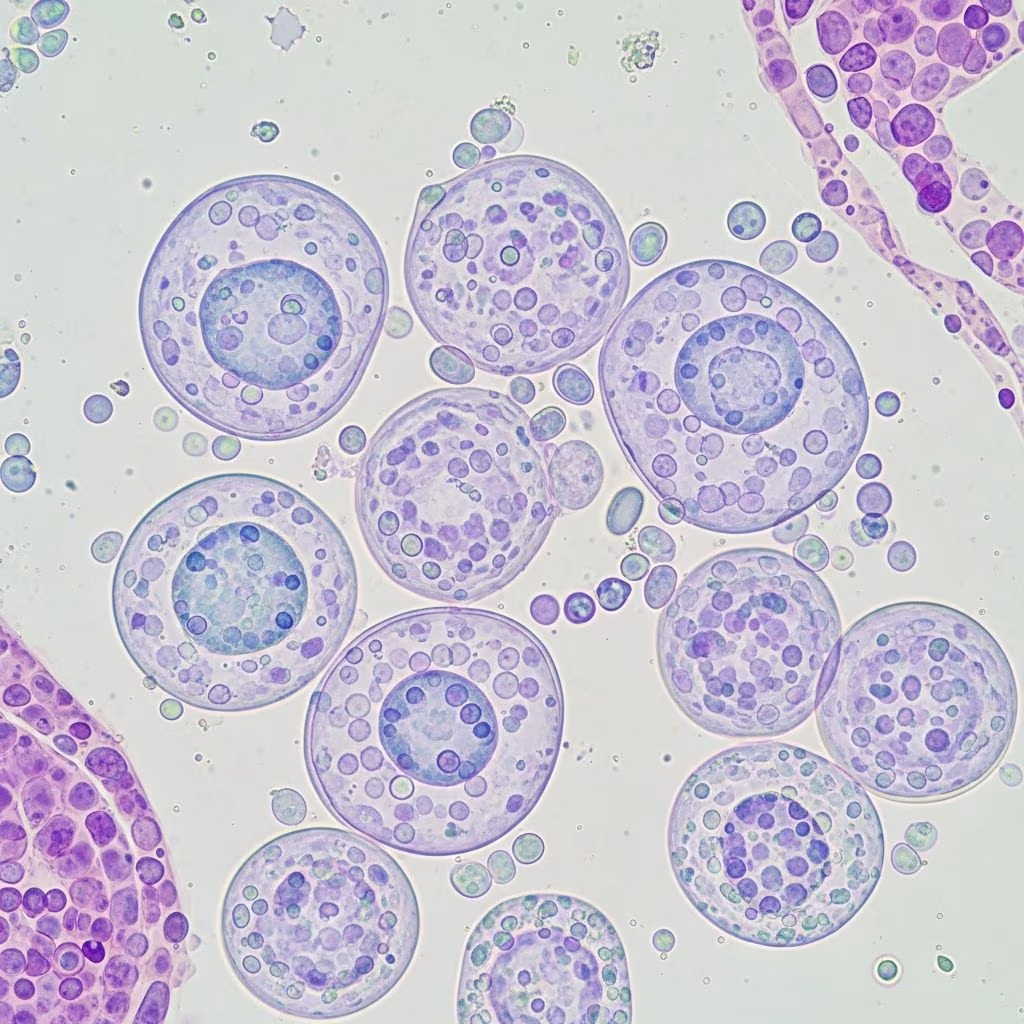
Protothecosis represents a unique infectious challenge in veterinary practice, stemming from achlorophyllous algae of the genus Prototheca. These environmental organisms, typically harmless saprophytes, can invade animal hosts under specific conditions, leading to severe localized or systemic disease. Primarily affecting cattle through mammary gland infections and dogs via gastrointestinal dissemination, this condition demands prompt recognition to mitigate economic losses and animal suffering.
The Nature of Prototheca Organisms
Belonging to the class Trebouxiophyceae within the Chlorophyta division, Prototheca species thrive in moist environments such as sewage, wastewater, and decaying vegetation. Key species include P. zopfii, P. bovis, and P. wickerhamii, each exhibiting varying pathogenicity. Their resilience to pasteurization temperatures and common disinfectants like chlorine enhances their survival and spread.
These microalgae lack chlorophyll, adopting a yeast-like morphology that complicates initial identification. They reproduce asexually via sporangial division, forming characteristic morula-like structures visible under microscopy. Their ubiquitous presence in nature underscores the importance of host susceptibility factors in disease onset.
Transmission Pathways in Animal Populations
Entry into hosts occurs primarily through traumatic wounds, mucous membrane contamination, or ingestion. In dairy cattle, algae invade the teat canal during milking, contaminating udders. Calves may acquire infection by consuming tainted milk from affected cows.
For companion animals like dogs and cats, cutaneous breaches from injuries serve as portals, alongside oral uptake from contaminated water sources. Systemic spread in dogs often links to underlying immunosuppression, such as viral coinfections or debilitating states. Environmental exposure remains the cornerstone, with no evidence of direct animal-to-animal transmission dominating.
Clinical Manifestations Across Species
Manifestations vary by species and organ involvement, reflecting the algae’s tropism.
Cattle: The Mastitis Menace
Bovine protothecosis manifests as chronic mastitis, causing significant milk production declines. Affected quarters yield watery, grayish milk with flocculent particles. Systemic signs like fever and weight loss appear in advanced cases. Economic impacts are profound due to udder destruction and culling necessities.
Dogs: Multisystemic Devastation
Dogs face the most severe outcomes, with 67% experiencing disseminated disease affecting multiple organs. Gastrointestinal signs dominate, including chronic hemorrhagic diarrhea, tenesmus, and weight loss, signaling colonic involvement. Ocular complications like uveitis, retinitis, and blindness affect over 70% of cases, often bilaterally. Neurological deficits—seizures, ataxia, vestibular issues—occur in nearly half, alongside cutaneous nodules and ulcers.
Breeds like Collies and Boxers show predispositions, possibly linked to genetics or regional exposures. Progression is rapid, with fatality rates exceeding 90%.
Cats and Other Species
Feline cases localize to skin post-trauma, forming draining nodules responsive to therapy. Goats exhibit respiratory distress, while horses and wildlife report sporadic isolations. Multispecies outbreaks remain rare.
Diagnostic Approaches
Diagnosis integrates clinical suspicion, cytology, histopathology, and culture. Fecal smears or milk samples reveal pathognomonic 3–30 μm sporangia with internal septations. Biopsies from lesions display granulomatous inflammation with algal elements.
Laboratory findings include neutrophilic leukocytosis, hyperglobulinemia, and organ-specific anomalies like azotemia or elevated liver enzymes. Ophthalmic exams confirm retinal detachment or glaucoma. Molecular PCR enhances species identification, crucial for P. bovis vs. P. wickerhamii differentiation, where the former correlates with graver prognosis.
| Species | Primary Sample | Hallmark Finding | Supportive Labs |
|---|---|---|---|
| Cattle | Milk | Sporangia in sediment | Leukocytosis |
| Dogs | Feces, colon biopsy | Morula structures | Hyperglobulinemia, blindness |
| Cats | Skin lesion swab | Algal granulomas | Local inflammation |
Treatment Challenges and Prognosis
Therapeutic success is dismal, particularly in dogs. Systemic cases resist antifungals like amphotericin B, fluconazole, and tetracyclines due to algal cell wall imperviousness. Localized bovine mastitis may respond to intramammary gentamicin, but quarter amputation is frequent. Feline cutaneous lesions fare better with surgical excision and topicals.
Of 67 treated dogs in reviews, only 1 survived, with 89% succumbing despite interventions. Euthanasia prevails in disseminated canine disease.
Pathological Findings at Necropsy
Gross lesions feature yellow-white nodules on serosae, mucosal erosions, and organ enlargement. Colons show hemorrhagic thickening, eyes display retinal necrosis, and skin exhibits ulcerated masses. Mesenteric lymph nodes swell prominently.
Histologically, pyogranulomas encase algae, confirming invasion depth.
Prevention and Control Measures
Milking hygiene is paramount: teat dips, dry cow therapy, and segregation of infected herds. Avoid contaminated water for pets; wound care prevents cutaneous entry. No vaccines exist, emphasizing environmental sanitation.
- Regular udder checks in dairy operations.
- Water source monitoring for dogs in endemic areas.
- Early euthanasia consideration for systemic canine cases to curb suffering.
Epidemiological Insights
Reports span decades, with Australia noting 17 fatal dog cases (1988–2005), predominantly P. zopfii. Global cases in 125 dogs highlight GI primacy (54%) and comorbidities like parasitism in 28%. Climate and hygiene influence prevalence.
FAQs
What causes protothecosis in animals?
Achlorophyllous algae Prototheca spp., entering via wounds or ingestion.
Is protothecosis curable in dogs?
Rarely; systemic forms are nearly always fatal despite treatment.
How is bovine protothecal mastitis diagnosed?
Milk cytology showing sporangia; culture confirms.
Can cats recover from protothecosis?
Yes, cutaneous cases often resolve with localized therapy.
What breeds are at higher risk for canine protothecosis?
Collies and Boxers show increased incidence.
Future Directions in Research
Emerging molecular tools promise better diagnostics. Antifungal resistance studies and host immunity probes could yield breakthroughs. Surveillance in dairy regions aids containment.
References
- Protothecosis in Veterinary Medicine: a minireview — PubMed/NCBI. 2023-06-01. https://pubmed.ncbi.nlm.nih.gov/37286817/
- Protothecosis in Animals — Merck Veterinary Manual. 2023. https://www.merckvetmanual.com/generalized-conditions/protothecosis/protothecosis-in-animals
- Protothecosis in Dogs: A Narrative Review — PubMed/NCBI. 2025. https://pubmed.ncbi.nlm.nih.gov/40072265/
- Protothecosis in Dogs: A Narrative Review — Journal of Veterinary Internal Medicine (PDF). 2025-03. https://alergoveterinaria.com.br/wp-content/uploads/2025/03/Journal-Veterinary-Internal-Medicne-2025-Jagielski-Protothecosis-in-Dogs-A-Narrative-Review.pdf
- Protothecosis in Dogs — Wiley Online Library. 2025. https://onlinelibrary.wiley.com/doi/10.1111/jvim.70025?af=R



