

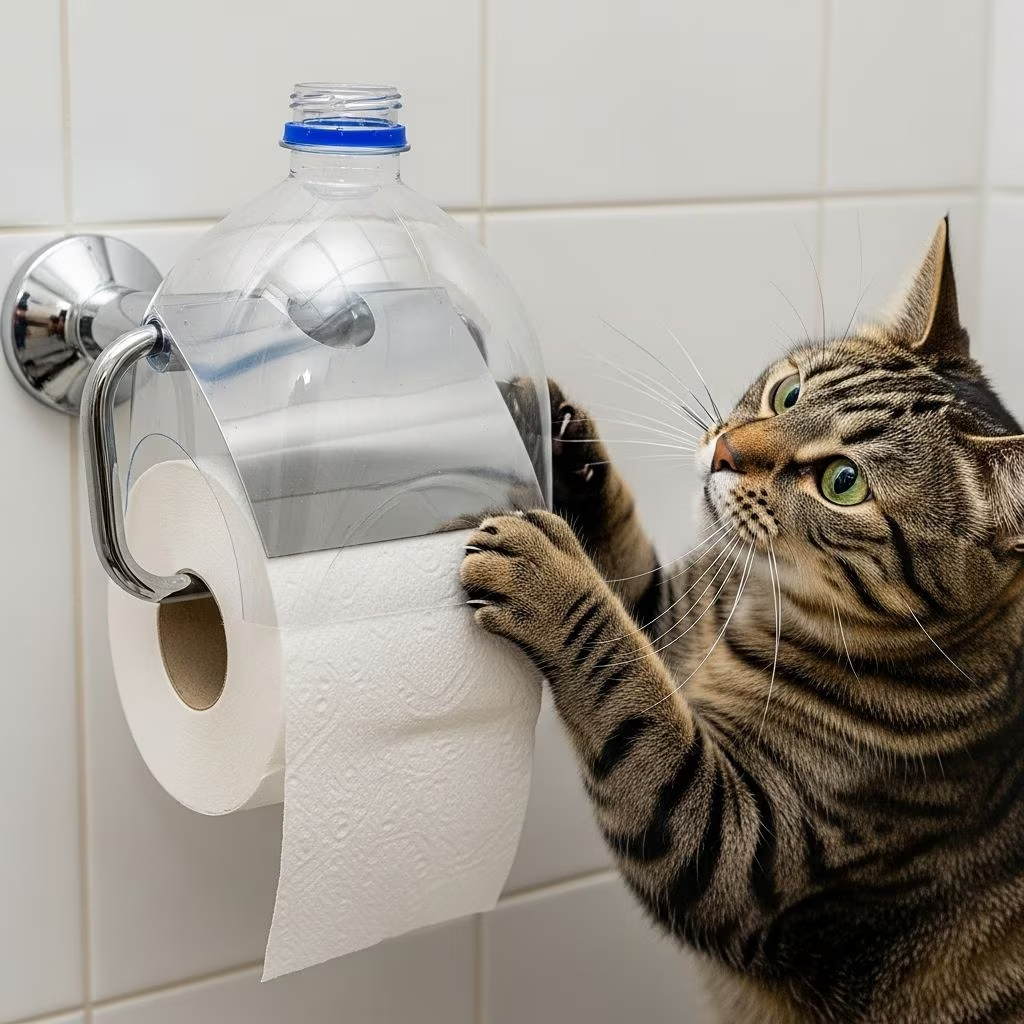
Cat owners frequently encounter a common household challenge: discovering shredded toilet paper strewn across the bathroom floor. This destructive behavior, while frustrating, stems from natural feline instincts and curiosity. Rather than accepting this as inevitable, there are practical and affordable solutions available. Creating a protective barrier around your toilet paper requires minimal investment and can be accomplished in under fifteen minutes using materials you likely already have at home.
Understanding Why Cats Target Toilet Paper
Before exploring solutions, it’s important to understand the underlying reasons for this behavior. Cats are naturally drawn to toilet paper for several compelling reasons. The soft, pliable texture appeals to their tactile senses, and the way it moves and unravels mimics prey behavior. When your cat pounces on and shreds the tissue, they’re engaging in predatory play rather than acting out of malice or misbehavior. The rolling motion of the paper as it spins off the holder creates an exciting challenge that stimulates their hunting instincts. Additionally, some cats are simply attracted to the novelty and entertainment value of the material.
This behavior is particularly common in younger, more energetic cats and those without sufficient environmental enrichment. Understanding that this is normal feline behavior helps cat owners respond with patience and practical solutions rather than punishment, which is ineffective for modifying instinctive behaviors.
Gathering Materials for Your DIY Project
One of the greatest advantages of the DIY approach is the minimal cost and accessibility of required materials. You don’t need specialized tools or expensive supplies. Most items can be sourced from your home or obtained inexpensively at local retailers. Here’s what you’ll need:
- A large plastic container: Disinfectant wipe containers, antibacterial wipe boxes, or large plastic beverage bottles work exceptionally well. The key is ensuring the container is large enough to accommodate your toilet paper roll without restricting its ability to spin freely.
- Measuring tool: A ruler or tape measure helps ensure proper dimensions and proportional cuts.
- Cutting tools: Scissors or a utility knife will allow you to trim the plastic container to the desired size and shape.
- Decorative elements (optional): Stickers, markers, duct tape, or paint can personalize your creation and make it blend seamlessly with your bathroom decor.
When selecting your plastic container, prioritize size. A container that’s too small won’t provide adequate protection or clearance for the paper to unroll smoothly. Most standard toilet paper rolls require a container opening of at least four inches in diameter to function properly.
Step-by-Step Construction Process
Creating your cat-proof toilet paper holder involves a straightforward series of steps that require approximately ten to fifteen minutes of active work time. This timeline makes it an excellent weekend project for busy cat owners.
Preparing Your Container
Begin by thoroughly cleaning your chosen plastic container and removing any labels or adhesive residue. This ensures a clean, hygienic surface and prevents any unwanted text or imagery from showing through your finished product. If your container had a strong smell, you may want to rinse it thoroughly and allow it to air dry completely.
Creating the Protective Tube
Next, you’ll transform the container into a tube shape suitable for housing your toilet paper. Using your cutting tool, carefully remove the bottom and top portions of the container, leaving a cylindrical band approximately four inches in height. This dimension accommodates standard toilet paper rolls while providing adequate coverage to prevent cats from easily accessing the paper edges.
Enabling Rotation and Access
Create a single vertical cut through the plastic tube that runs from top to bottom. This opening allows the tube to wrap around your toilet paper roll with slight flexibility, enabling the paper to rotate freely without resistance. The cut should be clean and straight to ensure proper function.
Smoothing Edges for Safety
Trim any rough or sharp edges, particularly along the top and bottom of your newly created tube. Smooth edges prevent accidental cuts to your hands when inserting or removing the toilet paper roll. You can sand the edges lightly with fine-grit sandpaper if you have it available, or simply file them carefully with a utility knife.
Creating the Dispensing Mechanism
Bend one end of the plastic tube backward by approximately half an inch. This creates the critical mechanism that allows users to pull toilet paper from underneath while preventing cats from accessing it from the side or top. The bent edge acts as a barrier and guide, directing hand placement to the correct dispensing location.
Forming the Final Shape
Curl the plastic tube so that it forms a circular band with the bent end facing outward. Hold it in this position for several moments to allow the plastic to retain its shape. This step is crucial because it creates tension in the material, causing the tube to grip the toilet paper roll snugly. The tightness should be firm enough to prevent slipping but not so tight that the paper cannot rotate freely.
Adding Aesthetic Elements
If desired, decorate your protective cover with stickers, markers, or duct tape. This personalization step serves dual purposes: it enhances the visual appeal of your bathroom and can help disguise the fact that you’ve repurposed a plastic container. Some cat owners choose colors that complement their bathroom palette, while others create playful designs.
Installation and Testing
Position your completed protector over your toilet paper roll on the existing holder. Don’t be concerned if it slides slightly along the roll—this minor movement is normal and actually beneficial. It ensures the paper can rotate without excessive friction. Test the dispenser by gently pulling on the paper to confirm it unrolls smoothly. Make any minor adjustments as needed.
Commercial Alternatives and When to Consider Them
While DIY solutions offer excellent value and customization options, commercial cat-proof toilet paper holders exist as alternative options. These professionally manufactured covers often feature enclosed designs with small flaps or access points. However, they come with both advantages and limitations.
Commercial covers may provide more aesthetic consistency with modern bathroom designs and are available in various styles and materials. However, cats are remarkably intelligent and adaptable. Many demonstrate surprising ability to learn how to lift flaps, push through barriers, or attack the bottom edge where the paper hangs. Some cats treat the challenge of accessing protected tissue as a more entertaining puzzle than the unprotected version.
Alternative commercial solutions include covered boxes that require opening the lid to access paper, or completely enclosed containers where users remove only what they need. These options eliminate access entirely but reduce convenience for human users. Some families find success storing toilet paper in covered containers that are retrieved only when needed, though this approach requires more deliberate planning.
Effectiveness and Behavioral Considerations
The success rate of protective covers varies depending on your individual cat’s personality, age, and persistence level. Some cats, particularly those who find the barrier visually imposing or physically challenging, may abandon their toilet paper-shredding habit immediately. Others may lose interest gradually as the novelty wears off and they understand the tissue is no longer easily accessible.
It’s important to maintain realistic expectations. Highly motivated, extremely playful, or particularly determined cats may continue attempting to access the paper despite protective measures. In these cases, combining the physical barrier with environmental enrichment can be beneficial. Providing appropriate scratch posts, climbing structures, interactive toys, and regular playtime redirects destructive energy toward acceptable outlets.
Complementary Strategies for Long-Term Success
While physical barriers address the immediate problem, addressing underlying behavioral drivers creates more comprehensive solutions. Consider these complementary approaches:
- Environmental enrichment: Ensure your cat has sufficient mental and physical stimulation through interactive toys, puzzle feeders, and climbing structures.
- Bathroom access management: If possible, limit your cat’s unsupervised access to the bathroom when toilet paper is present and unprotected.
- Interactive play: Regular play sessions that channel hunting instincts toward appropriate toys reduce the likelihood of destructive behaviors.
- Consistent reinforcement: Redirect your cat to appropriate toys when you observe bathroom interest, using positive reinforcement rather than punishment.
Cost Analysis and Value Proposition
The financial comparison between DIY and commercial solutions heavily favors the do-it-yourself approach. Most homemade protectors cost between zero and five dollars if you use materials already available at home. Even if you purchase a plastic container specifically for this project, the total investment rarely exceeds ten dollars. Commercial cat-proof toilet paper holders typically range from fifteen to fifty dollars depending on design sophistication and material quality.
Over the lifespan of pet ownership, the savings from the DIY approach accumulate significantly, particularly for households with multiple bathrooms or multiple cats. Additionally, if your homemade version deteriorates or becomes damaged, replacement costs remain negligible.
Troubleshooting Common Issues
If your DIY protector isn’t functioning as expected, several adjustments can improve performance. If the tube is too loose and slides freely, add a layer of foam padding or weatherstripping tape to increase friction. If the paper doesn’t unroll smoothly, ensure the tube isn’t bent too tightly and that internal edges are smoothed and free of obstructions.
Should your cat somehow overcome the barrier, the solution isn’t necessarily to invest in a more complex system. Instead, evaluate whether your cat might benefit from additional interactive play, environmental enrichment, or a trip to the veterinarian to rule out medical causes for the behavior.
Frequently Asked Questions
Will a plastic tube protector damage my toilet paper roll?
No, when properly constructed and installed, the tube should allow smooth rotation without damaging the paper. The tube should fit snugly but not create excessive compression or friction.
Can I use any type of plastic container?
Most plastic containers work, but larger containers are preferable to smaller ones. Very small containers may restrict paper movement or break under pressure. Ensure your chosen container is food-grade if cleanliness is a concern.
How long does the DIY protector last?
With normal use, a well-constructed plastic container protector typically lasts several months to over a year. Durability depends on the plastic quality, how aggressively your cat attacks it, and environmental factors like humidity.
Is this solution suitable for all cats?
While most cats cannot overcome a properly installed protector, exceptionally determined or destructive cats might still find ways to access the paper. Combined behavioral strategies yield the best results for these persistent individuals.
Can I make the protector look more attractive?
Absolutely. Decorating with paint, duct tape, fabric, or adhesive decorations allows you to create a cover that complements your bathroom aesthetic while protecting your toilet paper.
References
- How to Cat Proof a Toilet Paper Holder: Vet-Reviewed Explanation — Catster. 2024. https://www.catster.com/cat-behavior/how-to-cat-proof-a-toilet-paper-holder/
- How to Make a DIY Cat-Proof Toilet Paper Holder — Hill’s Pet Nutrition. 2024. https://www.hillspet.com/cat-care/resources/making-a-diy-cat-proof-toilet-paper-holder



