

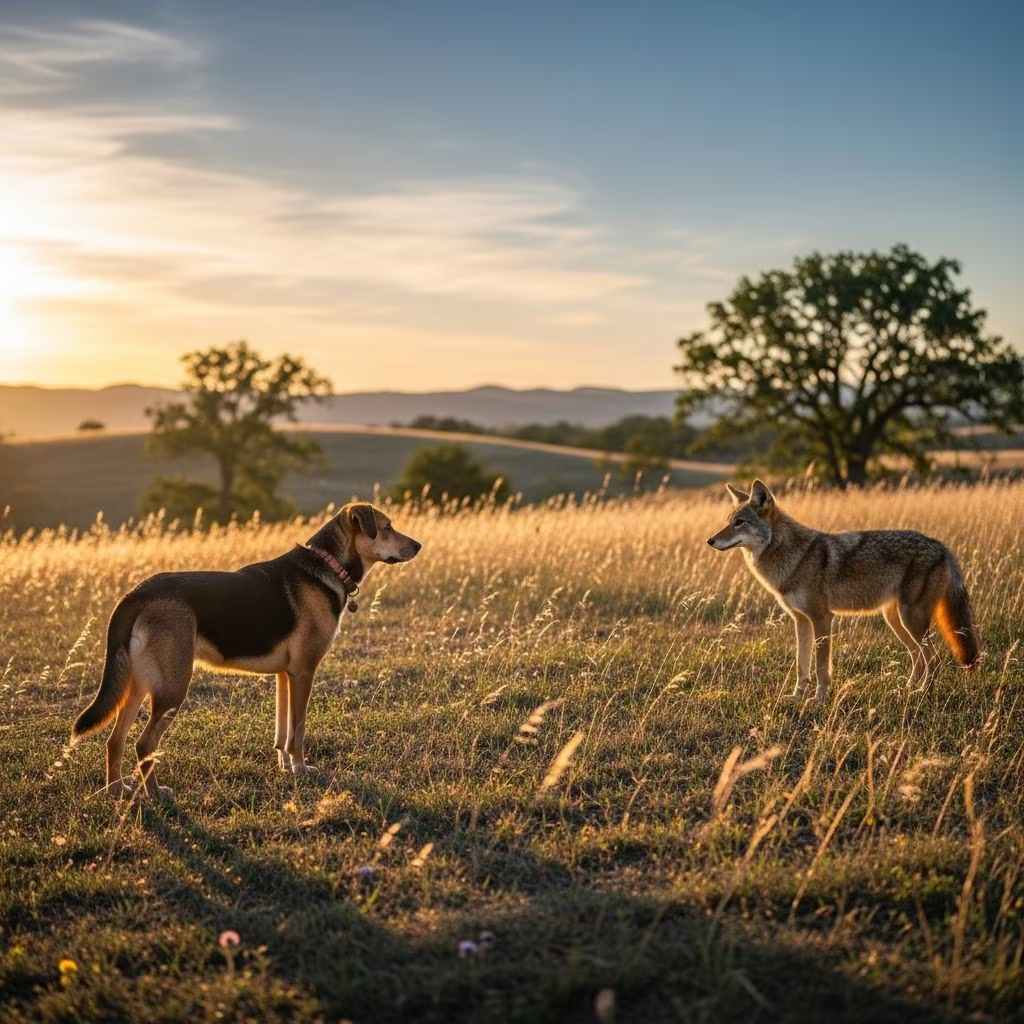
Coyote encounters have become increasingly common in urban and suburban neighborhoods across North America. As a dog owner, understanding the risks and implementing preventive measures can significantly reduce the likelihood of a dangerous encounter. This guide provides practical, actionable strategies to safeguard your canine companion from coyote-related threats.
Understanding the Coyote Threat Landscape
Coyotes are highly adaptable predators that have expanded their range into human-populated areas over the past few decades. These animals typically exhibit natural wariness toward humans, but they are opportunistic hunters that view small dogs as potential prey. The risk increases during dawn, dusk, and nighttime hours when coyotes are most active. Understanding this behavior pattern is crucial for developing an effective protection strategy.
Coyotes are drawn to residential areas primarily by the availability of food sources. Once they identify your property as a potential feeding ground, they become repeat visitors. This makes habitat management and food source elimination your first line of defense against unwanted wildlife encounters.
Eliminating Attractants: The Foundation of Prevention
The most effective way to discourage coyotes from frequenting your property is to eliminate the things that attract them in the first place. Food sources are the primary draw for these animals, making attractant removal the cornerstone of any comprehensive protection strategy.
Managing Food Sources and Waste
Dog waste is a significant attractant that many pet owners overlook. The scent of your dog’s feces signals the presence of a canine on your property, potentially drawing coyotes to investigate. Make a habit of immediately removing waste from your yard using poop bags or a scooper. Regular yard maintenance prevents the accumulation of waste that could entice predators.
Garbage management requires equal attention. Secure garbage cans with locking lids or store them in a garage or shed until pickup day. Coyotes possess strong problem-solving abilities and can overturn unsecured trash containers. Additionally, rinse food containers before disposal to minimize odors that travel through the air. The same applies to outdoor grills—thoroughly clean them and remove any residual food particles.
Composting practices demand careful consideration. If you maintain a compost bin, ensure it is securely locked and inaccessible to wildlife. Never compost meat, fish, dairy products, or meat-based items, as these create an irresistible odor signature for coyotes. Stick to plant-based composting materials only.
Fallen fruit and vegetation should also be removed from your yard. Coyotes consume plant matter, and fruit that falls from trees creates an easy meal. Regularly collect fallen apples, berries, and other fruit to eliminate this food source.
Securing Outdoor Pets and Livestock
If you keep backyard chickens or other small livestock, housing them in secure, predator-resistant coops is essential. These enclosures should have solid walls, roofs, and elevated designs that prevent ground-level access. The coop should be locked at night when predators are most active.
Fencing: Creating a Physical Barrier
Proper fencing is a critical component of coyote protection, though not all fences are created equal. Standard residential fencing often fails to keep determined coyotes out because these animals are both excellent climbers and diggers.
Specifications for Effective Barriers
A coyote-proof fence should meet specific engineering standards. The minimum height should be 6 to 8 feet tall, with 8 feet providing optimal protection. The fence must extend underground to a depth of at least 12 to 18 inches to prevent coyotes from digging underneath. Choose materials that are difficult for coyotes to climb, avoiding chain-link fencing if possible, as it provides grip points for climbing animals.
The fence should be constructed with a solid or closely-spaced design that eliminates handholds and prevents the animal from achieving purchase with their paws. If you already have an existing fence that doesn’t meet these specifications, consider adding a fence skirt—an underground extension that prevents digging—or coyote rollers.
Advanced Fence Modifications
Coyote rollers are aluminum rods installed at the top of your fence that spin when an animal attempts to climb, preventing them from gaining leverage. These devices are aesthetically less imposing than barbed wire or PVC pipe, making them acceptable to many homeowners’ associations while providing effective protection.
Outward extensions or overhangs angled at 45 degrees at the top of the fence create an obstacle that’s difficult for coyotes to navigate. Barbed wire or PVC pipe can also be installed at the top, though the latter’s smooth, round shape is particularly difficult for coyotes to grip.
For enhanced security, consider electrified fence wire at the bottom to discourage digging. An electric fence that activates when contacted can effectively deter coyotes without causing harm.
Motion-Activated Lighting
Installing motion-sensor lights around your property, especially pointing outward along the fence line, provides an additional deterrent. Most coyotes will retreat when suddenly exposed to bright light. This low-cost addition enhances your backyard security and provides the added benefit of improving visibility for nighttime activities.
Behavioral Protocols: Supervision and Outdoor Management
Physical barriers are only effective when combined with responsible pet management practices. Your behavior and vigilance play equally important roles in keeping your dog safe.
Supervised Outdoor Access
Never allow your dog to access the backyard unattended, particularly in areas where coyote activity has been reported. Stand near your dog during outdoor time, maintaining visual contact at all times. This allows you to intervene immediately if a coyote approaches.
Nighttime and twilight hours require extra vigilance. Visually scan your yard before letting your dog outside, checking for any signs of wildlife. Consider using a flashlight to illuminate dark areas of the yard.
Leash Walking Protocols
Keep your dog on a 6-foot leash during all outdoor walks. Off-leash dogs are significantly more vulnerable because they may chase a coyote or wander away from your protective presence. Dogs instinctively want to explore and play, but in areas with known coyote activity, the leash is a lifesaving tool.
Walking on well-lit streets and trails whenever possible reduces risk. If you walk during dawn, dusk, or evening, carry a flashlight and keep it illuminated throughout your walk. Avoid walking through wooded areas or tall vegetation where coyotes may hide. Stay on established trails and maintain awareness of your surroundings at all times.
Yard Maintenance to Reduce Cover
Coyotes prefer environments with hiding places where they can stalk prey undetected. Maintain your yard to eliminate these concealment opportunities by trimming shrubs and overhanging branches, clearing fallen branches, and removing weeds along fence lines. Keep the grass short and the yard open, making it uncomfortable for coyotes to linger.
Protective Equipment and Training
Modern pet safety innovation has produced several tools that can enhance your dog’s protection. Combined with proper training, these can provide additional layers of security.
Coyote Protective Vests
Coyote vests were developed after a family lost their small dog to a coyote attack. These garments feature a Kevlar neck collar and spikes along the back, making it difficult for coyotes to achieve a lethal bite. These vests are specifically designed for small dogs and do not impede movement or prevent normal play and running.
Noise-Making Devices
Carry noise-making devices during walks—items such as air horns, dog whistles, bells, or citronella spray. These tools can startle and deter a curious or approaching coyote. The loud, unexpected noise triggers a fear response that typically causes the animal to retreat.
Training Your Dog for Coyote Encounters
While dogs cannot be trained to reliably avoid coyotes, certain obedience skills significantly improve survival odds. Develop a reliable recall command so your dog returns immediately when called. Practice this regularly with positive reinforcement, ensuring your dog responds consistently in various settings.
Teach reliable “stay” and “heel” commands that keep your dog close and controlled during a potential encounter. Instruct your dog to ignore distractions and remain focused on you rather than pursuing interesting animals or sounds. An emergency U-turn command—training your dog to immediately turn and move in the opposite direction—can be invaluable if a coyote appears ahead on your walking path.
Emergency Response: What To Do During an Encounter
Despite your best prevention efforts, you may encounter a coyote while walking your dog. Knowing how to respond can be the difference between a frightening experience and a dangerous one.
Core Response Principles
Do not run or turn your back. Running triggers a chase response and coyotes are faster than humans. Maintain your position and composure while moving toward safety if possible.
Make yourself appear large and intimidating. Stand tall, raise your arms above your head, and wave them aggressively. Puff out your chest and maintain steady eye contact with the animal.
Make loud noises. Shout aggressively at the coyote using a deep, commanding voice. Yell phrases like “Go away!” or “Get out of here!” repeatedly. Use noise-making devices if you’re carrying them.
Throw objects. If small objects are available, throw them in the direction of the coyote (not at your dog). Rocks, sticks, or other items create the impression of aggression and unpredictability, potentially causing the coyote to retreat.
Move toward safety. Slowly back toward a door, vehicle, or building while maintaining vigilance. Once you reach a safe location with your dog, get inside immediately and contact animal control.
Managing Your Dog During Encounters
Keep your dog close and restrained on the leash. Do not allow your dog to engage with the coyote or chase it away. Use your trained commands to keep your dog at your side and prevent them from pursuing the animal.
If the coyote ignores your presence and focuses on your dog, position your body between the animal and your pet while implementing the above deterrent strategies. The coyote should perceive you as a threat greater than the opportunity presented by your dog.
Community Response and Reporting
Individual property management is important, but community awareness and coordinated response enhance effectiveness. Report all coyote sightings to your local animal control agency or wildlife management department. Information about sightings helps authorities track coyote movement patterns and warn other residents about high-risk areas.
If you observe a coyote exhibiting aggressive behavior, appearing sick, or showing no fear of humans, report this immediately. Such animals may require removal by wildlife professionals to prevent future incidents.
Quick Reference: Protection Strategy Checklist
- Remove dog waste daily and maintain yard cleanliness
- Secure garbage cans with locking lids
- Never leave pet food outside
- Install or upgrade fencing to 6-8 feet with underground extensions
- Consider coyote rollers or fence modifications
- Add motion-sensor lighting to your property
- Never leave dogs unattended in the backyard
- Keep dogs on leash during walks in high-risk areas
- Walk on well-lit, established paths
- Carry noise-making devices during walks
- Train reliable recall and “stay” commands
- Report all coyote sightings to local authorities
Frequently Asked Questions
Can an invisible fence protect my dog from coyotes?
No. Invisible or electric fences keep your dog in but do nothing to keep coyotes out. These fences are ineffective for coyote protection and should be supplemented with physical barriers if predator safety is a concern.
What size dogs are most at risk?
Small dogs under 25 pounds are at greatest risk of predation. However, larger dogs can also be targeted, particularly if they’re elderly, injured, or if multiple coyotes attack together. All dogs deserve protection regardless of size.
How aggressive are coyotes toward humans?
Coyotes are naturally wary of humans and attacks on people are exceptionally rare. Most coyotes will retreat from human confrontation. The danger is primarily to pets, not people.
Are coyotes active only at night?
While coyotes are most active during dawn, dusk, and nighttime, they can be active any time. Never assume daytime means safety. Maintain vigilance regardless of the hour.
References
- 10 Ways to Protect Your Dog From Coyotes — Dog Tales. Accessed January 2026. https://www.dogtales.ca/10-ways-to-protect-your-dog-from-coyotes
- Do Coyotes Attack Dogs? How to Protect Your Pet — American Kennel Club. Accessed January 2026. https://www.akc.org/expert-advice/health/coyote-attacks-protecting-dogs/
- Protect Your Pets From Coyotes and Other Wildlife — Massachusetts Office of Public Safety and Security. Accessed January 2026. https://www.mass.gov/info-details/protect-your-pets-from-coyotes-and-other-wildlife
- Safety Tips For Pet Owners — CoyoteSmart. Accessed January 2026. https://coyotesmarts.org/public-and-pet-safety/
- How to Avoid Coyotes and Other Wildlife While Walking Your Dog — Animal Humane Society. Accessed January 2026. https://www.animalhumanesociety.org/resource/how-avoid-coyotes-and-other-wildlife-while-walking-your-dog
- Protect Your Pets From Coyotes, Bobcats, And Owls — Firehouse Veterinary Clinic. Accessed January 2026. https://firehouse.vet/blog/keep-cats-dogs-safe-from-local-predators



