Protect Your Dog: Warm-Up and Cool-Down Essentials
Master warm-up and cool-down routines to keep your active dog injury-free and performing at peak levels during play and sports.
Active dogs thrive on exercise, but sudden intense activity without preparation can lead to strains, sprains, and long-term joint issues. Implementing structured warm-up and cool-down routines significantly lowers injury risks by preparing muscles, joints, and cardiovascular systems for exertion and aiding recovery afterward.
Why Preparation Matters for Canine Athletes
Dogs engaging in sports, hikes, or vigorous play face similar risks to human athletes: muscle tears, ligament damage, and overuse injuries. Research shows strength-focused conditioning can reduce sports injury risks by up to 68%, outperforming other training types by enhancing joint stability, core strength, and bone density. Without proper prep, cold muscles are prone to micro-tears, while abrupt stops cause blood pooling and stiffness.
A balanced approach builds resilience. Regular conditioning—combining strength, endurance, and flexibility—ensures dogs handle dynamic movements safely. Experts emphasize starting slowly, especially for puppies whose growth plates are still developing, to avoid permanent damage.
Building a Foundation with Daily Conditioning
Consistent moderate exercise forms the base for injury prevention. Aim for at least 30 minutes of walking five days weekly to maintain mental health and stretch major muscle groups. Gradually incorporate variety to target underused areas, preventing repetitive strain common in dogs on flat surfaces.
- Endurance walks: Mix terrains like grass, hills, and trails to challenge balance and proprioception.
- Low-impact cardio: Swimming builds stamina without joint stress, ideal for all ages.
- Core integration: Everyday play like gentle tug enhances neck and abdominal strength.
For seniors or small breeds, veterinary clearance is crucial before ramping up activity to protect fragile joints. Progress incrementally to build tolerance.
Effective Warm-Up Strategies
A 5-10 minute warm-up elevates heart rate, increases blood flow, and lubricates joints, mimicking human athlete protocols that cut strain risks. Begin with active movement, progress to targeted exercises.
Active Movement Phase
Start with leashed walking or trotting to gradually activate circulation. For speed sports like agility, use lures to encourage controlled jogging. This phase prevents cold-muscle injuries during explosive efforts.
Dynamic Flexibility Drills
Incorporate figure-eights around cones or through legs to boost spinal flexibility and rear-end awareness, reducing twist-related mishaps. Slow spins in both directions enhance coordination.
- Front paw elevation on low sturdy objects (2-4 inches) for 1-5 seconds, repeating twice, strengthens rear legs.
- Cavaletti rails or micro-steps over low hurdles improve proprioception and foot placement.
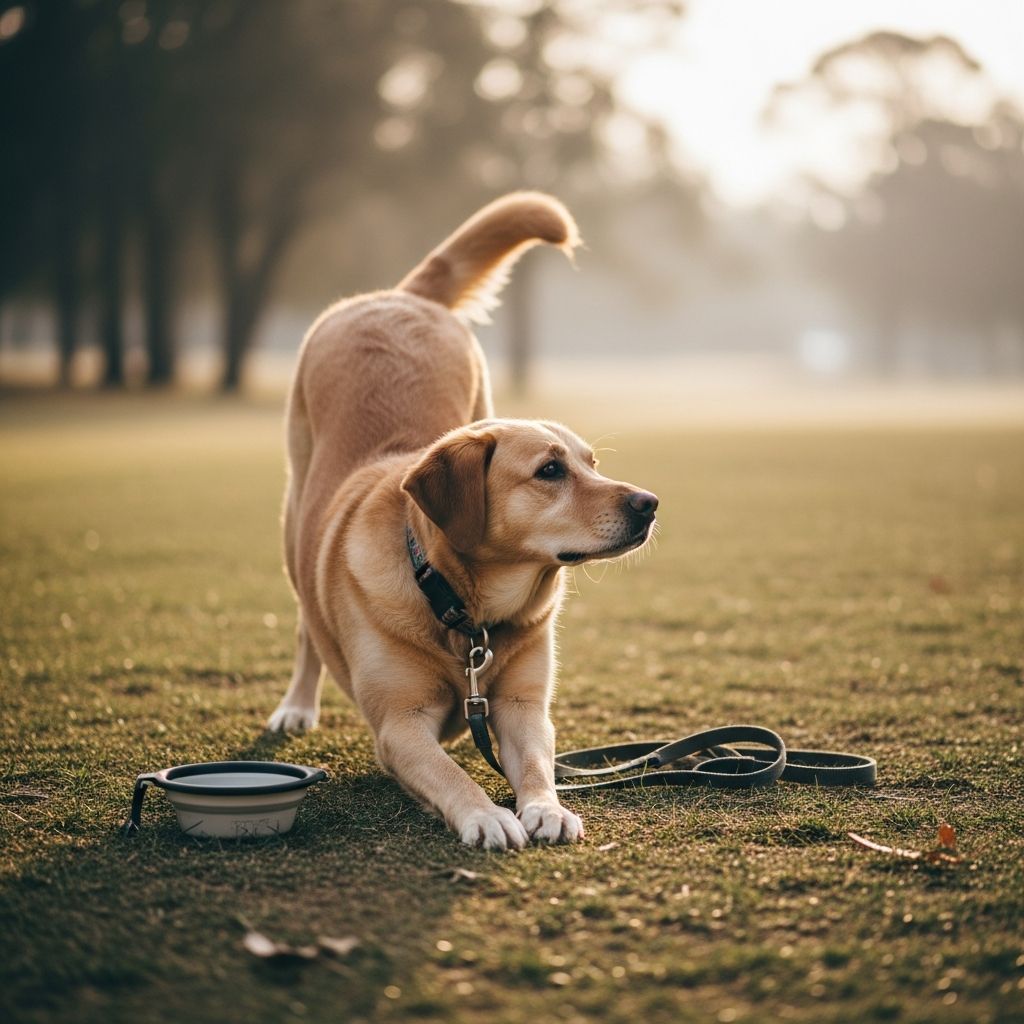
- Bow holds (10-15 seconds x2) stretch front and rear muscles gently.
Strength Activation
End warm-ups with sit-to-stand reps or tuck sits to fire quadriceps, hamstrings, and core muscles. These mimic sport demands while building power. Hold each 30 seconds, 4-5 reps per stretch for optimal tissue elongation.
| Warm-Up Exercise | Target Area | Duration/Reps | Benefits |
|---|---|---|---|
| Leashed trot | Cardiovascular | 5 minutes | Increases blood flow |
| Figure-8 weaves | Spine, hips | 10 reps/direction | Improves flexibility |
| Sit-to-stand | Hindquarters, core | 5-10 reps | Activates strength |
| Paw elevation | Rear legs | 1-5 sec x2 | Builds stability |
Cooling Down: The Recovery Key
Post-exercise cool-downs, lasting 15 minutes, lower heart rate, flush lactic acid, and elongate contracted muscles, minimizing soreness and future injury odds. Skip this, and stiffness sets in quickly.
Gradual Deceleration
Transition from intense play to a leisurely walk, preventing limb blood pooling. Follow with passive range of motion (PROM): gently flex and extend joints like shoulders, elbows, hips, and knees 4-5 times per session.
Stretching and Massage
Gentle stretches held 30 seconds (3 reps) target tight areas, with strengthening follow-ups like down-to-sit for reinjury protection. Massage previously injured spots to boost circulation and bonding.
- Fold-back down/up: Strengthens front end (pushup motion).
- Back-up drills: Builds rear and core straight-line power.
- Passive limb cycles: Lubricates joints without dog effort.
For high-drive dogs, end with mental games like nosework to ease into rest.
Strength Training for Long-Term Resilience
Strength tops all methods for injury reduction, fortifying posture muscles, joints, and spine. A Copenhagen study confirms it slashes risks significantly via better slip recovery and unwanted motion control.
Core and Posture Builders
Wobble boards or unstable surfaces train balance, vital for agility and uneven terrain. Neck-strength tug on ropes prevents whiplash in fetch.
Hind and Front-End Focus
Doggy squats (tuck sit to kick-back stand) and backing up target rear power. Front paw stands build shoulder endurance.
Supervise form; start low-intensity, progressing as fitness grows.
Cross-Training: Variety Prevents Overuse
Monotonous routines breed imbalances; diversify to engage all muscles evenly. Alternate hiking, swimming, and skill games for comprehensive fitness.
- Hiking varied paths: Enhances proprioception on uneven ground.
- Swimming sessions: Low-impact full-body workout.
- Nosework puzzles: Mental-physical combo without strain.
Indoor safety aids: Cover slippery floors, check for holes, keep toys low.
Age and Breed-Specific Adjustments
Puppies need controlled play until growth plates close. Seniors benefit from vet-guided slow builds. Small breeds require knee protection via supervision.
FAQs
How long should a dog’s warm-up last?
5-10 minutes, scaling with intensity: trot, dynamics, strength.
Can stretching alone prevent injuries?
No; pair with strengthening for best results, per studies.
Is swimming safe for injured dogs?
Yes, low-impact; consult vet first.
What if my dog resists exercises?
Use treats, go slow; build gradually.
How often for strength training?
3-5 days/week, with rest days.
Common Pitfalls to Avoid
Overexertion post-injury worsens issues. Sudden inactivity-to-rigorous jumps invite harm. Always monitor for limps or fatigue.
References
- Canine Injury Prevention: Safeguarding Your Furry Athlete — JJ Dog. 2023. https://www.jjdog.com/blog/canine-injury-prevention-safeguarding-your-furry-athlete/
- The Single Best Way to Lower Your Dog’s Risk of Injury in K9 Sports — K9 Fit Solutions. 2023. https://www.k9fitsolutions.com/blog/the-best-way-to-reduce-chances-of-injury-in-k9-sports
- Dog Exercises and Injury Prevention — Whole Dog Journal. 2023. https://www.whole-dog-journal.com/health/dog-exercises-and-injury-prevention/
- 4 Ways to Help Prevent Injuries in Companion Dogs — Canine Arthritis. 2023. https://caninearthritis.org/four-ways-prevent-injuries-in-companion-dogs/
- Preventing injury in sporting dogs — CS D K9. 2023. https://csdk9.org/wp-content/uploads/Preventing-injury-in-sporting-dogs.pdf
- Canine Sports Medicine Part 1: Peak Performance & Injury Prevention — Canine Rehab OC. 2023. https://www.caninerehaboc.com/post/csm-part1
Similar Articles








Read full bio of medha deb