

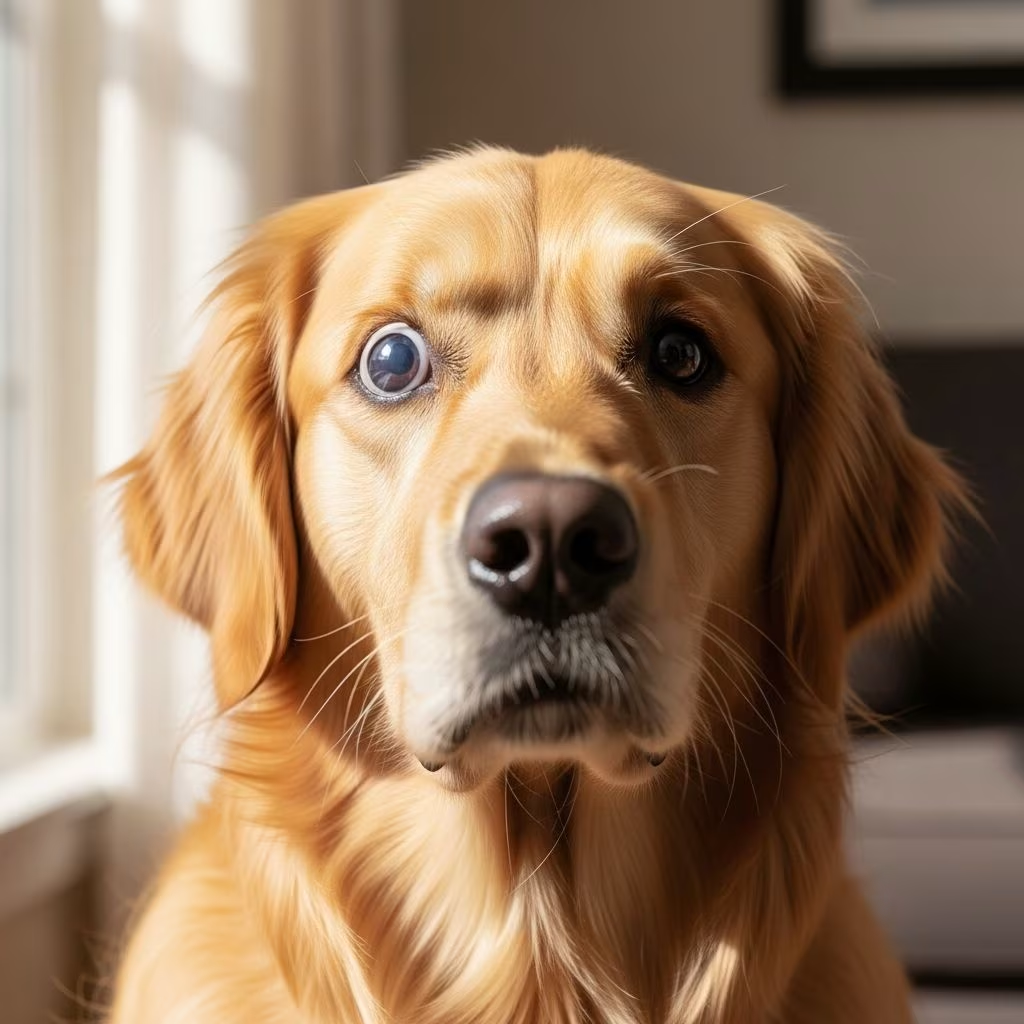
Blind and painful eyes in dogs often require surgical intervention to alleviate suffering and improve quality of life. Prosthetic eyes provide a cosmetic solution that maintains a natural appearance while addressing underlying issues like glaucoma or severe trauma. These procedures, performed by veterinary ophthalmologists, range from full eye removal to implanting artificial spheres that preserve the eye’s outer structure.
Understanding Canine Eye Conditions Necessitating Prosthetics
Dogs develop eye problems from various causes, including progressive glaucoma, retinal detachment, chronic uveitis, or traumatic injuries. Glaucoma, characterized by increased intraocular pressure, leads to irreversible blindness and pain if untreated. Retinal detachment disrupts vision, while infections or tumors exacerbate discomfort. When medical treatments fail, surgery becomes essential to eliminate pain sources without compromising aesthetics.
Early signs include squinting, pawing at the eye, cloudiness, redness, or tearing. Veterinary exams, including tonometry for pressure measurement and ultrasound, confirm the need for intervention. Untreated conditions cause orbital inflammation or secondary infections, worsening prognosis.
Primary Surgical Options for Painful Blind Eyes
Veterinary specialists offer tailored procedures based on eye health, pet age, and owner preferences. Key options include intrascleral prosthesis, intraocular prosthesis, enucleation, and ciliary body ablation. Each balances pain relief, cosmetics, and recovery time.
Intrascleral Prosthesis: Preserving the Eye’s Shell
This procedure eviscerates the eye’s interior contents—lens, iris, retina, and ciliary body—while retaining the sclera, cornea, and muscles. A silicone sphere is implanted inside, allowing natural movement and size maintenance synchronized with the good eye.
Ideal for intact globes with healthy outer layers, it’s unsuitable for dry eye (KCS) or corneal diseases requiring ongoing meds. Surgery lasts 30-60 minutes under general anesthesia, with monitoring of vitals.
Intraocular Prosthesis: Cosmetic Eye Retention
Similar to intrascleral, this inserts a silicone prosthetic after removing internal structures through a corneal or scleral incision. It provides symmetry and lifelike appearance, maturing to a blue-gray hue over 2-3 months.
Healing involves redness from vessel ingrowth, resolving post-surgery. Owners note pets adjust quickly, resuming normal activity.
Enucleation: Complete Eye Removal
Enucleation fully excises the globe, third eyelid, and tear glands, suturing skin over the socket. Variants include transconjunctival (minimal tissue loss, less sinking) and transpalpebral (for infections/cancers).
An orbital silicone implant prevents socket collapse. Recovery is swift, with fur regrowth masking the site.
Ciliary Body Ablation: Minimally Invasive Relief
For frail pets avoiding anesthesia, gentamicin injection destroys the ciliary body, lowering pressure. The eye shrinks but remains, though cosmetics suffer. Not for infections.
Comparing Prosthetic Procedures: A Detailed Overview
| Procedure | Pain Relief | Cosmetics | Surgery Time | Recovery | Best For |
|---|---|---|---|---|---|
| Intrascleral Prosthesis | Excellent | Superior (natural movement) | 30-60 min | 3-6 weeks | Healthy cornea, glaucoma |
| Intraocular Prosthesis | Excellent | High (symmetrical) | ~45 min | 2-3 months full color | Blind painful eyes |
| Enucleation | Immediate | Good (fur covers) | 30-45 min | 1-2 weeks | Infections, tumors |
| Ciliary Ablation | Good | Poor (shrunken eye) | Outpatient | Days | Elderly, high-risk |
This table highlights trade-offs; consult a specialist for personalization.
Pre-Surgery Preparation and What to Expect
Owners fast pets 8-12 hours pre-op, withholding water as instructed. IV catheters deliver fluids; sedation eases anxiety via trazodone. Shaving and sterile prep precede anesthesia with endotracheal intubation for safety.
- Discuss anti-anxiety meds if your dog stresses easily.
- Provide health history, especially heart/kidney issues.
- Arrange transport; same-day discharge common.
Gentle techniques protect the fellow eye, as nerves interconnect.
Detailed Recovery Protocols
Post-op, an Elizabethan collar prevents rubbing for 2-4 weeks. Pain meds like carprofen (dogs) or buprenorphine (cats, adaptable) manage discomfort.
Rechecks occur at 2, 4, 8 weeks for intrascleral; sutures remove at 2 weeks for enucleation. Eyes redden initially, normalizing over time.
- Monitor for swelling, discharge, or lethargy—contact vet immediately.
- Clean gently; restrict activity.
- Topicals may continue for select cases.
Complications are rare: infection (<1%), implant migration, or anesthesia risks (1/2000 dogs).
Long-Term Outcomes and Pet Quality of Life
Dogs adapt remarkably to single-eye vision, navigating via the unaffected eye. Prosthetics eliminate pain, boosting playfulness and appetite. Owners report no behavioral changes; cosmetics enhance emotional bonds.
Prostheses last years without vision restoration—they’re purely functional/cosmetic. Annual exams monitor the remaining eye.
Financial Considerations and Insurance
Costs vary: enucleation $500-1500, prostheses $2000-4000, reflecting specialist fees, imaging, anesthesia. Pet insurance often covers 70-90%; seek reimbursable ophthalmologists. Payment plans aid accessibility.
Frequently Asked Questions (FAQs)
Will my dog miss the removed eye’s vision?
Dogs compensate swiftly with binocular overlap from the good eye, rarely bumping objects post-recovery.
Is anesthesia safe for seniors?
Yes, with monitoring; ablation suits highest risks.
How natural does the prosthetic look?
Indistinguishable to laypeople; moves naturally.
Can both eyes be done?
Rarely; bilateral blindness requires caution, but feasible.
What breeds are prone?
Brachycephalics (Pugs, Bulldogs) face higher glaucoma risks.
Choosing a Veterinary Ophthalmologist
Seek ACVO-boarded specialists via acvo.org. Facilities boast advanced tools like intraoperative ultrasound. Consultations include tonometry, gonioscopy.
Questions for vets: success rates, implant types, complication stats.
Preventive Eye Care Strategies
Annual exams catch issues early. Breeds like Shih Tzus need cherry eye checks. UV-protective goggles aid outdoor dogs.
References
- Enucleation/intraocular Prosthesis/ciliary Body Ablation — Animal Eye Consultants. Accessed 2026. https://www.animaleyeconsultants.com/eye-services/enucleation-prosthesis-ciliary-body-ablation.html
- Intrascleral Prosthesis — Complete Animal Eyecare Center. Accessed 2026. https://completeanimaleyecare.com/eye-diseases/intrascleral-prosthesis/
- Surgical options for blind and painful eyes — Vision Care For Animals. 2013-06-09. https://www.visioncareforanimals.com/articles/2013/6/9/surgical-options-for-blind-and-painful-eyes
- Enucleation of the Eye in Cats and Dogs — PetMD. Accessed 2026. https://www.petmd.com/dog/procedure/enucleation-of-the-eye-in-dogs-and-cats
- Intraocular Prosthesis Surgery — Animal Eye Clinic. Accessed 2026. https://animaleyeclinicpensacola.com/intraocular-prosthesis-surgery/
- Intrascleral Eye Prosthesis for Pets — Plano Vet Eye Care. Accessed 2026. https://www.peteyevet.com/services/intrascleral-prosthesis-placement-alternative-to-eye-removal
- Ocular Prosthesis (Evisceration) — ACVO Public. 2018-02-23. https://www.acvo.org/common-conditions-1/2018/2/23/ocular-prosthesis-evisceration



