

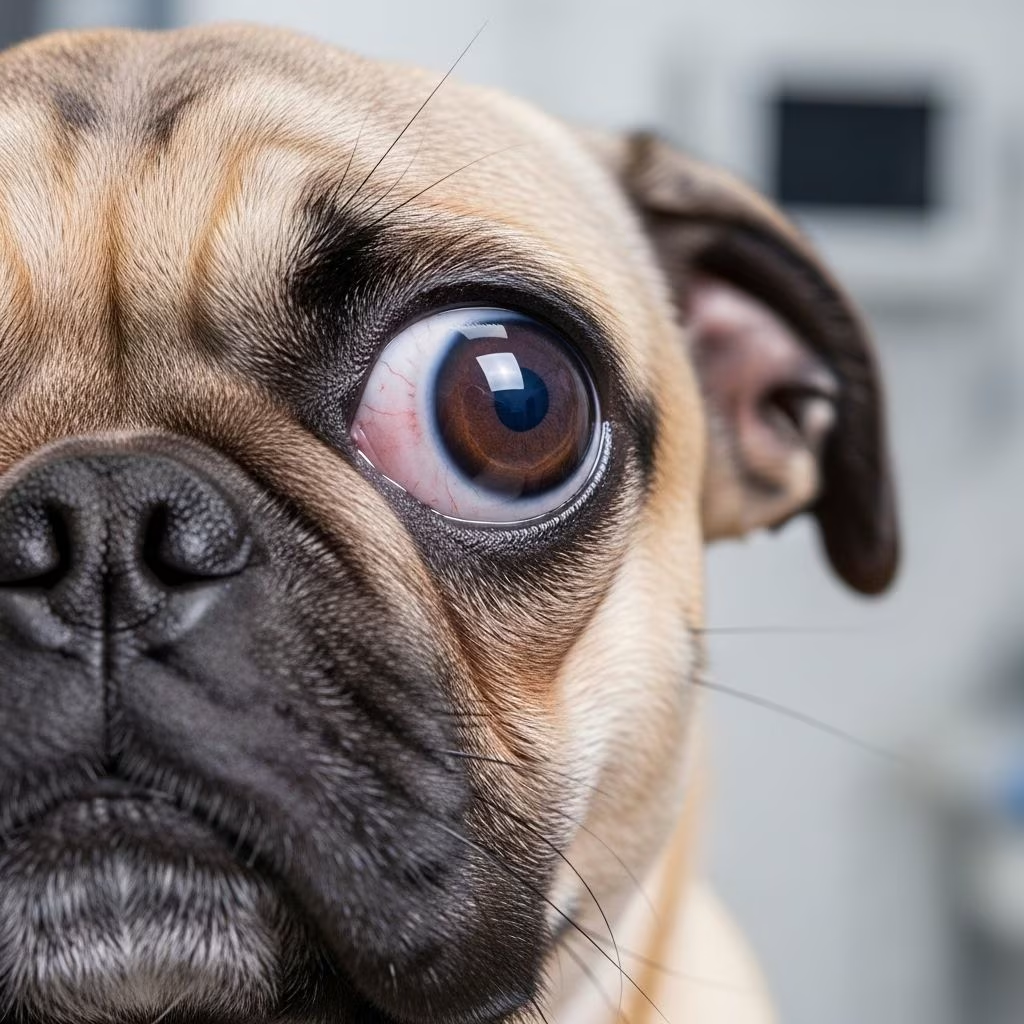
Proptosis represents a severe forward displacement of the eyeball from its socket in small animals, particularly dogs, where the eyelids become trapped behind the protruding globe. This condition demands immediate veterinary intervention to prevent permanent vision loss or globe removal.
Understanding the Anatomy Behind Proptosis
The eye, or globe, sits within the orbit, a bony cavity protected by eyelids, extraocular muscles, and surrounding tissues. In proptosis, trauma forces the globe rostrally, stranding eyelids posteriorly and exposing the cornea to rapid drying and damage. Brachycephalic breeds possess shallow orbits and large palpebral fissures, amplifying vulnerability even to minor forces.
Key anatomical factors include:
- Shallow orbital depth in breeds like Pekingese and Shih Tzu.
- Prominent globes relative to eyelid span.
- Extraocular muscles that anchor the globe, prone to rupture during displacement.
Primary Causes of Eye Proptosis
Trauma dominates as the trigger for proptosis. In small dogs, dog fights—especially when a larger dog shakes the smaller by the scruff—stretch facial skin backward, propelling the eye outward. Vehicle impacts or direct facial bites also contribute, though less frequently.
| Cause | Common Scenarios | High-Risk Breeds |
|---|---|---|
| Blunt Trauma | Car accidents, falls | All small dogs |
| Dog Fights | Scruff shaking by larger dogs | Pekingese, Griffon |
| Restraint Injury | Manual scruffing | Brachycephalic types |
| Orbital Masses | Tumors pushing globe | Any breed |
Less common etiologies involve retrobulbar tumors exerting pressure or iatrogenic mishandling during grooming.
Recognizing Symptoms in Affected Pets
Owners often notice acute distress post-trauma: the eye bulges prominently, with eyelids invisible behind it. Pain manifests as whining, pawing, head shaking, or aggression toward the face.
Clinical hallmarks include:
- Bruised, hyperemic, swollen conjunctiva and periorbital areas.
- Cloudy or ulcerated cornea from exposure.
- Miosis (pupil constriction) in 40% of cases.
- Periorbital edema potentially trapping lids further.
- Strabismus or exotropia post-repositioning.
Blindness may occur immediately if the optic nerve ruptures, or develop secondary to corneal desiccation.
Immediate First Aid for Suspected Proptosis
Time is critical—delay beyond hours heightens complications. Keep the pet calm in a dark, quiet space to minimize further displacement. Gently apply sterile saline-soaked gauze over the globe without forcing repositioning, as this risks muscle tears.
- Prevent self-trauma with an Elizabethan collar.
- Avoid touching or pushing the eye back.
- Rush to an emergency vet; do not wait for regular hours.
Systemic stabilization precedes ocular focus: address shock, dehydration, or concurrent injuries first.
Veterinary Diagnosis and Assessment
Diagnosis relies on history of trauma, visual confirmation of globe protrusion, and inability to retropulse the eye. Ophthalmic exams check for pupillary light reflexes, fundus integrity, and muscle function. Ultrasound or endoscopy reveals retrobulbar damage or hyphema.
Prognostic indicators:
- Favorable: Retained vision, intact reflexes, minimal muscle rupture, clear fundus.
- Poor: Optic nerve damage, hyphema, three-muscle tears, globe rupture.
In one study of 15 small-breed dogs, Pekingese comprised 53.3% of cases, with Griffons at 26.7%; 53.3% required enucleation due to phthisis bulbi.
Treatment Approaches: From Replacement to Enucleation
Globe replacement surgery (GRS) is the goal if viable. Steps include:
Pre-surgical Prep: Lateral canthotomy, muscle relaxants, lubrication, IV fluids, and anti-inflammatories.
Surgical Technique: Free entrapped lids, sever damaged muscles if needed, reposition globe, suture lids, and place temporary tarsorrhaphy.
Post-op care: Antibiotics, mydriatics, pain control, and frequent rechecks. Complications like strabismus (26.7%), exotropia (20%), or phthisis (53.3%) arise, especially with multi-muscle rupture.
Enucleation follows if the globe is unsalvageable—ruptured, blind, or necrotic—preserving cosmesis via prosthetic options.
Post-Treatment Complications and Management
Short-term issues post-GRS include corneal ulcers, uveitis, and motility deficits. Long-term, phthisis bulbi (shrunken globe) mandates removal. Monitor for infection via cytology and culture.
Recovery timeline:
| Timeframe | Expected Progress | Interventions |
|---|---|---|
| 0-24 Hours | Stabilization, reduce swelling | Cold compresses, meds |
| 1-7 Days | Wound healing, vision check | Topicals, bandages |
| 1-4 Weeks | Muscle function return | Rehab exercises |
High-Risk Breeds and Prevention Strategies
Brachycephalic dogs—Pekingese, Pug, Shih Tzu, Boston Terrier—dominate statistics due to orbital shallowness. Preventive measures:
- Avoid scruff restraint; use harnesses.
- Supervised play with larger dogs.
- Protect during travel with secure crates.
- Regular vet eye exams for early orbital issue detection.
Cats experience proptosis less often, typically from severe trauma, with grimmer prognoses due to tight orbital ligaments.
Prognosis Factors and Long-Term Outlook
Success hinges on prompt care: eyes with single muscle damage and vision retention often regain function. Multi-rupture cases fare poorly, with over 50% needing enucleation in studies.
Owners report good quality of life post-enucleation, as pets adapt quickly to monocular vision.
Frequently Asked Questions (FAQs)
Can a proptosed eye be pushed back home?
No—professional intervention prevents further injury.
How quickly must I seek treatment?
Within hours; corneal exposure causes irreversible damage rapidly.
Will my dog regain vision after proptosis?
Possible if treated early and prognostic signs are favorable; 40-50% success in select cases.
Is proptosis painful?
Extremely—pets show acute distress.
Can it happen to cats?
Yes, but rarer and harder to treat.
Advances in Proptosis Management
Recent protocols emphasize endoscopy for muscle assessment and novel lubricants for corneal protection. Studies advocate breed-specific education to curb incidence.
References
- Clinical findings of traumatic proptosis in small-breed dogs — PMC/NCBI. 2019-10-01. https://pmc.ncbi.nlm.nih.gov/articles/PMC6794399/
- Proptosis – Riverside Veterinary Hospital — Riverside Veterinary Hospital. 2023. https://www.riversidevet.net/index.php/component/vetwebsites/?view=showArticle&id=71
- Proptosis in Dogs — PetMD. 2024. https://www.petmd.com/dog/conditions/eyes/proptosis-dogs
- Diagnosis and Treatment of Ocular Proptosis in Dogs and Cats — Today’s Veterinary Practice. 2022. https://todaysveterinarypractice.com/ophthalmology/ocular-proptosis/
- Proptosis – Greenside Vet — Greenside Veterinary Clinic. 2023. https://www.greensidevet.co.za/proptosis/
- Proptosis — ACVO Public — American College of Veterinary Ophthalmologists. 2018-02-02. https://www.acvo.org/common-conditions-1/2018/2/2/prosthetics
- Proptosis – Feline — Indy Animal Eye Clinic. 2023. https://indyanimaleyeclinic.com/veterinary-ophthalmology-publications/proptosis-cats-eye-trauma/



