Prong Collars: Humane Tool or Risky Choice?
Explore the science, benefits, and dangers of prong collars to decide if they're right for your dog's training needs.
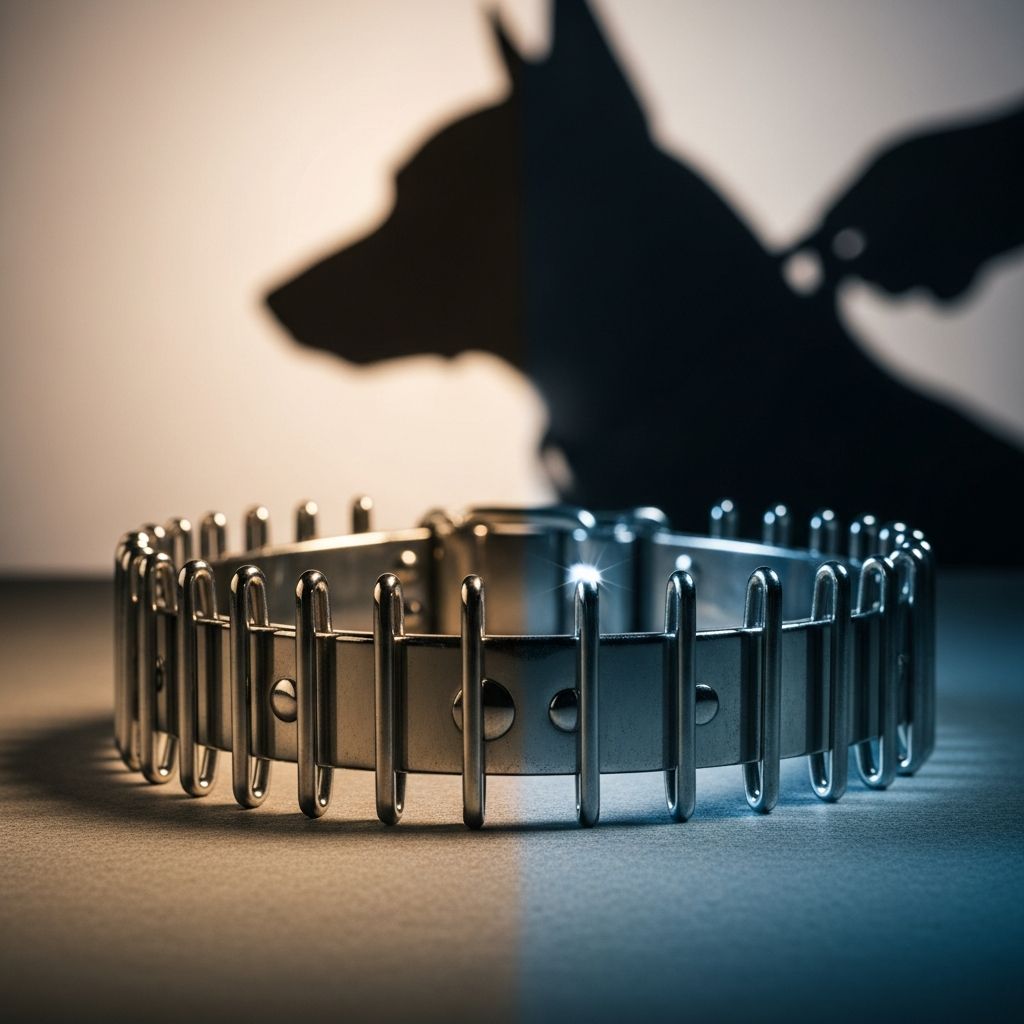
Prong collars, also known as pinch collars, spark intense debate among dog owners, trainers, and veterinarians. These devices feature metal links with prongs that press into a dog’s neck during leash tension, aiming to discourage pulling and promote better walking behavior. While some hail them as efficient for strong-willed dogs, others warn of potential harm and advocate for force-free alternatives. This article delves into their design, advantages, drawbacks, scientific evidence, and best practices to help you evaluate their place in modern dog training.
Understanding Prong Collar Mechanics
At their core, prong collars distribute pressure evenly around a dog’s neck rather than concentrating it in one spot like traditional choke chains. When the leash tightens, the prongs create a pinching sensation that mimics a mother dog’s corrective bite on her puppies, serving as an attention-grabber rather than a source of pain. This even pressure application is intended to communicate boundaries without causing undue harm, making it suitable for short, precise corrections during walks or training sessions.
Proper fitting is crucial: the collar should sit high on the neck, just behind the ears, with prongs pointing inward. A correctly sized collar allows two fingers to fit between the links and the skin when loose. Users typically pair it with a short, sturdy leash—around 4 feet—for controlled tugs that release quickly, avoiding sustained pulls.
Key Benefits for Dog Owners
Prong collars offer several practical advantages, particularly for owners struggling with leash reactivity or powerful breeds.
- Rapid Behavioral Improvements: Many report near-instant reductions in pulling, especially in cases where positive reinforcement alone falls short. This speed can prevent dangerous situations, like a dog lunging at traffic or wildlife.
- Versatility Across Dogs: Adjustable links accommodate various neck sizes and temperaments, from energetic puppies to adult working dogs. Balanced trainers often integrate them for stubborn pullers unresponsive to harnesses.
- Temporary Training Aid: Once desired behaviors solidify, owners transition to flat collars or harnesses, using the prong only as a bridge to long-term compliance.
- Chiropractic Safety Edge: Veterinary chiropractor Dr. Daniel Kamen notes that prong collars cause fewer upper cervical subluxations than flat collars due to even pressure distribution, requiring minimal force.
Real-world feedback echoes these points. One petite owner described success with a rabbit-chasing dog: after professional guidance, quick tugs curbed bolting without injury, outperforming a harness in distracting environments.
Significant Risks and Downsides
Despite benefits, misuse amplifies serious concerns. Improper application can injure the trachea, soft tissues, or spine.
- Physical Damage Potential: Excessive force risks neck trauma, bruising, or embedded prongs. Small dogs or those with thin skin face higher vulnerability.
- Behavioral Pitfalls: Over-correction may induce fear, anxiety, or defensive aggression, undermining trust between dog and handler.
- Stress Indicators: Behaviors like pinned ears or avoidance signal discomfort, potentially worsening welfare long-term.
Owners must vigilantly watch for signs of distress—coughing, gagging, reluctance to move—and halt use immediately if observed, seeking professional input.
Scientific Evidence on Effectiveness and Welfare
Research provides nuanced insights, with limited direct studies on prong collars.
A 2024 peer-reviewed study compared prong collars to harnesses, martingale collars, and Starmark collars using strain gauges and behavioral analysis on shelter dogs. Dogs pulled least (trending, not statistically significant) on prong collars, suggesting efficacy in reducing force. No clear welfare impairments emerged across tools, though metal prongs proved most aversive. Pulling was highest on martingales, highlighting flat collar risks.
Earlier work on Belgian Malinois police dogs (Salgirli et al., 2012, cited in ) found prongs elicited more stress behaviors (e.g., backward ears in 64% vs. 38% for e-collars) than electronic alternatives, though effectiveness was comparable. Owner surveys link prong/choke use to lower walk satisfaction, implying relational strain.
Consensus favors prongs as a last resort in balanced programs, not standalone solutions. Positive reinforcement dominates recommendations, with aversives reserved for expert-supervised cases.
Comparing Prong Collars to Alternatives
To contextualize, here’s a comparison table of common leash tools based on research and expert views:
| Tool | Pulling Reduction | Welfare Impact | Best For |
|---|---|---|---|
| Prong Collar | High (lowest pull force trend) | Moderate risk if misused; even pressure | Strong pullers, temporary use |
| Front-Clip Harness | Moderate | Low; no neck pressure | Daily walks, sensitive dogs |
| Martingale Collar | Low (highest pull) | Low-moderate | Escape artists |
| Starmark Collar | Moderate | Lower than prong (plastic prongs) | Mild corrections |
Data drawn from strain gauge tests showing prongs excel in force reduction but demand precise handling. Harnesses shine for welfare, avoiding neck strain entirely.
Guidelines for Safe and Effective Use
If opting for a prong collar, prioritize safety:
- Professional Fitting and Training: Consult a certified trainer for conditioning—introduce gradually with rewards to desensitize.
- Technique Mastery: Employ quick “tug-and-release” for corrections, never yanks or drags. Pair with verbal cues and treats.
- Duration Limits: Use 10-15 minutes per session, removing post-training. Not for unsupervised wear or puppies under 6 months.
- Health Checks: Avoid on dogs with neck issues, respiratory conditions, or aggression. Vet clearance advised.
- Phased Exit: Fade out as compliance builds, reinforcing with positives.
Balanced approaches blend tools: 80% rewards, 20% corrections for sustainable results.
Expert Perspectives and Chiropractic Insights
Veterinary chiropractor Dr. Daniel Kamen emphasizes prongs’ superiority over flat collars for training, citing reduced subluxation risks from even distribution. He cautions against harnesses for certain breeds, as they may stress the spine improperly. Balanced trainers view prongs as humane when wielded knowledgeably, countering bans by stressing education over prohibition.
Alternatives to Consider First
Before prongs, exhaust gentler options:
- Positive Reinforcement Training: Lure with treats, clicker for heel position.
- Head Halters: Gentle redirection without pain.
- No-Pull Harnesses: Redirect forward momentum.
- Management Tools: Longer leashes in low-distraction areas.
Patience yields lasting change; tools accelerate but don’t replace skill-building.
Frequently Asked Questions (FAQs)
Are prong collars banned anywhere?
Not federally in the US, but some retailers, cities (e.g., Denver), and countries like Germany restrict them. Check local laws.
Can puppies use prong collars?
No—wait until full growth (6+ months) to avoid developmental harm.
Do prong collars cause aggression?
Misuse can foster fear-based reactivity; proper use minimizes this risk.
How long should I use a prong collar?
Temporarily, 2-6 weeks ideally, transitioning once behaviors stick.
Are plastic prong alternatives safer?
Starmark-style collars may reduce aversion but check efficacy for your dog.
Final Thoughts on Responsible Choices
Prong collars aren’t inherently cruel but demand expertise to stay humane. Science shows they curb pulling effectively with minimal welfare hits when used right, yet risks loom for novices. Prioritize your dog’s well-being: seek pros, blend methods, and monitor closely. Ultimately, the best tool fosters a confident, happy companion.
References
- Understanding the Use of Prong Collar in Dog Training — Upstate Canine. Accessed 2026. https://www.upstatecanine.com/blog/understanding-the-use-of-prong-collar-in-dog-training/
- The Prong Collar, the Good, the Bad, and the Ugly — Rescue Dogs 101. Accessed 2026. https://www.rescuedogs101.com/the-prong-collar-the-good-the-bad-and-the-ugly/
- Comparing efficacy in reducing pulling and welfare impacts of four… — PMC (NCBI). 2024. https://pmc.ncbi.nlm.nih.gov/articles/PMC11512810/
- Prong collars – a kinder way to walk your dog — Dogology. Accessed 2026. https://dogology.ca/prong-collars-a-kinder-way-to-walk-your-dog/
- A conversation and scientific study on Prong Collars — Pack Leader Help. Accessed 2026. https://www.packleaderhelp.com/post/a-conversation-and-scientific-study-on-prong-collars
- Do Prong Collars Work? – YouTube — YouTube Short. Accessed 2026. https://www.youtube.com/shorts/FFIyjFD9AWc
Similar Articles








Read full bio of Sneha Tete