

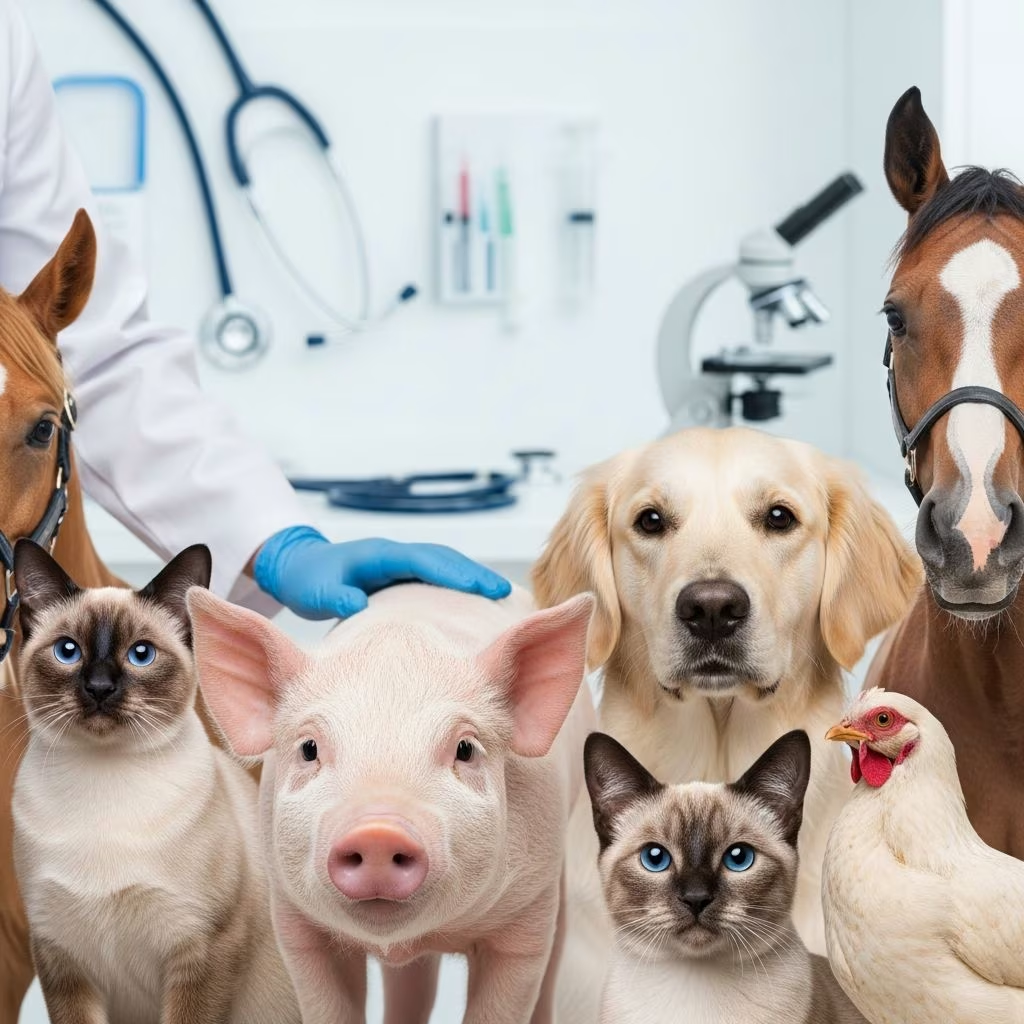
Prokinetic agents play a crucial role in veterinary medicine by stimulating gastrointestinal (GI) motility in monogastric animals such as dogs, cats, and horses. These drugs promote the coordinated propulsion of contents through the digestive tract, addressing conditions like ileus, gastroparesis, and reflux disorders. By targeting specific receptors and neural pathways, they restore normal peristaltic activity disrupted by illness, surgery, or inflammation.
Understanding GI Motility and the Need for Prokinetics
The GI tract relies on smooth muscle contractions regulated by the enteric nervous system, hormones, and extrinsic nerves. Disruptions lead to stasis, vomiting, regurgitation, and secondary complications like bacterial overgrowth. Prokinetics enhance propulsive waves, particularly in the stomach and small intestine, without excessively stimulating sphincters.
- Key motility disorders: Postoperative ileus, gastric dilatation, esophageal reflux, and proximal enteritis.
- Benefits: Faster gastric emptying, reduced regurgitation risk, and improved nutrient absorption.
In clinical settings, these agents are selected based on species, condition severity, and concurrent therapies. Recent studies highlight their frequent use in hospitalized dogs for vomiting and ileus prophylaxis post-surgery.
Core Mechanisms of Prokinetic Action
Prokinetics act via multiple pathways: dopaminergic antagonism, serotonergic agonism, motilin receptor stimulation, and acetylcholinesterase inhibition. This multifaceted approach mimics natural regulators like acetylcholine and motilin.
| Mechanism | Primary Targets | Effects on GI Tract |
|---|---|---|
| Dopaminergic D2 antagonism | Central and peripheral dopamine receptors | Increases ACh release, enhances peristalsis |
| 5-HT4 agonism | Enteric neurons, smooth muscle | Promotes coordinated contractions |
| Motilin agonism | Motilin receptors in duodenum | Induces migrating motor complexes |
| Acetylcholinesterase inhibition | Cholinergic synapses | Prolongs ACh action in proximal GI |
These actions are tailored to monogastrics, where simple stomach anatomy amplifies drug effects compared to ruminants.
Metoclopramide: A Cornerstone Prokinetic
Metoclopramide stands as a first-line option due to its broad receptor profile. As a D2 antagonist and 5-HT4 agonist/5-HT3 antagonist, it boosts gastric emptying and antagonizes emesis via central effects. Administered orally, subcutaneously, or intravenously, it suits both outpatient and critical care.
- Dogs/cats: 0.2–0.5 mg/kg PO/SC q8h or 0.01–0.02 mg/kg/h IV CRI.
- Horses: 0.125–0.25 mg/kg IV over 60 min or 0.04 mg/kg/h CRI.
Studies in hospitalized dogs show it as the most common sole prokinetic, though usage declined slightly from 2018–2023, often combined with others for refractory cases. Side effects include sedation or extrapyramidal signs at high doses, but these are rare in vets.
Cisapride: Selective Serotonergic Stimulation
Cisapride, a 5-HT4 agonist, excels in enhancing small intestinal motility without strong central effects. Withdrawn from human markets due to cardiac risks, it remains safe and effective in veterinary use via compounding pharmacies.
- Dogs: 0.1–0.5 mg/kg PO q8–12h (up to 1 mg/kg in select cases).
- Cats: 2.5 mg/cat (<5 kg) or 5 mg/cat (>5 kg) PO q8h.
No adverse cardiac events reported in animals; it proves ideal for chronic motility issues like megacolon or idiopathic gastroparesis.
Erythromycin and Macrolide Alternatives
Erythromycin mimics motilin, triggering phase III migrating motor complexes vital for clearing residues. Oral suspension is preferred for optimal prokinetic activity over tablets.
- Dogs: 0.5–1 mg/kg PO q8–12h.
- Horses: 1 mg/kg IV erythromycin lactobionate.
Drawbacks include antimicrobial effects causing dysbiosis and CYP450 inhibition interacting with drugs like cisapride. Newer macrolides like clarithromycin offer similar benefits with fewer issues; non-antibiotic derivatives are under development. Veterinary guidelines suggest IV erythromycin first for critical GI intolerance.
H2 Antagonists with Dual Roles: Ranitidine and Nizatidine
These acid suppressants also inhibit acetylcholinesterase, stimulating proximal GI motility. Useful in reflux esophagitis or ulcers with stasis.
- Ranitidine: 1–2 mg/kg PO q12h (dogs/cats).
- Nizatidine: 2.5–5 mg/kg PO q12h (dogs/cats).
Activity peaks in stomach/duodenum, complementing antisecretory effects without sedation.
Lidocaine for Equine Ileus Management
In horses, lidocaine addresses postoperative ileus via multimodal actions: suppressing afferent neuron firing, reducing inflammation, and direct smooth muscle stimulation. A bolus precedes CRI for rapid response.
- Horses: 1.3 mg/kg IV bolus, then 0.05 mg/kg/min CRI.
Most respond within 12 hours, though cost and volume limit use. Evidence varies, with benefits in proximal duodenitis-jejunitis.
Domperidone: Peripheral Dopamine Blocker
Domperidone offers prokinetic effects without crossing the blood-brain barrier, minimizing CNS side effects. Administered IM or PO, it aids in equine and small animal GI slowdown.
- Dogs/cats: 0.1–0.5 mg/kg IM; 0.5–1 mg/kg PO.
It supports recovery in fescue toxicosis-related ileus in horses, though less common than others.
Clinical Applications and Species-Specific Strategies
Selection depends on diagnosis: metoclopramide for emetogenic ileus, cisapride for colonic issues, erythromycin for gastroparesis. Combinations rise in complex cases, per recent trends.
| Condition | Preferred Prokinetics | Species |
|---|---|---|
| Gastroparesis | Erythromycin, Cisapride | Dogs, Cats |
| Post-op Ileus | Metoclopramide, Lidocaine | Horses, Dogs |
| Esophageal Reflux | Ranitidine, Metoclopramide | Dogs, Cats |
| Megacolon | Cisapride | Cats |
Monitoring includes auscultation, imaging, and response to feeding tolerance.
Safety, Interactions, and Limitations
Adverse effects are minimal in vets: metoclopramide sedation, erythromycin diarrhea. Interactions via CYP450 (erythromycin) necessitate caution. Evidence quality varies; human data informs but animal trials are limited. Prokinetics don’t address underlying causes like obstruction.
Emerging Trends and Future Directions
Trends show shifting preferences: less metoclopramide monotherapy, more erythromycin combos. Research explores mosapride-like serotonergics and pure motilins. Personalized dosing via pharmacodynamics gains traction.
Frequently Asked Questions (FAQs)
What are prokinetic drugs used for in pets?
They treat GI stasis, vomiting, and ileus by enhancing motility in dogs, cats, and horses.
Is cisapride safe for cats?
Yes, no cardiac issues reported in veterinary use; available compounded.
Can erythromycin be used long-term?
Limited due to resistance and interactions; short courses preferred.
How quickly does lidocaine work in horses?
Most show improvement within 12 hours of infusion.
Are there prokinetics for chronic use?
Cisapride and low-dose metoclopramide suit ongoing management.
References
- Gastrointestinal Prokinetic Drugs Used in Monogastric Animals — Merck Veterinary Manual. 2023. https://www.merckvetmanual.com/pharmacology/systemic-pharmacotherapeutics-of-the-digestive-system/gastrointestinal-prokinetic-drugs-used-in-monogastric-animals
- Gastrointestinal Prokinetic Drugs Used in Monogastric Animals — MSD Veterinary Manual. 2023. https://www.msdvetmanual.com/pharmacology/systemic-pharmacotherapeutics-of-the-digestive-system/gastrointestinal-prokinetic-drugs-used-in-monogastric-animals
- Use of erythromycin and metoclopramide in hospitalized dogs — PMC (PubMed Central). 2024. https://pmc.ncbi.nlm.nih.gov/articles/PMC12063353/
- Prokinetic Drugs Table — Merck Veterinary Manual. 2023. https://www.merckvetmanual.com/multimedia/table/prokinetic-drugs
- Prokinetics: it’s a moving story! (Proceedings) — dvm360. 2023. https://dvm360.com/view/prokinetics-its-moving-story-proceedings



