

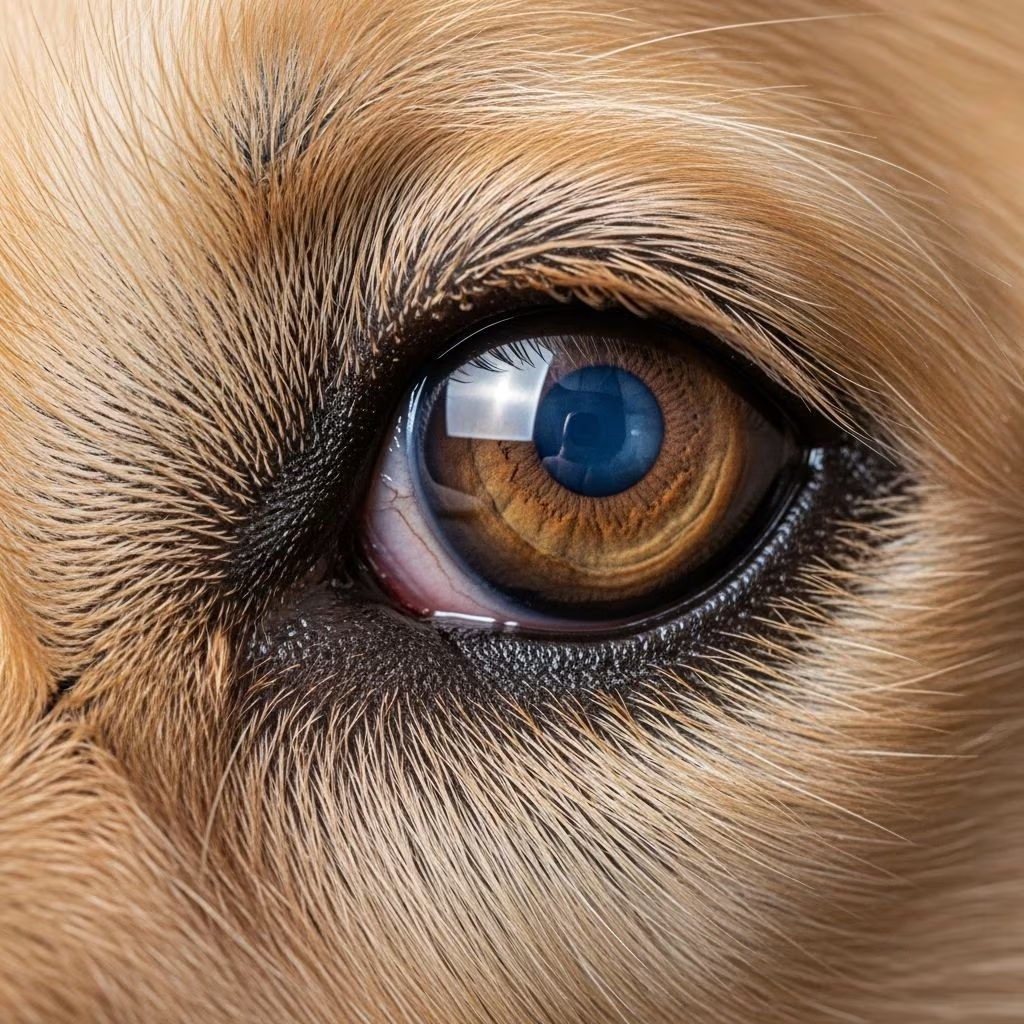
Understanding Progressive Retinal Atrophy in Dogs
Progressive Retinal Atrophy (PRA) is a hereditary eye disease that affects dogs of various breeds and backgrounds. This condition involves the gradual degeneration of photoreceptor cells in the retina, ultimately leading to vision loss and potential blindness. Understanding PRA is crucial for dog owners, as early recognition of symptoms can help facilitate proper veterinary care and allow for better management strategies to maintain your pet’s quality of life.
The condition affects the light-sensitive cells of the eye, known as rods and cones, which are responsible for vision in different lighting conditions. As these cells deteriorate over time, dogs progressively lose their ability to see, starting with diminished night vision and eventually progressing to complete blindness if left unchecked.
What Is Progressive Retinal Atrophy?
Progressive Retinal Atrophy refers to a group of inherited disorders that cause the retina to gradually degenerate. The retina is the light-sensitive tissue at the back of the eye that plays a vital role in converting light into neural signals, which are then sent to the brain for visual processing. In dogs with PRA, the photoreceptor cells in the retina begin to break down and lose their function over time.
PRA is primarily a genetic condition, meaning it is passed down from parents to offspring through inherited genes. Several genetic disorders have been identified as causing PRA, and genetic testing can now detect some of these conditions. However, not all genetic variants causing PRA have been identified, so a negative genetic test does not guarantee that a dog will not develop the disease.
Types of Progressive Retinal Atrophy
There are two main forms of PRA in dogs, distinguished by the age at which the condition first appears.
Early-Onset PRA (Retinal Dysplasia)
Early-onset PRA, also referred to as retinal dysplasia, occurs in puppies around the time they are weaned, typically between 8 and 12 weeks of age. In affected puppies, the rods and cones fail to develop properly during the critical early growth phase. These puppies will experience rapid vision loss as their photoreceptor cells never achieve normal function. This form is particularly distressing because the onset is immediate and progression can be swift.
Late-Onset PRA
Late-onset PRA is far more common and affects adult dogs typically between 3 and 9 years of age. This form represents a “true” atrophy, where the photoreceptor cells develop normally during the dog’s youth but gradually lose their ability to function as the dog matures. The vision loss in this form is typically more gradual than in early-onset cases, allowing dogs more time to adapt to their changing vision.
Signs and Symptoms of Progressive Retinal Atrophy
Progressive Retinal Atrophy is not a painful condition, which means early signs may go unnoticed by pet owners. However, there are several key symptoms to watch for that may indicate your dog is developing the disease.
Early Warning Signs
The most common initial sign of PRA is night blindness. Dogs affected with PRA often display reluctance to go outside at night or to enter dark rooms. They may appear nervous in dim lighting conditions or hesitant to navigate spaces with low light levels. Many owners first notice that their dog seems unsure or anxious during evening hours or in shadowy areas of the home.
Observable Physical Changes
Pet owners may notice several physical changes in their dog’s eyes as PRA progresses:
- Eyes that appear more reflective when light shines on them, similar to the “eye shine” or “red eye” effect seen in photographs with flash photography
- Pupils that remain dilated longer than normal and respond sluggishly to light
- Increased clumsiness and bumping into objects, especially in dark rooms, new environments, or when furniture has been rearranged
- Development of cataracts, which may become the first noticeable sign to some pet owners
Disease Progression
Understanding how PRA progresses is important for recognizing the condition at various stages. In most dogs with PRA, the rods—photoreceptor cells responsible for vision in low light conditions—begin to atrophy first. This initial deterioration results in decreased ability to see in dark or dimly lit environments, manifesting as the characteristic night blindness.
As the disease progresses, the cones—photoreceptor cells that enable daytime vision and color perception—also begin to atrophy. Once all rods and cones have deteriorated significantly, complete vision loss occurs. Many dogs maintain some level of night vision for 6 to 36 months before day vision becomes affected, though this timeline varies considerably between individuals.
How Veterinarians Diagnose Progressive Retinal Atrophy
Diagnosing PRA requires a thorough examination by a qualified veterinarian and often involves referral to a board-certified veterinary ophthalmologist for definitive diagnosis.
Initial Examination
Your veterinarian may initially suspect PRA based on clinical signs such as dilated pupils, sluggish pupillary light responses, and apparent vision loss. A general ophthalmic examination provides important preliminary information about your dog’s eye health and visual function.
Ophthalmoscopic Examination
The primary diagnostic tool for PRA is an indirect ophthalmoscope, an optical instrument that allows the veterinarian to examine the back of the eye and visualize the retina. This tool, which may be worn as a headpiece or attached to eyeglasses, enables the veterinarian to look for characteristic changes associated with PRA.
Observable Changes
During examination, the veterinarian will look for several telltale signs:
- Changes in the optic nerve appearance and function
- Alterations in the retinal blood vessels
- Increased reflectivity of a portion of the retina called the tapetum lucidum (the area that causes the reflective quality of affected eyes)
Both eyes are typically affected equally by PRA. In early stages, these retinal changes may be subtle and difficult to observe, which is why referral to a veterinary ophthalmologist may be recommended for a more detailed examination and accurate diagnosis.
Genetic Testing
Genetic testing can identify specific genetic mutations known to cause PRA in certain dog breeds. However, since not all genetic variants have been identified, a negative genetic test does not definitively rule out the possibility that a dog will develop PRA.
Treatment Options for Progressive Retinal Atrophy
Unfortunately, there is currently no effective treatment available for PRA. This remains one of the most challenging aspects of dealing with this condition, as the progressive nature of the disease means affected dogs will eventually lose their vision.
Why Treatment Is Limited
The lack of effective treatment stems from the irreversible nature of photoreceptor cell death in PRA. Once these cells have degenerated, they cannot be restored or regenerated with current medical technology. Research into gene therapy holds promise for the future, but such treatments remain in experimental stages and are not yet available for clinical use.
Supplementation Approaches
Some veterinarians may recommend antioxidant supplements or a supplement called Ocu-Glo when PRA is first diagnosed. However, these supplements have not been scientifically proven to be effective in stopping or slowing the progression of PRA. While antioxidants are generally not harmful, there is insufficient evidence to support their use as a standard treatment. These supplements may theoretically reduce stress on lens cells and potentially delay cataract formation in some cases, but their benefit remains unproven.
Managing Secondary Conditions
While PRA itself cannot be treated, managing secondary complications is important for maintaining your dog’s comfort and quality of life. If your dog develops cataracts—which occurs in nearly all dogs with PRA—treatment of the cataracts is generally not recommended since vision improvement would be only temporary at best. Dogs with PRA will continue to lose vision regardless of cataract removal.
However, if cataracts lead to inflammation within the eye or glaucoma, these conditions can cause pain and require treatment with special eyedrops or other medications. In these cases, careful monitoring by your veterinarian is essential to prevent discomfort and manage these secondary complications.
Breeding Considerations
Because PRA is an inherited condition, affected dogs, their parents, and their offspring should not be bred. Responsible breeding practices are crucial for preventing the spread of this genetic disease in dog populations. If you own a dog with PRA or a close relative of an affected dog, it is important to discuss breeding implications with your veterinarian.
Managing Life With a Dog With Progressive Retinal Atrophy
While PRA cannot be cured, there are many strategies to help your dog adapt and maintain a good quality of life despite vision loss.
Home Environment Modifications
Creating a safe and predictable environment is essential for blind or vision-impaired dogs. Consider these modifications:
- Keep furniture and household items in consistent locations to help your dog navigate familiar spaces
- Use baby gates or barriers to prevent access to hazardous areas like staircases
- Provide adequate lighting throughout your home, even at night
- Remove tripping hazards and sharp objects from your dog’s usual paths
- Use textured mats or rugs to help your dog identify different areas of the home
Training and Commands
Training your dog to respond to verbal commands becomes particularly important as vision declines. Commands such as “stop,” “slow,” and “step” can help guide your dog safely through various environments. Consistency in your use of these commands and positive reinforcement techniques will help your dog learn to rely on auditory cues for navigation and safety.
Leash Use
When taking your dog outside or into unfamiliar territory, always use a leash for safety. This prevents your dog from wandering into hazardous situations and gives you control over their movement in environments where they may struggle to navigate independently.
Veterinary Monitoring
Careful ongoing monitoring by your veterinarian will be required for the rest of your affected dog’s life. Regular check-ups allow your veterinarian to watch for complications such as cataracts and ensure that any secondary conditions are managed appropriately. Many dogs with PRA adapt remarkably well to gradual vision loss and continue to enjoy a high quality of life with proper support and management.
Frequently Asked Questions About Progressive Retinal Atrophy
Q: Can Progressive Retinal Atrophy be prevented?
A: While the condition cannot be prevented once a dog carries the genetic predisposition, responsible breeding practices can prevent the disease from spreading in dog populations. Genetic testing of breeding dogs can help identify carriers and prevent affected individuals from reproducing.
Q: Is PRA painful?
A: No, PRA itself is not a painful condition. However, secondary complications such as cataracts that lead to inflammation or glaucoma can cause discomfort and may require treatment.
Q: How quickly does PRA progress?
A: Progression rates vary considerably between dogs. Some dogs may maintain night vision for 6 to 36 months before day vision is affected. Many dogs cope quite well with gradual vision loss and adapt over time.
Q: What breeds are most commonly affected by PRA?
A: PRA can affect many breeds, including Labrador Retrievers, Golden Retrievers, Miniature Poodles, Irish Setters, and many others. Consult with your veterinarian or breed club for information about PRA prevalence in your dog’s breed.
Q: Can my blind dog still have a good quality of life?
A: Yes, many dogs adapt well to blindness and continue to enjoy a good quality of life with appropriate environmental modifications, consistent routines, and supportive care from their owners.
References
- Progressive Retinal Atrophy (PRA) in Dogs — VCA Animal Hospitals. 2024. https://vcahospitals.com/know-your-pet/progressive-retinal-atrophy-in-dogs
- Progressive Retinal Atrophy (PRA) In Dogs — PetMD. 2024. https://www.petmd.com/dog/condition/progressive-retinal-atrophy-in-dogs
- Progressive Retinal Atrophy (PRA) in Dogs: What to Know — American Kennel Club. 2024. https://www.akc.org/expert-advice/health/progressive-retinal-atrophy/
- What is Progressive Retinal Atrophy in Dogs? — Embark Vet. 2024. https://embarkvet.com/products/dog-health/health-conditions/progressive-retinal-atrophy-prcd/
- PRA – Progressive Retinal Atrophy — Animal Eye Care Australia. 2024. https://www.animaleyecare.com.au/advice-sheet/pra-progressive-retinal-atrophy/
- Retinal Degeneration in Dogs — Dominion Valley Animal Hospital. 2024. https://www.dominionvalleyvets.com/retinal-degeneration-in-dogs-dominion-valley-animal-hospital/



