

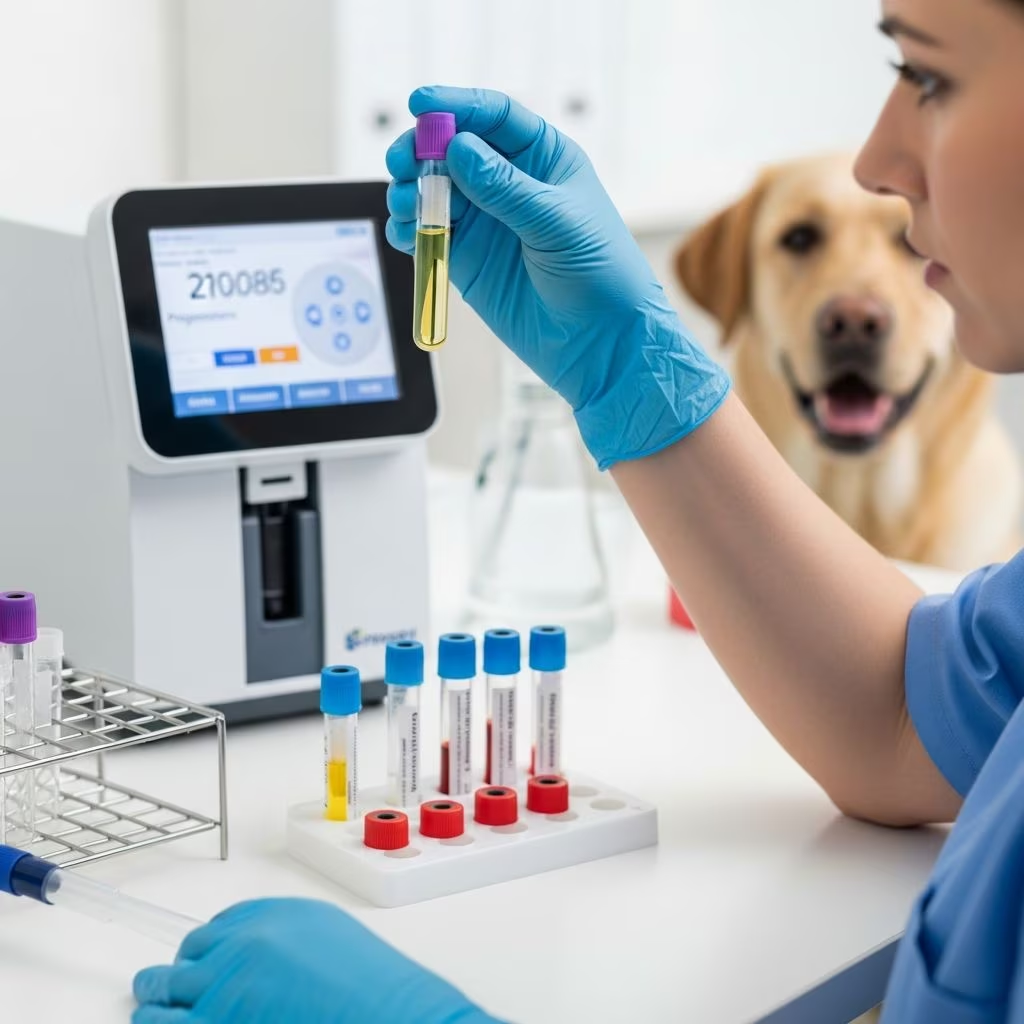
Progesterone testing serves as a cornerstone for breeders aiming to time matings precisely during a female dog’s reproductive cycle. By measuring progesterone levels in the blood, veterinarians can identify the optimal window for conception, reducing missed opportunities and improving litter sizes.
Understanding the Canine Estrous Cycle
The female dog’s reproductive life revolves around the estrous cycle, which consists of four distinct phases: proestrus, estrus, diestrus, and anestrus. This cycle typically repeats every 6 to 11 months, with each heat period lasting about 2 to 3 weeks, though variations occur based on breed and individual factors.
Larger breeds often experience their first heat later, between 12 to 24 months, while smaller ones may start as early as 6 months. Recognizing these phases helps owners manage behaviors and plan interventions like spaying.
Proestrus: The Preparation Phase
Proestrus kicks off the visible heat cycle, lasting 6 to 11 days on average. Estrogen levels peak, causing vulvar swelling and bloody vaginal discharge. Females attract males but reject mating, signaling the body is gearing up for ovulation.
- Bloody discharge: Starts heavy and dark, alerting owners to the cycle’s start.
- Vulvar changes: Edema makes the area turgid and prominent.
- Behavioral cues: Flirtatious yet evasive around intact males.
This phase ends as estrogen declines, paving the way for progesterone’s rise.
Estrus: The Fertile Window
Estrus, the true ‘heat’ phase, spans 5 to 10 days where the female accepts breeding. A luteinizing hormone (LH) surge triggers ovulation around 48 hours after its onset, with eggs maturing over 2-3 days post-release for fertilization viability.
Discharge lightens to straw-colored or clear, and the vulva softens. Progesterone begins climbing from baseline (<1 ng/mL) toward 2-5 ng/mL at ovulation, serving as a reliable marker.
Diestrus: Pregnancy Maintenance or Pseudopregnancy
Post-estrus, diestrus lasts 60-90 days with sustained high progesterone (peaks at 20-80 ng/mL), supporting pregnancy if conception occurred or mimicking it otherwise. Females lose interest in males, and discharge ceases.
Progesterone drops sharply before whelping (around day 63-65 post-LH surge), initiating labor.
Anestrus: Rest and Recovery
The longest phase, anestrus (4+ months), features low hormones as the uterus involutes post-diestrus or whelping. No external signs appear, preparing for the next cycle.
The Critical Role of Progesterone in Timing Ovulation
Unlike vaginal cytology or behavior, which vary widely, blood progesterone levels provide objective data. Levels >2 ng/mL indicate the LH surge has passed, confirming ovulation 2 days prior. Ideal breeding occurs 4 days post-LH (progesterone 4-10 ng/mL), when eggs are fertile.
| Progesterone Level (ng/mL) | Reproductive Event |
|---|---|
| <1 | Pre-ovulatory (proestrus) |
| 2-5 | LH surge/ovulation imminent or occurred |
| 5-20 | Optimal breeding window (eggs maturing) |
| >20 | Diestrus; pregnancy support |
This table summarizes key thresholds, guiding serial testing.
Implementing Progesterone Testing Protocols
Begin testing on day 5 of proestrus (first day of bloody discharge as day 1). Draw blood every 2-3 days until levels exceed 5 ng/mL, then breed 2-4 days later. In-house tests like Catalyst® offer rapid results (20 minutes), while labs provide quantitative values.
- Day 5-7: Baseline check; expect <1 ng/mL.
- Every 48 hours: Monitor rise; LH surge at 1.5-2.5 ng/mL.
- Post-5 ng/mL: Schedule breeding; confirm with cytology if needed.
- Follow-up: Track to diestrus for pregnancy checks.
Vets recommend 3-5 tests per cycle for accuracy, costing $50-150 each depending on method.
Benefits and Challenges of Hormone Monitoring
Precise timing boosts conception rates to 80-90% vs. 50% with visual cues alone, especially in silent heats or irregular cyclers. It predicts whelping dates accurately (63 days from LH surge) and aids frozen semen use, where timing is <24 hours.
Challenges include cost, stress from venipuncture, and lab turnaround. Home kits lack precision; professional oversight is essential.
Diagnostic Tools Beyond Progesterone
Combine with vaginal cytology (cornified epithelial cells in estrus) or ultrasound for follicle tracking. LH assays pinpoint the surge exactly but are pricier and less available.
- Cytology smears: Serial sampling avoids misreads from infections.
- Ultrasound: Visualizes corpora lutea post-ovulation.
- Relaxin test: Confirms pregnancy at 25-30 days diestrus.
Practical Tips for Dog Owners and Breeders
Track cycles with calendars noting discharge onset. Separate females during proestrus to prevent unwanted ties. For pet owners, understanding phases aids spay timing post-anestrus to minimize complications.
Consult reproductive specialists for high-value breedings. Avoid breeding maiden or aged bitches without hormone data.
Frequently Asked Questions (FAQs)
When should I start progesterone testing for my dog?
Begin on day 5 of heat, defined as the first bloody discharge day. Test bi-daily until levels rise above 5 ng/mL.
How accurate is progesterone for predicting whelping?
Very accurate: count 63-65 days from the LH surge (progesterone ~2 ng/mL).
Can progesterone testing detect silent heats?
Yes, serial tests reveal hormonal shifts even without visible signs.
Is progesterone testing safe for my dog?
Minimal risk from blood draws; benefits outweigh for planned breedings.
What if progesterone doesn’t rise as expected?
May indicate anestrus, split heats, or pathology; vet evaluation needed.
Advanced Applications in Breeding Programs
In competitive breeding, progesterone integrates with AI (artificial insemination) protocols. For chilled/extended semen, breed days 5-6 post-LH; frozen requires day 6 precision.
Monitor pseudopregnancies in diestrus, where progesterone mimics gestation, causing milk production or nesting.
References
- Progesterone Testing for Dogs: When to Do It and How Often — American Kennel Club (AKC). 2023. https://www.akc.org/expert-advice/dog-breeding/progesterone-testing/
- Ovulation & Progesterone Timing — Plantation Park Animal Hospital. 2024. https://plantationanimalhospitalnc.com/reproductive/ovulation-and-progesterone-timing
- Dog Estrous Cycles — Cornell University College of Veterinary Medicine. 2025-03-15. https://www.vet.cornell.edu/departments-centers-and-institutes/riney-canine-health-center/canine-health-topics/dog-estrous-cycles
- Recognizing Signs of Dog Heat Cycles & When to Breed — Purina Pro Club. 2024. https://www.purinaproclub.com/pro-resources/learning-hub/breeding/recognizing-signs-dog-heat-cycle-when-to-breed
- Progesterone in Female Dogs — Schultz Veterinary Clinic. 2023. https://schultzvetclinic.com/canine-reproduction/progesterone-timing/
- Catalyst Progesterone: Simplifying the Canine Reproductive Cycle — IDEXX Laboratories. 2022. https://www.idexx.com/files/CLD-12211-00%20Simplifying%20the%20Canine%20Reproductive%20Cycle%20Using%20Progesterone.pdf
- Breeding Management of Bitches — Merck Veterinary Manual. 2025-01-10. https://www.merckvetmanual.com/management-and-nutrition/management-of-reproduction-dogs-and-cats/breeding-management-of-bitches



