

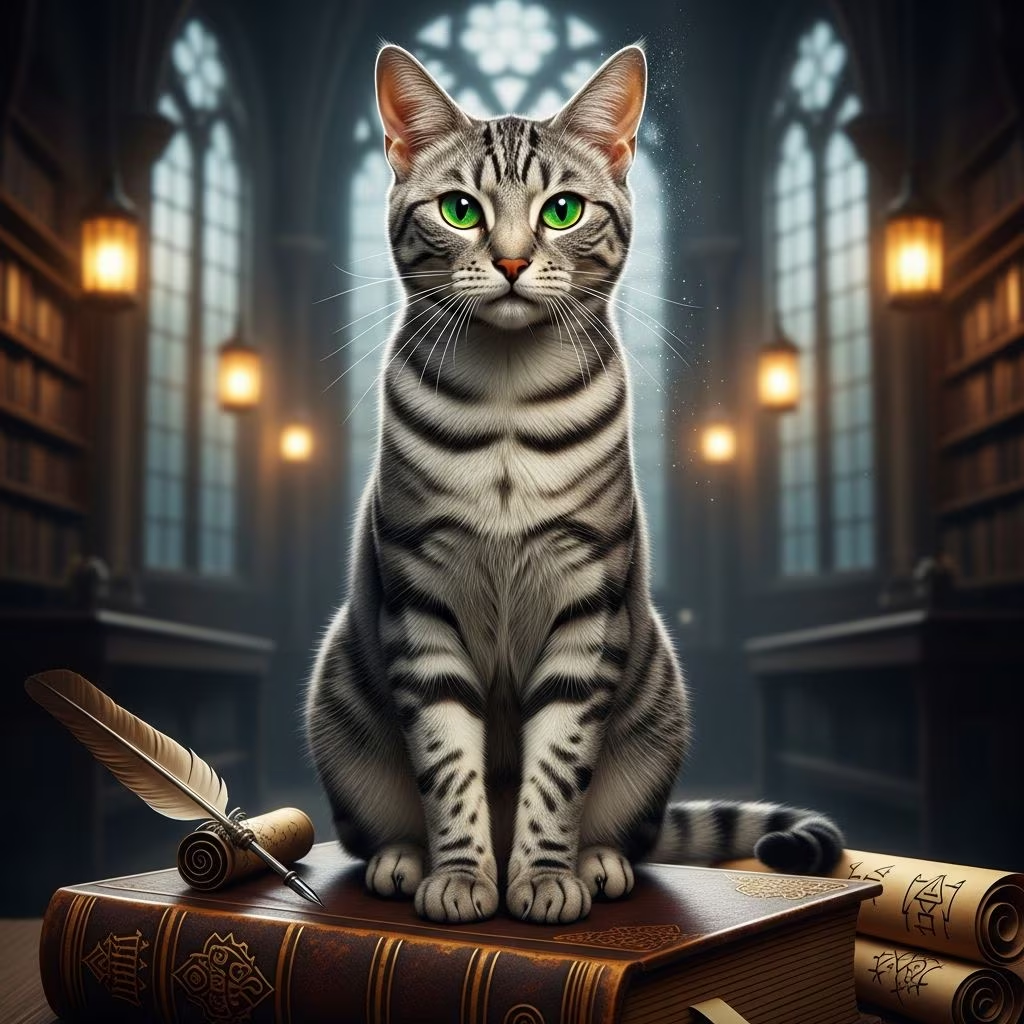
Minerva McGonagall, the formidable Transfiguration professor at Hogwarts, reveals her Animagus abilities by transforming into a **tabby cat**, a detail that blends seamlessly with the magical world’s intrigue. This form, described consistently across J.K. Rowling’s books and the film adaptations, underscores her character’s discipline and perceptiveness, drawing fans into debates about its precise feline traits.
The Magic of Animagi and McGonagall’s Choice
In the wizarding universe, an Animagus is a witch or wizard who can assume an animal shape at will, a rare and advanced skill requiring years of study and registration with the Ministry of Magic. McGonagall’s selection of a cat form reflects deep personal resonance, as these transformations are not arbitrary but tied to the individual’s core qualities like independence and sharp awareness.
Her debut as a cat occurs in the opening scenes of Harry Potter and the Sorcerer’s Stone, perched observantly outside the Dursleys’ home. This choice symbolizes vigilance and mystique, traits that define her role as Deputy Headmistress and Gryffindor Head of House. Cats in folklore often embody witchcraft and intuition, amplifying McGonagall’s portrayal as a guardian of order amid chaos.
Decoding the Tabby Cat Appearance
The tabby designation refers to a distinctive coat pattern rather than a purebred lineage. Key identifiers include bold stripes, swirls, and notably, an “M” shape on the forehead, which folklore links to the Virgin Mary, though in magical contexts, it evokes mystery.
- Classic Tabby: Features circular and swirling patterns on the body, resembling marbled designs.
- Mackerel Tabby: Displays narrow, parallel stripes akin to a fish skeleton, the most prevalent variety.
- Spotted Tabby: Breaks stripes into rosettes or spots for a leopard-like effect.
McGonagall manifests as a silver-gray tabby with darker markings, aligning with classic patterns observed in the films. This commonplace look among domestic cats highlights accessibility—no exotic pedigree required for profound magic.
Domestic Shorthair: The Likely Breed Basis
Without explicit breed specification in canon, McGonagall’s cat aligns with the **domestic shorthair**, a versatile category encompassing mixed-heritage felines prevalent worldwide. These cats boast short, dense fur ideal for agility and low-maintenance living, mirroring the professor’s no-nonsense efficiency.
| Feature | Domestic Shorthair Traits | McGonagall’s Cat Match |
|---|---|---|
| Coat Length | Short and sleek | Streamlined for quick shifts |
| Pattern Variety | Highly diverse, tabby common | Gray tabby with black stripes |
| Temperament | Adaptable, observant | Watchful and composed |
| Size | Medium build | Neither oversized nor diminutive |
This breed’s ubiquity in muggle and wizarding homes underscores Rowling’s intent to ground fantastical elements in everyday familiarity.
Feline Companions Across Hogwarts Halls
Crookshanks: Hermione’s Intelligent Ally
Hermione Granger’s pet, Crookshanks, blends cat and Kneazle heritage, granting superior intellect and suspicion-detecting prowess. In Harry Potter and the Prisoner of Azkaban, he aids in exposing Pettigrew’s rat disguise. Film portrayals used a ginger tabby Persian, whose long fur and flattened face lent a distinctive, somewhat squashed appearance, prone to eye issues like tear staining.
Mrs. Norris: Filch’s Enigmatic Scout
Argus Filch’s scrawny companion, Mrs. Norris, prowls corridors with eerie vigilance, her book description contrasting the robust Maine Coon actors in movies. These giants, capable of 25-pound weights, required multiple stand-ins due to filming challenges, injecting real-world humor into production tales.
Other cats populate the series: students tote felines to Hogwarts alongside owls and toads, and vendors at Magical Menagerie offer tabbies for nine Galleons. Hagrid’s cat allergy adds levity, while spells like Felifors turn cats into cauldrons, taught by McGonagall herself.
Behind-the-Scenes Feline Adventures
Filming the Harry Potter saga involved real cats, blending charm with chaos. The tabby portraying McGonagall once escaped set, vanishing for days before returning, delaying shoots but fueling anecdotes. Crookshanks’ actor exhibited Persian breed woes, while Mrs. Norris’s Maine Coons grew disinterested mid-take, demanding patience from crews.
J.K. Rowling drew Crookshanks from her own perceptive cat, emphasizing felines’ uncanny judgment. These stories humanize the magic, showing how ordinary animals amplified cinematic wonder.
Cultural and Magical Symbolism of Cats
Cats transcend pets in wizarding lore, linked to Patronuses (McGonagall’s is feline) and Animagi traditions. Historical Hogwarts records note gray tabbies in the 1890s, and Ministry stats suggest over 60% of registered Animagi favor cats, citing spiritual synergy.
Globally, cats symbolize enigma and guardianship—from Egyptian deities to medieval witch familiars—echoing McGonagall’s archetype. Their Dementor-sensing ability, as with Mr. Tibbles, reinforces utility in defense against dark forces.
Tabby Cats in the Broader Wizarding Ecosystem
Beyond stars, cats interbreed with Kneazles for hybrid vigor, yielding litters up to eight strong. Squibs like Arabella Figg bred these for livelihood, highlighting economic roles. Newt Scamander’s works hint at magical retinal adaptations aiding invisibility detection, as Mrs. Norris demonstrates.
In potions and transfiguration, cats feature prominently, their forms challenging students’ precision—a nod to McGonagall’s rigorous pedagogy.
FAQs About McGonagall’s Cat Form
Is Professor McGonagall’s cat a specific breed?
No canon breed is named; it’s a tabby-patterned domestic shorthair, emphasizing pattern over pedigree.
What does the ‘M’ on a tabby cat’s forehead mean?
A hallmark of tabby genetics, often mythologized but purely a coat trait visible across breeds.
Which cat played McGonagall in the movies?
An unnamed silver-gray tabby, notable for a brief runaway incident during production.
Why are cats popular Animagus forms?
Their alignment with wizardly traits like intuition and stealth, per in-universe records.
Can cats detect magic in Harry Potter?
Yes, especially hybrids like Crookshanks or keen observers like Mrs. Norris.
Exploring Feline Magic Further
McGonagall’s tabby form invites endless fascination, bridging literature, film, and feline biology. Whether pondering coat genetics or production mishaps, it enriches the Potterverse’s tapestry. Fans might seek domestic shorthairs with that signature “M,” imagining their own Animagus potential amid Hogwarts’ enduring legacy.
References
- What Kind of Cat Breed Was Professor McGonagall in Harry Potter — Catster. 2023-10-12. https://www.catster.com/lifestyle/what-kind-of-cat-breed-was-professor-mcgonagall-in-harry-potter/
- Tabby cat | Harry Potter Wiki — Fandom. 2024-05-15. https://harrypotter.fandom.com/wiki/Tabby_cat
- Cat – Harry Potter Wiki — Fandom. 2024-08-22. https://harrypotter.fandom.com/wiki/Cat



