

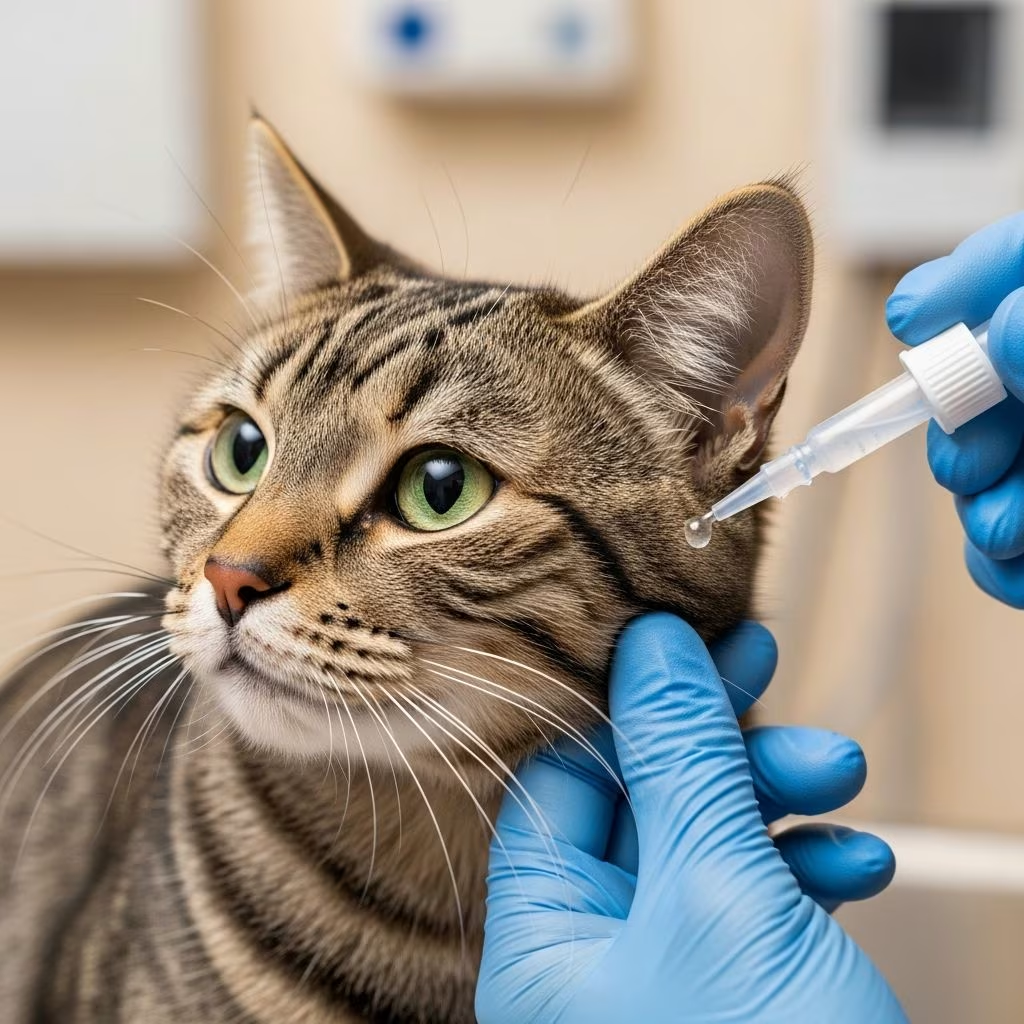
Profender stands out as a pioneering topical solution designed specifically for cats to combat common intestinal parasites. This prescription medication targets hookworms, roundworms, and tapeworms with a single-dose application, making it a convenient choice for feline health management.
Understanding Intestinal Parasites in Cats
Cats frequently encounter intestinal worms due to their hunting instincts, outdoor explorations, or contact with contaminated environments. Hookworms attach to the intestinal walls, feeding on blood and causing anemia, especially in kittens. Roundworms, resembling spaghetti-like strands, can lead to vomiting, diarrhea, and a pot-bellied appearance. Tapeworms, often transmitted via fleas, result in visible rice-like segments around the anus. These parasites not only compromise your cat’s nutrition but can also pose zoonotic risks to humans, particularly in households with young children or immunocompromised individuals.
Early detection through fecal exams by a veterinarian is crucial. Symptoms include weight loss, poor coat condition, lethargy, and abdominal discomfort. Regular deworming forms part of preventive care, especially for cats with high exposure risks.
The Science Behind Profender’s Formula
Profender combines two potent active ingredients: emodepside and praziquantel. Emodepside, exclusive to this product, disrupts the nervous system of roundworms and hookworms at both adult and larval stages, paralyzing them for expulsion. Praziquantel, a well-established anthelmintic, targets tapeworms by increasing their permeability to calcium, leading to muscle contraction, paralysis, and disintegration within the intestines.
Applied topically, the solution absorbs rapidly through the skin into the bloodstream, reaching the gastrointestinal tract to eliminate parasites. Dead worms are then passed in the feces, often within 24-48 hours. Clinical studies demonstrate over 90% efficacy against roundworms and tapeworms post-treatment.
Who Can Use Profender and When?
Suitable for cats and kittens 8 weeks or older weighing at least 2.2 pounds (1 kg). It’s formulated in weight-based sizes: small (2.2-5.5 lbs), medium (5.5-11 lbs), and large (11-17.6 lbs). For cats over 17.6 lbs, veterinarians recommend combining tubes for accurate dosing.
Administer as a one-time treatment for active infections. Retreatment is possible after 30 days if reinfection occurs, common in outdoor or flea-exposed cats. It’s not for pregnant or breeding cats without veterinary advice, though safety data supports use in most cases.
Precise Dosage Guidelines
The minimum dose delivers 1.36 mg/lb (3 mg/kg) emodepside and 5.45 mg/lb (12 mg/kg) praziquantel. Select the tube matching your cat’s weight:
| Cat Weight Range | Tube Color/Size | Volume |
|---|---|---|
| 2.2 – 5.5 lbs (1-2.5 kg) | Small / 0.35 ml | Orange |
| 5.5 – 11 lbs (2.5-5 kg) | Medium / 0.70 ml | Purple |
| 11 – 17.6 lbs (5-8 kg) | Large / 1.12 ml | Green |
Always consult a vet for precise measurement, especially for multi-tube needs.
Step-by-Step Application Instructions
Applying Profender is straightforward and stress-free:
- Ensure your cat’s skin is dry and undamaged at the application site.
- Weigh your cat accurately and select the correct tube.
- Hold the tube upright, remove the cap, and pierce the seal by twisting the cap’s opposite end onto the tip.
- Part the fur at the base of the skull (back of the neck) to expose skin.
- Place the tip directly on the skin and squeeze the entire contents in one spot.
- Avoid bathing the cat for 24 hours post-application and prevent licking by distracting with play.
Monitor for 30 minutes to ensure no immediate reactions. Store tubes at room temperature away from food and children.
Proven Effectiveness and Clinical Evidence
Profender’s single-dose efficacy sets it apart from oral dewormers requiring multiple administrations. Field trials showed 90-100% reduction in worm burdens, including immature forms, unmatched by many competitors. Unlike pills that cats may regurgitate, topical delivery ensures full absorption, ideal for finicky eaters or multi-cat homes.
For tapeworm control, it eliminates both Dipylidium caninum (flea-transmitted) and Taenia species. Hookworm and roundworm clearance prevents complications like anemia or growth stunting in kittens.
Potential Side Effects and Safety Profile
Most cats tolerate Profender well, with rare adverse events. Common reactions include temporary salivation, vomiting, or grooming at the site if licked. Less frequent: lethargy, diarrhea, hair loss, or skin irritation.
In safety studies on kittens, high doses (up to 5x) caused minimal issues like transient tremors or salivation in a few cases. No reproductive toxicity noted. Humans should wash hands after handling and avoid contact with treated areas until dry.
- Avoid use on: Kittens under 8 weeks/2.2 lbs, sick/injured cats without vet approval.
- Overdose signs: Excessive drooling, tremors—contact vet immediately.
Profender in Preventive Care Routines
Incorporate Profender into a holistic parasite control plan: monthly flea preventives reduce tapeworm vectors, regular fecal tests guide retreatment, and indoor living minimizes exposure. Pair with heartworm preventives covering multiple parasites for comprehensive protection.
For breeding catteries or shelters, its broad-spectrum action aids population health management. Vets often recommend it seasonally or post-hunting season for feral-exposed cats.
Frequently Asked Questions (FAQs)
Is Profender safe for pregnant cats?
While not contraindicated, consult your vet. Studies show no adverse effects in reproduction trials.
Can I use Profender with flea treatments?
Yes, no known interactions. Apply to separate skin areas if combining spot-ons.
How soon do worms die after application?
Parasites are killed within hours, expelled over 1-3 days.
What if my cat licks the spot?
Mild salivation may occur; it’s generally self-limiting. Prevent by using an e-collar if needed.
Does Profender kill all tapeworm types?
It targets common feline species but not all rare variants—fecal checks confirm.
Why Choose Profender Over Other Dewormers?
Unlike oral tablets (e.g., pyrantel), Profender treats immature stages and requires no pilling. Compared to multi-dose regimens, its convenience boosts compliance. As the only FDA-approved topical feline dewormer, it offers reliability backed by Elanco.
In summary, Profender empowers cat owners with an efficient, vet-recommended tool against debilitating worms, promoting healthier, happier felines.
References
- Profender Topical Solution Dewormer for Cats — PetCareRx. 2023. https://www.petcarerx.com/profender/13216
- Profender Cat Dewormer — 1800PetMeds. 2024. https://www.1800petmeds.com/cat/flea-tick-parasite/product/profender-dewormer/prod11220.html
- Profender Topical Solution for Cats — Chewy.com. 2025. https://www.chewy.com/profender-topical-solution-cats-55-11/dp/173196
- Profender for Cats — Heartland Vet Supply. 2024. https://www.heartlandvetsupply.com/p-5128-profender-for-cats.aspx
- Profender for Small Cats/Kittens — Medi-Vet. 2023. https://www.medi-vet.com/Profender-For-Small-Cats-Kittens-2-2-5-5-p/16405.htm
- Profender for Cats — Revival Animal Health. 2024. https://www.revivalanimal.com/product/profender-for-cats



