

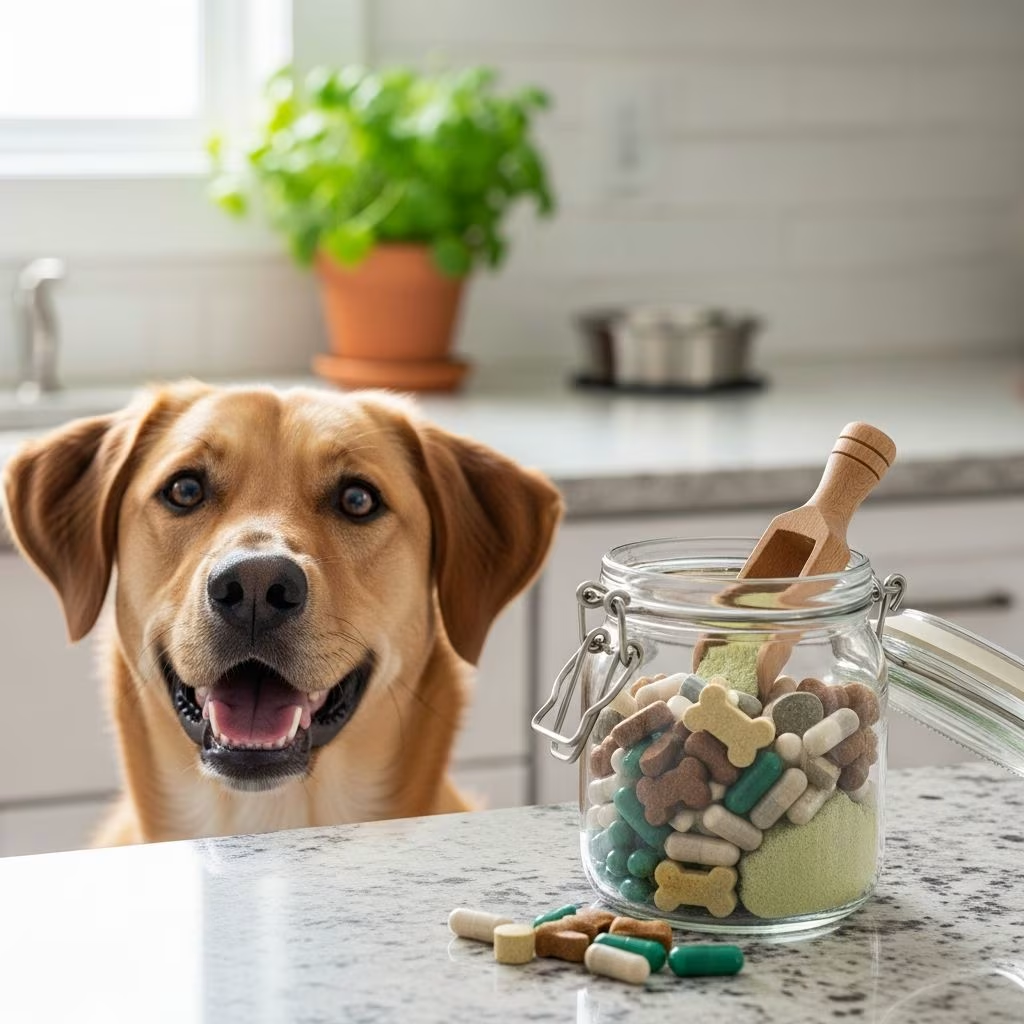
Probiotics offer dogs significant advantages in maintaining optimal health, particularly by supporting digestive function, bolstering immune responses, and promoting overall well-being through targeted microbial balance.
Understanding Probiotics in Canine Nutrition
Probiotics are live microorganisms that, when administered in adequate amounts, confer health benefits on the host. In dogs, these beneficial bacteria primarily reside in the gut, where they influence digestion, nutrient absorption, and pathogen resistance. Research demonstrates that canine-specific probiotic strains, such as certain Lactobacillus and Bifidobacterium species, can reshape the intestinal microbiome to favor beneficial microbes over harmful ones.
The canine gut microbiome comprises trillions of bacteria that play crucial roles in metabolism, immune modulation, and barrier integrity. Disruptions, known as dysbiosis, can arise from antibiotics, stress, poor diet, or age, leading to issues like diarrhea or weakened immunity. Probiotic supplementation helps restore this balance by competing with pathogens for resources and producing short-chain fatty acids that nourish gut cells.
How Probiotics Enhance Digestive Wellness
One of the primary benefits of probiotics for dogs is improved digestive health. Studies show they reduce diarrhea duration and severity, especially in high-stress environments like kennels or shelters. For instance, compound probiotics have lowered clinical diarrhea scores in treated dogs as early as 30 days into supplementation, with effects persisting post-treatment.
Probiotics normalize intestinal pH and inhibit harmful bacteria like Salmonella or Clostridium perfringens by outcompeting them for adhesion sites and nutrients. In healthy dogs, strains like Lactobacillus reuteri increase beneficial genera while decreasing others associated with inflammation, such as Turicibacter.
- Shorten acute diarrhea episodes in sheltered dogs.
- Alleviate symptoms in inflammatory bowel disease by normalizing dysbiosis.
- Boost fecal levels of protective bacteria like Bifidobacterium.
Boosting Immunity with Probiotic Support
Probiotics strengthen canine immunity by enhancing antibody production and cytokine regulation. Oral administration of multi-strain probiotics elevates serum IgG, IFN-α, and fecal SIgA while reducing pro-inflammatory TNF-α. This modulation helps elderly dogs, who often exhibit weaker responses, achieve significant immune gains.
In trials, probiotic-fed dogs across age groups showed improved immune markers, with older dogs displaying the most pronounced shifts in gut microbiota toward beneficial species like Faecalibacterium prausnitzii. These changes correlate with better physiological parameters, underscoring probiotics’ role in age-related health maintenance.
| Immune Parameter | Effect of Probiotics | Significance (p-value) |
|---|---|---|
| Serum IgG | Increased | <0.001 |
| Fecal SIgA | Increased | <0.001 |
| TNF-α | Decreased | <0.05 |
| IFN-α | Increased | <0.05 |
Promoting Healthy Weight Gain and Feed Efficiency
Probiotics positively impact growth metrics in dogs. Research indicates significant increases in average daily feed intake (ADFI) for elderly dogs (p<0.01) and average daily weight gain (ADWG) across all ages (p<0.05). Training dogs experienced even stronger ADWG boosts (p<0.001), with effects lingering 15 days post-supplementation.
These gains stem from optimized nutrient utilization and reduced gastrointestinal distress, allowing better calorie absorption. Elderly dogs, prone to appetite decline, benefit most, as probiotics stimulate feed intake without adverse effects on vital signs like respiration or temperature.
Age-Specific Responses to Probiotics
Dogs of varying ages respond differently to probiotics, with seniors showing the strongest microbial shifts. In elderly subjects, gut structures diverged markedly from controls after 60 days (p=0.025), persisting post-treatment (p=0.01). Beneficial bacteria like Lactobacillus species proliferated, while pathogens like Escherichia coli declined.
Young and training dogs saw subtler changes but consistent weight and immune improvements. This age-dependency highlights probiotics’ value in geriatric care, countering microbiota decline linked to aging.
Selecting the Right Probiotic Products
Not all probiotics suit dogs; efficacy depends on strain specificity. Veterinary-recommended options like FortiFlora or Proviable, with proven studies, deliver 1-10 billion CFUs daily. Canine-derived strains, such as Enterococcus faecium, excel at shortening diarrhea, while Bacillus species aid immunity.
Administer via food or capsules for picky eaters. Look for products with live cultures guaranteed through expiration, avoiding those with fillers. Consult vets for tailored dosing, especially for dogs with conditions like IBD.
- Strain Examples: Lactobacillus for yeast management; Bifidobacterium for stress reduction.
- Dosage: 1-10 billion CFUs/day for most dogs.
- Forms: Powder, chew, capsule.
Potential Applications Beyond Digestion
Emerging evidence suggests broader uses. Probiotics mitigate stress-induced anxiety, support allergy relief, and enhance resilience to infections. In IBD cases, they increase tight junction proteins, reducing inflammation and histological damage.
Metabolomics studies reveal shifts in fecal metabolites post-probiotic cheese feeding, linking microbiota changes to health outcomes. These applications position probiotics as adjuncts to conventional therapies.
Safety Profile and Considerations
Probiotics prove safe, showing no changes in respiration, pulse, temperature, or blood cell counts. Mild initial loose stools may occur as microbiota adjusts, resolving quickly. Avoid in severely immunocompromised dogs without vet approval.
Combine with prebiotics for synergistic effects, forming a complete gut support strategy. Monitor for 30-60 days to assess benefits.
Frequently Asked Questions
Can all dogs benefit from probiotics?
Yes, particularly those with dysbiosis from antibiotics, travel, or age. Healthy dogs gain preventive support.
How long until probiotics work?
Effects on diarrhea appear in days; weight/immunity in 30-60 days.
Are dog probiotics different from human ones?
Yes, canine strains ensure host specificity and optimal colonization.
What if my dog refuses probiotics?
Mix into wet food or use treat forms; capsules hide in peanut butter.
Can probiotics replace vet treatment?
No, they complement therapies for conditions like IBD.
References
- Oral Administration of Compound Probiotics Improved Canine Feed Utilization and Immunity — Frontiers in Immunology. 2019-03-29. https://www.frontiersin.org/journals/immunology/articles/10.3389/fimmu.2019.00666/full
- Gut Probiotics and Health of Dogs and Cats: Benefits, Applications, and Underlying Mechanisms — PMC (Animals). 2023-10-20. https://pmc.ncbi.nlm.nih.gov/articles/PMC10609632/
- Probiotics for Dogs: Does Your Dog Need Them? — PetMD. Recent (post-2023). https://www.petmd.com/dog/general-health/probiotics-dogs-what-you-need-know
- Gut Probiotics and Health of Dogs and Cats: Benefits, Applications… — PubMed. 2023-10-01. https://pubmed.ncbi.nlm.nih.gov/37894110/
- The Power of Probiotics — Cornell University College of Veterinary Medicine. Recent. https://www.vet.cornell.edu/departments-centers-and-institutes/riney-canine-health-center/canine-health-topics/power-probiotics
- Using Probiotics to Support Digestive Health for Dogs — ISAPP. Recent. https://isappscience.org/using-probiotics-to-support-digestive-health-for-dogs/
- Probiotics in Cats and Dogs Fact Sheet — Davies Veterinary Specialists. Recent. https://www.vetspecialists.co.uk/fact-sheets-post/probiotics-use-in-cats-and-dogs-fact-sheet/



